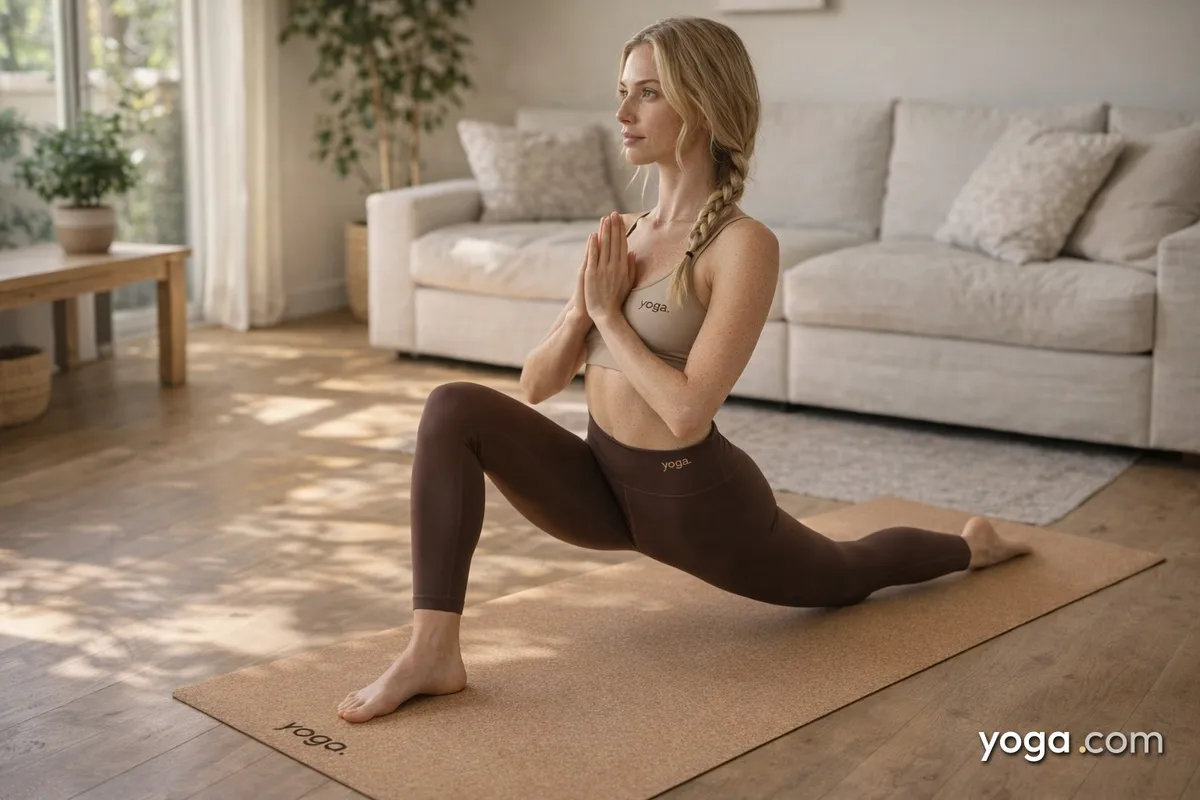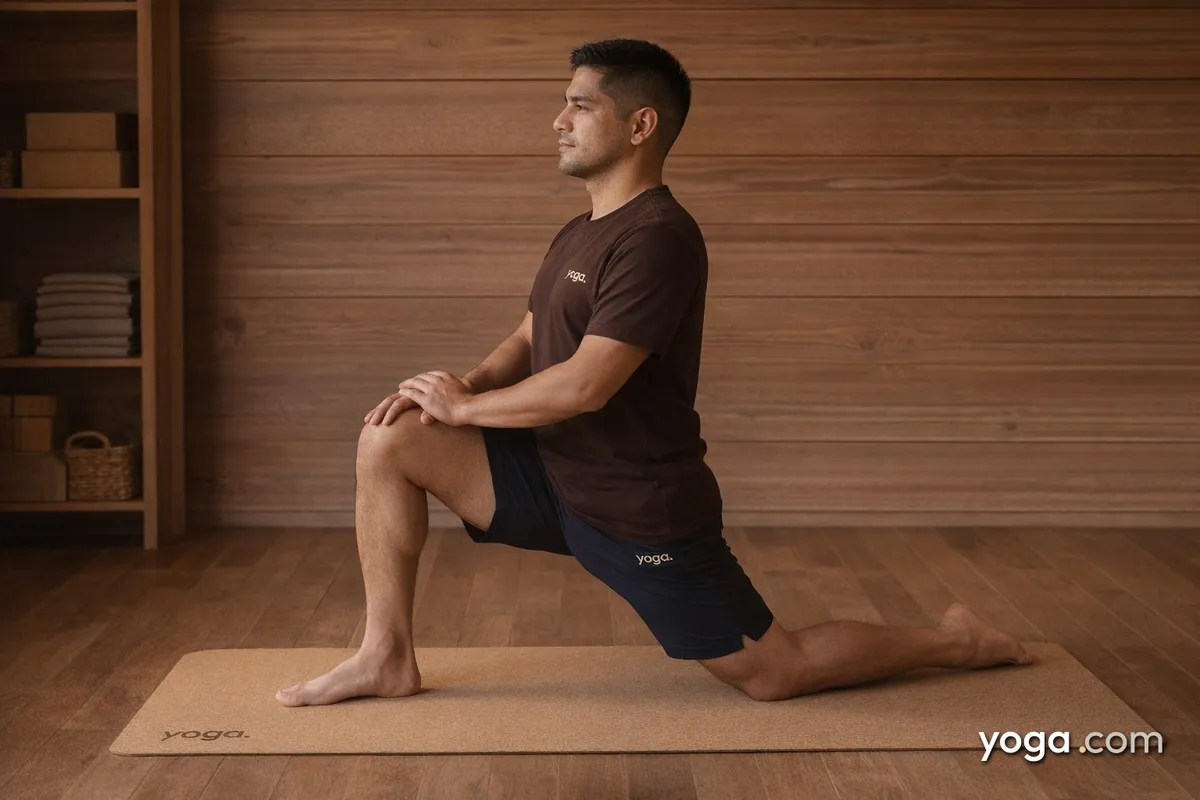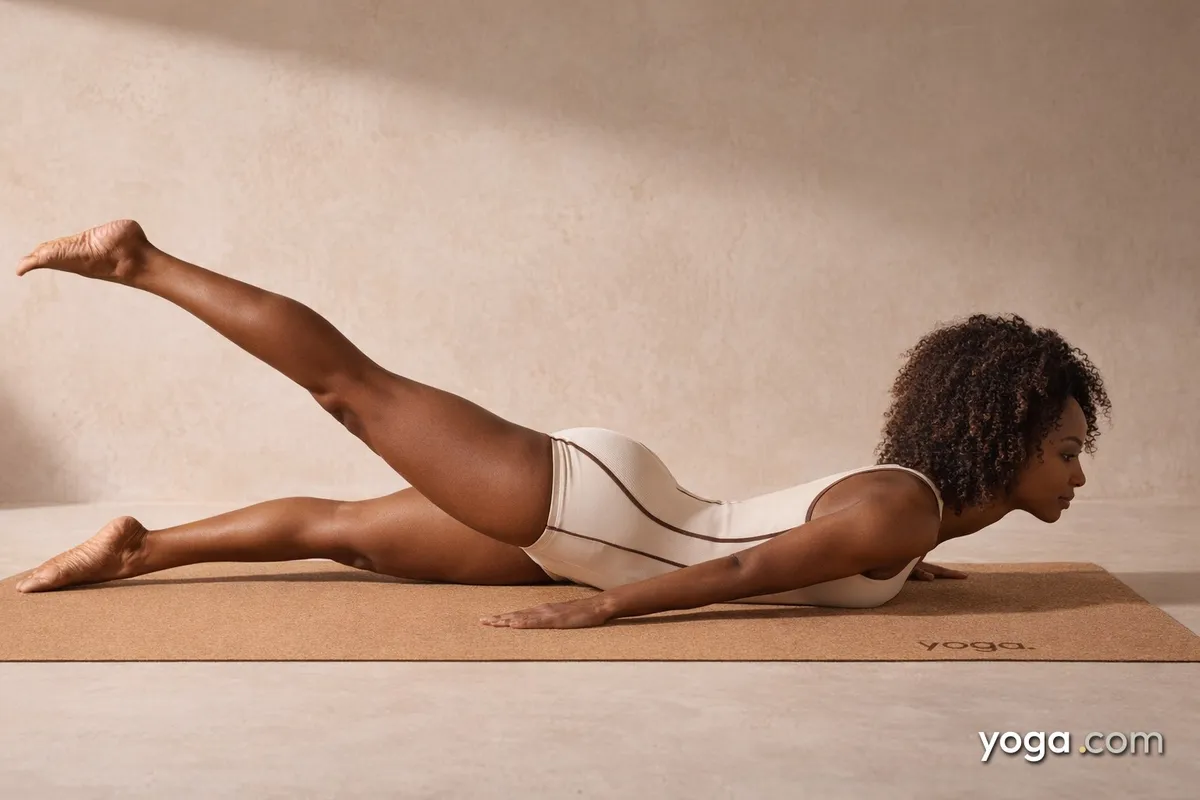
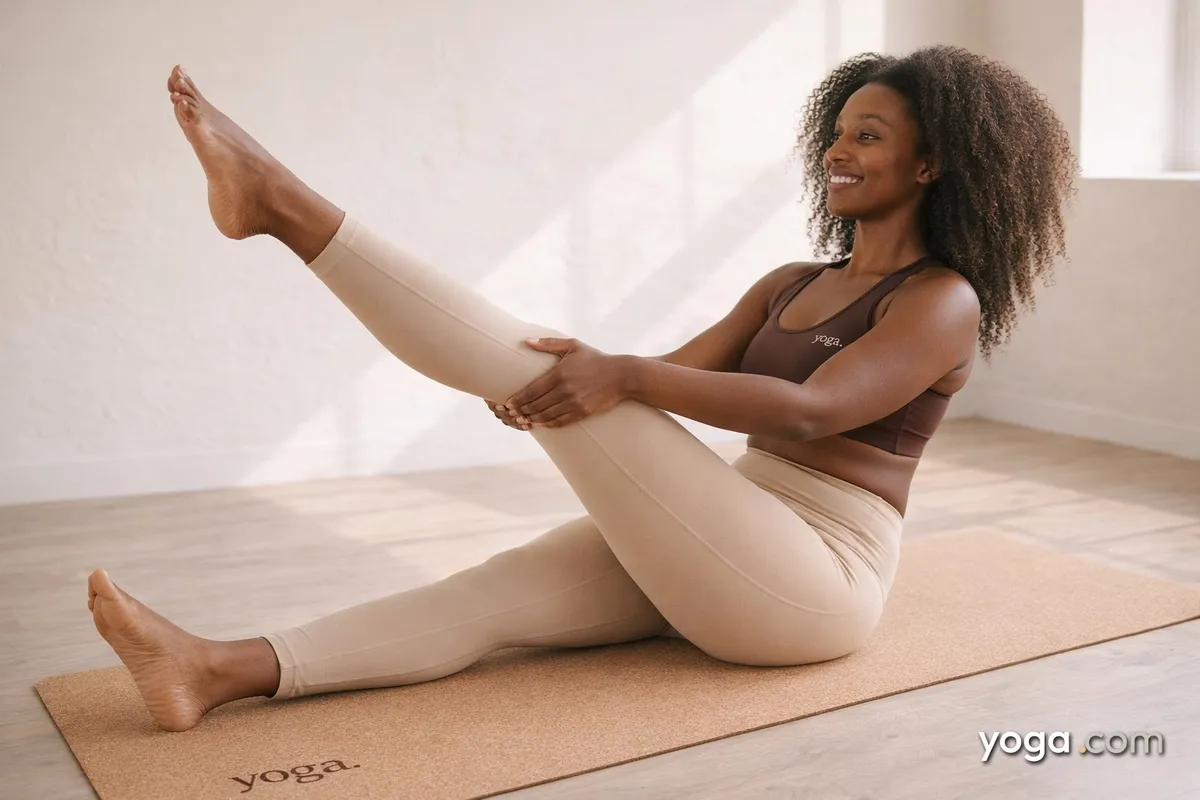
Staff Pose with Left Leg Up is a seated pose that builds on the grounded foundation of classic Staff Pose by lifting one leg, adding an active hamstring stretch and a demand for core steadiness. Its Sanskrit name, Daṇḍāsana (left leg up), comes from daṇḍa meaning "staff" or "stick" - a reference to the long, upright spine that defines the shape. You'll find this pose useful as a transition, a hamstring opener, or a quiet check-in on single-leg stability within a seated sequence.
At a Glance
- Level: Beginner
- Type: Seated
- Targets: Hamstrings (left), hip flexors, core, spinal extensors
- Good for: Lengthening the posterior left leg, building pelvic stability in a seated position, improving awareness of spinal alignment
How to Do Staff Pose with Left Leg Up
- Sit on the floor with both legs extended straight in front of you and your hands resting beside your hips, fingertips pressing down. This is classic Staff Pose - find your vertical spine here first.
- Root your sitting bones evenly and draw the lower belly in and up slightly. Avoid letting the pelvis tuck under or the low back round.
- Flex both feet, drawing the toes back toward the shins, and press through both heels.
- On an inhale, lift your left leg off the floor, keeping it straight. Raise it to a height where your spine stays long - even if that's only a few inches off the ground at first.
- Press through the left heel and keep the left foot flexed. Let the inner thigh face up rather than rotating the leg outward.
- Keep both hands pressing into the floor beside your hips, or reach the left hand toward the left foot (or a strap looped around the foot) if your spine remains upright when you do so.
- Hold your gaze forward or slightly down - soften your jaw and breathe evenly for 5-8 breaths.
- To come out, lower the left leg on an exhale, returning to classic Staff Pose. Pause for a breath before switching sides or transitioning.
Benefits
- Stretches the hamstrings and calf muscles of the raised left leg.
- Strengthens the hip flexors, particularly the iliopsoas and rectus femoris, as they hold the leg aloft.
- Engages the deep core stabilizers to maintain an upright pelvis while one leg is lifted.
- Trains the spinal extensors to sustain a tall, neutral spine under mild asymmetrical load.
- Builds body-side awareness and helps you notice differences in flexibility or stability between the left and right leg.
- Reinforces the alignment principles of seated poses, making transitions into forward folds and leg-stretching shapes more accessible.
Common Mistakes and Alignment Cues
- Rounding the lower back to lift the leg higher. Lower the leg until you can keep the spine long. Height matters far less than a neutral pelvis.
- Letting the right sitting bone lift off the floor. Press both sitting bones down equally; think of anchoring the right side as the counterweight for the left lift.
- Externally rotating the lifted leg so the toes point outward. Internally rotate the left thigh slightly so the inner thigh faces the ceiling and the toes point straight up.
- Collapsing into the supporting shoulder when holding the foot. Keep both shoulders level and the chest open - use a strap if reaching the foot pulls you off-balance.
- Holding the breath. The pose requires steady effort; breathing freely signals that you're working at the right intensity for your body today.
Modifications and Props
- Tight hamstrings: Sit on a folded blanket or a block to tilt the pelvis forward and reduce the pull on the hamstrings; keep the lifted leg lower or softly bent at the knee.
- Strap for the foot: Loop a strap around the ball of the left foot and hold both ends, allowing the arms to stay long and the spine to remain upright rather than rounding forward to reach.
- Wall support: Sit with your back a few inches from a wall; the proximity reminds you to stack the spine vertically without actually leaning on the surface.
- Bent supporting leg: If both legs fully extended feels unstable, bend the right knee and place the right foot flat on the floor while you work on the left-leg lift.
Cautions
- Hamstring strain or injury: Keep the lifted leg at a lower height and consider a slight bend in the knee to reduce tension along the back of the leg.
- Low back pain or sensitivity: Prioritize spinal length over leg height; sit on a folded blanket to support the natural lumbar curve.
- Hip flexor strain: Avoid forcing the leg higher than the hip flexors can comfortably sustain, and skip this pose if active groin pain is present.
- Wrist sensitivity: If pressing the hands into the floor is uncomfortable, make fists or place fingertips on blocks beside the hips to reduce wrist extension.
If you're working with an injury or a medical condition, check with a qualified professional before practicing.
Related Poses
- Bound Angle Pose - a gentle seated hip opener to practice before or after this shape.
- Half Boat Pose - the next progression, asking both legs to lift with core support.
- Tortoise Pose - a deeper hamstring and hip stretch that builds on the seated foundation.
- Downward-Facing Dog Pose - a useful counter-pose to reset the spine and stretch the calves and hamstrings symmetrically.
This pose fits well within a floor-based sequence - see A Gentle Yoga Routine for Tired, Low-Energy Days for context, or try A 10-Move Chair Yoga Sequence for a Midday Reset for a seated adaptation.