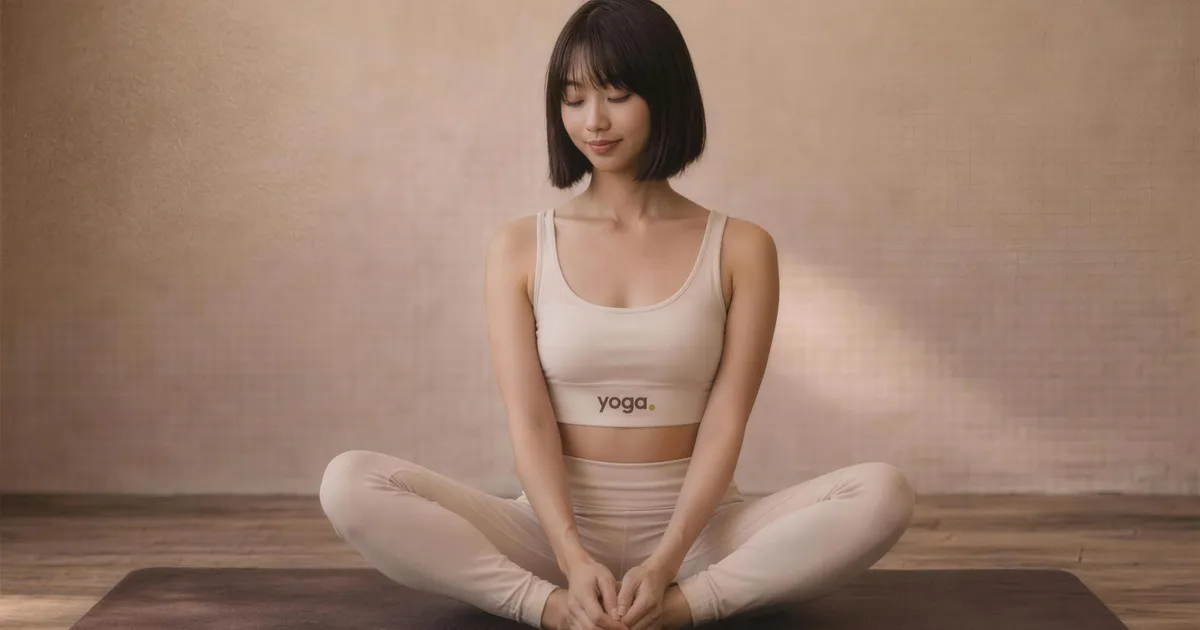
Bound Angle Pose (Baddha Koṇāsana - "bound angle" or "bound corner") is a classic seated hip opener that brings the soles of the feet together and draws the heels toward the pelvis. It appears frequently in both active flows and longer restorative sequences, making it one of the most versatile shapes in a seated practice.
At a Glance
- Level: Beginner
- Type: Seated
- Targets: Inner thighs (adductors), groins, hips, lower back
- Good for: Stretching the inner thighs and groin, building upright spinal posture, improving hip external rotation
How to Do Bound Angle Pose
- Sit on your mat with your legs extended in front of you (Dandasana). If your lower back rounds heavily, sit on a folded blanket or firm block to lift the pelvis.
- Bend both knees and draw the soles of your feet together, letting the outer edges of your feet rest on the mat. Bring your heels as close to your pelvis as feels comfortable - there is no single correct distance.
- Clasp your hands around your feet or ankles, interlacing the fingers if you like. Allow the outer edges of the feet to open like a book, pressing the soles gently together.
- Sit tall: root your sitting bones into the mat, lengthen through the crown of your head, and draw the lower belly in and up. Avoid collapsing the chest forward.
- Let the thighs release toward the floor naturally - do not press or bounce the knees down. Gravity and breath do the work over time.
- Gaze softly forward or slightly downward. Hold for 5-15 breaths, breathing steadily and letting the inner thighs soften on each exhale.
- To come out, bring your hands to the outer thighs, use them to guide the knees back to center, and extend both legs forward into Dandasana.
Benefits
- Stretches the inner thighs, groins, and adductor muscles.
- Mobilizes the hip joints through external rotation.
- Lengthens the muscles along the inner knee when the heels are drawn close.
- Strengthens the muscles that support upright spinal posture when held actively.
- Gently opens the lower back by encouraging a neutral pelvic tilt.
- Prepares the hips for deeper seated poses such as Lotus Pose.
Common Mistakes and Alignment Cues
- Rounding the lower back: If your pelvis tucks and your lower back collapses, sit on a folded blanket or block until your spine can lengthen naturally without effort.
- Pressing or bouncing the knees down: Forcing the knees toward the floor strains the inner knee ligaments. Let the thighs descend through patient, passive release rather than active pushing.
- Hunching the shoulders forward: Keep the collarbones broad and the shoulder blades gently drawn toward each other. The hands hold the feet - they don't pull you into a slump.
- Feet too close for the current hip openness: If the knees are significantly higher than the hips, move the feet a few inches further from the pelvis. A comfortable position will yield more release than a strained one.
- Holding the breath: An even, relaxed breath signals the nervous system to release the hip flexors and adductors. If breathing is restricted, ease back slightly.
Modifications and Props
- Blanket or block under the pelvis: Elevating the hips encourages the pelvis to tip forward, making it easier to sit upright and letting the thighs release without strain.
- Blocks under the outer thighs: Place a block (any height) under each outer thigh for full passive support. This is especially useful in longer holds or restorative versions of the pose.
- Strap around the feet: Loop a strap around the soles of the feet and hold the free ends. This lets you sit tall without needing the flexibility to reach the feet directly.
- Wall support: Sit with your back against a wall to reinforce spinal length and remove the effort of balancing upright, allowing the hips to be the sole focus.
Cautions
- Groin or inner knee injury: Avoid any sensation of sharp pulling at the knee or groin. Move the feet further from the pelvis and use thigh support.
- Hip replacement or recent hip surgery: Check with your surgeon or physical therapist regarding safe ranges of external rotation before practicing.
- Sciatica or significant lower back discomfort: Sit on a higher support and keep the feet further away; avoid any forward fold variation until discomfort subsides.
- Late-stage pregnancy: Practice with the back against a wall and avoid deep forward folds; keep the chest lifted.
If you're working with an injury or a medical condition, check with a qualified professional before practicing.
Related Poses
- Easy Pose - a simpler seated shape to use as a warm-up or alternative
- Cow Face Pose (Left Leg and Right Arm Up) - a complementary deep hip opener that follows naturally
- Lotus Pose - the advanced progression that Bound Angle Pose helps prepare
- Tortoise Pose - a deeper seated fold that builds on the hip opening established here
Put this pose to use in a full practice: A Gentle Yoga Routine for Tired, Low-Energy Days or try it seated in A 10-Move Chair Yoga Sequence for a Midday Reset.