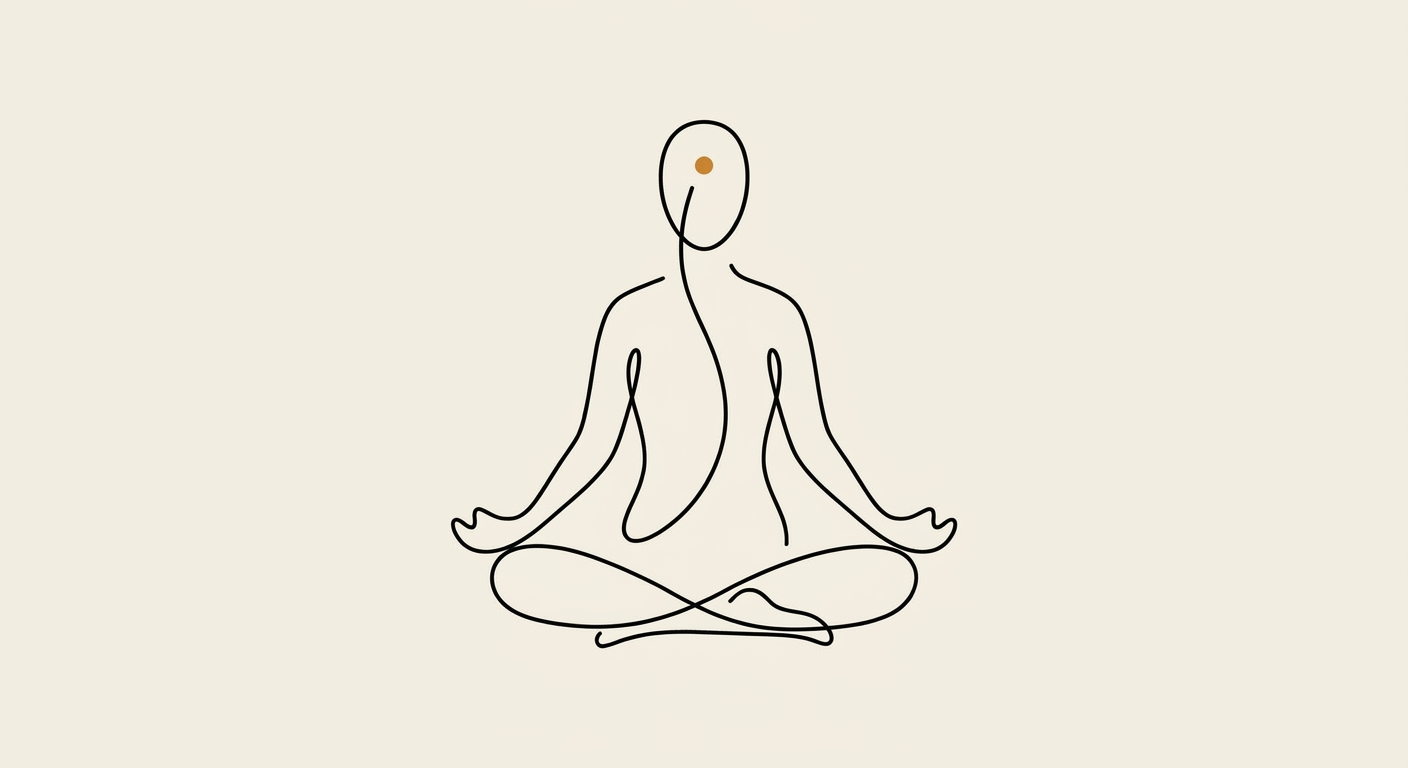
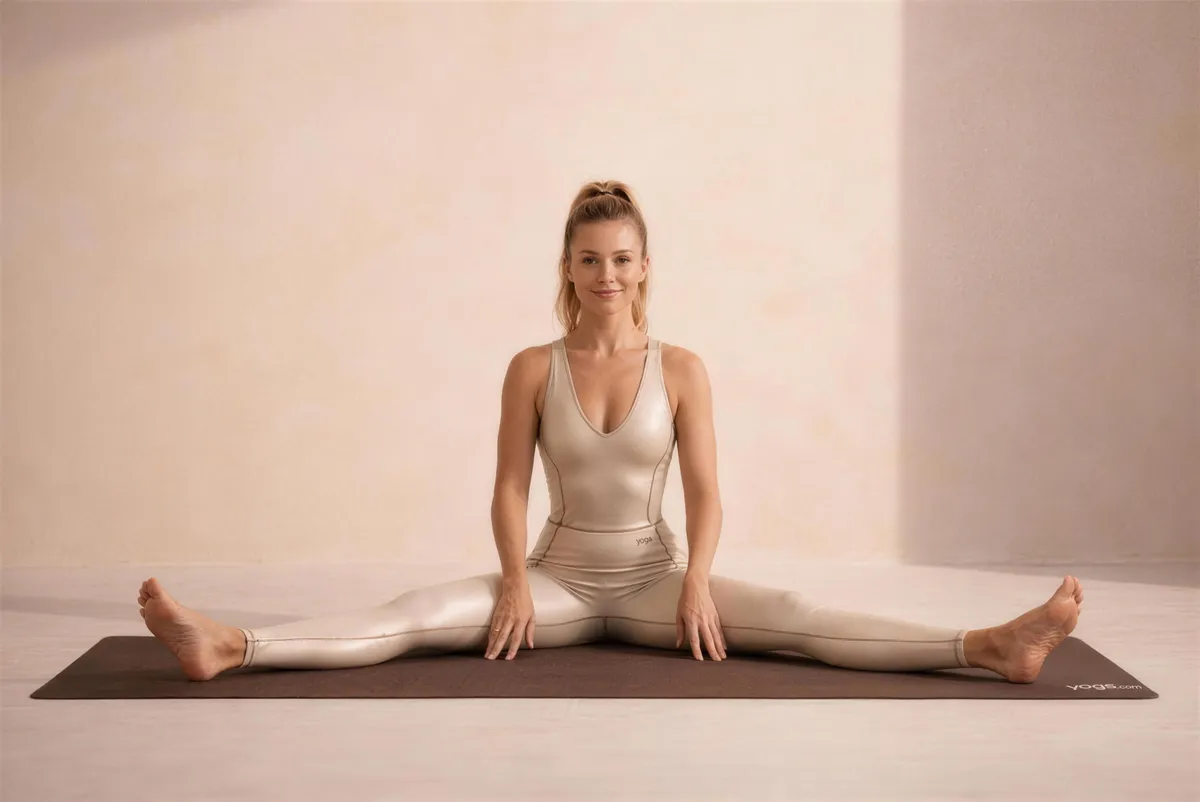
Seated Pose with Legs Wide Apart, Back Straight is a wide-legged seated posture known in Sanskrit as Upaviṣṭha Koṇāsana (back straight) - literally "seated angle pose" - with the emphasis here firmly on an upright, lengthened spine rather than a forward fold. It appears early in seated sequences as both a standalone hip opener and a preparatory shape for deeper forward folds and floor poses.
At a Glance
- Level: Beginner
- Type: Seated
- Targets: Inner thighs (adductors), hamstrings, hip flexors, lumbar spine
- Good for: Building spinal extension awareness, improving hip mobility, developing adductor length
How to Do Seated Pose with Legs Wide Apart, Back Straight
- Sit on the floor with your legs extended straight in front of you in Staff Pose. Place your hands beside your hips and press the floor away to lift your spine tall.
- Slowly spread your legs apart to a comfortable V-shape - roughly 70-90 degrees to start. Your kneecaps and toes point directly toward the ceiling.
- Flex your feet firmly: press through your heels and spread your toes. This engages the legs and protects the knee joints.
- Place your hands on the floor between your thighs, fingertips pointing forward. Press down through your palms to help your pelvis tilt gently forward, so your sitting bones root into the mat.
- On an inhale, grow your spine long from the base of your pelvis to the crown of your head. Draw your lower belly in and up slightly to support the lumbar curve.
- Broaden your collarbones, draw your shoulders back and down away from your ears, and let your gaze rest softly at eye level or slightly downward.
- Hold for 5-10 breaths, continuing to lengthen upward on each inhale and soften the inner thighs toward the floor on each exhale.
- To come out, bring your legs together slowly, return to Staff Pose, and take one or two breaths before moving on.
Benefits
- Stretches the adductor muscles along the inner thighs.
- Lengthens the hamstrings while keeping the spine in a neutral, extended position.
- Strengthens the muscles of the back that support an upright posture.
- Mobilises the hip joints through abduction and external rotation.
- Builds body awareness of pelvic tilt and spinal alignment that carries into other seated poses.
- Gently activates the hip flexors in an elongated position, reinforcing their range of motion.
Common Mistakes and Alignment Cues
- Rounding the lower back: If your pelvis tucks under and your lumbar rounds, sit on a folded blanket or block to raise the hips until the pelvis can tilt forward and the spine can straighten.
- Knees rolling inward or kneecaps facing the floor: Actively rotate your thighs outward so kneecaps point up; this also protects the medial knee.
- Feet passively hanging: Keep a strong flex through both feet - pressing out through the heels engages the legs and stabilises the position.
- Gripping through the shoulders: Release your shoulder blades down your back; the effort is in the spine, not the neck and traps.
- Spreading the legs too wide too soon: A smaller V with a long spine is more beneficial than a dramatic angle with a collapsed back - widen only as far as you can maintain the upright position.
Modifications and Props
- Blanket or block under the hips: Elevating the sitting bones makes it significantly easier to tilt the pelvis forward and straighten the spine, especially if your hamstrings are tight.
- Hands on blocks: Place one block on the floor in front of each hip, inside your legs, and rest a hand on each to reduce the load on your wrists and give your spine something to press away from.
- Strap around each foot: Loop a strap around each foot and hold the ends in your hands; this lets you draw the spine up without needing the hamstrings to be fully flexible.
- Seated against a wall: Sit with your back lightly against a wall to get immediate feedback on spinal alignment and use the wall as a guide while you build the muscular strength to hold the position independently.
Cautions
- Hamstring or inner-thigh strain: Ease the leg spread and avoid any sharp or pulling sensation along the backs or insides of the legs.
- Groin injury: Move into the wide-leg position slowly and stop well before any point of pain; adductor tissues can be vulnerable to overstretching.
- Lower-back sensitivity: Prioritise a raised seat and a neutral lumbar curve over width or depth; a rounded spine under load can aggravate the lumbar discs.
- Knee concerns: Ensure kneecaps face the ceiling throughout and never press down on the knees to deepen the pose.
If you're working with an injury or a medical condition, check with a qualified professional before practicing.
Related Poses
- Bound Angle Pose - a complementary hip opener that prepares the hips for wide-leg work
- Tortoise Pose - the natural forward-fold progression from this upright shape
- Downward-Facing Dog Pose - a good counter-pose to release the spine and hamstrings after the held position
- Corpse Pose - an ideal closing shape to let the adductors and hips integrate
See this pose in context: A Gentle Yoga Routine for Tired, Low-Energy Days and A 10-Move Chair Yoga Sequence for a Midday Reset.