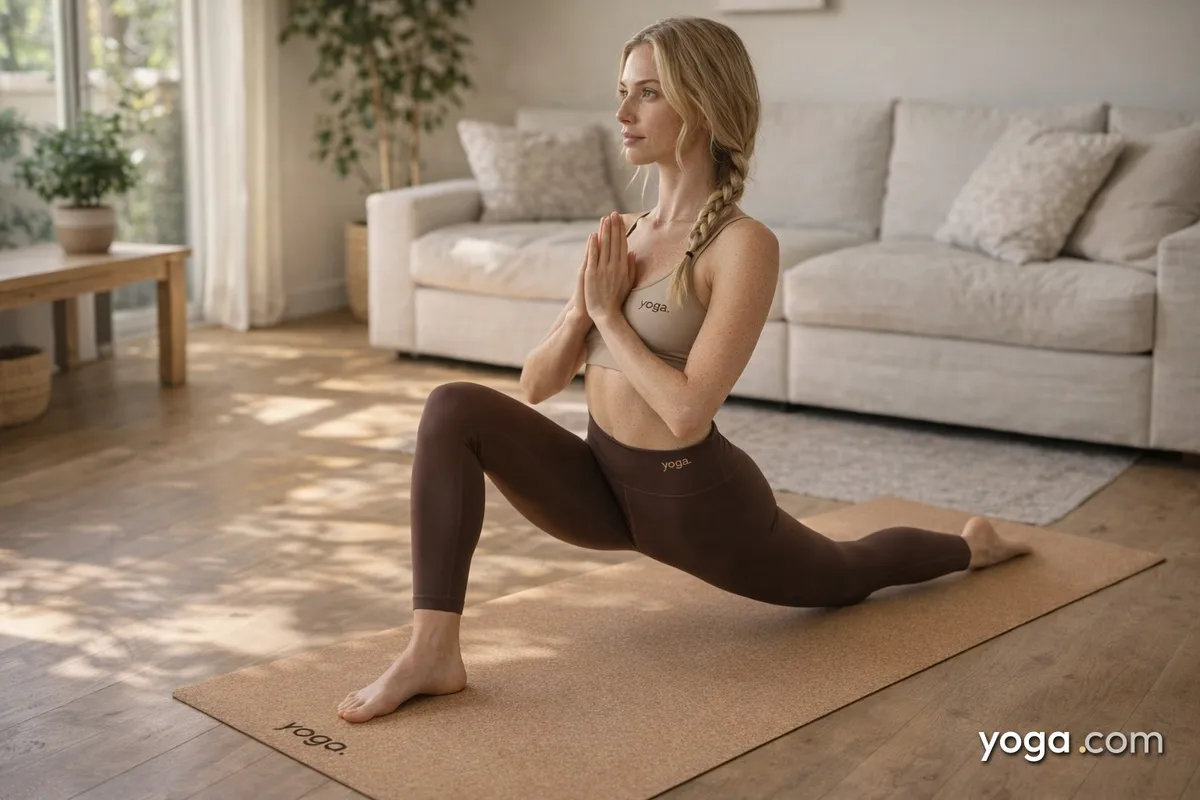
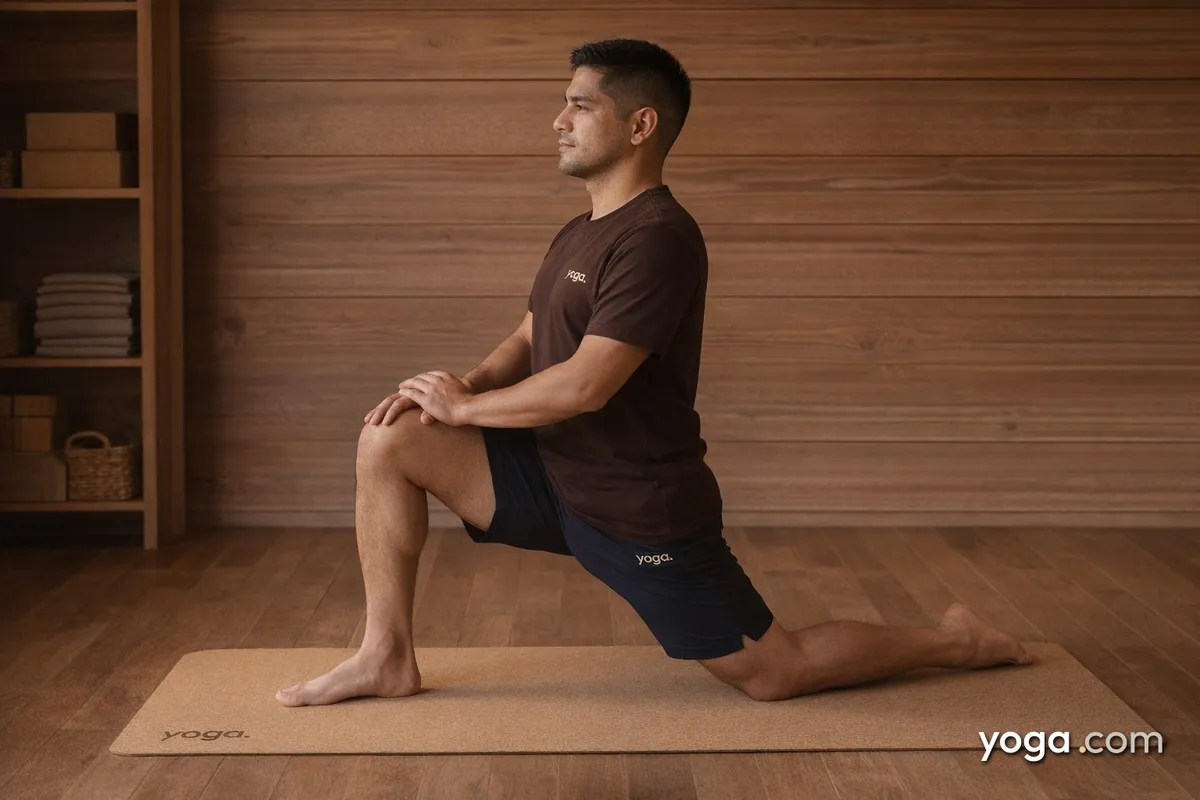
Low Lunge with Left Leg Straight is a kneeling hip-opening pose that places the left knee on the mat while the left leg extends behind you, right foot forward. Its Sanskrit name is Añjaneyāsana (left leg straight) - Añjaneya is an epithet for Hanuman, son of Añjanā - and it belongs to the family of kneeling poses. Accessible to beginners, it appears in warm-up sequences, sun salutation variations, and as a standalone hip flexor stretch.
At a Glance
- Level: Beginner
- Type: Kneeling
- Targets: Left hip flexors, right hip and groin, quadriceps (left), hamstrings (right)
- Good for: Increasing hip-flexor length, building single-leg stability at the pelvis, improving lunge mechanics
How to Do Low Lunge with Left Leg Straight
- Begin in Downward-Facing Dog or on all fours (Table Pose) with your hands shoulder-width apart and fingers spread wide.
- Step your right foot forward between your hands so the right knee aligns directly over the right ankle, shin roughly vertical.
- Lower the left knee to the mat. Slide the left leg straight back until you feel a firm stretch along the front of the left thigh and hip. The top of the left foot can rest on the mat or the toes can tuck under - use whichever keeps the pelvis level.
- Press the left heel actively toward the back wall, engaging the left leg. Avoid letting the left hip collapse outward; draw it gently toward centre.
- Place your hands on your right thigh or bring them to prayer at the chest. Keep the front knee directly over - not past - the ankle.
- Lengthen your tailbone toward the mat and lift the lower abdomen in and up. Stack the shoulders over the hips and extend the crown of the head toward the ceiling. Gaze is forward and slightly downward, or directly ahead.
- Hold for 5-10 breaths, maintaining even pressure through both legs.
- To come out: Place both hands on the mat framing the right foot, tuck the left toes under if they weren't already, and step back to Table Pose or lift into Downward-Facing Dog. Repeat on the second side with the right leg extended.
Benefits
- Stretches the left hip flexors (psoas and iliacus) and the left quadriceps along the front of the extended leg.
- Opens the right groin and inner thigh in the bent-leg position.
- Strengthens the muscles around the right knee and ankle as they stabilise the lunge stance.
- Activates the deep abdominals and spinal extensors required to maintain an upright torso.
- Builds proprioceptive awareness of pelvic alignment - useful preparation for standing balance poses.
Common Mistakes and Alignment Cues
- Front knee drifts inward: Press the right big-toe mound down and firm the outer right hip to track the knee over the second toe.
- Back hip rotates open: Square both hip bones toward the front of the mat; use a gentle internal rotation of the back thigh to level the pelvis.
- Lower back overarches: Draw the lower belly in slightly and lengthen the tailbone down rather than letting the lumbar collapse.
- Weight dumps into the front knee: Actively push the left heel back to share the load between both legs.
- Gaze strains the neck: Keep the chin roughly parallel to the floor and the back of the neck long - no need to crane upward.
Modifications and Props
- Knee padding: Fold a blanket under the left knee if you feel discomfort on the kneecap or shin.
- Blocks under the hands: Place a block on each side of the right foot at the appropriate height to keep the chest lifted if the torso tends to round forward.
- Wall for balance: Practice with the right hand resting on a wall to steady the torso and focus attention on hip alignment.
- Foot position variation: If the top of the back foot is sensitive, tuck the left toes under for a more neutral ankle position and slightly more leg activation.
Cautions
- Knee sensitivity: If you feel sharp or pinching pain in either knee, reduce the depth of the lunge or add a blanket under the back knee.
- Hip or groin tightness: Work gradually into the stretch - avoid forcing the hips square if significant resistance is present.
- Lower back discomfort: Keep the pelvis neutral and the core gently engaged rather than pushing deeper into the backbend through the lumbar.
- Recent lower-body surgery or injury: Use a very conservative range of motion or skip the pose until cleared.
If you're working with an injury or a medical condition, check with a qualified professional before practicing.
Related Poses
- Table Pose - a natural starting position and neutral reset between sides.
- Downward-Facing Dog Pose - the common transition pose into and out of the lunge.
- Hero Pose with Hands on Thighs - a complementary kneeling shape that stretches the quadriceps in a different plane.
- Bridge Pose - a useful counter-pose to open the front of the hips after the lunge.
Put this pose to work in a full practice: A Gentle Yoga Routine for Tired, Low-Energy Days or keep it short with A 10-Move Chair Yoga Sequence for a Midday Reset.