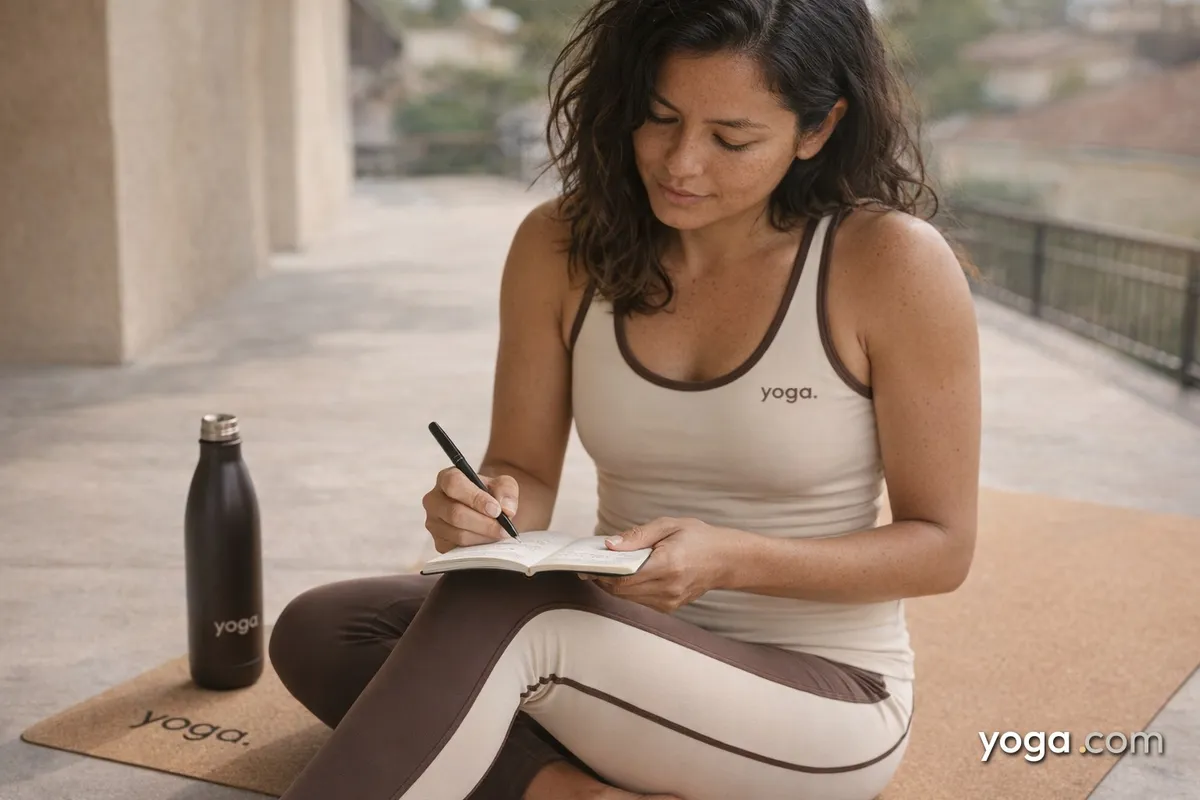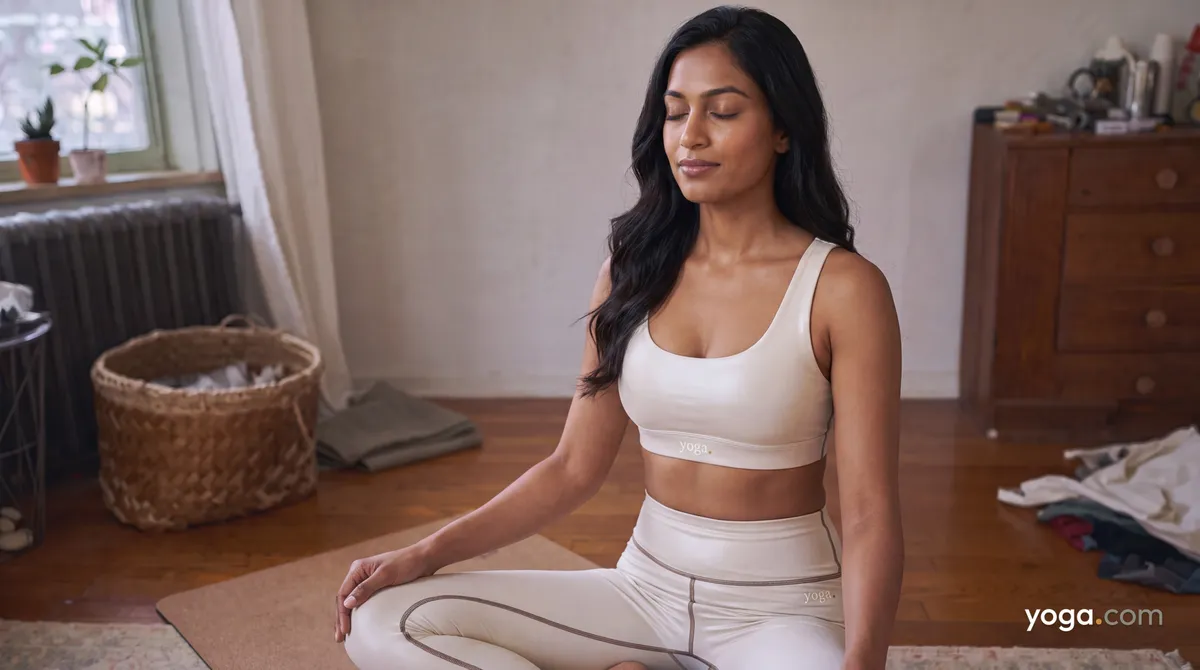
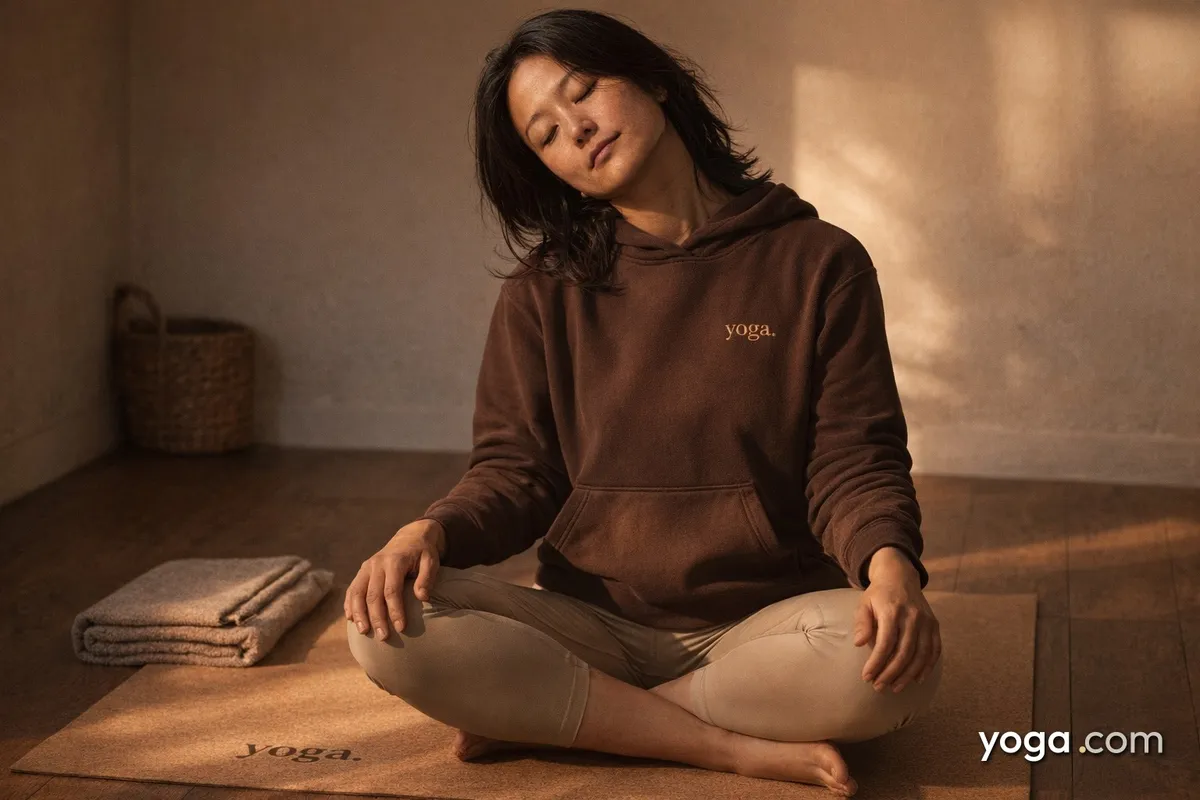
Common sense says that when your limbs are heavy and your mind is foggy, you should either push through a vigorous vinyasa class or skip movement altogether. On days like those, neither serves you. A gentle yoga routine for tired, low-energy days takes a third path: movement designed to work with your body, not against it - permission to slow down and still do something good for yourself.
Why Gentle Yoga Works When You're Running on Empty
Gentle movement isn't a consolation prize for skipping a "real" workout. It's a legitimate tool. According to the National Institutes of Health, scientific evidence shows that yoga supports stress management, mental health, mindfulness, and quality sleep - all of which take a hit on low-energy days.
One finding that may surprise you: sedentary people who regularly complain of fatigue can increase their energy levels by 20% and decrease their fatigue by 65% through regular, low-intensity exercise. Not high-intensity. Low. That's the kind of effort a gentle yoga sequence asks of you. Even more telling: the low-intensity group had a greater reduction in fatigue than the moderate-intensity group - 65% compared to 49%. Doing less, on purpose, may actually serve you better on tired days.
Sleep and energy are deeply linked, too. Studies have found that yoga can help people with insomnia fall asleep faster, sleep longer, and wake up less during the night. Better nights lead to better days. And research shows that a consistent bedtime yoga routine can help prepare your body to fall asleep and stay asleep - so even a short evening session has a ripple effect.
If persistent fatigue is your reality, check with your doctor before starting any new movement practice. Yoga is supportive, not a substitute for medical care.
The Right Mindset Before You Begin
This is not a workout. You are not here to burn calories or build strength today - your real goal is to give your nervous system a chance to downshift. The mindset you bring to your practice matters just as much as the movements themselves.
Short and consistent beats long and occasional every time. After eight weeks of practicing yoga at least twice a week for a total of 180 minutes, participants showed greater muscle strength and endurance, flexibility, and cardio-respiratory fitness. A 15-minute practice you actually repeat is far easier to sustain than an occasional 90-minute class - and with yoga, consistency is what the sleep research generally rewards. Start small. Stay consistent. Your body and nervous system will reward you for it.
A few things that help before you begin: set a timer for 15-20 minutes, dim the lights or close the curtains if that helps, and move at half the pace you think you should. Lower the barrier to entry so far that you can't talk yourself out of it.
Your Gentle Sequence: 7 Poses to Restore Your Energy
Roll out your mat or just use your carpet. You will also want a pillow, a folded blanket, and optionally a yoga block placed nearby before you begin. This sequence stays close to the floor throughout - your heart doesn't have to work hard, and you never have to stand up if you'd rather not.
1. Knees-to-Chest Pose (Apanasana)
Lie on your back and draw both knees gently into your chest. Rock side to side if it feels good. This softly massages the lower back and signals your nervous system that it's safe to slow down. Stay for 10 breaths before moving on.
2. Child's Pose (Balasana)
Kneel and sit your hips back toward your heels. Stretch your arms forward along the floor and let your forehead rest down. Close your eyes and breathe slowly for 8-10 breaths.
- Wide-knee variation: Move your knees toward the edges of your mat and let your belly drop between your thighs. This version gently decompresses the lower back and is especially welcome on tired days.
- If your knees feel pressure: Tuck a folded blanket between your thighs and calves.
- Skip it if: You have an acute knee injury - move straight to the next pose instead.
3. Reclined Twist (Supta Matsyendrasana)
Lie on your back. Draw your right knee to your chest, then let the knee fall across your body to the left while your right arm extends out to the right. Keep both shoulders grounded. Hold for 5-6 breaths, then switch sides.
- Don't force the knee to the floor - let gravity do the work.
- The benefit comes from the shoulder-to-knee opposition, not from depth, so there's no need to press further than your body naturally wants to go.
- If the twist pulls at your lower back, place a folded blanket under the bent knee to shorten the range.
- Recent spinal surgery? Check with your surgeon before any rotational poses.
4. Legs-Up-the-Wall (Viparita Karani)
Scoot your hips close to a wall and rest your legs vertically against it. Let your arms fall open at your sides. Stay here for 5-10 minutes and just breathe.
This is one of the most restorative poses you can do. Legs-Up-the-Wall requires almost no effort, and the gentle elevation reverses the pooling that builds up from sitting all day, easing that heavy-leg feeling that often comes with fatigue. If the backs of your legs are tight, move your hips a foot or two from the wall - a slight bend in the knee is a perfectly valid version of this pose.
- Avoid this pose if: You have glaucoma, uncontrolled high blood pressure, or a history of detached retina, as inverted positions may increase pressure in the eyes - check with your eye doctor first.
- If you're pregnant - especially past the first trimester - avoid long holds lying flat on your back: prop up your chest and head on a bolster or rest on your left side instead, and clear any new routine with your prenatal provider.
5. Supported Bridge (Setu Bandha Sarvangasana - supported variation)
Lie on your back with knees bent and feet flat on the floor. Lift your hips and slide a folded blanket or block under your sacrum - the flat, bony area at the very base of your spine (not under your lower lumbar curve). Then let go completely and let the prop hold you.
- The entire point of Supported Bridge is passive. Your muscles should be doing nothing at all.
- If the prop feels like it is digging into your lower back, slide it slightly lower until it rests under that flat bony area.
- Sacroiliac joint sensitivity? Move slowly in and out of the pose, and come down immediately if you feel any sharp sensation.
6. Reclined Bound Angle (Supta Baddha Konasana)
Lie on your back. Bring the soles of your feet together and let your knees fall open to the sides. Place folded blankets or blocks under your outer thighs if the inner groin stretch feels too intense - most beginners benefit from this support, as it keeps the pose comfortable.
- Don't press your knees toward the floor. Let gravity lead them down in their own time.
- For a deeper opening: place a rolled blanket or bolster under the length of your spine so your chest gently lifts toward the ceiling. This small addition transforms the whole feeling of the pose.
7. Corpse Pose (Savasana)
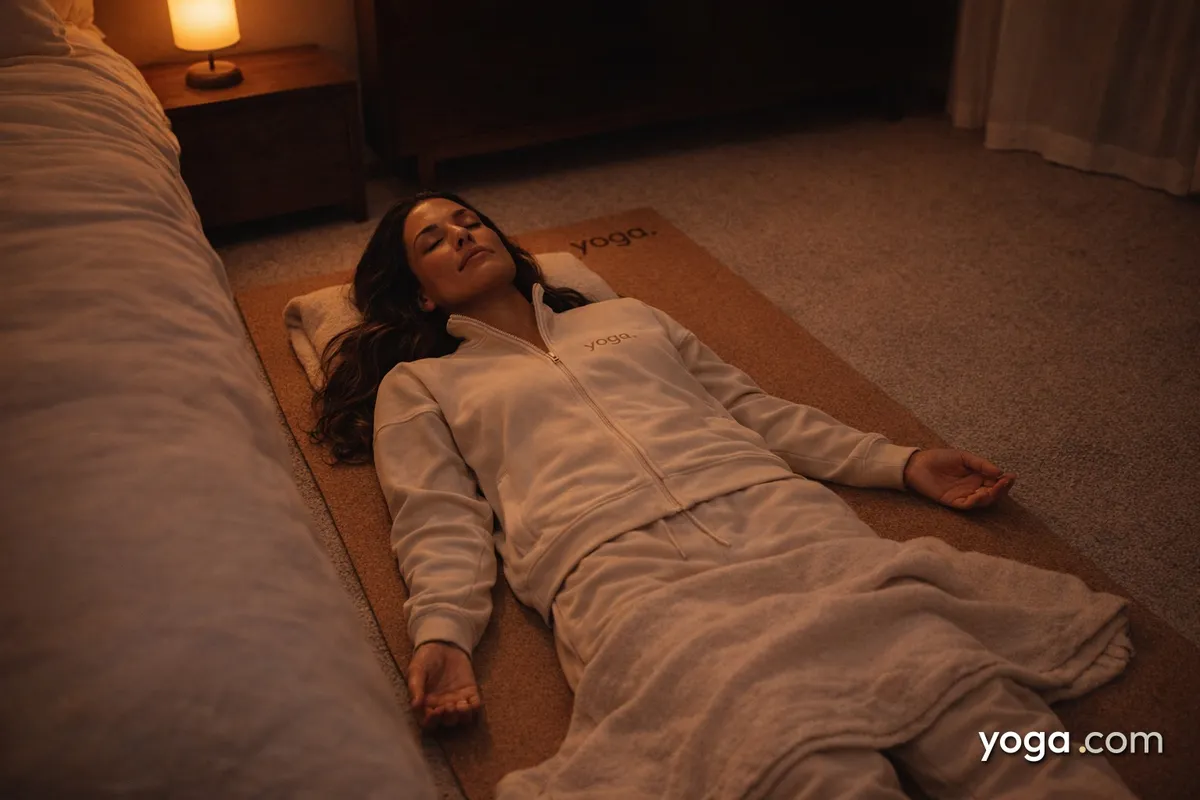
Lie flat on your back, arms slightly away from your sides, palms facing up. Close your eyes. Do nothing for at least 5 minutes.
Don't skip this. Savasana is where your body absorbs everything you have just done. It is not the ending - it is the point of the whole practice.
- Tip: Place a folded blanket under the back of your head to release any tension that builds at the base of the skull when you lie on a hard floor. It's a small change that makes a real difference to how comfortable your Savasana feels.
How to Breathe Through the Whole Practice
Your breath is the thread that holds the sequence together. On low-energy days, a slow, extended exhale signals safety to your nervous system.
Try this: inhale through your nose for a count of 4, exhale through your nose for a count of 6 or 8. A longer exhale is widely used in yoga to encourage the body's rest-and-digest response. You don't need to be perfect. Just keep the exhale a little longer than the inhale.
One cue worth keeping with you throughout the practice: if you've stopped breathing, you've gone too deep into a pose. Ease back until the breath returns. Because you hold each pose for longer in a slow practice, a small alignment issue gets held longer too - so use that extra time to check in with yourself. Soften your jaw and your hands, two of the most common places to hold tension without noticing.
When to Practice and How Often
This sequence works at any time of day, but a gentle yoga routine for tired, low-energy days is especially effective in the evening. Even 15-20 minutes before bed can shift your body into a more restful state. Consistency matters more than duration - a short practice most evenings will serve you far better than a long one once a week.
If fatigue is a persistent issue in your life, it may be worth exploring a regular yoga habit beyond tired days. Gentle yoga has also been shown to ease some of the discomfort of tender, swollen joints for people with arthritis, according to a Johns Hopkins review of 11 studies - so the benefits extend well beyond energy alone.
One Last Thing
On the days when everything feels heavy, you don't need to push through. You need to slow down with intention. This gentle sequence asks almost nothing of you - and gives quite a lot back. Roll out your mat, lie down, and breathe. That's enough.