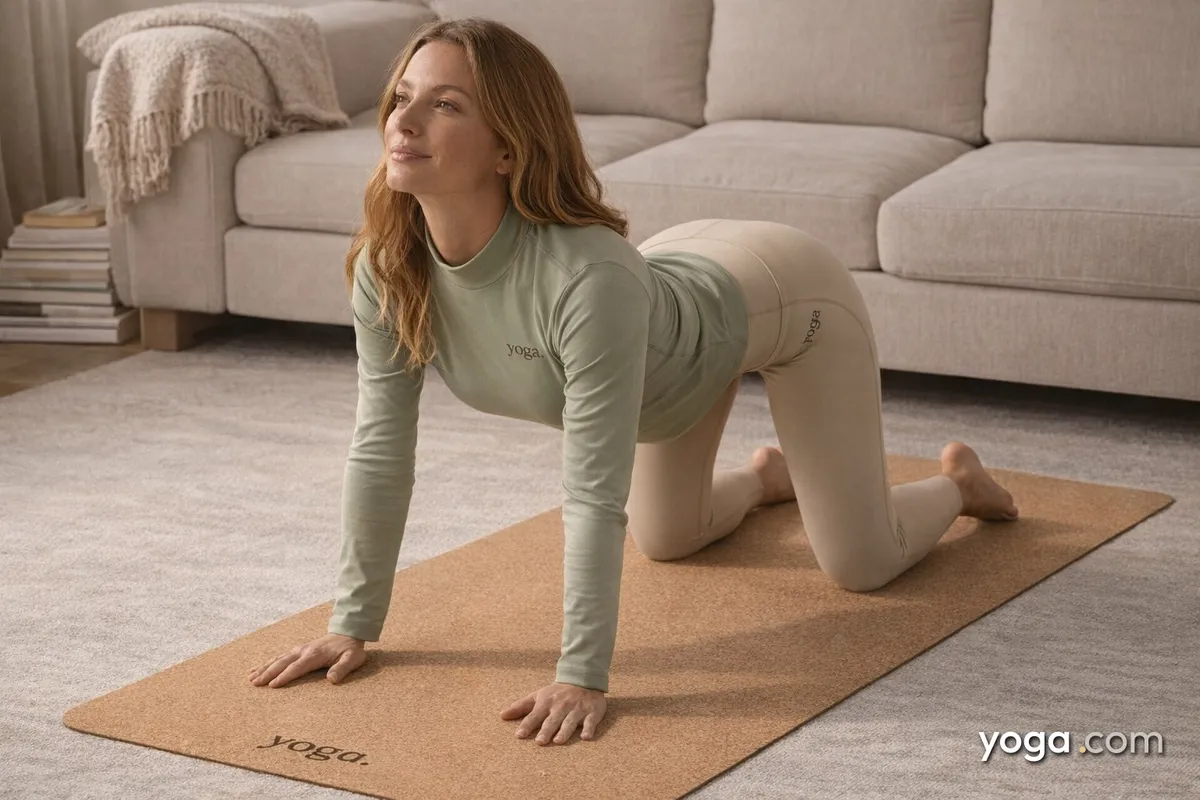
Back pain is one of the most common reasons people step into a yoga class for the first time. Before you unroll a mat, it helps to be clear about what a gentle practice can honestly offer.
One thing before anything else: this page is general information, not medical advice. Yoga for back pain is a subject where the details of your own body matter enormously, and those details belong with your doctor or a physical therapist. Our health and safety disclaimer explains this in full.
Why an Aching Back Finds Its Way to a Yoga Mat
Ordinary life is hard on backs. Desk hours, long drives, awkward lifting, a strange night of sleep - most adults know the feeling of a back that has quietly gone stiff or sore. When that happens, people understandably look for something gentle they can do for themselves, and yoga sits high on that list. Slow movement, steady breathing, and a few quiet minutes of attention simply feel good to many people, and feeling good is a perfectly reasonable thing to want.
What a sore back means, though, varies from person to person, and no article can tell you which story is yours. Working that out is a job for someone who can examine you. If your pain is severe, followed an injury, comes with numbness or tingling, or has stuck around without improving, make the medical appointment first and the class booking second.
Where Gentle Practice Fits
Once a professional knows about your back and is happy for you to move, yoga's contribution is modest and real. It gives you a set time in the week to move gently. It builds the habit of noticing how your body feels before, during, and after movement. And the slow breathing that runs through most classes feels calming to many people, which matters, because living with a grumpy back is tiring in ways that go beyond the physical.
If someone is already treating you - a doctor, a physical therapist, an osteopath - tell them you are thinking about yoga and ask what they would like you to avoid. Most are glad to be asked, and their answer will be far more useful than anything a general article can offer, this one included.
Starting Small on a Tender Back
A good early practice is small and unhurried. A few habits serve nearly everyone:
- Go slowly. There are no prizes for speed in yoga, and rushing is how people get hurt in every kind of movement.
- Stay in a comfortable range. Work where movement feels easy and pleasant. There is no need to chase the edge of a stretch.
- Stop on pain. Gentle effort is fine; pain is a stop sign. Come out of the position, rest, and if the pain keeps returning, bring it to your doctor before you bring it back to class.
- Use support. Blankets, blocks, and cushions exist so that positions can be comfortable. Reaching for them early is a sign of good judgment.
You may notice what this list leaves out: named poses matched to particular kinds of back pain. That is deliberate. Which movements suit your back depends on why it hurts in the first place, and that question is exactly what a physical therapist is trained to answer for you in person.
Choosing a Class and a Teacher
Styles vary widely, and the label on the studio door matters. If you are easing in, slower formats make kinder starting points: gentle classes, restorative classes built around props and long rests, and beginner-level hatha, which moves at a pace that lets you pay attention. Fast, heated, or acrobatic classes ask more of a body than a tender back may want to give on day one, so it is fair to save those for later, if ever.
Whichever class you choose, tell the teacher about your back before things begin, even at a drop-in studio. A good teacher will quietly offer easier versions of poses and will never pressure you into a shape that feels wrong. And if a class leaves you feeling worse, treat that as useful information: try a slower style, a different teacher, or check back in with your doctor before continuing.
A Patient Kind of Progress
Whatever gentle movement gives you tends to arrive quietly. Short, relaxed, regular sessions do more over weeks and months than occasional heroic ones, and a practice you enjoy is the one you will keep. Let consistency do the work, and let it take its time.
Hold on to the bigger picture, too. A calm home practice can be a lovely companion to good professional care, and it does its best work in exactly that role. Take the condition-specific questions to your doctor or physical therapist, take the slow breathing and the quiet half hour for yourself, and let each do what it does well.