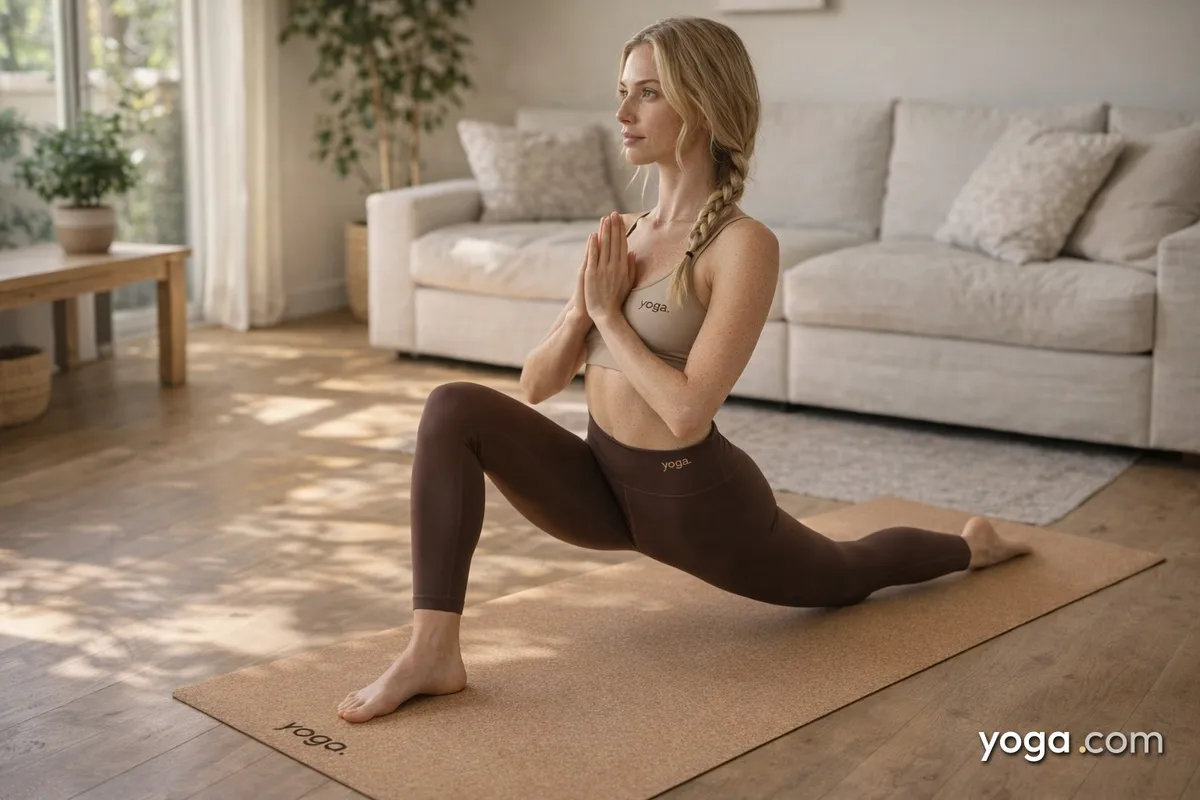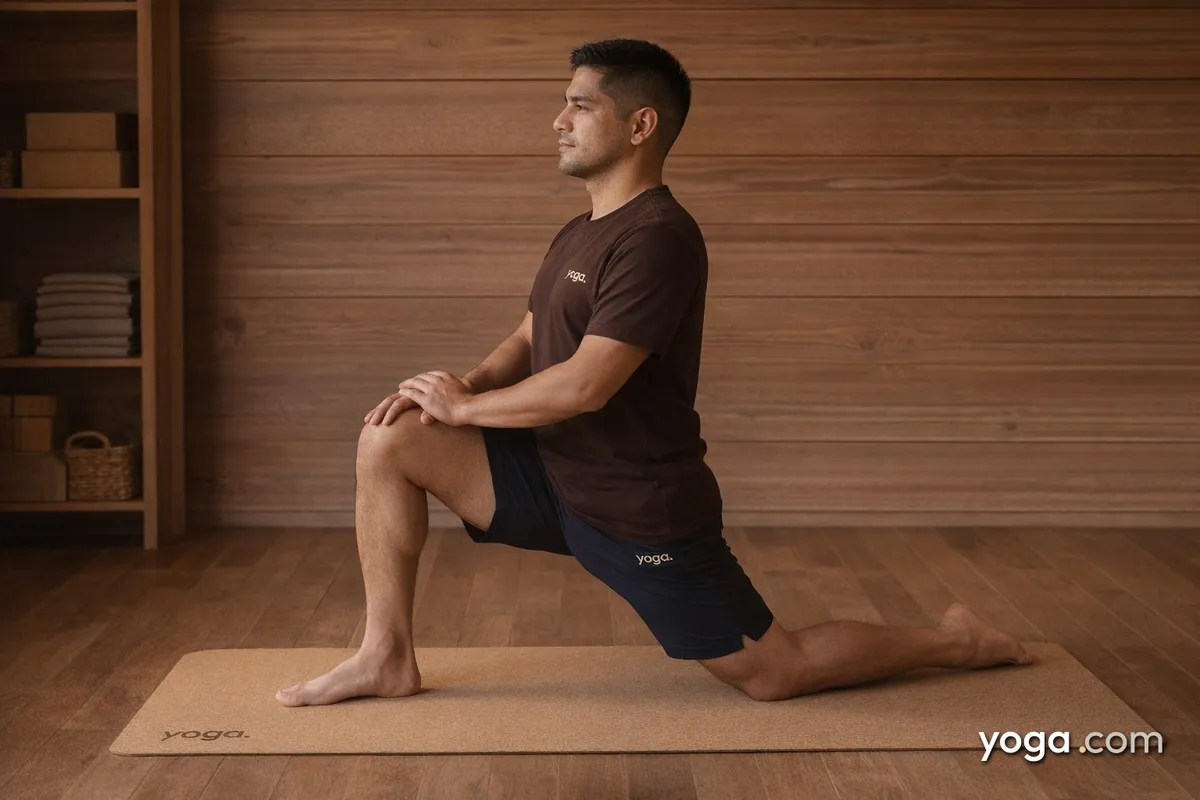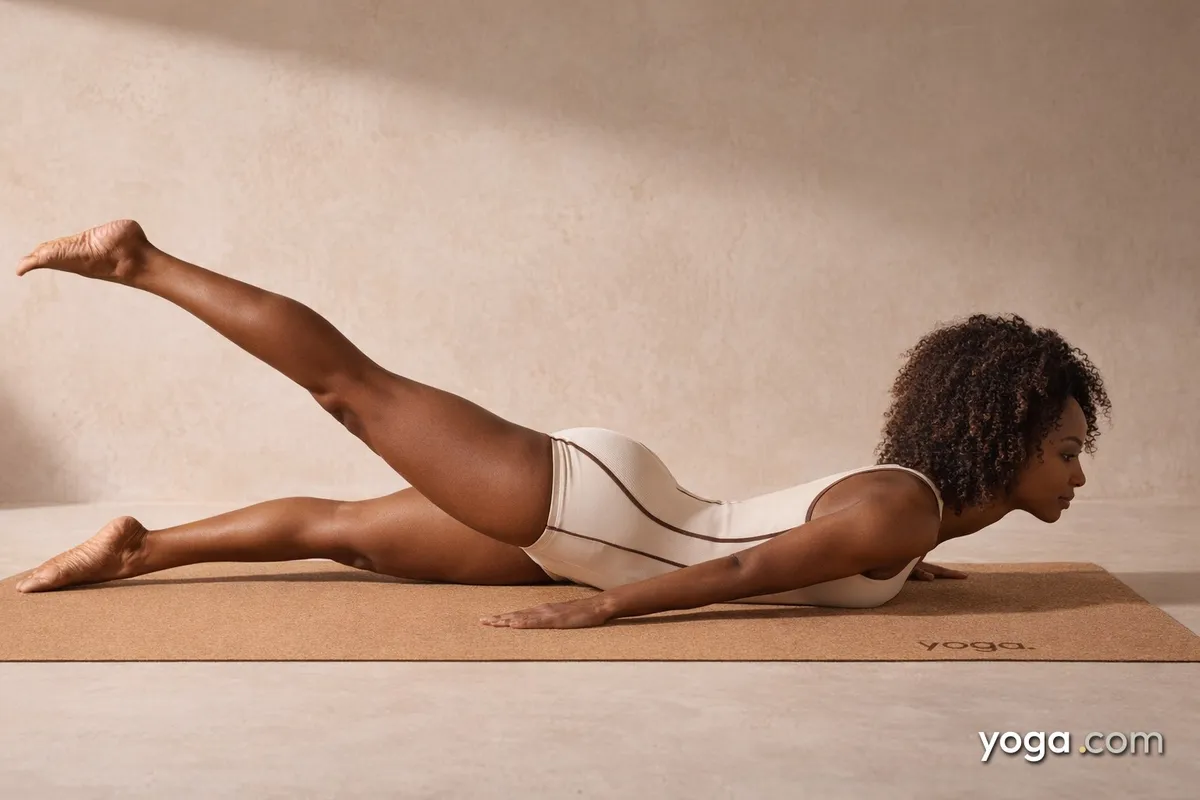
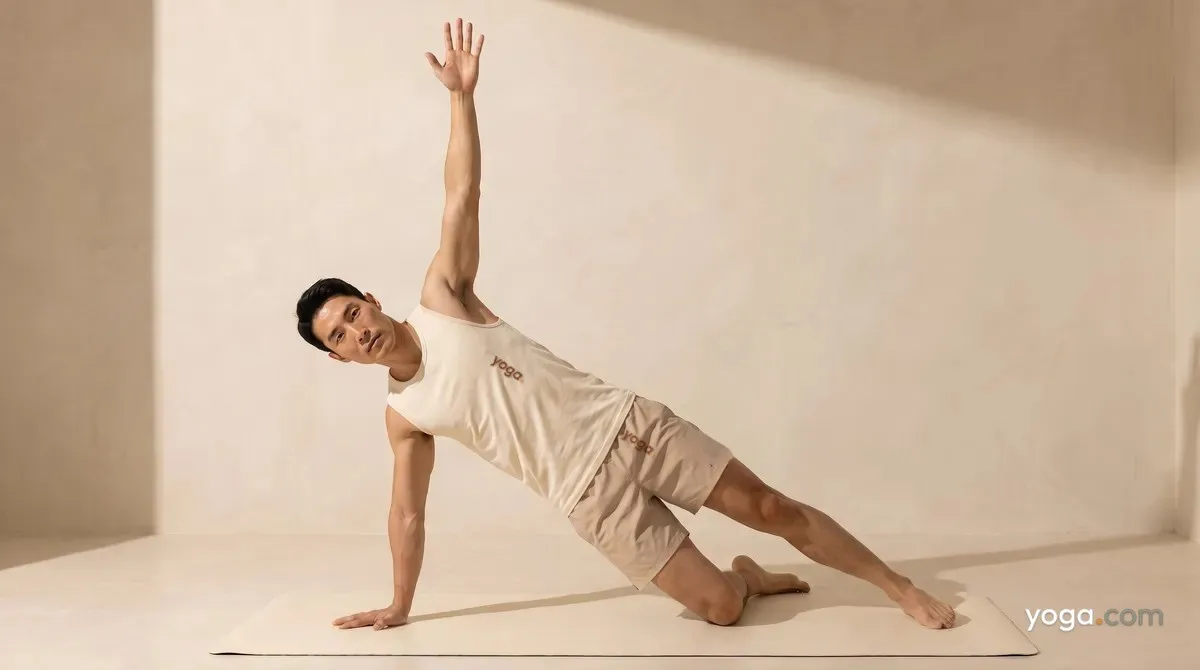
Half Side Plank Pose is a supported arm-balance that introduces you to the lateral line of the body while keeping one knee on the mat for stability. Its Sanskrit name, Vasiṣṭhāsana (half, right hand), honors the sage Vasiṣṭha - translated loosely as "most excellent" - and the "half" variation signals that the bottom knee stays down, reducing the load on the supporting arm. You'll typically encounter this pose after Plank Pose as a way to build toward the full expression of the shape.
At a Glance
- Level: Beginner
- Type: Arm Balance
- Targets: Wrists and forearms, lateral core (obliques), shoulder girdle, inner thighs
- Good for: Building wrist-bearing strength, developing lateral core engagement, improving shoulder stability
How to Do Half Side Plank Pose on Right Hand
- Begin in Plank Pose with your wrists directly under your shoulders, body in one long line from crown to heels.
- Shift your weight onto your right hand and roll onto the outer edge of your right foot, stacking your left foot on top of the right - or keeping both feet on the mat if that feels unsteady.
- Lower your right knee to the mat, placing it directly below your right hip. Keep the right shin extending back at roughly a 45-degree angle behind you so the knee and hip are aligned.
- Press firmly through the right palm - spread all five fingers wide - and straighten the right arm fully without locking the elbow. Draw the shoulder blade toward the spine to avoid sinking into the joint.
- Stack your left hip over the right and lift it away from the floor so your body forms a straight diagonal line from right knee to left foot to crown of head.
- Extend your left arm toward the ceiling, palm facing forward, and gaze either straight ahead or gently up toward the left hand.
- Hold for 3-5 breaths, keeping the bottom waist lifted and the top hip pressing forward to prevent the pelvis from rolling back.
- To come out, lower the left hand to the mat, return to Plank Pose, and take a breath before repeating on the left side or moving into Child's Pose to rest.
Benefits
- Strengthens the wrist extensors and forearm muscles through sustained weight-bearing.
- Activates and strengthens the obliques and lateral stabilizers of the trunk.
- Builds rotator-cuff and serratus anterior engagement to support the shoulder joint.
- Stretches the left side of the torso, intercostals, and hip flexors.
- Develops proprioceptive awareness of spinal alignment in a lateral plane.
- Establishes the foundational coordination needed for full Side Plank Pose.
Common Mistakes and Alignment Cues
- Sinking into the bottom shoulder: Actively push the floor away with your right hand so the shoulder girdle lifts, keeping the right side of the chest open rather than collapsed.
- Bottom hip sagging toward the mat: Engage the right-side obliques to lift the right hip and maintain a straight line from knee to crown - imagine a board running along your body's underside.
- Top hip rolling backward: Draw the left hip slightly forward and firm the inner thighs together; this keeps the pelvis squared and protects the lower back.
- Fingers gripping or wrist collapsing: Spread the fingers evenly, press the base of the index finger firmly down, and micro-bend the elbow if wrist pressure feels sharp.
- Neck straining to look up: Keep the neck in line with the spine - gaze straight ahead is perfectly fine and reduces unnecessary tension in the cervical muscles.
Modifications and Props
- Forearm variation: Lower onto the right forearm instead of the hand to reduce wrist load. Place the forearm parallel to the short edge of the mat, elbow under the shoulder.
- Block under the hip: Rest the right hip on a block for extra support while you build the lateral strength to hold the lift independently.
- Wall support: Practice with the soles of both feet pressing into a wall; the resistance helps you feel the full-body engagement without fear of tipping.
- Top hand on hip: If balancing the raised arm creates wobble, rest the left hand on the left hip to narrow the balance challenge and focus attention on the core lift.
Cautions
- Wrist sensitivity: If you feel sharp or pinching sensations in the wrist, shift to the forearm variation or place a folded blanket under the heel of the hand to reduce extension angle.
- Shoulder instability: Approach this pose gradually if you have a history of shoulder impingement; keep the movement slow and stop if you feel grinding or catching in the joint.
- Knee discomfort: Place a folded blanket under the bottom knee for cushioning; if pressure persists, rest and consult a teacher about alternative alignment.
- Recent wrist fracture or surgery: Wait for full clearance before loading the wrist in extension.
If you're working with an injury or a medical condition, check with a qualified professional before practicing.
Related Poses
- Plank Pose - the natural starting and ending point for this shape; builds the base-level wrist and core strength required.
- Downward-Facing Dog Pose - a useful counter-pose and warm-up that decompresses the wrists and opens the shoulders after the lateral load.
- Side Plank Pose on Left Hand, Legs Together - the direct mirror of this pose; practice both sides to balance the body evenly.
- Upward-Facing Dog Pose - a complementary backbend that continues to build shoulder-girdle strength and wrist resilience in the same arm-balance family.
Looking for a well-rounded sequence to practice these poses in context? See A Gentle Yoga Routine for Tired, Low-Energy Days and A 10-Move Chair Yoga Sequence for a Midday Reset.