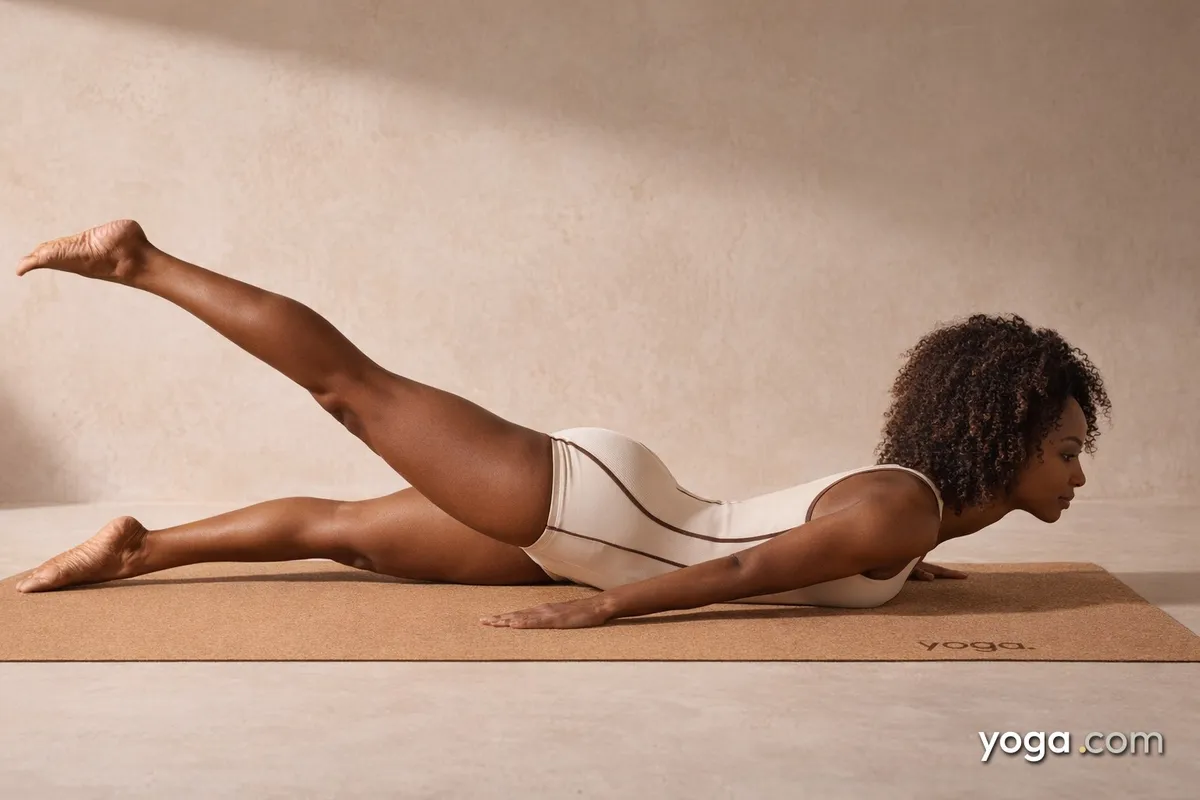
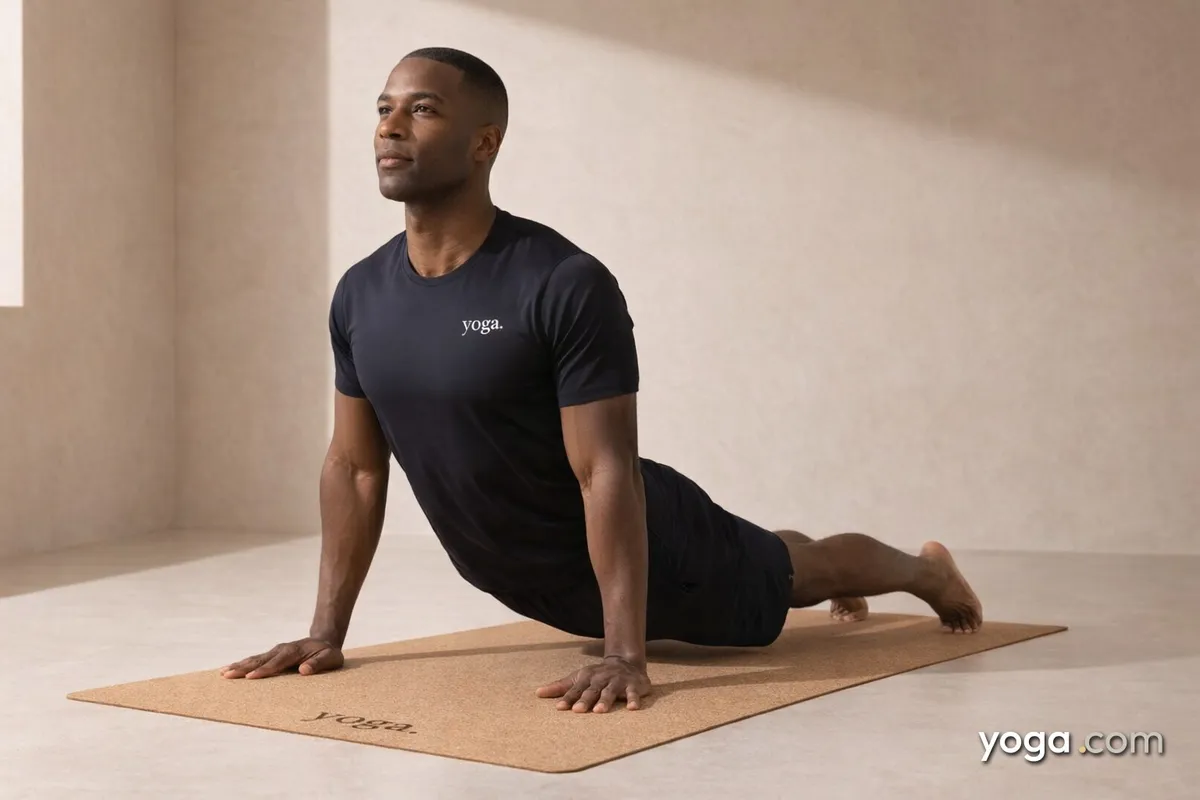
Upward-Facing Dog Pose - Ūrdhva Mukha Śvānāsana, literally "upward-facing dog posture" - is a prone backbend in which the arms press the torso fully off the floor while the tops of the feet root into the mat. It appears as a key transition in Sun Salutations and stands equally well as a standalone heart-opener in any sequence.
At a Glance
- Level: Beginner
- Type: Backbend
- Targets: Spine (thoracic and lumbar extension), chest and anterior shoulders, hip flexors, wrists and forearms
- Good for: Building spinal extensor strength, opening the chest and front body, developing shoulder stability
How to Do Upward-Facing Dog Pose
- Lie face down on your mat with your legs extended hip-width apart, the tops of your feet flat on the floor.
- Place your palms beside your lower ribs - roughly in line with your last floating rib - fingers spread wide and pointing forward.
- Hug your elbows toward your sides; they should be directly above your wrists, not flared out.
- Press firmly through your palms and straighten your arms, lifting your chest, ribcage, and hips completely off the mat. Only your hands and the tops of your feet remain on the floor.
- Roll your inner thighs upward and firm your legs without locking the knees; keep the legs active so the lower back stays long rather than compressed.
- Draw your shoulder blades toward each other and down the back, then lift the sternum forward and up. Your gaze travels slightly upward - chin level to gently raised - without cranking the neck.
- Hold for 1-5 breaths, keeping the arms straight and the chest lifted throughout.
- To release: bend the elbows and lower your torso slowly back to the mat, or press back directly into Downward-Facing Dog Pose.
Benefits
- Strengthens the spinal extensors, glutes, and posterior legs.
- Stretches the chest, anterior shoulders, and hip flexors.
- Builds strength and stability in the wrists, forearms, and shoulders.
- Improves active thoracic extension, which counteracts prolonged forward-flexed postures.
- Develops the arm and core control needed for more advanced backbends and arm-supported transitions.
Common Mistakes and Alignment Cues
- Thighs resting on the mat. If the legs stay down, this becomes Cobra. Press through the tops of your feet and straighten the arms fully until the thighs clear the floor.
- Shoulders climbing toward the ears. Actively slide the shoulder blades down the back before and during the lift; think of making space between your ears and your shoulders.
- Elbows flaring wide. Keep the inner elbows turning slightly forward and the upper arms parallel; this protects the wrists and engages the triceps evenly.
- Lower back compression. Rather than hinging from the lumbar, press the floor away and lengthen from the tailbone toward the heels while lifting the sternum forward - length before height.
- Passive neck. Let the lift in the chest lead; the head follows. If the cervical spine feels crunched, keep the gaze forward rather than up.
Modifications and Props
- Blocks under the hands: Place a block (flat or medium height) under each palm. The added height reduces the range of spinal extension and takes pressure off the wrists, useful when building strength.
- Rolled blanket under the ankles: If the tops of your feet are sensitive or your ankles are stiff, place a folded blanket beneath your ankles for cushioning and ease.
- Cobra Pose as a preparation: If fully straightening the arms strains the lower back, practice Cobra first with the elbows bent, keeping a slight curve in the arms, until the spinal extensors are stronger.
- Wall variation: Stand facing a wall, place your palms at chest height, and press into a standing backbend. This teaches the shoulder and chest action with no load on the wrists or spine.
Cautions
- Wrist sensitivity: Distribute weight evenly across all four corners of the palm; avoid dumping weight into the heel of the hand. Take breaks or use blocks if the wrists fatigue quickly.
- Lower back discomfort: Emphasize leg engagement and the lengthening action of the tailbone before increasing the height of the backbend. Sharp pain in the lumbar is a signal to reduce the range or return to Cobra.
- Shoulder or rotator-cuff issues: Keep a microbend in the elbow if full extension provokes shoulder pinching, and confirm the shoulder blades are moving toward each other rather than winging.
- Pregnancy (second trimester onward): Prone backbends are generally not appropriate; substitute a supported standing or seated chest-opener.
If you're working with an injury or a medical condition, check with a qualified professional before practicing.
Related Poses
- Half Cobra Pose - a preparation that builds spinal extension with less demand on the arms
- Cobra Pose - the natural precursor with bent elbows; master it before fully straightening the arms
- Downward-Facing Dog Pose - the most common counter-pose, lengthening the spine and backs of the legs after the backbend
- Bow Pose - a next-step prone backbend that deepens thoracic and hip-flexor opening
See also: A Gentle Yoga Routine for Tired, Low-Energy Days and A 10-Move Chair Yoga Sequence for a Midday Reset.