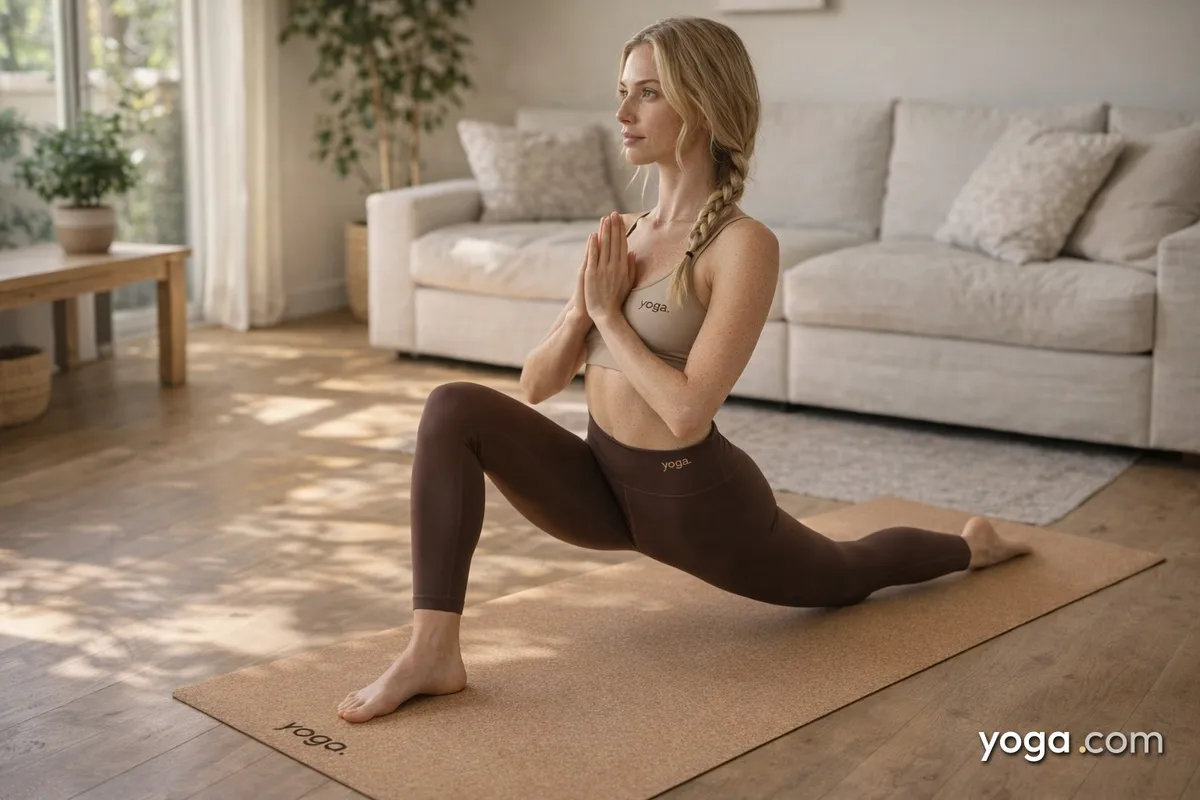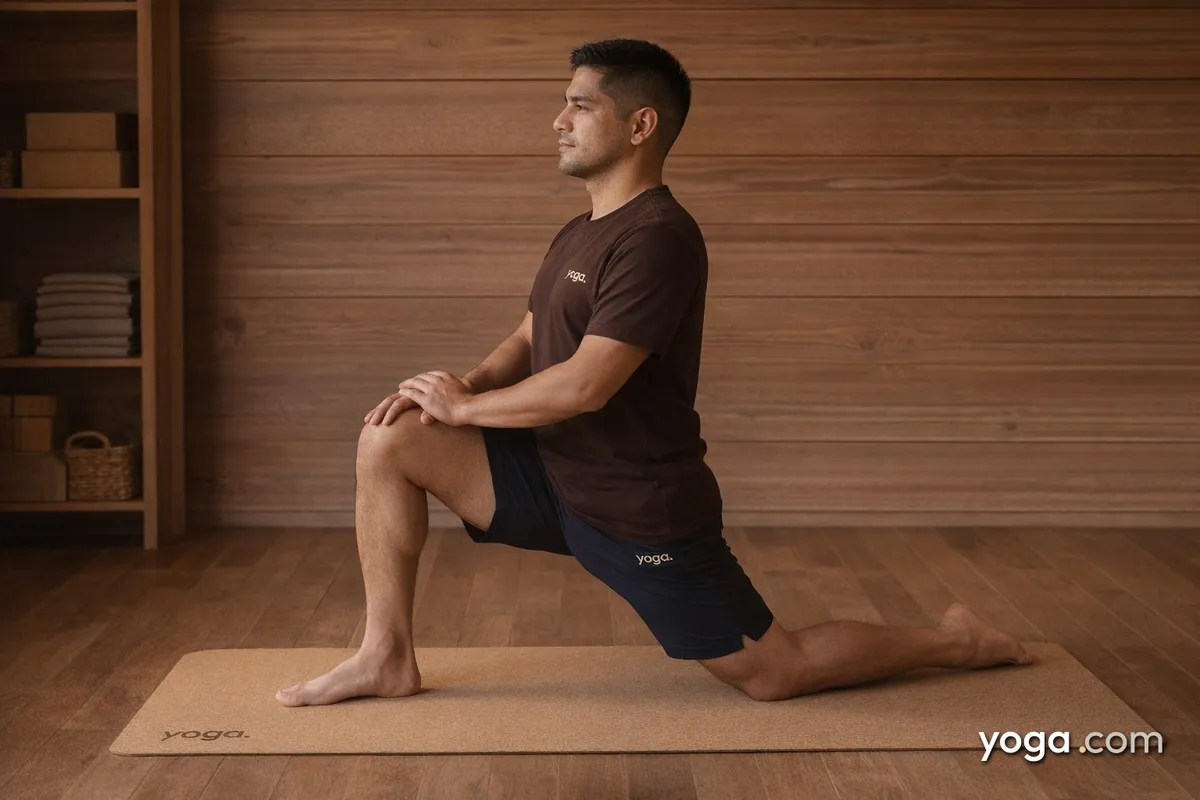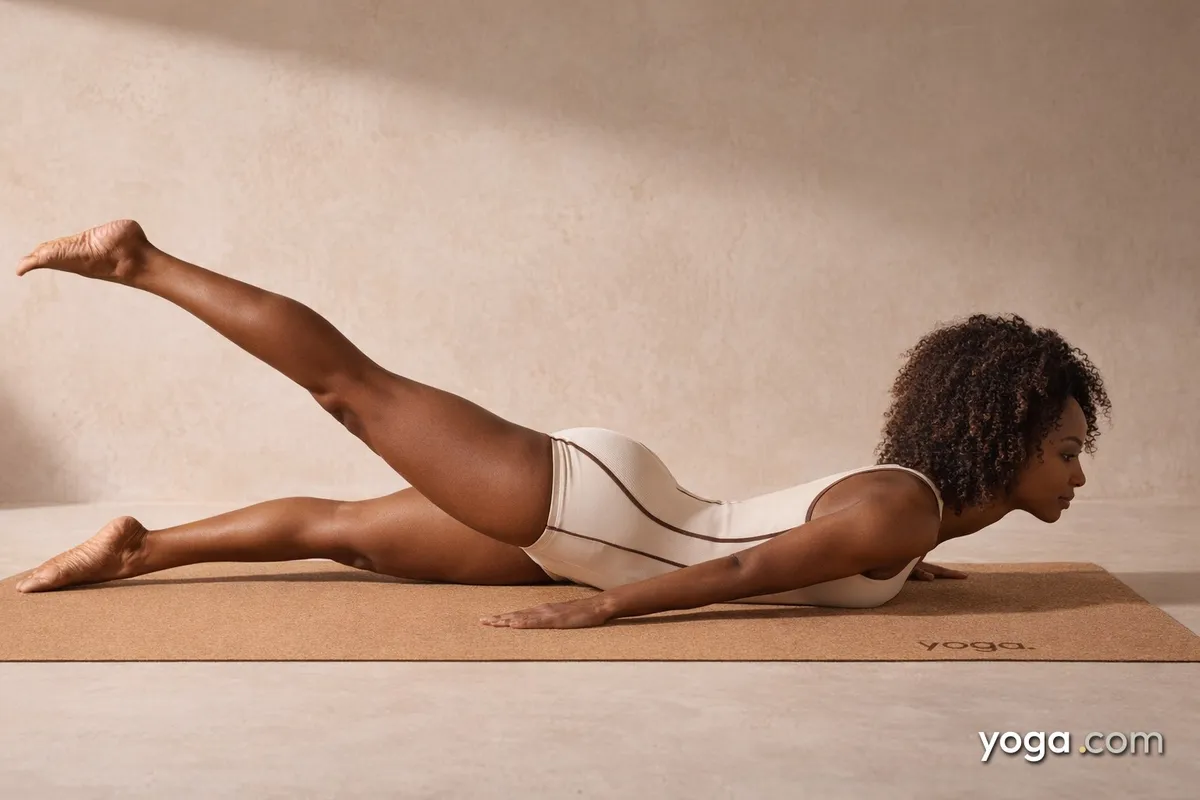
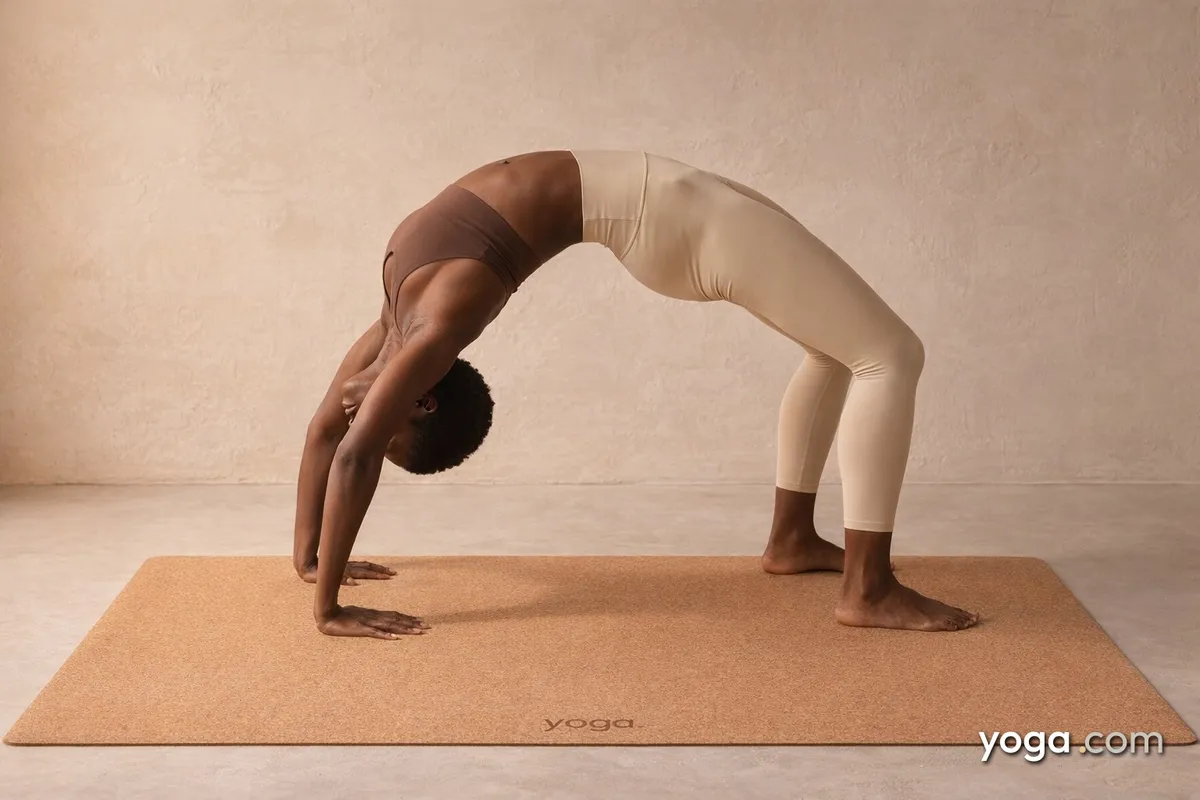
Ūrdhva Dhanurāsana - upward bow - is a full-wheel backbend that asks your entire front body to open at once: ankles, hip flexors, abdomen, chest, and shoulders all lengthen while the posterior chain fires to hold you there. It is one of yoga's most demanding and rewarding shapes, and arriving in it safely is a process worth respecting.
At a Glance
- Level: Advanced
- Type: Backbend
- Targets: Spinal extensors, gluteus maximus, hip flexors (rectus femoris, psoas), pectorals, anterior deltoids, wrist flexors
- Good for: Spinal mobility, shoulder and chest opening, hip-flexor lengthening, full-body integration
How to Do Upward Bow Pose
Coming in
- Set your foundation. Lie on your back with knees bent and feet flat on the mat, hip-width apart, heels close enough that your fingertips can just graze them. Place your palms beside your ears, fingers pointing toward your shoulders, elbows pointing straight up toward the ceiling.
- Root your feet and engage your legs. Press all four corners of each foot evenly into the mat. Firm your inner thighs and draw them parallel - avoid letting the knees splay wide. This leg work protects the lumbar spine throughout the pose.
- Press to the crown of your head. On an exhale, press down through your hands and feet and lift your hips and chest enough to place the crown of your head lightly on the mat. Pause here and check that your elbows are stacked directly above your wrists - not flaring out. If they are drifting wide, walk your hands a few centimeters closer together and re-stack before continuing.
- Inhale and press to full arm extension. On a full inhale, drive firmly through your palms, straighten your arms, and lift your head clear of the mat. Let the breath actively support the chest expansion as your sternum rises. Simultaneously press through your feet to lift the hips high. Your weight is now distributed between all four limbs.
- Refine the shape. Walk your feet a touch closer to your hands if your range allows, deepening the arc. Keep your thighs parallel. Draw your shoulder blades toward each other without crunching the neck. Let your head hang freely between your arms - do not strain to look forward. Breathe fully for three to five cycles.
Coming out
- Tuck your chin slightly, bend your elbows, and lower yourself slowly - hips descend last - until the back of your head, then your shoulders, then your spine returns to the mat with control.
- Hug both knees to your chest and rock gently side to side to release the lumbar spine before your next movement.
Benefits
- Spinal extension mobility: Moves the spine through a deep backbend range, maintaining length and articulation through each vertebral segment.
- Hip-flexor lengthening: With the hips elevated, the rectus femoris and psoas are placed under a significant eccentric stretch.
- Shoulder and chest opening: Full arm extension overhead lengthens the pectorals and anterior deltoids and improves shoulder-flexion range of motion.
- Posterior-chain activation: The glutes, hamstrings, and spinal extensors work isometrically to sustain the lifted position.
- Wrist and forearm strength: Bearing load through the palms in extension builds wrist stability and forearm muscular endurance.
Common Mistakes and Alignment Cues
- Elbows flaring wide. Splaying elbows shifts load onto the outer wrists and reduces pressing power. Keep elbows shoulder-width and stacked over wrists from step 3 onward.
- Feet turning out. External rotation of the feet compresses the sacroiliac joint and narrows the base. Keep feet parallel and hip-width throughout.
- Knees splaying. When the inner thighs release, the lumbar spine bears undue compression. Maintain active inner-thigh engagement so the knees track over the second toe.
- Gripping the neck. Attempting to look forward crunches the cervical spine. Let the head hang heavy - your gaze naturally falls toward the floor behind you.
- Skipping the crown-of-head check. Going straight from the floor to full extension without pausing at the crown means elbow alignment goes unchecked. Always use the step-3 pause to verify stacking before you press up.
Modifications and Props
Not yet on the floor - Half Wheel with a block: If full arm extension is not accessible, practice Bridge Pose with a block under the sacrum. This builds the spinal extension and hip-lift pattern without wrist load. Once Bridge Pose is comfortable and your shoulder flexibility is growing, you are closer to the floor version.
Blocks under the hands: Placing two blocks at their lowest height under your palms reduces the wrist extension angle and brings the floor closer to your hands, making the press-up more accessible for practitioners with limited shoulder flexion.
Strap above the elbows: Loop a strap around your upper arms just above the elbows at shoulder width. The strap provides tactile feedback to keep elbows from flaring without requiring constant mental effort.
Advanced progression - wall walk-downs: Once you are comfortable coming up from the floor, wall walk-downs offer a controlled path toward unassisted drop-backs. Stand an arm's length from a wall, reach hands overhead and back to contact the wall, then walk the hands down toward the floor in small steps. This builds the spatial awareness, shoulder mobility, and nervous-system confidence that free drop-backs require. Treat it as its own progression, not a substitute for floor work.
Cautions
Avoid or approach with care if you have acute wrist, elbow, or shoulder injuries, active lumbar disc issues, or unmanaged high blood pressure. Students with neck injuries should take particular care not to compress the cervical spine on the way in or out. If you are new to backbends, spend several months developing Bridge Pose and Camel Pose with Palms Set Against Feet before attempting full Wheel. If you're working with an injury or a medical condition, check with a qualified professional before practicing.
Related Poses
- Bridge Pose - the primary preparatory backbend; establishes hip lift and spinal extension before adding arm load.
- Camel Pose with Palms Set Against Feet - builds the thoracic and shoulder extension needed to bring the hands to the mat.
- Upward-Facing Dog Pose - trains arm extension and chest opening in a weight-bearing position.
- Bow Pose - develops the posterior-chain strength and full-front-body stretch that Wheel demands.