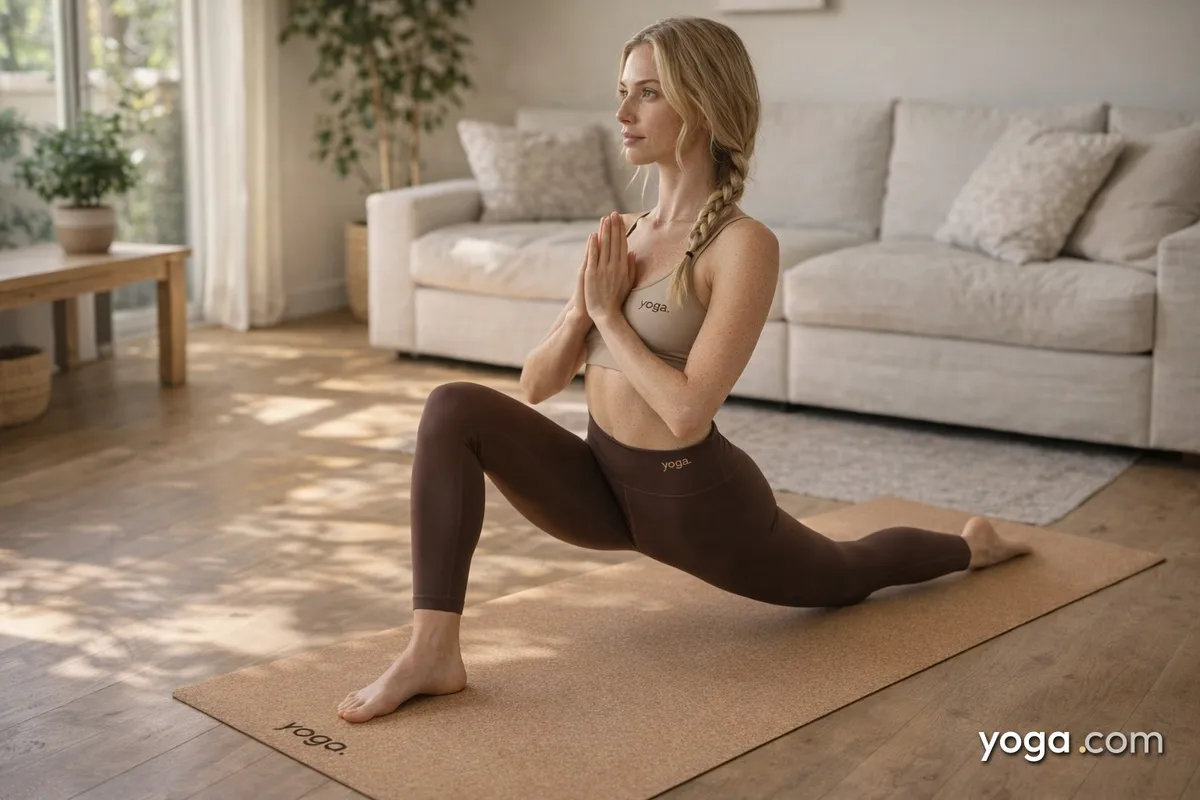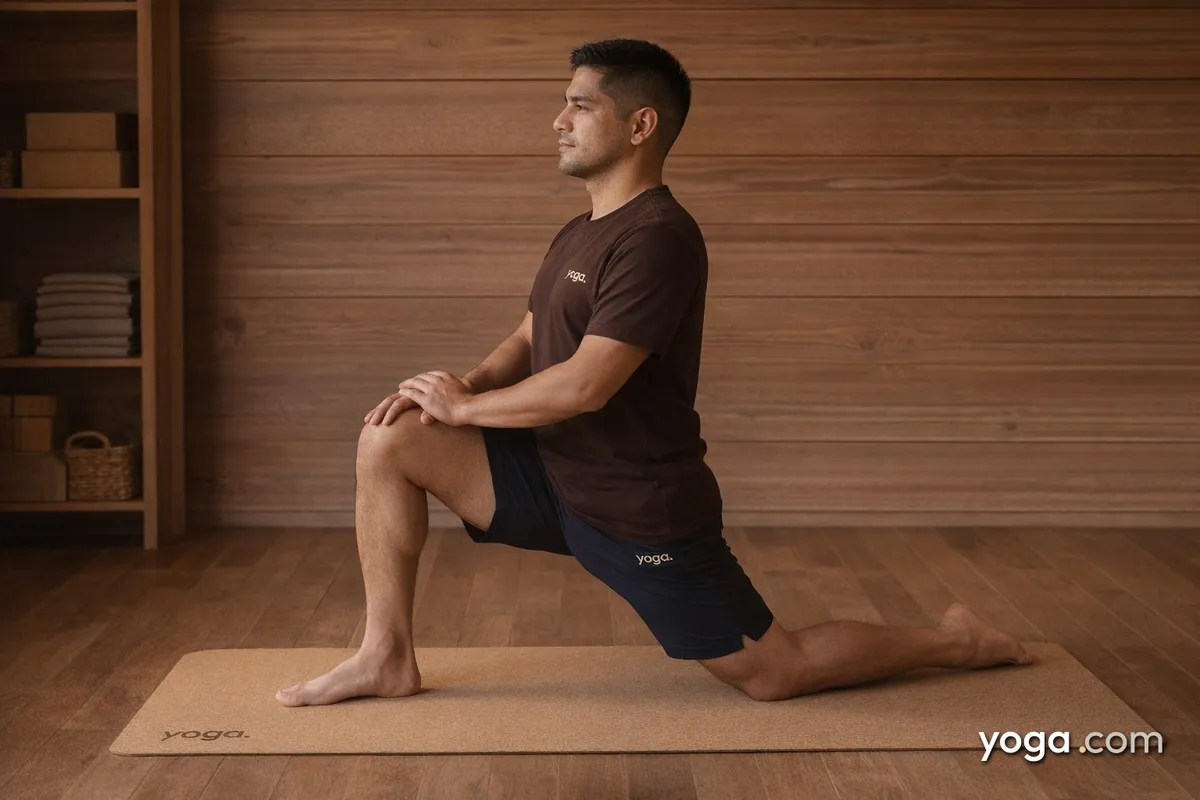
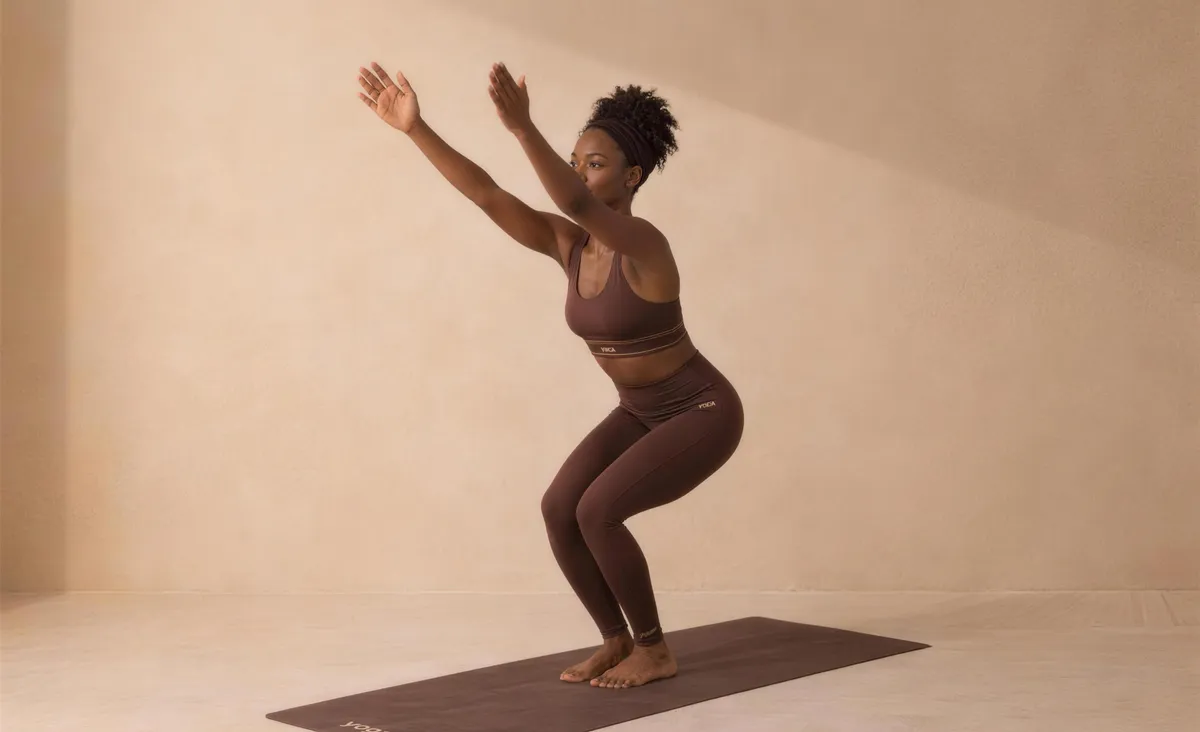
Chair Pose, known in Sanskrit as Utkaṭāsana - literally "fierce" or "intense" pose - is a standing posture that mimics the act of sitting back into an invisible chair. It builds heat quickly and appears in sun salutation B as well as standing sequences, making it a versatile anchor pose throughout a practice.
At a Glance
- Level: Beginner
- Type: Standing
- Targets: Quadriceps, glutes, core, shoulders
- Good for: Building lower-body strength, improving postural endurance, developing ankle stability
How to Do Chair Pose
- Begin in Mountain Pose with your feet together (or hip-width apart if that feels more stable). Ground down evenly through all four corners of each foot.
- Inhale and sweep your arms overhead, palms facing each other, shoulder-distance apart. Draw your shoulder blades down your back so your ears stay clear of your shoulders.
- Exhale and bend your knees, sending your hips back and down as if lowering toward a chair behind you. Aim to bring your thighs as close to parallel with the floor as your strength allows - parallel is an aspiration, not a requirement.
- Shift your weight into your heels until you could just lift your toes off the mat, but keep all ten toes down. Your knees should track in line with your second and third toes.
- Lengthen your tailbone toward the floor to prevent the lower back from over-arching. Engage your core gently by drawing the low belly in.
- Lift your chest and gaze forward or slightly upward - whichever allows you to keep the back of your neck long.
- Hold for 5-10 breaths, pressing actively through your arms while grounding through your feet.
- To come out, straighten your knees on an inhale, returning to Mountain Pose, then lower your arms on an exhale.
Benefits
- Strengthens the quadriceps, hamstrings, and glutes through an isometric hold
- Builds stability in the ankles and knees by challenging balance under load
- Engages and tones the deep core muscles needed to support an upright spine
- Strengthens the shoulder girdle and upper back through sustained arm elevation
- Increases muscular endurance in the lower body
- Stretches the chest and front of the shoulders when the arms are raised and the thoracic spine extends
Common Mistakes and Alignment Cues
- Knees diving inward: Press your knees apart so they stay aligned over your second and third toes; imagine gripping a block between the thighs to activate the outer hips.
- Weight in the toes: Shift your hips back until you feel your heels heavy; lifting your toes briefly can help you find this without actually letting them rise.
- Lower back over-arching: Actively lengthen your tailbone toward the floor and draw the front ribs down; avoid letting the belly spill forward.
- Shoulders creeping toward the ears: Re-broaden through the collarbones and slide the shoulder blades down; create space between your ears and your shoulders even as the arms lift.
- Chest collapsing forward: Keep a gentle lift through the sternum; think about lengthening the spine rather than just dropping the hips lower.
Modifications and Props
- Wall support: Stand with your back a few inches from a wall and lower until the wall supports your mid-back. This lets you focus on leg strength without worrying about balance.
- Block between the thighs: Place a yoga block between your upper thighs and gently squeeze it throughout the pose to encourage inner-thigh engagement and keep the knees tracking correctly.
- Hands at heart center: If raising the arms overhead strains the shoulders or neck, bring your palms together at your chest in Anjali Mudra instead.
- Raised heels: If your heels lift when you bend your knees, place a folded blanket or a wedge under them to make the shape accessible while your ankle mobility develops.
Cautions
- Knee sensitivity: Keep the bend shallow enough that you feel work in the thighs rather than strain in the joint; never push through sharp pain in the knee.
- Low back discomfort: Prioritize the tailbone tuck and core engagement; reduce the depth of the squat if you feel compression in the lumbar spine.
- Shoulder or neck issues: Use the hands-at-heart-center modification or keep the arms at a lower angle that stays pain-free.
- Balance challenges: Work with feet hip-width apart or practice near a wall until you build confidence in the shape.
If you're working with an injury or a medical condition, check with a qualified professional before practicing.
Related Poses
- Mountain Pose - the starting and finishing point for Chair; use it to reset alignment between repetitions.
- Mountain Pose with Upward Stretch - prepares the shoulder mobility and upward reach needed in Chair.
- Warrior Pose with Right Leg Bent - shares the deep knee bend and demand for lower-body strength, offering a natural next step.
- Downward-Facing Dog Pose - a useful counter-pose to lengthen the calves, hamstrings, and spine after the compression of Chair.
See Chair Pose in sequence: A Gentle Yoga Routine for Tired, Low-Energy Days and A 10-Move Chair Yoga Sequence for a Midday Reset.