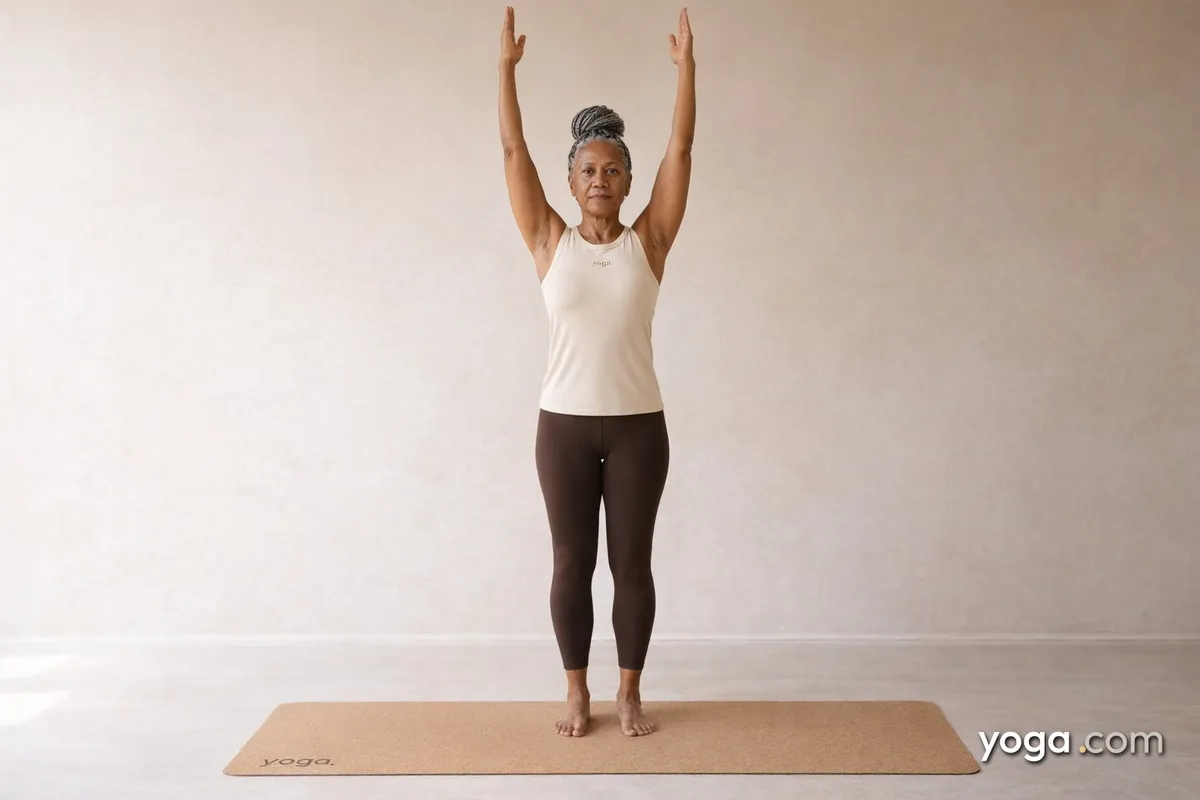
Mountain Pose with Upward Stretch - Tāḍāsana (arms raised), literally "mountain pose with arms lifted" - takes the steady, grounded foundation of classic Tāḍāsana and adds a full overhead reach, lengthening the entire front body from heel to fingertip. It appears at the top of Sun Salutations, as a warm-up in its own right, and as a simple way to reset posture between more demanding standing poses.
At a Glance
- Level: Beginner
- Type: Standing
- Targets: Shoulders and upper arms, spine (thoracic extension), side body (intercostals and obliques), ankles and feet
- Good for: Building upright posture habits, opening the chest and shoulders, developing full-body coordination and body awareness
How to Do Mountain Pose with Upward Stretch

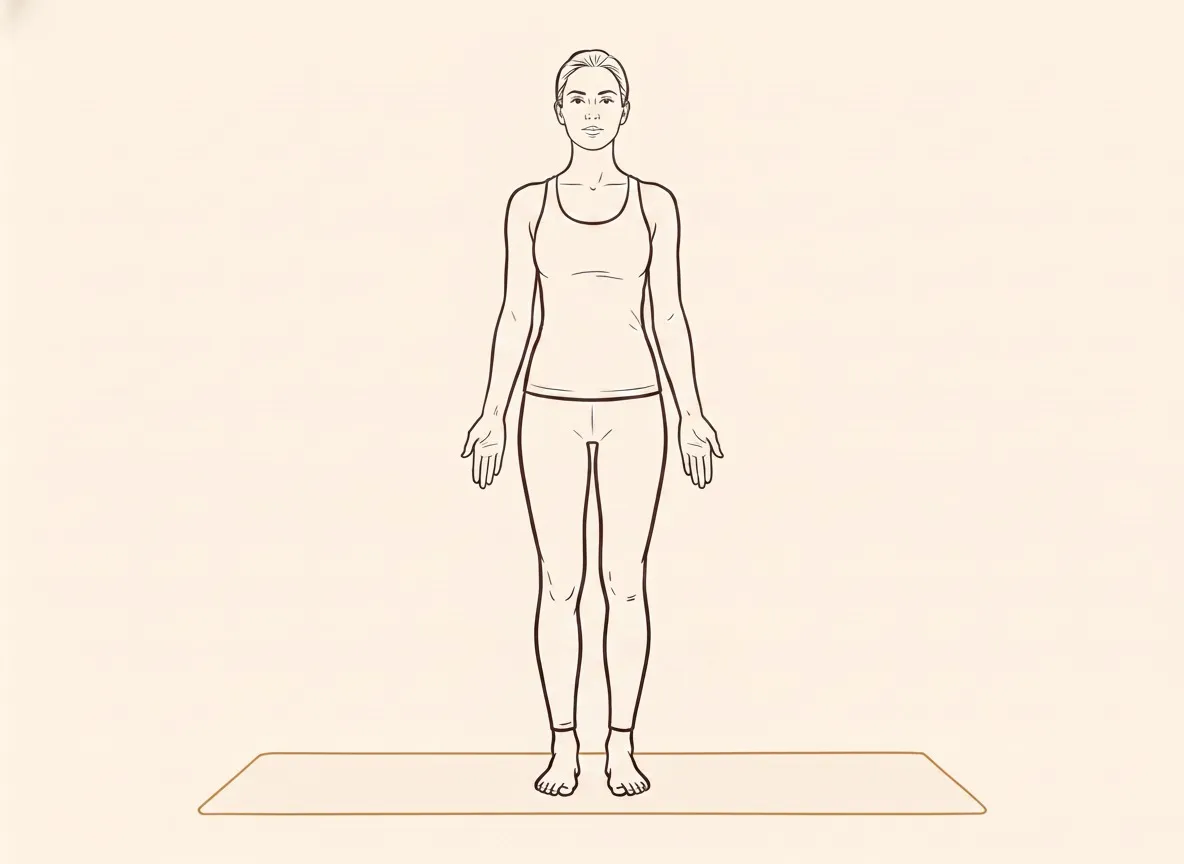
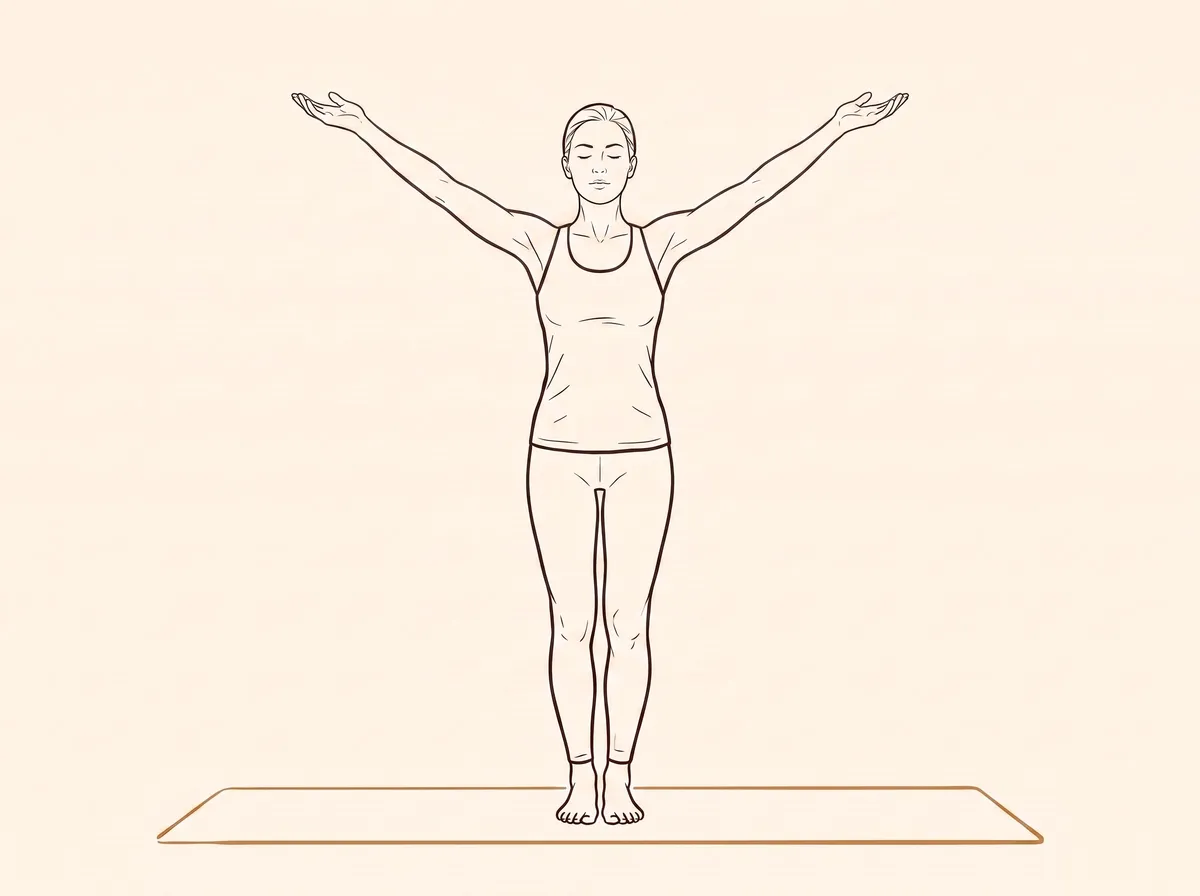
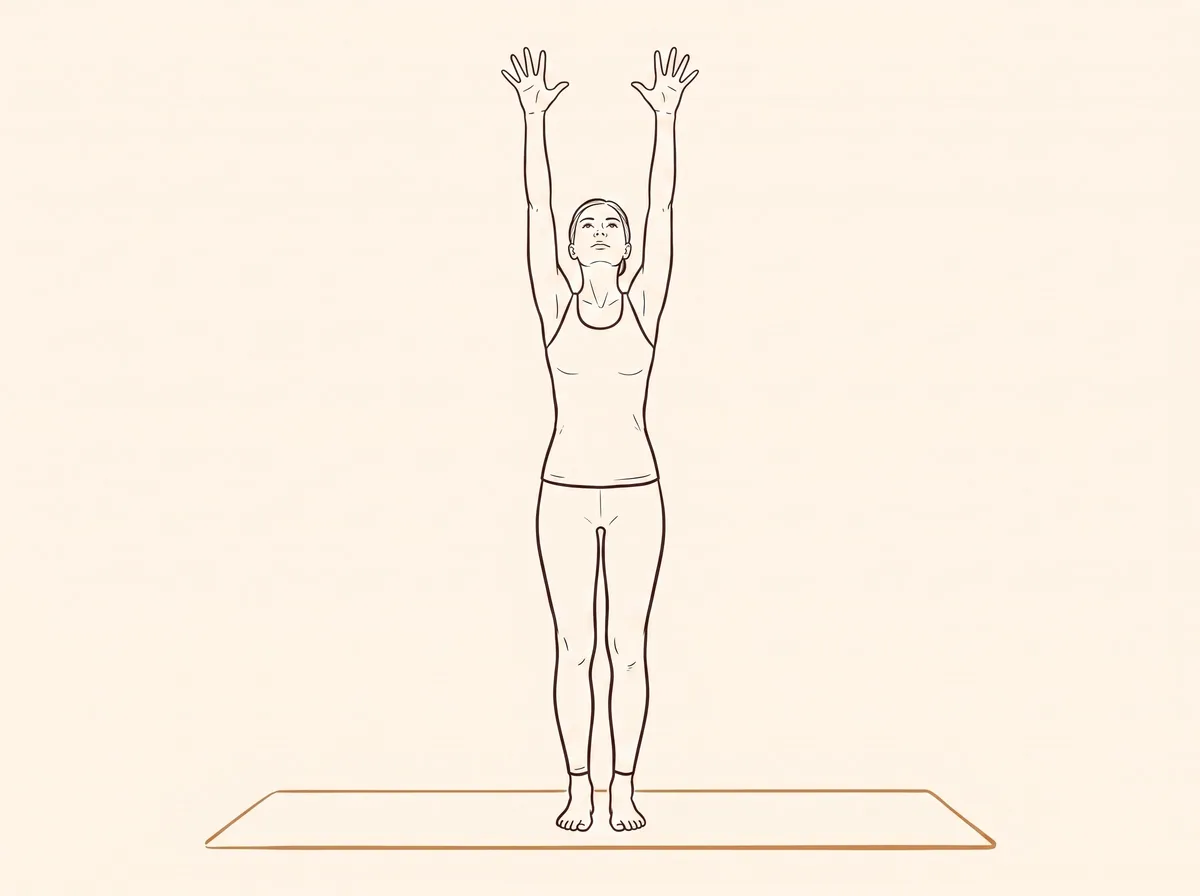
- Set your foundation. Stand with your feet together or hip-width apart (whichever feels more stable). Press all four corners of each foot - big-toe mound, little-toe mound, inner heel, outer heel - evenly into the floor.
- Stack the legs. Firm your thighs without locking the knees. Draw the kneecaps up slightly. Let the tailbone drop toward the floor rather than tucking or overarching.
- Lengthen the spine. Stack your pelvis over your ankles, your ribcage over your pelvis, and your head over your ribcage. Lift the crown of the skull toward the ceiling. Relax the shoulders away from the ears.
- Inhale and sweep the arms out and up. On an inhale, raise both arms out to the sides in a wide arc, palms facing up, until the palms meet - or stop parallel - overhead. Keep the arms straight but the elbows soft.
- Refine the reach. Spread your fingers actively, reach through the heel of each hand, and draw the lower ribs inward so the ribcage does not flare. Slide the shoulder blades down the back as you continue to lift through the arms.
- Find the gaze. Look straight ahead at the horizon, or, if the neck is comfortable, tilt the chin slightly upward and gaze toward the thumbs.
- Hold for 3-8 breaths, continuing to root through the feet and reach through the fingertips simultaneously.
- Come out. On an exhale, lower the arms back out to the sides in the same wide arc, returning to Tāḍāsana with hands at the sides. Pause for one breath before moving on.
Benefits
- Stretches the side body, including the intercostal muscles and lateral abdominals, as the arms rise overhead.
- Strengthens and stabilizes the shoulder girdle - rotator cuff, serratus anterior, and lower trapezius - under active load.
- Lengthens the thoracic spine into gentle extension, counteracting the forward-flexed posture common from desk work.
- Reinforces ankle and foot proprioception through the sustained weight-bearing stance.
- Trains coordination between breath and arm movement, a foundational skill for vinyasa-based sequences.
Common Mistakes and Alignment Cues
- Ribcage flaring forward: As the arms rise, many students let the front ribs pop out and the lower back overarch. Draw the lower ribs gently inward and keep the tailbone dropping toward the floor throughout the lift.
- Shoulders shrugging toward the ears: Active elevation shortens the neck and reduces stability. Think about pressing the shoulder blades down the back even as the arms continue to reach upward.
- Soft, passive hands: Dangling fingers reduce engagement all the way up the arm chain. Spread the fingers wide and reach through every fingertip.
- Weight drifting to the heels or toes: Check that you can feel all four corners of each foot equally. Micro-adjustments at the feet stabilize the whole pose above.
- Locking the knees: Hyperextended knees shift load into the joint. Maintain a very slight micro-bend, or simply keep the thigh muscles engaged without forcing the knees back.
Modifications and Props
- Tight shoulders: Instead of bringing palms to touch overhead, keep the arms parallel (shoulder-width apart) or hold a strap taut between the hands so the arms can rise without compensating at the ribcage.
- Balance challenges: Stand with your back heel lightly touching a wall, or widen the feet to hip-width. This gives you proprioceptive feedback and a broader base without changing the upper-body work.
- Wrist or hand sensitivity: Keep the wrists neutral - palms facing each other rather than pressing together - so there is no compression at the joint.
- Seated variation: Sit tall at the front edge of a chair with feet flat on the floor. Perform the identical arm sweep from this grounded seat to practice the shoulder and spinal actions without standing balance demands.
Cautions
- Shoulder impingement or rotator-cuff injury: Raising the arms overhead can compress irritated structures. Work within a pain-free range and consider the parallel-arms or strap modification.
- Neck sensitivity: Keep the gaze forward rather than tilting the head back if looking up causes discomfort or dizziness.
- High blood pressure or vertigo: Avoid holding the breath; breathe steadily throughout, and skip the upward gaze if it triggers symptoms.
- Foot or ankle instability: Use the wall variation or widen the stance to reduce balance demands until strength improves.
If you're working with an injury or a medical condition, check with a qualified professional before practicing.
Related Poses
- Mountain Pose - the direct foundation; practice this first to establish grounded alignment before adding the arm lift.
- Chair Pose - the natural progression from here, keeping the overhead arms while bending the knees deeply.
- Warrior Pose with Right Leg Bent - builds on the same upward reach while introducing a powerful lunge base.
- Downward-Facing Dog Pose - a frequent counter-pose in Sun Salutation sequences, releasing the shoulders after the overhead work.
See this pose in context: A Gentle Yoga Routine for Tired, Low-Energy Days and A 10-Move Chair Yoga Sequence for a Midday Reset.