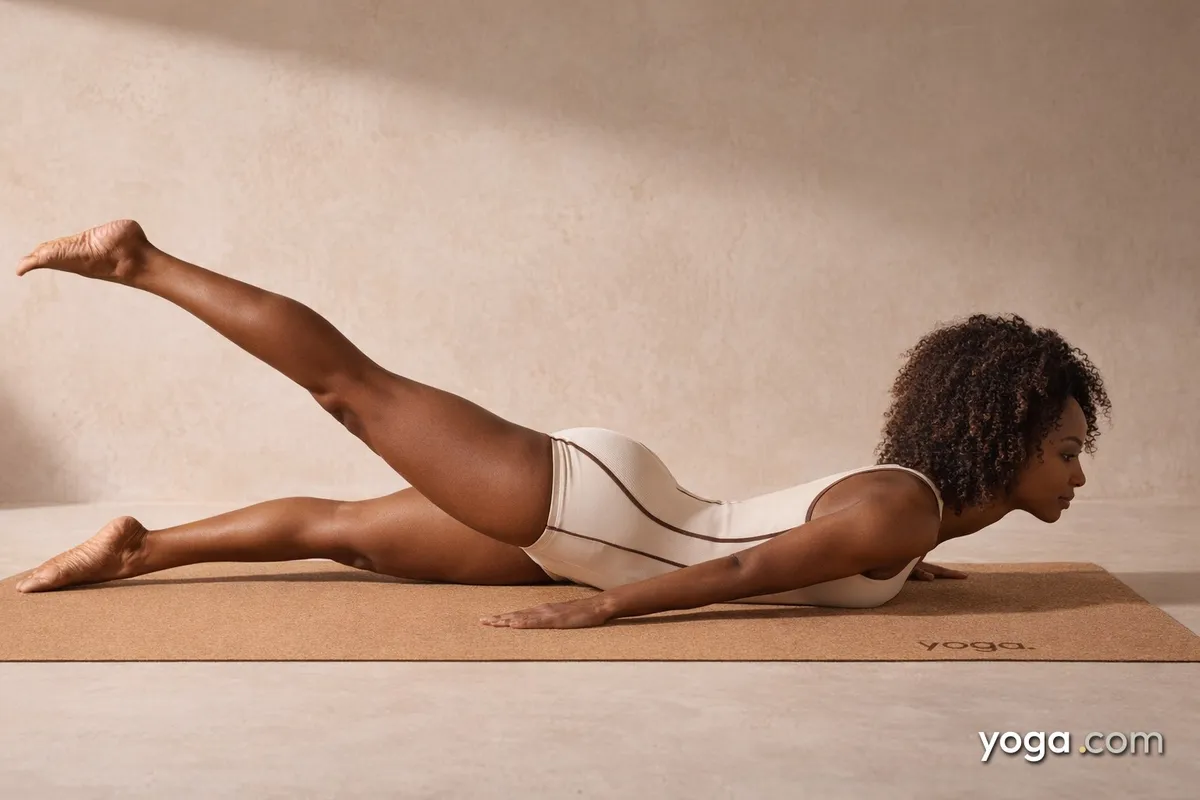
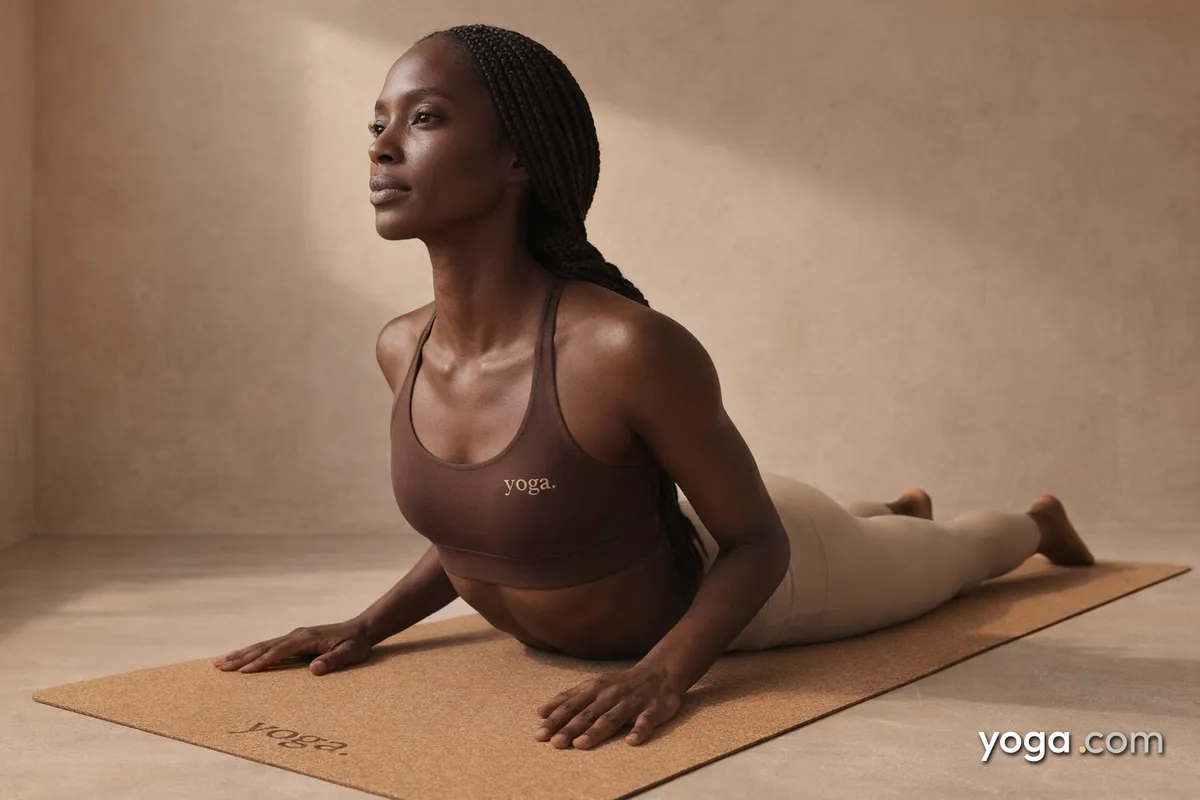
Cobra Pose, or Bhujaṅgāsana (bhujanga = serpent, āsana = seat or posture), is a prone backbend that lifts the chest off the floor using the strength of the back muscles with minimal press from the hands. It appears in Sun Salutation B sequences and as a standalone heart-opener, making it one of the first backbends most students encounter.
At a Glance
- Level: Beginner
- Type: Backbend
- Targets: Spinal extensors, chest and anterior shoulders, abdominals (lengthened), tops of the feet
- Good for: Building spinal extension strength, stretching the front body, improving posture awareness
How to Do Cobra Pose
- Lie face-down on your mat with your legs extended, tops of the feet pressing evenly into the floor, and feet hip-width apart or together.
- Place your palms flat on the mat directly under your shoulders, fingers spread wide. Draw your elbows in close to your ribcage - they should point straight back, not flare out to the sides.
- Press the tops of your feet, thighs, and pubic bone lightly into the mat to anchor the lower body.
- On an inhale, use the strength of your back muscles to begin lifting your chest. Let the hands offer light support - aim to hold a piece of paper under each palm rather than pushing yourself up with arm strength.
- Straighten the arms only as far as your back comfortably allows. For most beginners this means a slight bend remains in the elbows. The navel may stay on or just off the mat.
- Roll the inner thighs upward toward the ceiling to broaden the lower back, and draw the shoulder blades together and down, away from the ears. Gaze forward or very slightly upward - keep the back of the neck long.
- Hold for 3-5 breaths, keeping the breath steady and the glutes soft.
- To come out, bend the elbows, lower the chest and forehead back to the mat on an exhale, then rest with cheek to one side or press back into Child's Pose.
Benefits
- Strengthens the erector spinae and other spinal extensor muscles along the full length of the back.
- Stretches the pectorals, anterior deltoids, and the long muscles of the abdomen.
- Extends the thoracic spine, a region that often becomes stiff from prolonged sitting.
- Activates and tones the muscles of the posterior shoulder girdle.
- Stretches the tops of the feet and the anterior ankle, which can be tight from footwear.
Common Mistakes and Alignment Cues
- Mistake: Pushing up with the arms and leaving the back passive. Cue: Lower yourself until you can barely feel the mat under your palms - the lift should come from your back, not your triceps.
- Mistake: Letting the elbows wing out to the sides. Cue: Hug the elbows in until you can feel your upper arms graze your ribcage throughout the pose.
- Mistake: Crunching the back of the neck by throwing the head back. Cue: Lead the lift with the sternum, not the chin; keep a long line from the crown of the head through the tailbone.
- Mistake: Squeezing the glutes hard. Cue: Soften the glutes and instead firm the inner thighs, rotating them gently upward to protect the lumbar spine.
- Mistake: Holding the breath at the top of the pose. Cue: If you can't breathe smoothly, lower down an inch until the breath returns easily.
Modifications and Props
- Rolled blanket under the hips: Place a folded blanket under the hip points to reduce the range of lumbar extension, useful if the lower back feels compressed at full depth.
- Fingertip press: Instead of flat palms, lift the heels of the hands and balance on fingertips. This naturally reduces how much weight you transfer to the arms and encourages back-muscle engagement.
- Half Cobra (baby cobra): Keep the forearms on the mat, elbows under the shoulders, for a gentler lift that suits tighter spines - essentially a held version of Sphinx Pose.
- Wall variation: Stand facing a wall about an arm's length away, place palms at shoulder height, and press the upper chest toward the wall while keeping the pelvis back. This gives a feel for the chest-opening action without any load on the lumbar spine.
Cautions
- Avoid full Cobra if you have a recent or acute lower-back injury; use the Half Cobra modification or skip the pose until you have professional guidance.
- Those with wrist pain or carpal tunnel symptoms should try the fingertip or forearm variation to reduce wrist load.
- During pregnancy (second and third trimester), prone positions are generally not advised - work with a prenatal specialist on appropriate alternatives.
- If you experience sharp pain, tingling, or numbness in the spine or arms at any point, come down immediately.
If you're working with an injury or a medical condition, check with a qualified professional before practicing.
Related Poses
- Half Cobra Pose - the natural preparation and gentler alternative for learning the back-muscle engagement needed here.
- Upward-Facing Dog Pose - the next progression, where the thighs lift fully off the mat and arm strength plays a larger role.
- Bow Pose - a deeper prone backbend that builds on the spinal extension established in Cobra.
- Downward-Facing Dog Pose - a complementary counter-stretch for the spine and shoulders after any backbend sequence.
Practice Cobra in context: see it in a full flow in A Gentle Yoga Routine for Tired, Low-Energy Days, or explore accessible variations in A 10-Move Chair Yoga Sequence for a Midday Reset.