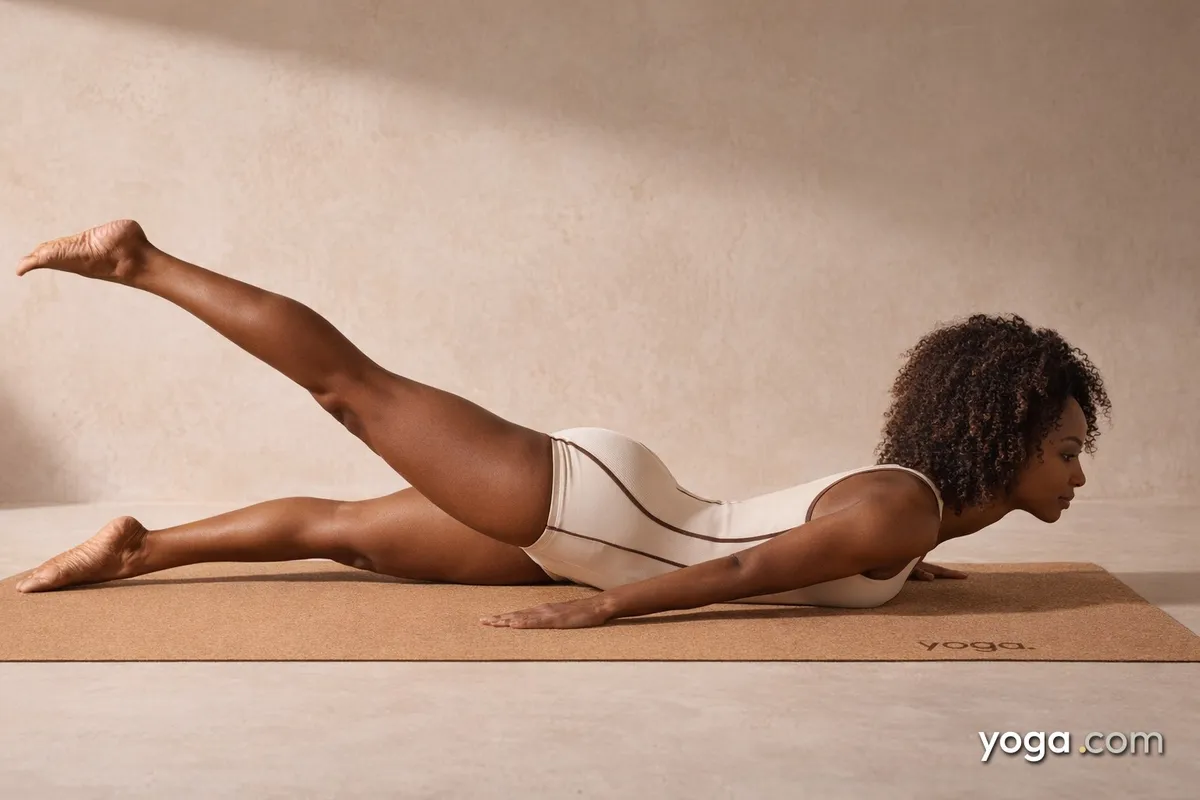
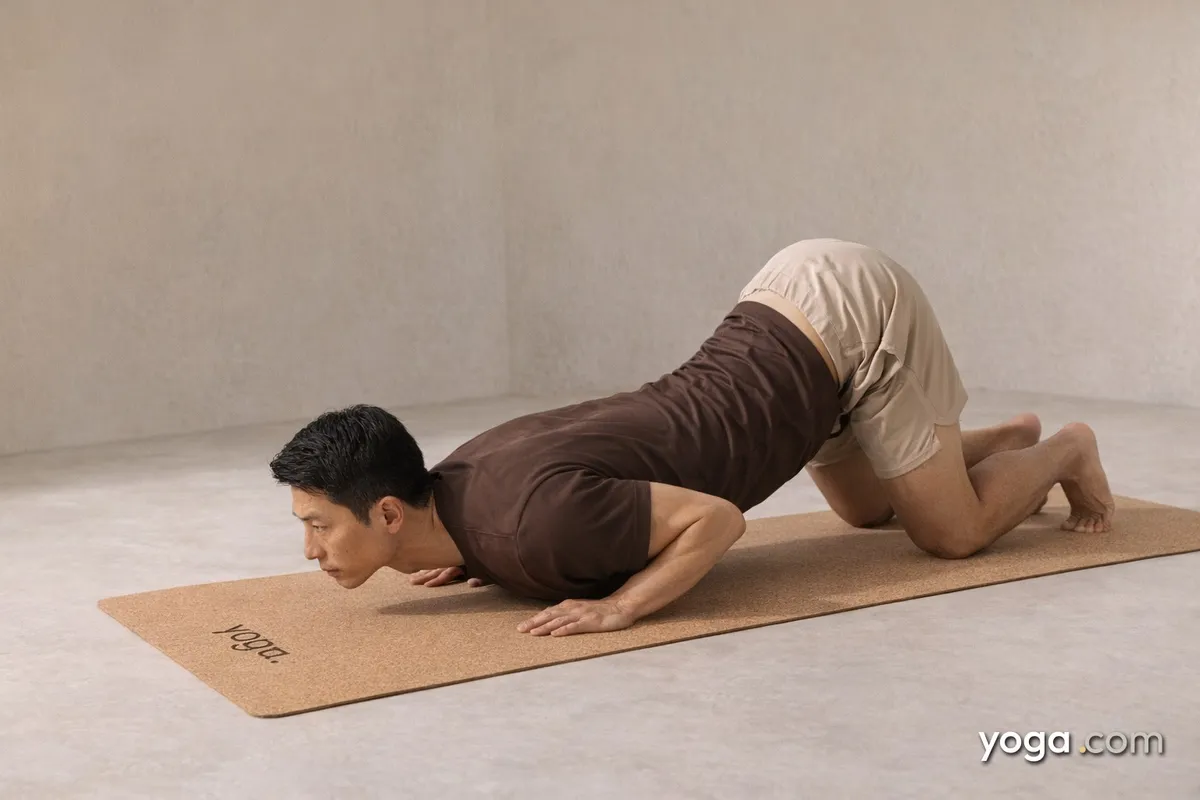
Knees, Chest and Chin Pose - Aṣṭāṅga Namaskāra, literally "eight-limbed salutation" - is a prone backbend in which eight points of the body touch the floor simultaneously: both feet, both knees, both hands, the chest, and the chin. It appears most often as a transitional shape within Surya Namaskar B in some classical Hatha sequences, and it serves as an accessible introduction to mild thoracic extension before students attempt fuller backbends.
At a Glance
- Level: Beginner
- Type: Prone
- Targets: Chest (pectorals), thoracic spine, shoulders, triceps
- Good for: Introducing spinal extension, building chest opening, preparing the upper body for deeper backbends
How to Do Knees, Chest and Chin Pose
- Begin in a Table Top position - hands under shoulders, knees under hips, spine neutral.
- Tuck your toes under and step or walk your knees back a few inches so they land slightly behind your hips.
- On an exhale, bend your elbows straight back alongside your ribs and lower your chest toward the mat between your hands. Keep your elbows drawing in; do not let them splay wide.
- Rest your chin on the mat, keeping your throat long rather than crunching the neck sharply. Your gaze lands a few inches in front of you.
- Check that your hips are lifted and roughly above your knees - the pelvis does not drop to the floor. Your lower back should feel a gentle, comfortable arch, not a sharp compression.
- Press your palms and the pads of your fingers evenly into the mat to maintain engagement in your arms and shoulders.
- Hold for 2-5 breaths, expanding across the front of the chest on each inhale.
- To come out, tuck your chin, press into your hands, and either lift back into Table Top or slide forward into Cobra or Upward-Facing Dog on an inhale.
Benefits
- Stretches the pectoral muscles and the anterior deltoids across the front of the chest and shoulders.
- Introduces gentle extension through the thoracic spine in a supported, low-load position.
- Builds isometric strength in the triceps and posterior shoulder as the elbows resist the floor.
- Activates the erector spinae along the back of the spine to maintain the lifted-hip position.
- Trains proprioceptive awareness of spinal segmentation, helping students distinguish thoracic from lumbar extension.
Common Mistakes and Alignment Cues
- Hips dropping to the mat: Keep your pelvis elevated. If your belly rests on the floor, you've lost the functional backbend and shifted compression into the lumbar spine.
- Elbows flaring outward: Draw the elbows in toward your midline so they track over the wrists. Flared elbows reduce shoulder stability and can strain the inner elbow.
- Crunching the neck: Let the chin rest lightly; don't jam the head into the floor. Keep the back of the neck long and the throat open.
- Hands too far forward: Place your hands directly under - or only slightly in front of - your shoulders when you enter the pose. Hands too far forward collapse the chest before it can open.
- Holding the breath: Continue to breathe steadily. Allow the inhale to actively broaden the collarbones and deepen the chest stretch.
Modifications and Props
- Blanket under the chest: Fold a firm blanket and place it under your sternum. This reduces the range of the backbend and gives sensitive wrists a gentler angle.
- Rolled blanket under the ankles: If your feet or shins are uncomfortable on the mat, a thin roll under the ankles cushions bony pressure points without changing the shape of the pose.
- Block between the thighs: Squeezing a block between the inner thighs as you lower down encourages adductor engagement and helps beginners feel how to keep the lower body stable while the chest drops.
- Partial range of motion: If the full chin-down position creates any sharp pinching in the neck or upper back, stop when the chest is a few inches above the mat and hover there, building strength before going lower.
Cautions
- Wrist sensitivity: Weight-bearing through the wrists in this position can aggravate existing wrist issues. Try making fists or coming onto your fingertips to reduce wrist extension.
- Neck discomfort: If placing the chin on the floor causes any sharp or radiating sensation in the neck, rest the forehead on the mat instead, or skip the pose entirely.
- Recent abdominal surgery or pregnancy: Avoid prone positions that place direct pressure on the abdomen. Choose a seated chest opener as an alternative.
- Lower back sensitivity: Because the hips stay elevated, most students find this gentler on the lumbar spine than full backbends - but if you feel any sharp pinching in the low back, lift the hips higher or exit the pose.
If you're working with an injury or a medical condition, check with a qualified professional before practicing.
Related Poses
- Cat Pose - a preparatory shape that warms the spine and teaches the distinction between flexion and extension.
- Upward-Facing Dog Pose - the natural progression once you're ready for a fuller thoracic and lumbar backbend.
- Downward-Facing Dog Pose - a common counter-pose that lengthens the spine after backbending work.
- Crocodile Pose - a resting prone shape that allows the back body to release between prone backbend attempts.
See this pose in context: A Gentle Yoga Routine for Tired, Low-Energy Days and A 10-Move Chair Yoga Sequence for a Midday Reset.