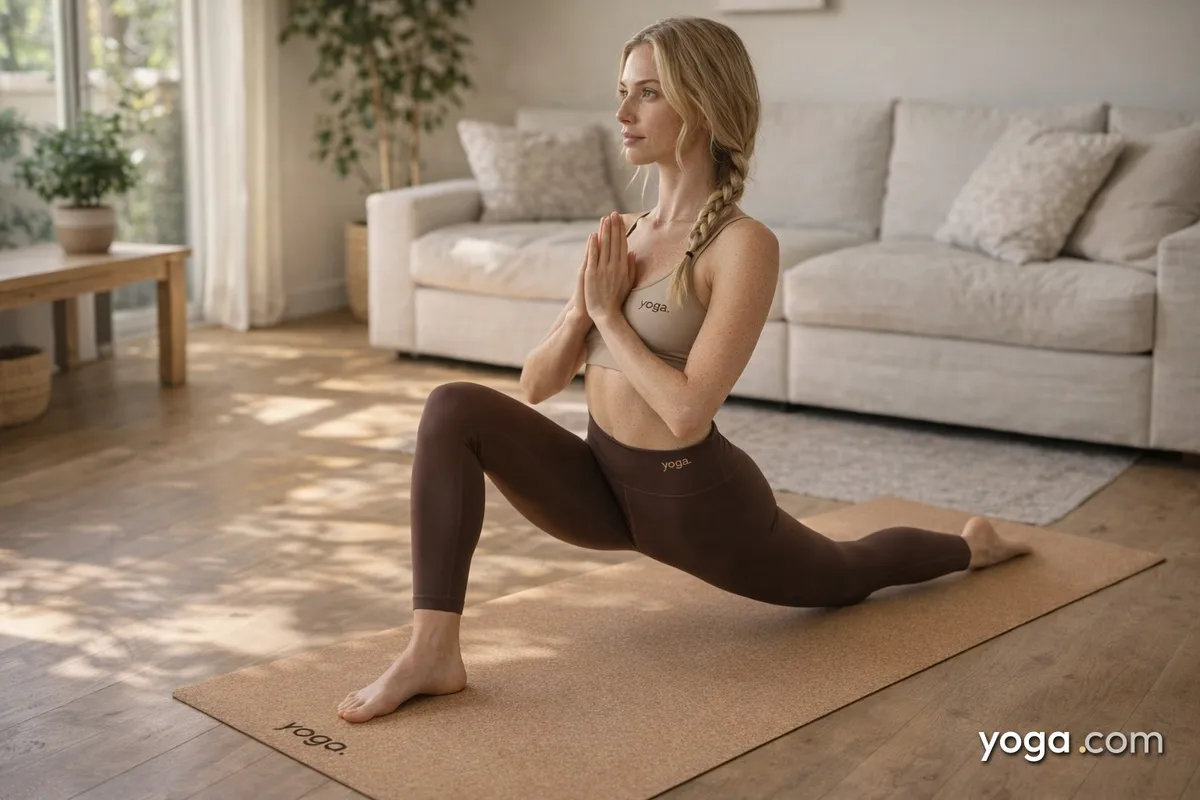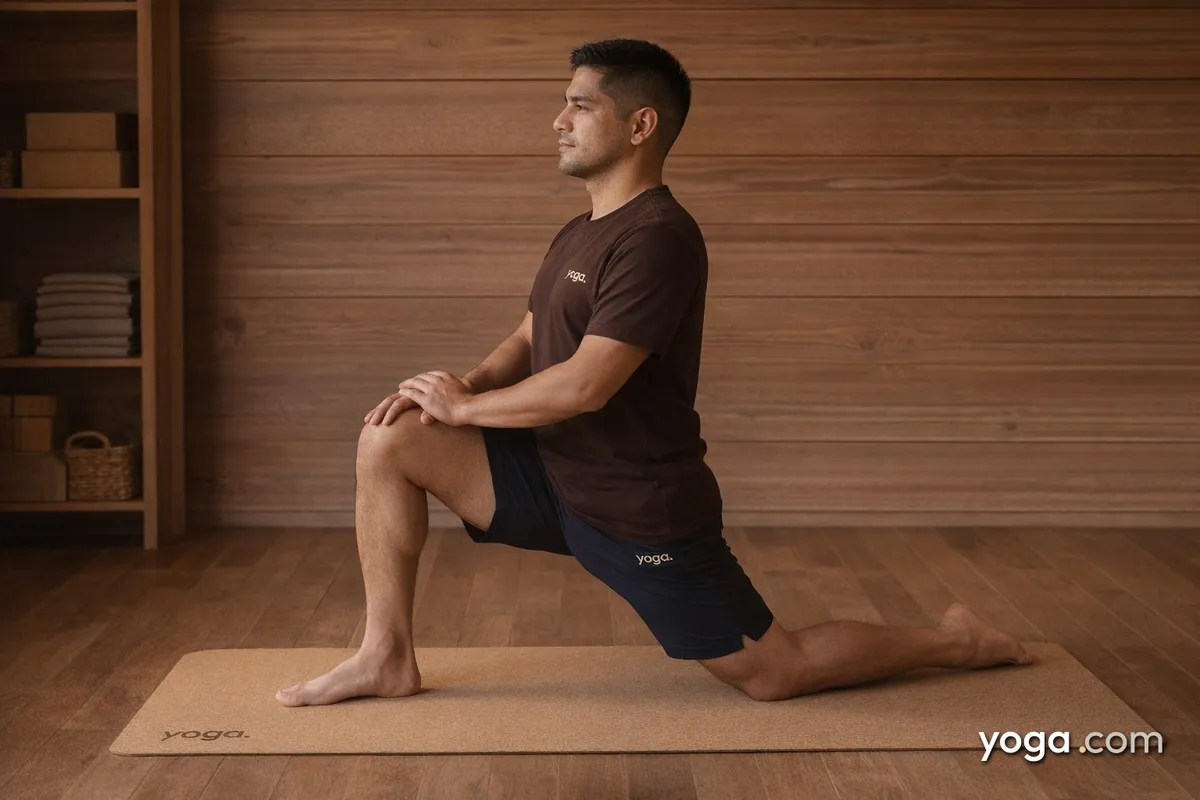
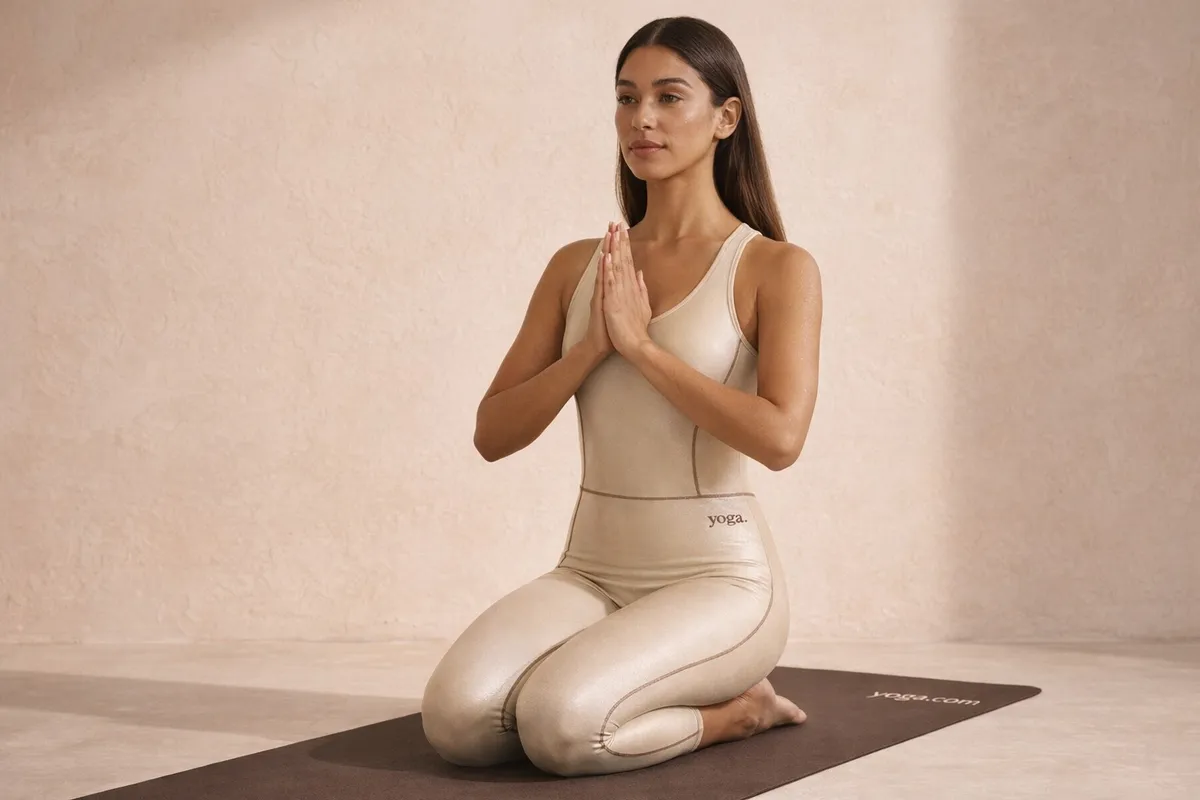
Greeting Pose (Añjalāsana - from añjali, meaning "offering" or "salutation," and āsana, meaning "seat" or "posture") is a kneeling prayer position that brings the palms together at the heart center. It appears at the opening and closing of many practices, in sun salutation transitions, and as a standalone moment of centering between more active sequences.
At a Glance
- Level: Beginner
- Type: Kneeling
- Targets: Shins and ankles, thoracic spine, wrists and forearms, chest and shoulders
- Good for: Establishing upright spinal alignment, grounding attention before or after dynamic movement, building awareness of symmetry in the torso
How to Do Greeting Pose
- Come to a kneeling position with your knees hip-width apart and the tops of your feet flat on the mat, toes pointing straight back.
- Lower your hips toward your heels - or rest them there if that is comfortable - so that your shins are evenly weighted on the mat.
- Lengthen your spine from the base of your pelvis to the crown of your head, drawing the lower ribs gently in so your lower back is neither overarched nor rounded.
- Bring your palms together in front of your sternum, fingertips pointing upward. Press the outer edges of your palms lightly together so the hands form a symmetrical shape.
- Draw your elbows slightly out to the sides so that your forearms are roughly parallel to the floor and there is a small gap between your thumbs and your sternum - about a thumb's width.
- Soften your shoulders away from your ears and broaden across your collarbones, allowing the shoulder blades to settle onto the back ribs.
- Relax your jaw and direct your gaze to a fixed point at eye level or slightly downward, keeping your chin parallel to the floor.
- To come out, release your palms to your thighs, then use your hands to press yourself upright, or transition forward onto all fours.
Benefits
- Stretches the anterior ankle and shin, improving range of motion in plantar flexion.
- Strengthens the postural muscles of the thoracic spine by requiring active upright extension without a backrest.
- Lengthens the wrist flexors and forearm muscles through the sustained prayer-hand position.
- Encourages symmetrical engagement of the left and right sides of the torso, making asymmetries easy to notice and address.
- Develops the habit of neutral pelvic alignment that transfers directly into standing and seated postures.
Common Mistakes and Alignment Cues
- Hips lifted high off the heels with the lower back overarched: Slide a folded blanket between your thighs and calves to reduce the distance your hips need to travel, then re-establish the natural lumbar curve without exaggerating it.
- Shoulders creeping toward the ears: Exhale and consciously drop the shoulder blades down the back before pressing the palms together again.
- Palms pressing unevenly, one wrist higher than the other: Look down at your hands and adjust until the wrists are level and the thumbs are centred at the midline.
- Chin jutting forward: Gently draw the chin back so the ears stack directly over the shoulders, lengthening the back of the neck.
- Toes gripping or curling under: Consciously spread the toes and press the tops of all ten toes evenly into the mat.
Modifications and Props
- Blanket under the knees: If bare kneecaps on the mat are uncomfortable, fold a blanket and place it beneath both knees for padding.
- Blanket or block between hips and heels: If your hips do not reach your heels without strain in the knees or ankles, support the sit bones on a folded blanket or a foam block placed across the heels.
- Rolled blanket under the ankles: Tight ankle extensors can make the tops of the feet feel strained. Place a thinly rolled blanket just in front of each ankle joint to reduce that pressure.
- Chair variation: Sit toward the front edge of a firm chair with feet flat on the floor, knees over ankles, and bring the palms together at the chest - all the upper-body alignment cues apply equally here.
Cautions
- Knee sensitivity: Avoid bearing weight directly on an acutely painful or recently injured knee. Use generous padding or practice the seated chair variation instead.
- Ankle or foot pain: If plantar flexion (pointing the foot) causes sharp pain, support the ankles with a rolled blanket and reduce the time spent in the pose.
- Wrist conditions: The sustained prayer-hand position compresses the wrist joint. If you have wrist discomfort, rest your hands in a loose prayer shape without pressing firmly, or simply place the backs of your hands on your thighs.
- Vertigo or balance concerns: Keep your gaze fixed and low, or practice near a wall you can touch lightly for orientation.
If you're working with an injury or a medical condition, check with a qualified professional before practicing.
Related Poses
- Diamond Pose - the foundational kneeling base from which Greeting Pose rises
- Hero Pose with Hands on Thighs - a closely related upright kneeling shape that develops the same spinal alignment
- Mountain Pose - the standing counterpart that teaches the same symmetrical, upright posture
- Hare Pose - a natural forward-fold progression from the kneeling position that follows centering work
Put Greeting Pose to use in a full sequence: try A Gentle Yoga Routine for Tired, Low-Energy Days or adapt it with the A 10-Move Chair Yoga Sequence for a Midday Reset.