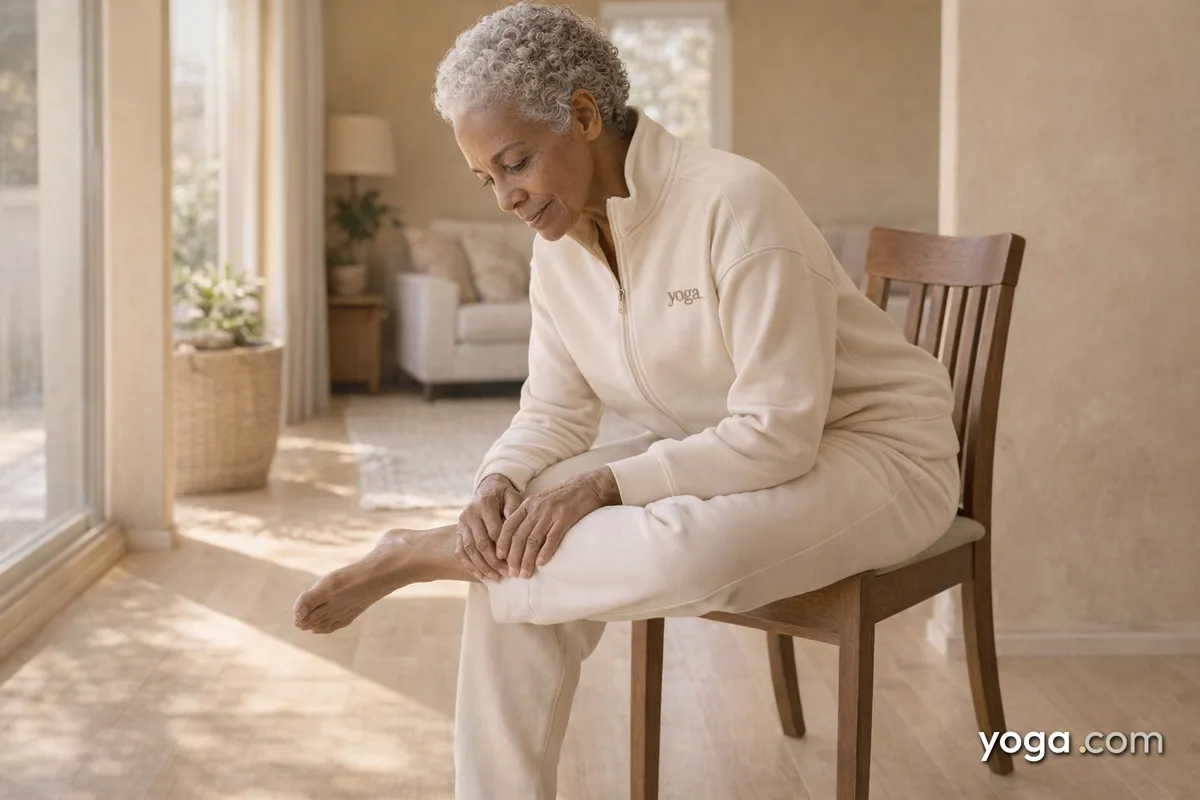
Stiff hips have a reputation for being permanent - the kind of thing that settles in after years at a desk and never leaves. They're more changeable than that. A short, consistent mobility routine can genuinely change how your hips feel, whether the tightness shows up when you bend to pick something up or when standing after a long sit feels like a project. And you can start today.
Why Your Hips Deserve Daily Attention
Your hip joints carry your full body weight every time you walk, stand, climb stairs, or get up from a chair. When they're stiff, nearly everything feels harder.
Prolonged sitting is a large part of the problem. Two-thirds of one studied population had limited hip extension flexibility - a direct sign of tight hip flexors, and an average of eight or more hours of sedentary time per day has been reported in both young and older populations. Muscles rarely taken through their full range adapt to a shorter working length over time.
In one cross-sectional study, researchers found 6.1° more passive hip extension in people who were highly active and sat minimally, compared to those who were less active and sat for long periods - an association, though the study can't prove sitting caused the difference.
Radiographic hip OA affects 27% of adults aged 45 and older, and between 1990 and 2019, hip OA prevalence in the USA increased by nearly 25%. That trend makes a daily hip mobility habit worthwhile for long-term health.
If you have a diagnosed hip condition, recent surgery, or significant pain, talk with your doctor or physical therapist before starting any new exercise routine.
Before You Begin: Warm Up First
Cold muscles stretch poorly and are more prone to discomfort or injury. The Mayo Clinic recommends 5 to 10 minutes of light activity before stretching. Try any of these:
- A slow walk around the room or up and down a hallway
- Gentle marching in place for 2-3 minutes
- Seated pelvic tilts: sit tall, feet flat on the floor, and slowly rock your pelvis forward and back 10-15 times - this gently moves the hip flexors and extensors with minimal load on the joint
The Core Routine: Five Moves for Hip Mobility
Work through these in order. The whole sequence takes about 15-20 minutes. Aim to stretch major muscle groups at least 2 to 3 days a week - daily is even better for hip mobility specifically.
1. Low Lunge Hip Flexor Stretch (Anjaneyasana)
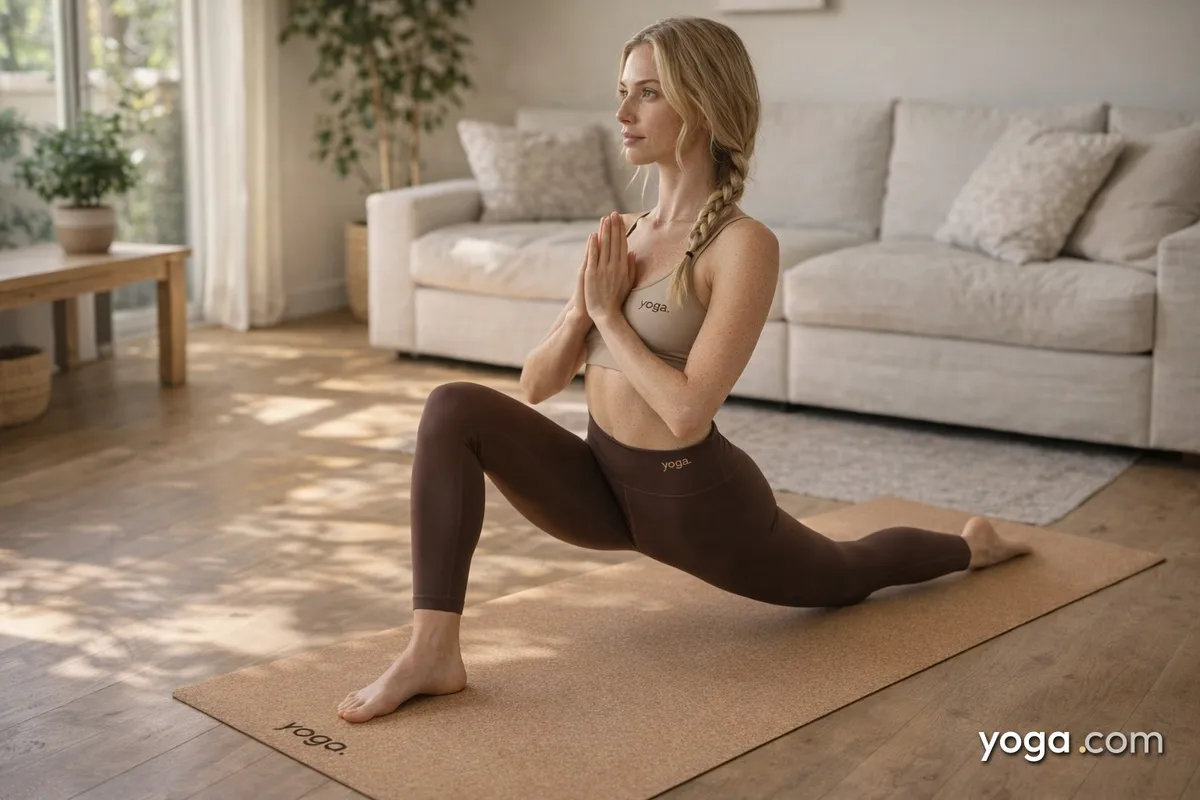
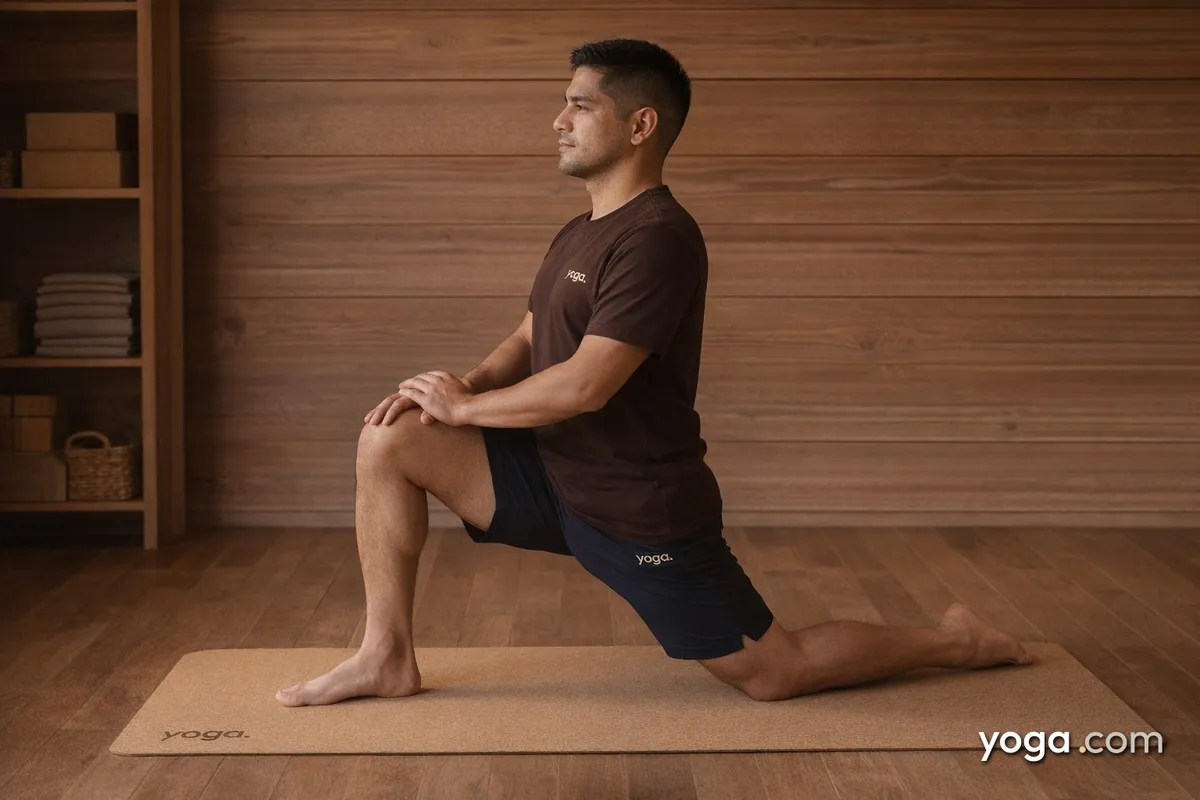
This targets the psoas and iliacus - the deep hip flexors that shorten most when you sit. From a kneeling position, step one foot forward so your front knee is above your ankle. Gently shift your hips forward until you feel a stretch at the front of the back hip.
Key tip: Resist the urge to arch your lower back. Tuck your pelvis slightly forward - you'll feel the stretch move into exactly the right place. Hold, then switch sides.
If kneeling is uncomfortable, lie on your back and gently pull one knee toward your chest while pressing the opposite leg into the floor - same muscles, no knee pressure.
Hold each stretch for about 30 seconds and repeat 2 to 4 times per side.
2. Supine Figure-Four Stretch (Supta Kapotasana)
Lie on your back with knees bent, feet flat. Cross your right ankle over your left thigh, flex your right foot, and either stay here or draw both legs toward your chest. You'll feel this in the outer hip and glute - often where tension hides.
- Hold 30 seconds per side
- Repeat 2-3 times each side
- Breathe steadily; let the hip release on each exhale
3. Child's Pose (Balasana)
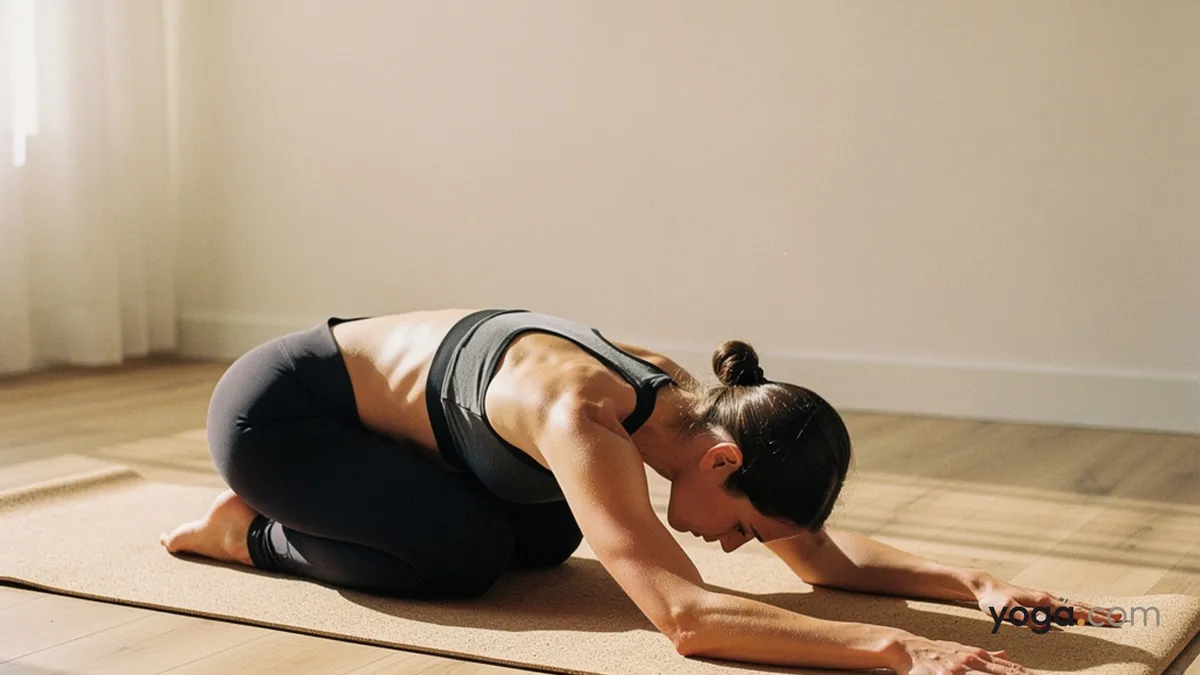
From a kneeling position, sit your hips back toward your heels and extend your arms forward, resting your forehead on the mat. This gently opens the hips and lower back simultaneously. Walk your hands to one side to deepen the stretch into that hip.
If your hips don't reach your heels comfortably, place a folded blanket between your thighs and calves. Stay 5-10 slow breaths.
4. Standing Hip Circles
Stand near a wall or chair for balance. Lift one knee to roughly 90 degrees, then trace a slow, wide circle with the knee - forward, out to the side, behind you, and back. One full circle should take 3-4 seconds.
- 5-8 circles per direction, per leg
- Do both clockwise and counterclockwise - the backward rotation especially tends to be where stiffness hides in people who sit a lot
- Never rush; if you feel grinding or clicking, slow down further
After a few weeks of consistency, build to 8-10 circles per direction.
5. Butterfly Pose (Baddha Konasana)
Sit on the floor (or on a folded blanket for extra height). Bring the soles of your feet together and let your knees fall out to the sides. Sit tall, place your hands on your feet or ankles, and breathe. Don't push your knees down - let gravity do the work. Hold for 1-2 minutes, focusing on steady, relaxed breathing.
Adding Strength: Don't Just Stretch
Stretching can increase flexibility and improve range of motion in your joints - but mobility without strength is unstable. The muscles surrounding the hip (glutes, hip abductors, adductors) need to be strong enough to support that new range of motion.
- Glute Bridge: Lie on your back, knees bent, feet hip-width apart. Press through your heels to lift your hips into a straight line from shoulders to knees. Hold 2 seconds at the top, lower slowly. 2 sets of 10-12 reps.
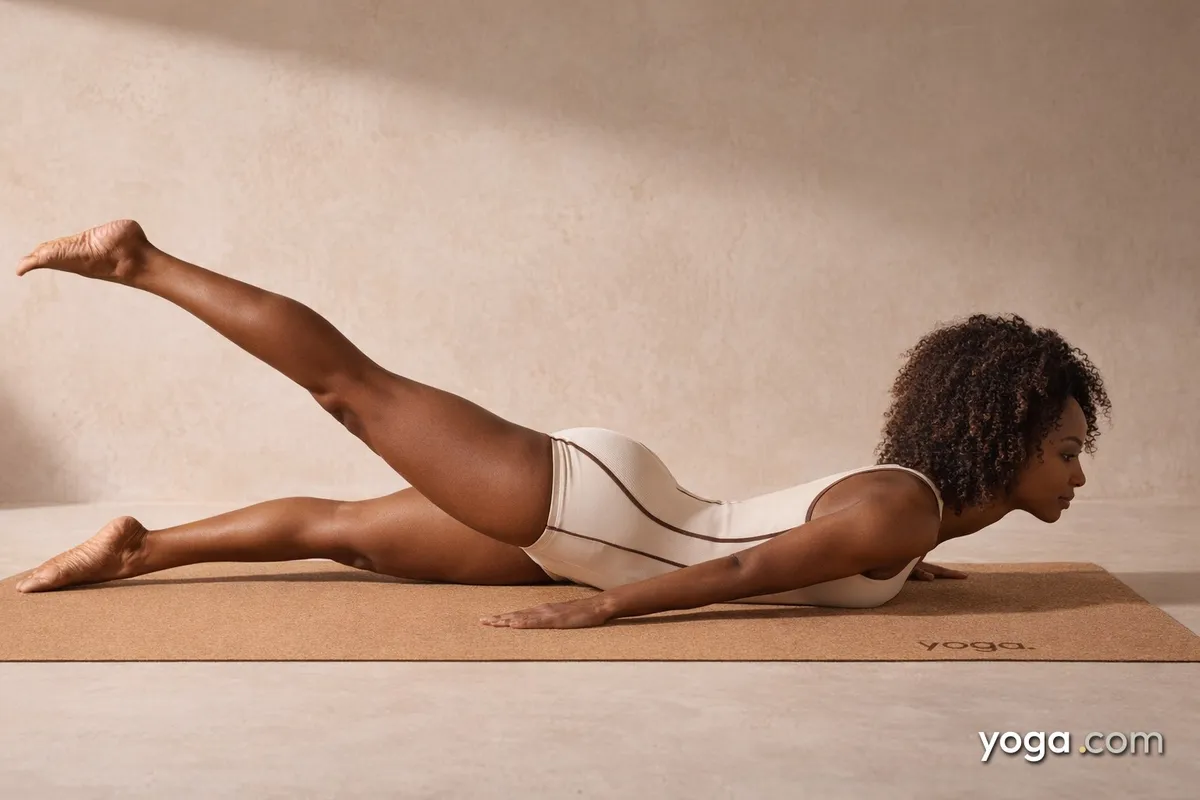
- Side-Lying Hip Abduction: Lie on your side with legs stacked. Slowly lift the top leg to about 45 degrees, hold 1-2 seconds, lower with control. 2 sets of 10-12 per side. Add a light resistance band when this feels easy.
Making It Stick: Small Habits That Work
A five-minute routine done daily is worth more than an hour-long session once a week.
- Anchor it to something you already do - morning coffee, before a shower, right after waking up.
- Keep a mat visible. Out of sight means out of mind.
- Notice how you feel the day after you practice versus the day you skip. That contrast is motivating.
- Go gently. A mild sense of stretch is right. Sharp pain is a signal to stop.
The Short Version
Your hips are built to move - they just need the invitation. This routine requires no special equipment, no gym membership, and no more than 20 minutes. Start with the warm-up, work through two or three of these poses today, and build from there. Your future self will notice the difference every time she stands up from a chair.
Sources
- PMC - Prevalence and incidence of osteoarthritis of the hip and knee
- PMC - Hip osteoarthritis trends and projections in the USA
- PubMed - Physical activity, sitting time, and hip extension flexibility
- PMC - Sedentary behavior and hip flexor tightness in the population
- Mayo Clinic - Stretching: Focus on flexibility
- PMC - Incidence and prevalence of hip osteoarthritis in adults