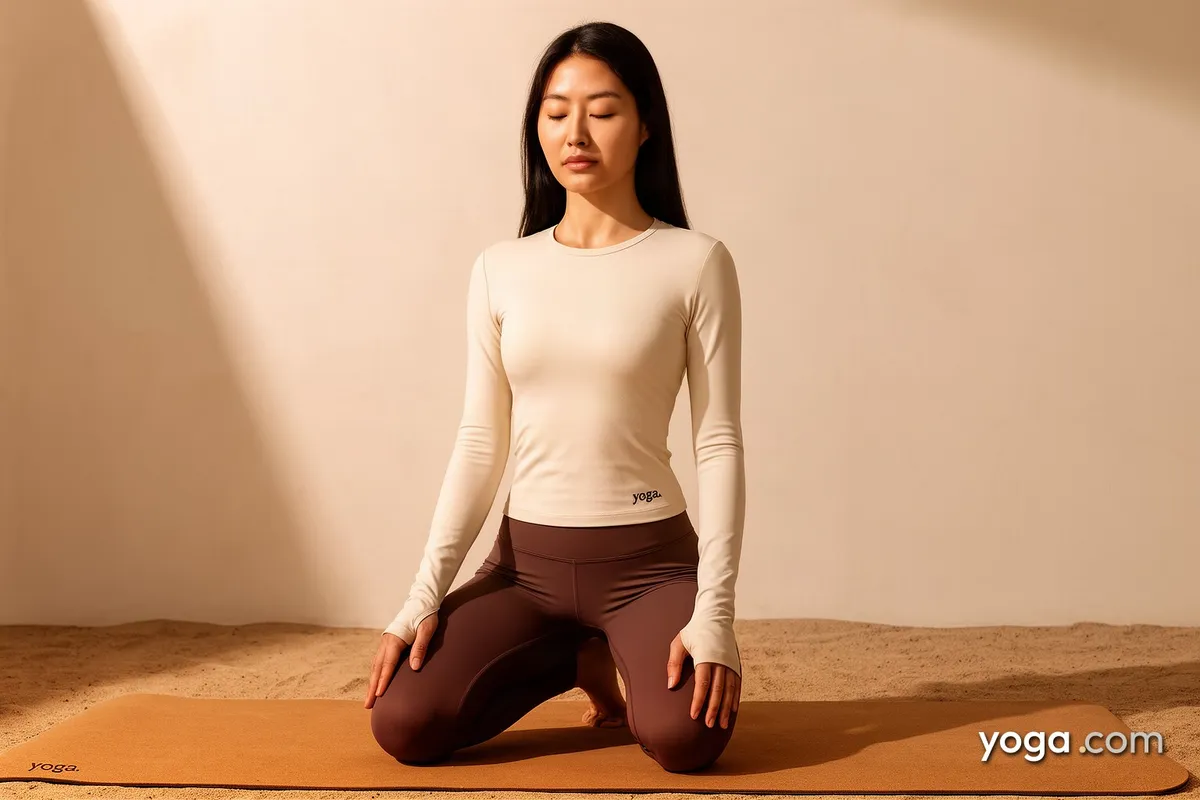
Diamond Pose - Vajrāsana, from the Sanskrit vajra (thunderbolt or diamond) and āsana (seat) - is a kneeling posture in which you sit directly on your heels with the spine upright. It is one of the few yoga poses traditionally recommended immediately after meals and serves as a reliable seat for pranayama, meditation, and breath-focused practice.
At a Glance
- Level: Beginner
- Type: Kneeling
- Targets: Quadriceps, ankles, lumbar spine, pelvic floor
- Good for: Building an upright seated posture, developing ankle flexibility, establishing a stable base for breathwork and meditation
How to Do Diamond Pose
- Kneel on your mat with your knees together and the tops of your feet flat on the floor, toes pointing straight back.
- Lower your sitting bones back onto your heels so your buttocks rest fully on the heels - not beside them. Keep your knees touching or no more than hip-width apart.
- Place your hands palm-down on your thighs, fingers relaxed and pointing toward your knees.
- Lengthen through the crown of your head, stacking your ears over your shoulders, shoulders over your hips. Avoid either collapsing the chest or over-arching the lower back.
- Soften your face and jaw. Rest your gaze at a soft downward angle, or close your eyes.
- Breathe evenly. Hold the pose for 30 seconds to several minutes, depending on your practice intention.
- To come out, press your palms into your thighs, lean slightly forward, and rise back to a kneeling position. From there, step one foot forward into a low lunge or swing your legs to one side and stretch them out.
Benefits
- Stretches the quadriceps and the anterior surface of the ankles progressively over time.
- Strengthens the erector spinae and encourages a natural lumbar curve when the pelvis is correctly positioned.
- Engages the pelvic floor and deep abdominal muscles to maintain an upright trunk without strain.
- Provides a stable, symmetrical base for diaphragmatic breathing and seated meditation.
- Develops proprioceptive awareness of pelvic alignment that transfers to standing postures.
Common Mistakes and Alignment Cues
- Sitting beside the heels rather than on them. Draw the heels together and sit squarely on top of them; if this compresses the ankles, use a prop (see Modifications).
- Letting the lower back round. Gently tilt your pelvis forward to restore the natural lumbar curve before you lengthen upward through the spine.
- Knees splaying wide. Keep the knees no wider than hip-width; for most practitioners, knees touching is achievable and encourages stability.
- Feet turning outward so the tops roll to the side. Press the tops of both feet evenly into the mat so the little-toe side doesn't lift.
- Chin jutting forward. Draw the chin back slightly to bring the ears in line with the shoulders and release tension in the neck.
Modifications and Props
- Blanket under the knees: Fold a firm blanket and place it under both knees to cushion the kneecaps on a hard floor.
- Blanket or block between heels and buttocks: If the full sit-on-heels position compresses the ankle joints or is painful, place a folded blanket or a yoga block horizontally across the heels and sit on that instead, gradually lowering the height as flexibility increases.
- Rolled towel at the ankles: Roll a small towel and place it just in front of the ankle joints (under the shins, above the feet) to reduce tension across the top of the ankles.
- Hands on a chair seat: If kneeling on the floor is not accessible, you can approximate the upright spinal alignment of Vajrāsana by sitting at the front edge of a firm chair with feet flat on the floor and hands resting on thighs.
Cautions
- Knee discomfort: Any sharp or pinching sensation in the knee joint is a signal to come out immediately and use a prop to reduce the range of flexion.
- Ankle or foot pain: Tight ankle extensors can make the full position uncomfortable; use a rolled towel or block and work into the pose gradually over multiple sessions.
- Recent knee or ankle surgery: Avoid deep knee flexion until cleared by your healthcare provider.
- Varicose veins in the lower legs: Prolonged sitting in this position can increase pressure in the lower legs; limit your hold time and alternate with gentle standing intervals.
If you're working with an injury or a medical condition, check with a qualified professional before practicing.
Related Poses
- Hero Pose with Hands on Thighs - the closest anatomical relative, with knees apart and hips between the feet rather than on the heels.
- Hare Pose - a natural forward-fold progression directly from Vajrāsana.
- Table Pose - a useful transition out of kneeling postures to neutral the spine.
- Cat Pose - a good counter-movement to decompress the lumbar spine after extended kneeling.
Put Vajrāsana to work in a full sequence: A Gentle Yoga Routine for Tired, Low-Energy Days or pair it with seated breathwork in A 10-Move Chair Yoga Sequence for a Midday Reset.