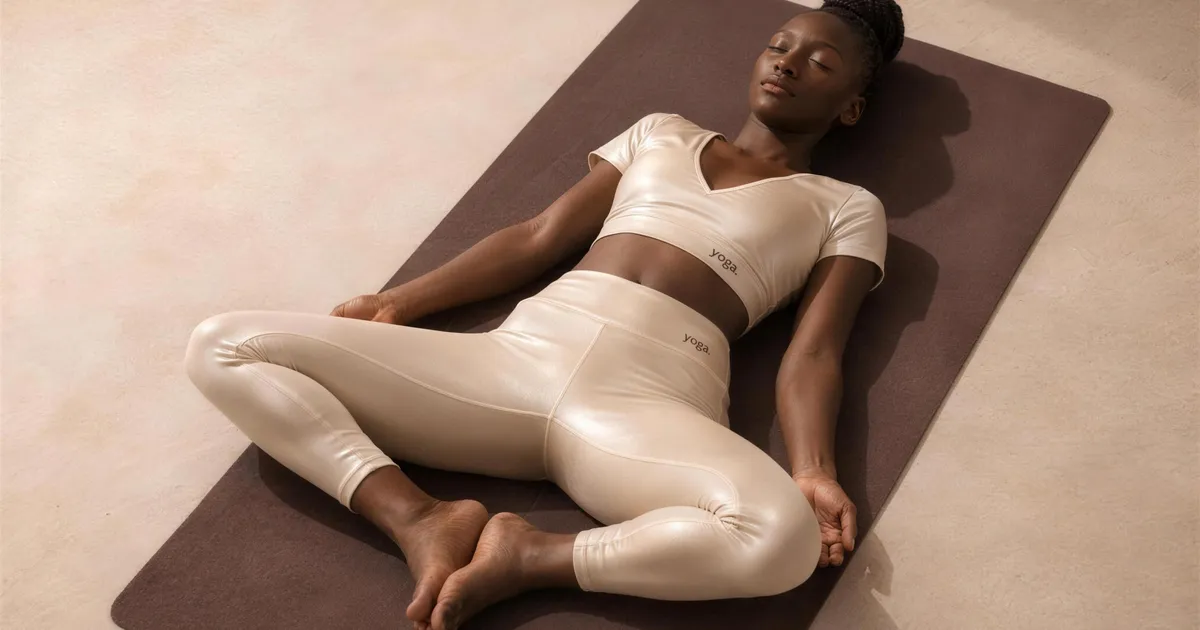
Lying Diamond Pose, Supta Vajrāsana (from Sanskrit: supta = lying down, vajra = diamond or thunderbolt, āsana = pose), brings the classic seated diamond shape of the soles pressing together fully onto the floor. Practiced on your back with the legs in a bound-angle position and the arms resting at your sides, it offers a passive, gravity-assisted opening across the inner thighs and groin. It fits naturally at the end of a practice as a restorative transition before Corpse Pose, or as a gentle opener at the beginning of a supine sequence.
At a Glance
- Level: Beginner
- Type: Supine
- Targets: Inner thighs (adductors), groin, hip flexors, lower back
- Good for: Releasing hip tension after seated work, calming the nervous system, encouraging diaphragmatic breathing
How to Do Lying Diamond Pose
- Begin seated on your mat with your knees bent and the soles of your feet pressed together, heels drawn comfortably toward your pelvis - a seated bound-angle position.
- Place your hands behind you on the mat and slowly lower yourself onto your back, using your forearms to control the descent.
- Once your back is flat on the mat, let your arms rest alongside your body, palms facing up.
- Allow gravity to do the work: let your knees drop toward the floor without forcing them down. Your inner thighs should feel a steady, passive stretch.
- Lengthen the back of your neck so it rests lightly on the mat, and soften your face, jaw, and shoulders.
- Close your eyes and breathe evenly, letting each exhale encourage a little more release through the hips without pushing.
- Hold for 1-3 minutes, or as long as is comfortable.
- To come out, bring your hands to the outsides of your knees and gently draw both knees together toward your chest, then roll to one side before pressing up to seated.
Benefits
- Lengthens the adductor muscles along the inner thighs.
- Stretches the hip flexors and the muscles of the groin.
- Encourages external rotation of the hip joints in a low-load, supine position.
- Allows the lower back to soften and settle against the mat without spinal compression.
- Promotes slow, full breathing by releasing tension across the pelvic floor and lower abdomen.
Common Mistakes and Alignment Cues
- Forcing the knees toward the floor: Let gravity work passively. Pressing or pulling your knees down strains the inner knee ligaments - keep the effort zero and the patience high.
- Feet too close to the pelvis: If you feel pinching in the groin or knees, slide your heels further away from your body until the shape becomes a wider, more open diamond.
- Chin jutting up: Lengthen the back of the skull gently away from the shoulders so your neck rests in its natural curve, without strain.
- Holding the breath: Tension in this area often triggers breath-holding. Consciously relax your belly on the inhale and soften the pelvic floor on the exhale.
- Arched lower back lifting off the mat: Tilt the pelvis very slightly toward neutral - imagine drawing the tailbone gently long - so the lumbar spine stays in soft contact with the floor.
Modifications and Props
- Blocks under the thighs: Place a yoga block (on its lowest height) under each outer thigh. This removes the demand for inner-thigh flexibility and makes the pose fully restorative.
- Folded blanket under the hips: If your lower back arches significantly or feels uncomfortable, rest your hips on a folded blanket to create a gentle posterior pelvic tilt.
- Strap around the feet and lower back: Loop a strap around your feet and the back of your pelvis to keep the heels drawn in without muscular effort, useful for longer holds.
- Feet further from the body: Simply moving the heels further away creates a wider, more accessible diamond shape for tighter hips - there is no minimum requirement for how close the heels must be.
Cautions
- Inner knee discomfort: If you feel pulling or pain at the inner knee, support the thighs with blocks immediately. Never let the knees hang unsupported if there is any knee instability.
- Recent groin or hip injury: Approach this pose cautiously and stay only in a range where you feel gentle stretch, not sharp sensation.
- Sacroiliac joint sensitivity: If your lower back or sacrum feels aggravated, place a folded blanket under the hips and reduce hold time.
- Late-term pregnancy: Lying flat on the back for extended periods may be uncomfortable; practice a seated bound-angle position instead.
If you're working with an injury or a medical condition, check with a qualified professional before practicing.
Related Poses
- Corpse Pose - the natural resting pose to follow after this release.
- Knee Press Both Legs - a gentle counter-pose to neutralise the hips and lower back after the open-hip shape.
- Lying Hero Pose - a progression into deeper supine hip and quad work once comfort in this pose is established.
- Bridge Pose - a complementary supine pose that engages the glutes and hip extensors to balance the adductor opening.
You'll find Lying Diamond Pose used well in A Gentle Yoga Routine for Tired, Low-Energy Days and it pairs equally well within A 10-Move Chair Yoga Sequence for a Midday Reset.