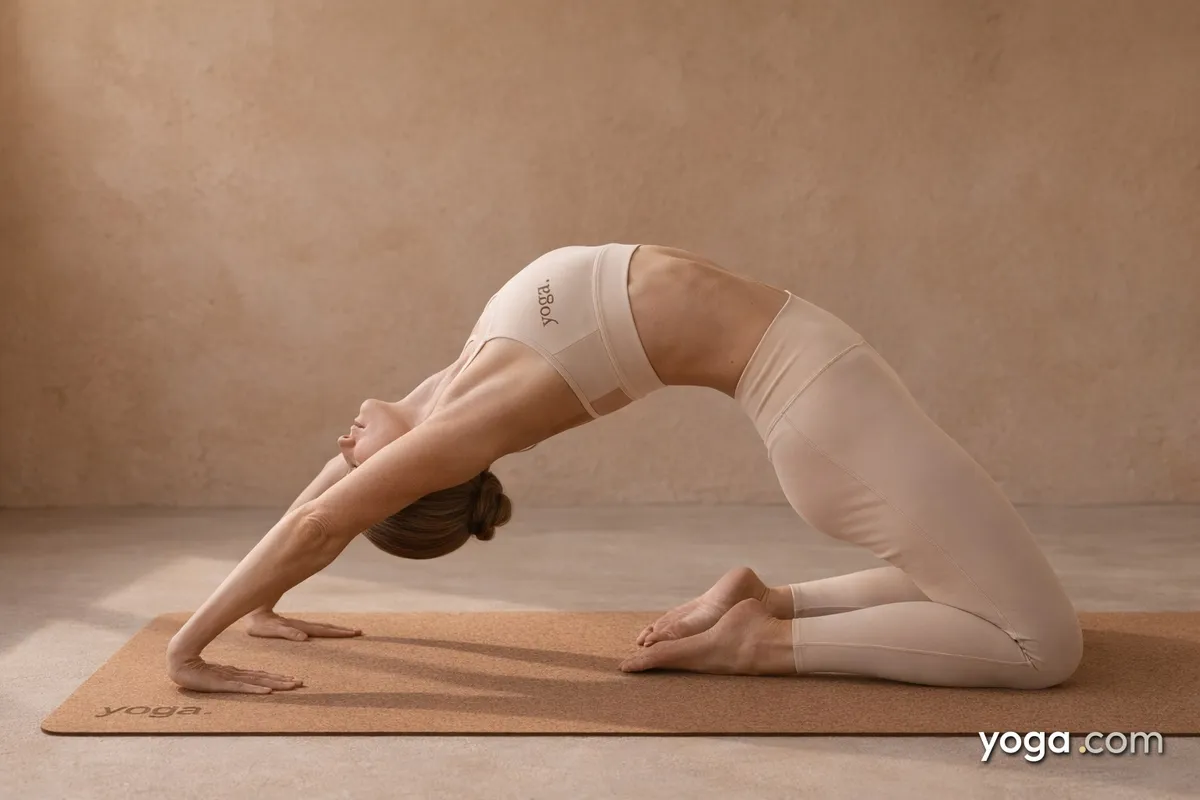
Dove Pose from Diamond Pose is a deep kneeling backbend that takes the classic reclined pigeon shape and builds it from a seated Vajrāsana base. Its Sanskrit name, Kapotāsana (from Vajrāsana), translates roughly as "pigeon pose from diamond pose" - kapota meaning pigeon or dove, āsana meaning seat, and vajra meaning diamond or thunderbolt. It typically appears near the peak of a well-warmed practice, after thorough preparation of the spine, hip flexors, and shoulders.
At a Glance
- Level: Advanced
- Type: Backbend
- Targets: Thoracic and lumbar spine, hip flexors, quadriceps, shoulders and chest
- Good for: Building spinal extension strength, increasing anterior hip mobility, developing shoulder and chest opening
How to Do Dove Pose from Diamond Pose
- Begin in Vajrāsana (Diamond Pose): kneel with your shins flat on the mat, tops of the feet down, and sit your hips back onto your heels. Sit tall and take several full breaths to settle.
- Place your hands on your hips and press the tops of your feet firmly into the mat. On an inhale, lift your hips away from your heels so you are kneeling upright with the thighs perpendicular to the floor.
- Engage your low belly lightly and draw your tailbone down - avoid dumping into your lower back. Begin to extend through your thoracic spine, broadening across your collarbones and drawing your shoulder blades gently toward each other.
- Reach your arms overhead, palms facing each other, and continue arching back through the upper and mid-spine. Keep your chin slightly tucked until you have enough extension to let the head follow the arc of the spine - do not simply drop it back.
- Bend your elbows and reach your hands toward the mat behind you, fingertips pointing toward your feet. Walk your palms closer to your heels, pressing evenly through all ten fingers.
- Once your palms are grounded, actively press into the floor to lift and open your chest further. Lengthen from your hip points to your sternum. Hold for 5-10 steady breaths, keeping the breath full and even.
- To come out: Bring your chin toward your chest, engage your core, and use your arms to press the floor away as you slowly return to upright kneeling.
- Lower your hips back to Vajrāsana or come into Child's Pose (Balāsana) for a full counter-stretch of the spine.
Benefits
- Stretches the hip flexors and quadriceps deeply from the kneeling base position
- Strengthens the spinal extensors throughout the thoracic and lumbar regions
- Increases mobility through the thoracic spine and costovertebral joints
- Stretches the anterior shoulder capsule, pectorals, and intercostals
- Builds wrist and shoulder stability under load in extension
Common Mistakes and Alignment Cues
- Collapsing into the lower back: Engage the low belly and lengthen the tailbone toward the knees before bending back - extension should travel evenly through the whole spine, not hinge at one lumbar segment.
- Feet splaying apart: Press the tops of all ten toes into the mat and keep the feet hip-width or closer; splayed feet reduce the stability of the kneeling base.
- Gripping the neck: Let the head follow the arc of the upper spine rather than dropping it sharply. If there is any pinching sensation in the cervical spine, keep the chin slightly tucked.
- Elbows winging wide: As you reach back, keep the elbows tracking roughly shoulder-width apart - flaring elbows reduces the lift through the chest and stresses the wrists unevenly.
- Holding the breath: The depth of this backbend can cause breath-holding; consciously soften the throat and maintain a rhythmic inhale and exhale throughout.
Modifications and Props
- Blocks under the hands: Place two blocks on the mat behind you at their tallest height. Reaching for the blocks rather than the floor shortens the range of motion and makes the pose accessible while your spine builds flexibility.
- Folded blanket under the shins: If kneeling is uncomfortable, pad the shins and knees with a folded blanket to reduce pressure on the knee joints and shin bones.
- Hands to lower back: Keep the palms on the sacrum (fingers pointing down) and simply practice the thoracic extension and hip-flexor stretch without reaching for the floor - a sound intermediate stage.
- Wall assist: Practice facing away from a wall at arm's length; reach back and walk your hands down the wall to gauge spinal extension before attempting the floor version.
Cautions
- Avoid or significantly modify this pose if you have a recent or acute knee injury; the sustained kneeling position places ongoing load on the knee joint.
- Use care with lower-back disc issues or lumbar instability - prioritize even spinal extension and avoid any sharp or compressive sensation.
- Approach with caution if you have a wrist, elbow, or shoulder injury; the weight-bearing demand on the arms is substantial in the full expression.
- If you experience dizziness, shortness of breath, or neck pain during the pose, come out slowly and rest before attempting again.
If you're working with an injury or a medical condition, check with a qualified professional before practicing.
Related Poses
- Camel Pose with Palms Set Against Feet - the closest structural preparation from the same kneeling family
- Upward Bow Pose - the natural next progression in deep backbend work
- Bow Pose - a prone backbend that builds the spinal extension needed here
- Upward-Facing Dog Pose - an accessible warm-up that primes the thoracic spine and hip flexors
For gentler movement on days when a peak backbend feels out of reach, explore A Gentle Yoga Routine for Tired, Low-Energy Days. If you prefer a seated, lower-intensity session, try A 10-Move Chair Yoga Sequence for a Midday Reset.