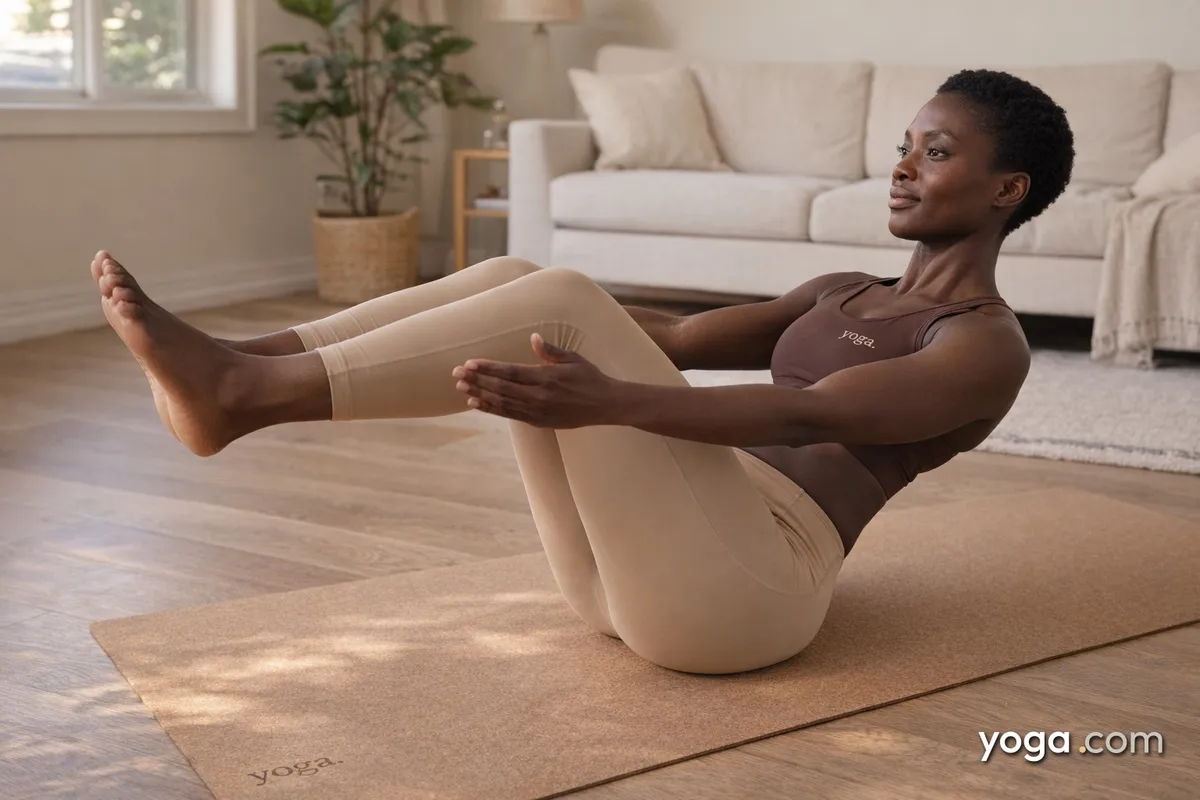
Easy Boat Pose is a beginner-friendly seated balance that introduces you to the core engagement and hip-flexor strengthening found in the full expression of the pose. Its Sanskrit name, Nāvāsana (easy variation), translates literally as "boat pose," evoking the V-shape your body makes as it balances on the sitting bones. It appears naturally in the middle of a seated sequence or as preparation before advancing to High Boat Pose.
At a Glance
- Level: Beginner
- Type: Seated
- Targets: Abdominals, hip flexors, spine extensors, quadriceps
- Good for: Building core stability, improving seated balance, developing postural awareness
How to Do Easy Boat Pose
- Sit on your mat with your knees bent and feet flat on the floor, hip-width apart. Place your hands behind your thighs, just above the backs of your knees.
- Sit tall, rooting your sitting bones evenly into the mat. Draw the crown of your head toward the ceiling and lengthen through your spine.
- Lean back slightly until you feel your abdominals engage - roughly a 45-degree angle from vertical. Keep your lower back long rather than rounding.
- With your hands still holding the backs of your thighs for support, lift your feet off the floor so your shins are parallel to the ground and your knees remain bent at roughly 90 degrees.
- Press your feet gently into an imaginary wall in front of you to activate your legs. Firm the quadriceps and flex the feet, bringing energy through the balls of the feet.
- Broaden across your collarbones, draw the shoulder blades toward each other, and keep the chest lifted. Direct your gaze softly forward or slightly upward toward your toes.
- Hold for 3-5 breaths, keeping the breath steady. When you are ready to come out, lower your feet to the floor with control on an exhale.
- Release your hands, sit upright, and pause for a breath before repeating or moving to the next pose.
Benefits
- Strengthens the rectus abdominis and deep transverse abdominis
- Engages and builds endurance in the hip flexors, particularly the iliopsoas
- Activates the spinal extensors, encouraging an upright, lengthened spine
- Strengthens the quadriceps as they work to hold the shins parallel to the floor
- Challenges seated balance and proprioception through the pelvis and sitting bones
Common Mistakes and Alignment Cues
- Rounding the lower back: If your lumbar spine collapses into a C-curve, you lose the spinal lengthening the pose is designed to build. Tip your pelvis slightly forward to find your natural lumbar curve before lifting the feet.
- Holding the breath: Gripping through the abdomen often causes you to stop breathing. Soften the jaw, relax the face, and maintain a smooth, even breath throughout.
- Collapsing the chest: When the torso sinks, the pose becomes a passive slump rather than an active balance. Lift the sternum and keep the collarbone broad.
- Feet dropping below knee level: Letting the legs sink too low removes the challenge from the core. Keep the shins parallel to the mat or slightly above horizontal.
- Straining the neck: Jutting the chin forward creates tension in the cervical spine. Keep the chin level and the back of the neck long.
Modifications and Props
- Keep hands on thighs: If balance is unstable, maintain your grip on the backs of the thighs throughout the hold - this is a completely valid way to practice the pose and still delivers the core and hip-flexor work.
- Yoga strap: Loop a strap around the soles of your feet, hold the ends, and use the strap for traction to help you maintain an upright spine while the legs are lifted.
- Sit on a folded blanket: Raising the hips on a folded blanket or firm block tilts the pelvis forward slightly, making it easier to avoid the lower-back rounding that many beginners experience.
- One foot at a time: Lift one foot off the floor while the other remains planted, practice the balance on one side, then switch - a useful starting point if lifting both feet simultaneously feels overwhelming.
Cautions
- Lower-back sensitivity: If you feel compression or pain in the lumbar spine rather than muscular effort in the abdomen, lower your feet to the floor and focus on spinal lengthening before attempting the lift again.
- Hip-flexor or groin strain: Because this pose actively loads the hip flexors, proceed carefully and reduce the lean-back angle if you notice pulling or discomfort at the front of the hip.
- Pregnancy: As the abdomen grows, this pose places significant pressure on the core. Consult a prenatal yoga specialist before practicing.
- Recent abdominal surgery: Avoid strong abdominal engagement until cleared to do so.
If you're working with an injury or a medical condition, check with a qualified professional before practicing.
Related Poses
- Bound Angle Pose - a gentle seated opener to practice before boat work
- Half Boat Pose - a close variation that deepens the challenge in a similar shape
- High Boat Pose - the natural next progression, with straight legs
- Bridge Pose - a useful counter-pose that opens the hip flexors and chest after boat work
Easy Boat Pose fits well in a core-focused flow or a restorative session. See it in action in A Gentle Yoga Routine for Tired, Low-Energy Days and A 10-Move Chair Yoga Sequence for a Midday Reset.