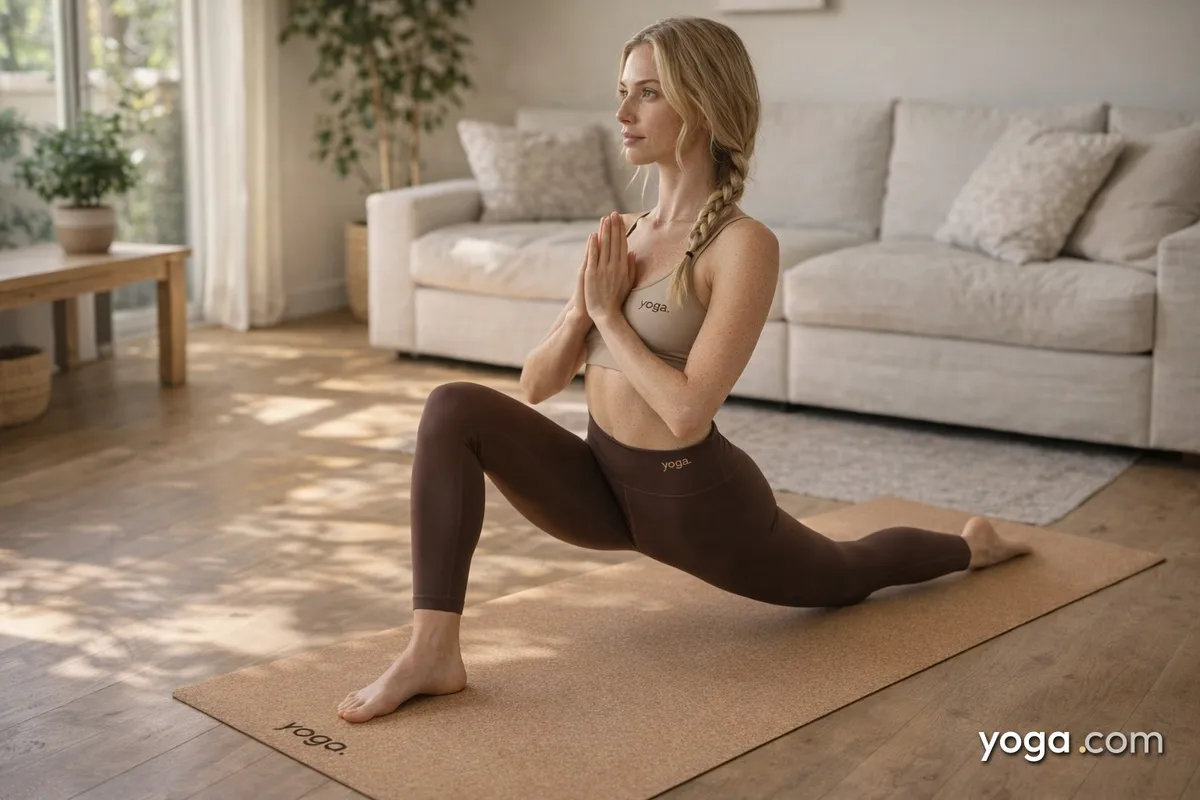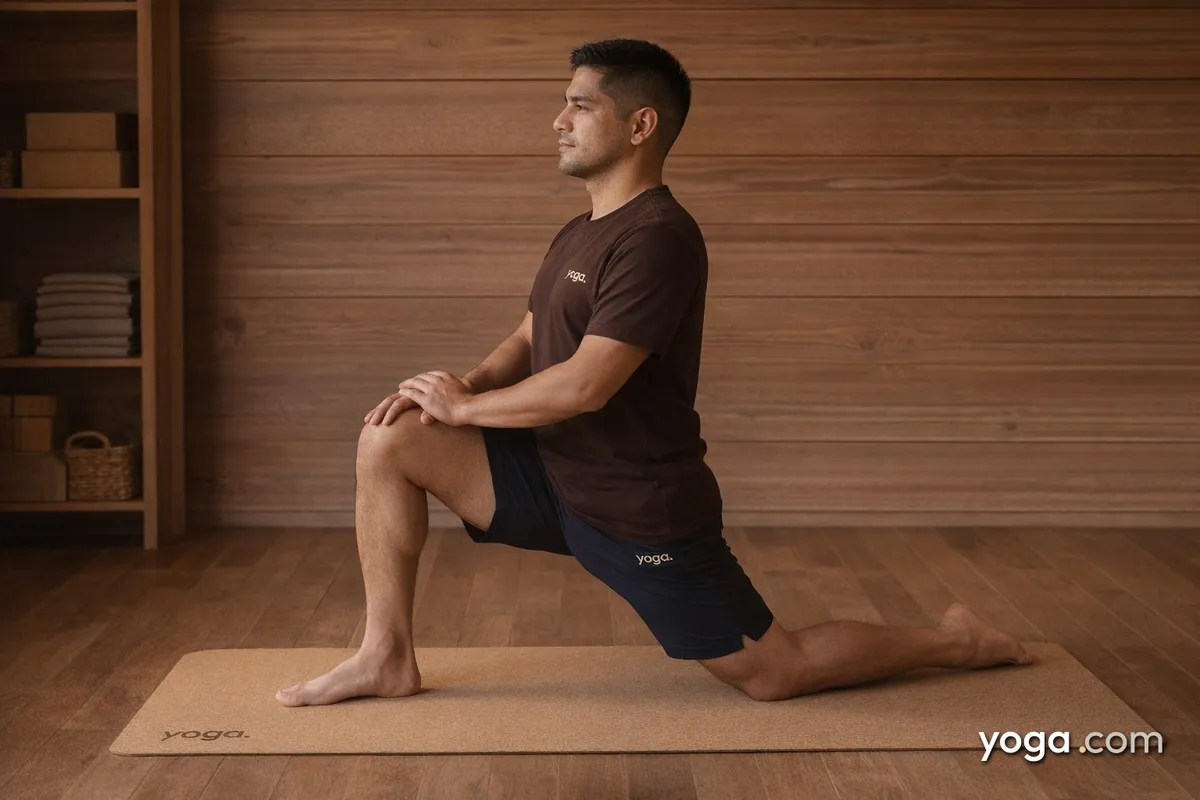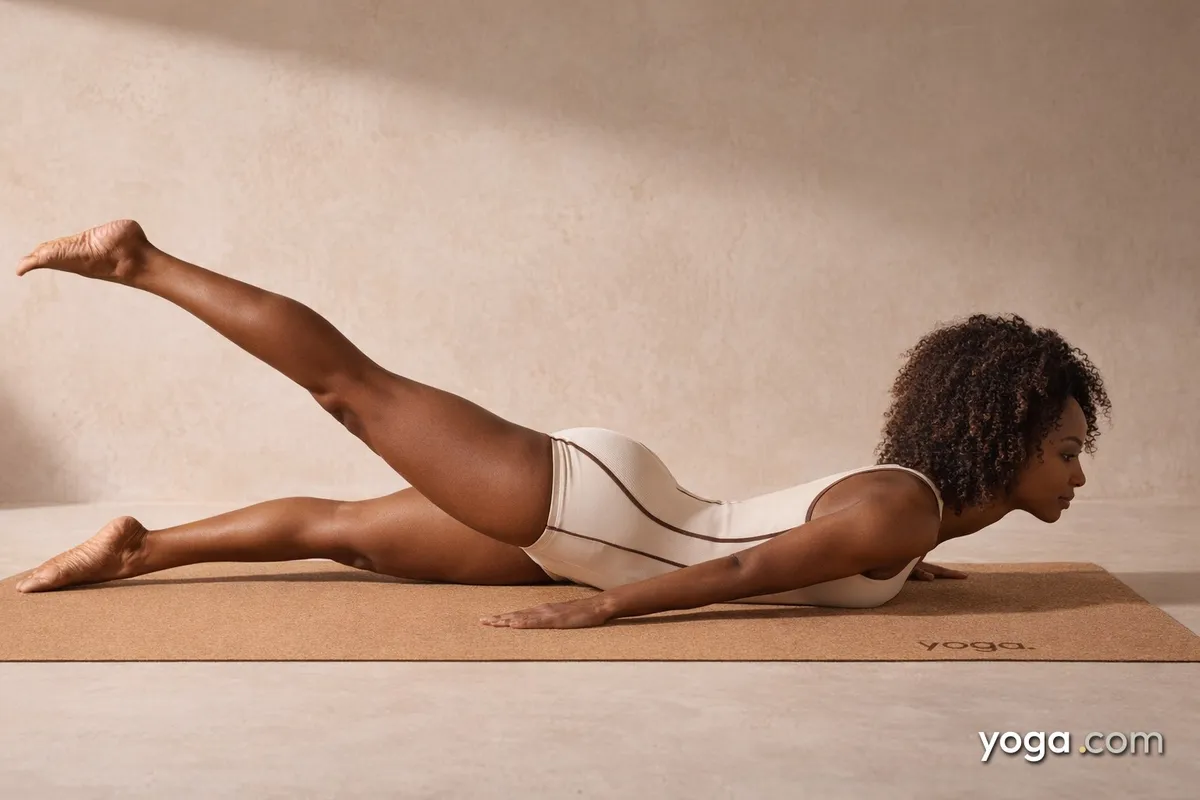
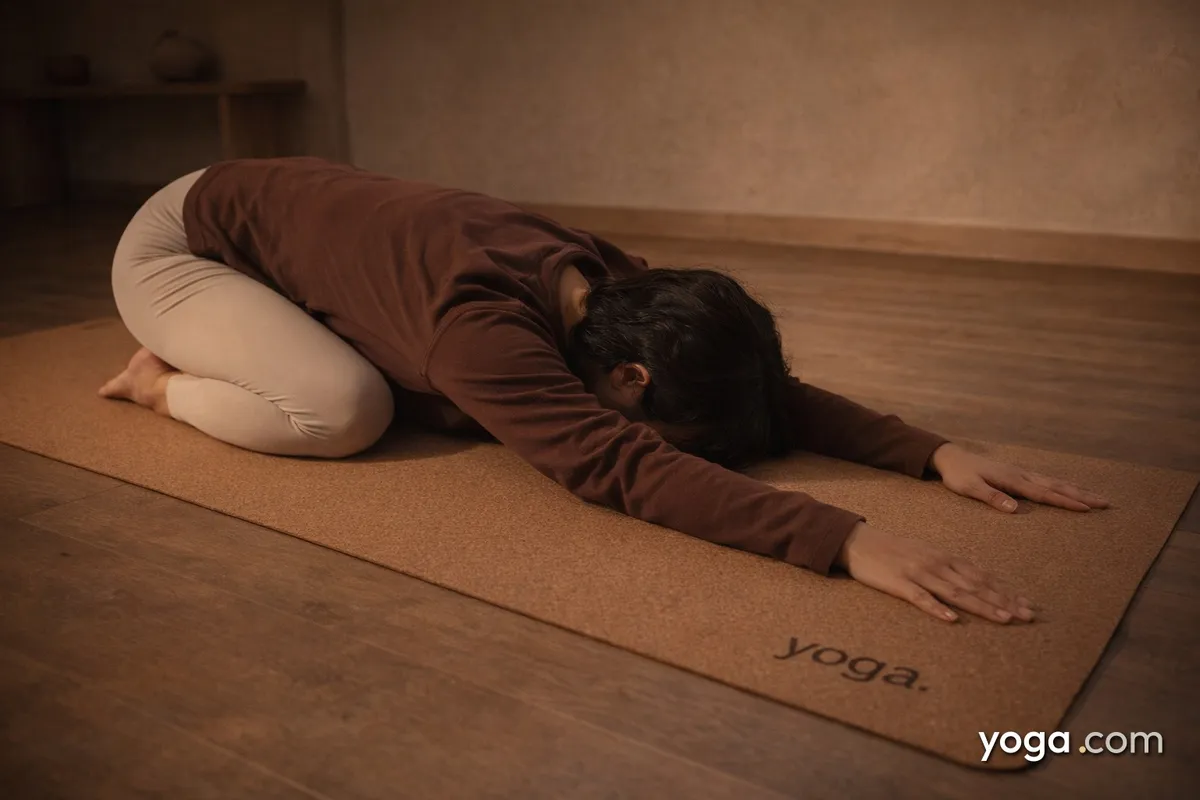
Hare Pose (Śaśāṅkāsana - from śaśa, "hare," and āṅka, "lap" or "mark") is a kneeling forward fold that draws the forehead toward the mat and the arms long overhead or alongside the body. It shares the rounded, tucked silhouette of its namesake animal. Placed near the end of a kneeling sequence or as a transition before Downward-Facing Dog, it offers a moment of quiet inward attention.
At a Glance
- Level: Beginner
- Type: Kneeling
- Targets: Spine (flexion), hips and glutes, shoulders and upper back, neck
- Good for: Lengthening the back body, building awareness of spinal rounding, calming the nervous system through a mild inversion of the head
How to Do Hare Pose
- Begin in Diamond Pose (Vajrāsana): kneel with your shins flat on the mat, tops of the feet down, and sit back onto your heels. Rest your hands on your thighs and take a breath to settle.
- On an inhale, reach your arms forward and overhead, lengthening through the side body.
- Exhale and hinge forward from the hips, lowering your torso and arms toward the mat in one smooth arc. Keep the buttocks in contact with the heels for as long as possible as you fold.
- Bring your forehead to the mat. Let your arms extend fully forward, palms facing down, shoulder-distance apart - or rest them alongside your body with palms up, whichever allows your shoulders to soften.
- Press the tops of the feet and shins evenly into the mat. Allow the tailbone to release toward the heels and the crown of the head to reach toward the mat, creating gentle traction along the entire spine.
- Soften your jaw, your eyes, and the muscles across the back of your skull. Breathe fully into the back ribs for 5-10 breaths.
- To come out: on an inhale, walk the hands back toward the knees and press into the shins to slowly rise, stacking the spine vertebra by vertebra. Return to Diamond Pose and pause for a breath before moving on.
Benefits
- Stretches the erector spinae and the thoracolumbar fascia along the full length of the back.
- Lengthens the gluteal muscles and hip external rotators in the folded position.
- Stretches the shoulder extensors and broadens the upper back when the arms are extended overhead.
- Gently mobilizes the cervical and thoracic spine into flexion.
- Builds body awareness around even weight distribution across both knees and shins.
Common Mistakes and Alignment Cues
- Hips lifting away from heels: Place a folded blanket between your thighs and calves to reduce the gap, or work with the modification below. The connection between seat and heels is what makes this pose distinctly Hare rather than a standard Child's Pose variation.
- Collapsing the neck and crunching the cervical spine: Rather than dropping the head passively, actively lengthen through the crown. Imagine a gentle thread drawing the top of your skull forward along the mat.
- Shoulders creeping toward the ears: Slide the shoulder blades gently down the back even as the arms reach forward. This keeps the neck long and the upper trapezius quiet.
- Uneven weight through the knees: Check that both shins press the mat with equal firmness. Shift your hips slightly side to side to find center before settling.
- Forcing the fold quickly: Lead with the breath - exhale into the forward hinge rather than pulling yourself down with the arms. The pose deepens gradually over several breaths.
Modifications and Props
- Blanket under the shins: If the tops of the feet or ankles are tender, fold a thin blanket under the shins and feet for cushioning.
- Blanket between thighs and calves: If the hips don't reach the heels comfortably, roll a blanket and tuck it into the back of the knees. This bridges the gap and lets the spine release without strain.
- Block under the forehead: If the forehead doesn't reach the mat, place a block on its lowest or middle height under the brow. This avoids compression in the neck and helps the back of the skull stay long.
- Arms alongside the body: Students with shoulder impingement or limited overhead range can rest the arms back along the sides of the legs, palms up. This variation still delivers the full spinal and hip stretch.
Cautions
- Knee sensitivity: Kneeling compresses the knee joint directly. Use generous padding and reduce the time spent in the pose if you feel pinching or sharp discomfort.
- Neck injury or recent surgery: Avoid any sensation of compression at the back of the neck. Use a block under the forehead and confirm the cervical spine feels long, not crunched.
- High blood pressure or glaucoma: The mild head-down position increases intraocular and intracranial pressure; keep the hold brief or choose a seated alternative.
- Pregnancy (second and third trimester): Deep forward kneeling folds may become uncomfortable; work with a teacher to find a suitable alternative.
If you're working with an injury or a medical condition, check with a qualified professional before practicing.
Related Poses
- Diamond Pose - the starting position for Hare Pose; build stability here first.
- Cat Pose - a complementary spinal flexion warm-up on hands and knees.
- Cow Pose - pairs with Cat as a counter-movement to balance the spine after Hare.
- Downward-Facing Dog Pose - a natural progression from Hare that continues the back-body lengthening in a weight-bearing context.
For a gentle practice that fits Hare Pose comfortably, see A Gentle Yoga Routine for Tired, Low-Energy Days or the A 10-Move Chair Yoga Sequence for a Midday Reset.