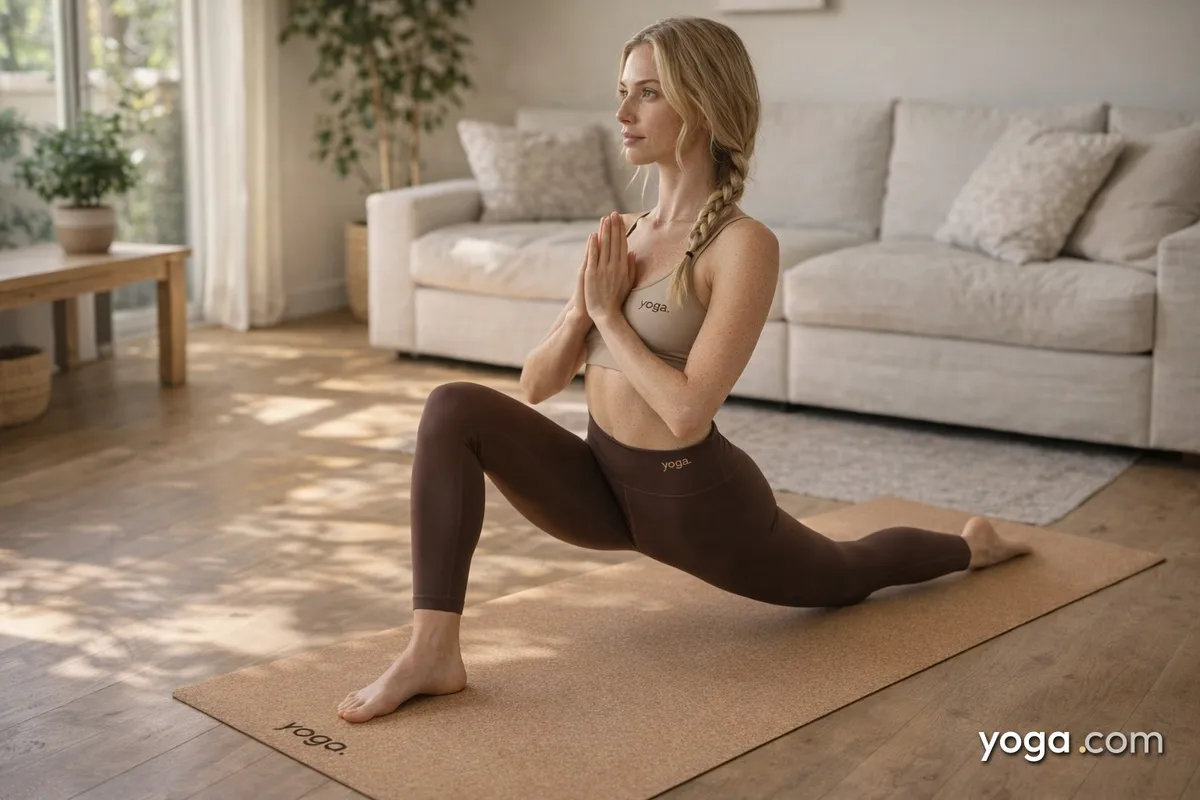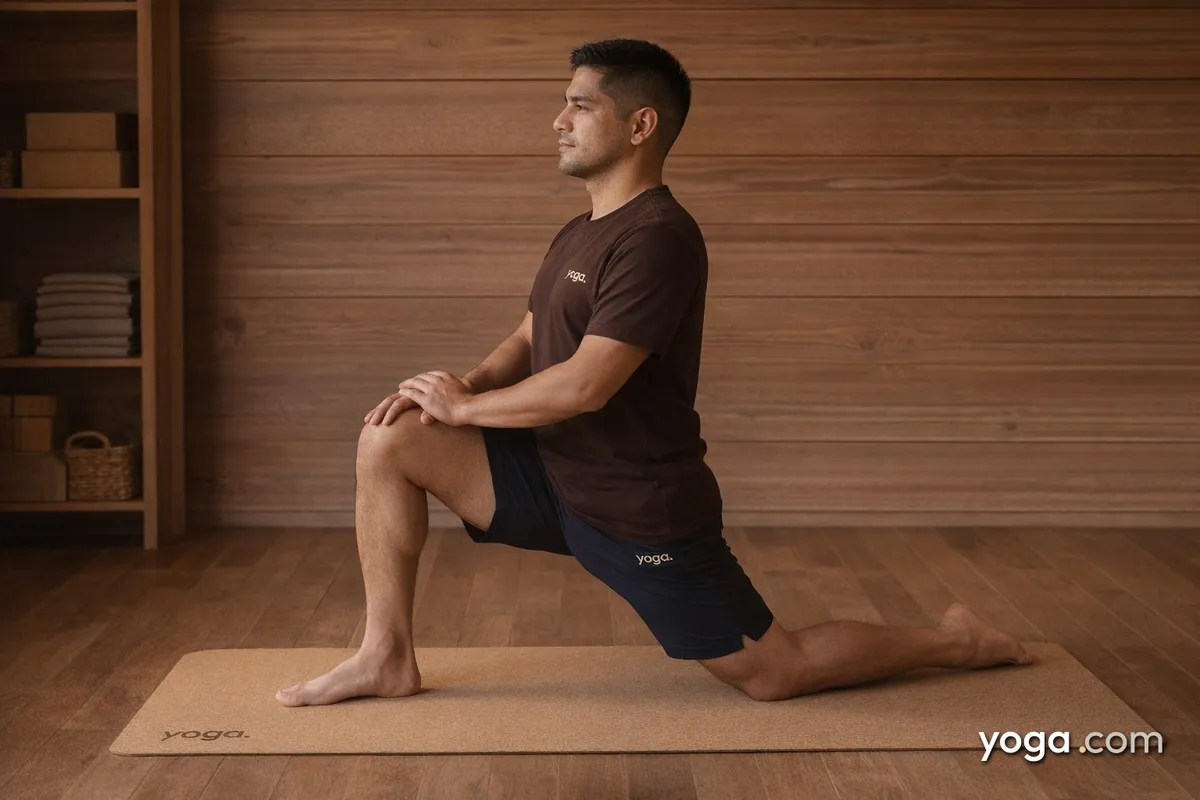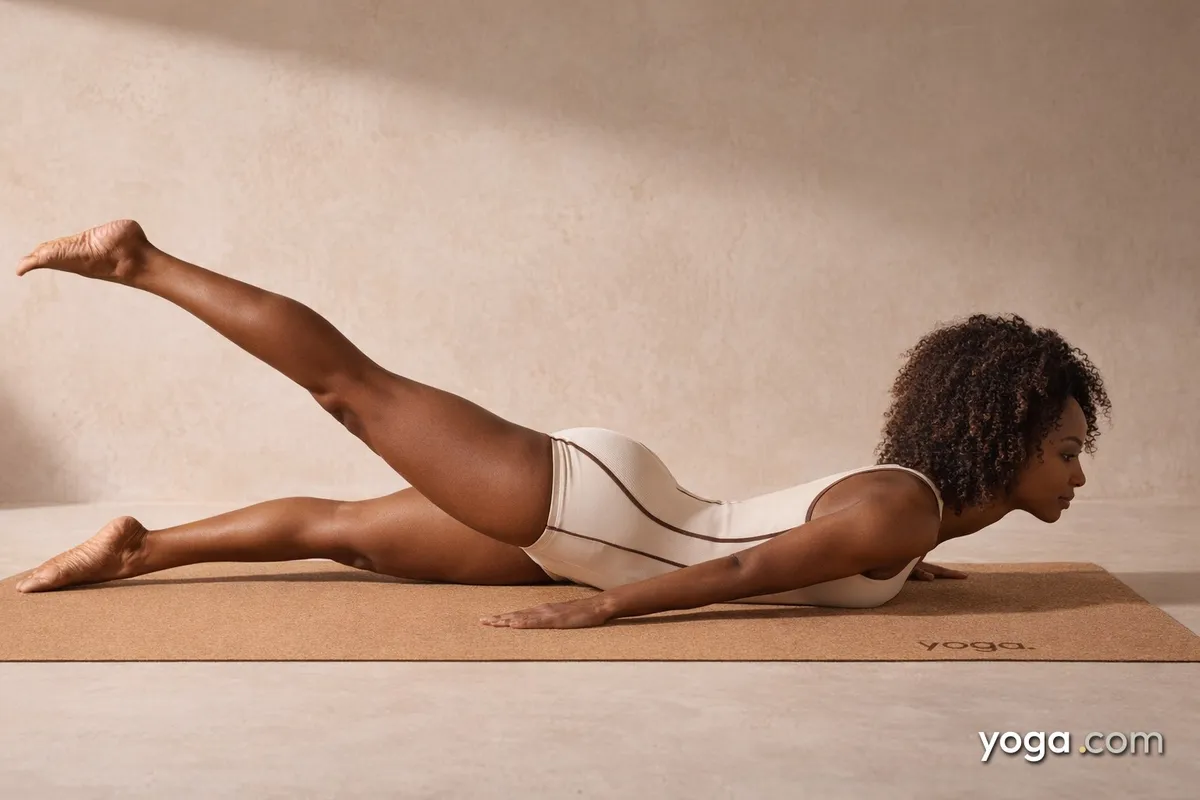
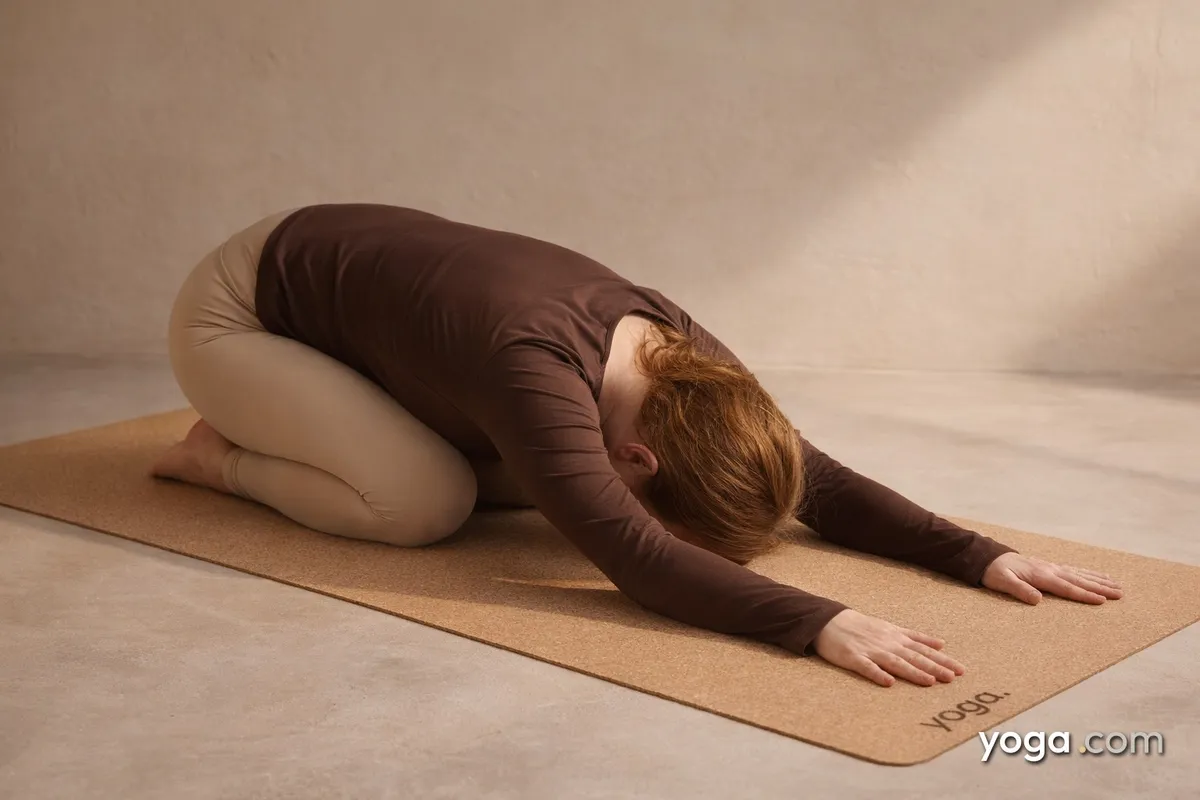
Head Down Hero Pose - Adho Mukha Vīrāsana, from the Sanskrit adho mukha (downward-facing) and vīra (hero) - is a kneeling forward bend that combines the hip and knee position of Hero Pose with the extended, surrendered shape of a prone bow. It sits naturally at the beginning or end of a practice as a resting shape, a gentle spinal lengthener, and a quiet transition between more active sequences.
At a Glance
- Level: Beginner
- Type: Forward Bend
- Targets: Quadriceps, ankles, thoracic spine, shoulders
- Good for: Lengthening the spine, stretching the tops of the feet and ankles, calming the nervous system through a grounded, prone position
How to Do Head Down Hero Pose
- Kneel on your mat with your knees together and your feet slightly wider than hip-width apart, tops of the feet flat on the floor. Sit back so your sitting bones rest between - not on top of - your heels.
- If your sitting bones don't reach the floor comfortably, place a folded blanket or block between your heels and your seat before proceeding.
- On an inhale, lengthen through the crown of your head and lift your chest.
- On an exhale, hinge forward from your hips and walk your hands out along the mat until your arms are fully extended, palms flat, shoulder-width apart. Let your forehead rest on the mat - or on a folded blanket if it doesn't reach easily.
- Allow your chest to release toward the floor. Draw your shoulder blades gently down your back so your ears stay away from your shoulders; avoid letting them scrunch up toward your ears.
- Soften your belly, breathe slowly into the back body, and hold for 5-10 breaths or as long as feels steady and comfortable.
- To come out, press your palms into the mat, engage your core, and slowly walk your hands back toward your knees as you rise upright on an inhale.
- Sit back in Hero Pose for a breath or two before moving on.
Benefits
- Stretches the quadriceps and hip flexors through the kneeling position.
- Lengthens the muscles along the thoracic and lumbar spine as the torso extends forward.
- Stretches the tops of the feet and ankles - areas that accumulate tension from standing, walking, and athletic activity.
- Broadens the upper back and stretches the muscles between the shoulder blades as the arms extend forward.
- Encourages diaphragmatic breathing by grounding the front body and allowing the back ribs to expand freely.
Common Mistakes and Alignment Cues
- Sitting bones lift off the prop or heels: If your hips hover in the air as you fold forward, add height under your seat - a block, blanket, or bolster - so your pelvis is supported before you reach the arms overhead.
- Shoulders creeping toward the ears: Actively slide your shoulder blades down your back, away from your neck. Think of lengthening through the side body as you reach the hands forward.
- Forehead pressing hard into the mat: Let your head be heavy and passive rather than pressing down. Use a blanket under the forehead if you're straining your neck to make contact.
- Knees splaying wide: Keep your knees together (or no wider than hip-width) so the quadriceps stretch remains even and the pelvis stays neutral.
- Holding the breath: With the belly compressed, breathing can become shallow. Focus on sending each inhale into the back ribs and sides of the chest.
Modifications and Props
- Raised seat: Place a folded blanket, bolster, or block between your heels and sitting bones. This is the single most useful modification if your knees or ankles feel sharp pressure in the full kneeling position.
- Blanket under the shins: If the tops of your feet or shins are uncomfortable on a firm mat, fold a blanket under them from knees to toes.
- Block or blanket under the forehead: Use a block at any height to support your head if it doesn't comfortably reach the mat - this also helps release neck tension rather than holding it.
- Arms alongside the body: Instead of extending the arms forward, rest them alongside your torso with palms facing up. This is a quieter, more restorative variation that reduces demand on the shoulders.
Cautions
- Knee discomfort: If you feel sharp or pinching pain in the knee joints (rather than the general stretch of a tight quadriceps), come out of the pose and add more height under the seat, or avoid the pose until you can work with a teacher directly.
- Ankle discomfort: Tight ankles may feel significant compression here. A rolled blanket placed just under the ankle joint (between the ankle and the mat) can reduce that pressure.
- Recent knee or ankle injury or surgery: This pose places the knee in deep flexion and the ankle in plantar flexion - both ranges that need to be approached cautiously after injury.
- Pregnancy (second and third trimester): The prone position may be uncomfortable as the belly grows; work with a prenatal yoga specialist for appropriate alternatives.
If you're working with an injury or a medical condition, check with a qualified professional before practicing.
Related Poses
- Cat Pose - a gentle kneeling warm-up that prepares the spine and wrists for the forward-folding shape.
- Downward-Facing Dog Pose - the natural progression from this shape: the same extended arms and lengthened spine, now with the hips lifted and the legs active.
- Seated Forward Bend - a seated counterpart that deepens the hamstring and spinal lengthening established here.
- Bridge Pose - an effective counter-pose that opens the hip flexors and chest in the opposite direction after the kneeling forward fold.
For a sequence that uses this pose as a rest shape, see A Gentle Yoga Routine for Tired, Low-Energy Days and A 10-Move Chair Yoga Sequence for a Midday Reset.