Seated Forward Bend is a foundational floor pose in which you hinge forward from the hips to reach toward your extended legs. Its Sanskrit name, Paścimottānāsana, translates literally as "intense stretch of the west side" - the back of the body, from heels to crown, is considered the west in yogic anatomy. It appears in nearly every style of practice, serving equally well as a warm-up for deeper forward bends or as a settling pose near the end of a sequence.
At a Glance
- Level: Beginner
- Type: Forward Bend
- Targets: Hamstrings, lumbar spine, calves, hip extensors
- Good for: Lengthening the posterior chain, building spinal flexion, quieting the nervous system
How to Do Seated Forward Bend
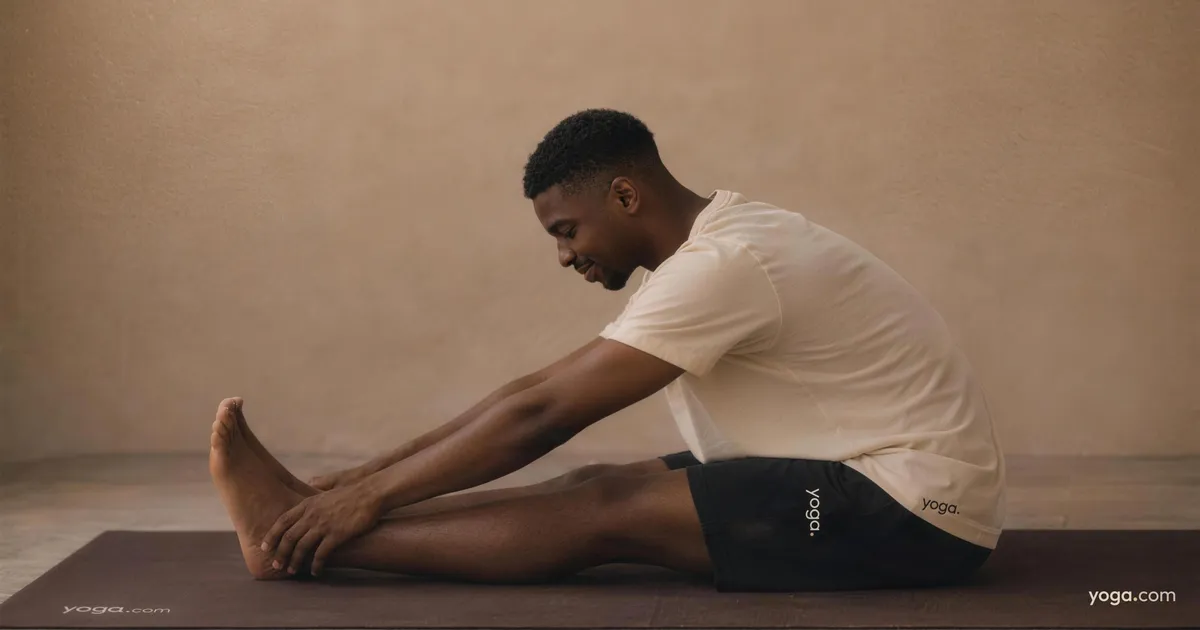
- Sit on the floor with both legs extended straight in front of you, feet flexed and together. If your lower back rounds severely right away, sit on a folded blanket to raise your hips.
- Press your thighs gently toward the floor and flex your feet so the heels push forward and the toes point toward the ceiling. Engage your quadriceps lightly - this protects the knee joints and encourages the hamstrings to release.
- On an inhale, lengthen your spine tall: lift the crown of your head, draw your shoulder blades onto your back, and feel your sitting bones root into the floor.
- On your exhale, hinge forward from the hip crease - not the waist. Lead with your sternum, keeping the spine long as you fold over your legs. Think about moving your chest toward your feet rather than your forehead toward your knees.
- Reach for your shins, ankles, or the outer edges of your feet with both hands. If you can hold your feet comfortably, interlace your fingers around the soles or loop a strap around the balls of your feet and hold one end in each hand.
- With each inhale, create a little more length in the spine. With each exhale, let the fold deepen naturally - without forcing. Keep your neck relaxed; gaze softly toward your feet or shins.
- Hold for 5-10 full breaths, or longer as your practice develops.
- To come out: on an inhale, lift your chest and lengthen the spine, then slowly sit upright using your core. Shake out your legs before moving to the next pose.
Benefits
- Stretches the hamstrings, calves, and the entire posterior chain from heels to skull
- Mobilizes the lumbar spine in flexion and lengthens the thoracic erectors
- Strengthens the hip flexors as they work to draw the torso toward the legs
- Stretches the connective tissue along the back of the knees
- Encourages diaphragmatic breathing as the abdomen is gently compressed against the thighs
- Cultivates patience and sustained focus - useful preparation for seated meditation
Common Mistakes and Alignment Cues
- Rounding the lower back from the start: Hinge at the hips first; if your pelvis immediately tilts backward, sit higher on a folded blanket until you can tilt the pelvis forward before folding.
- Yanking the feet with the arms: Your arms are guides, not levers. Hold lightly - let the breath create the depth, not muscular pulling.
- Collapsing the chest toward the floor: Keep the sternum lifting away from the navel; the fold deepens from length, not compression.
- Locking or hyperextending the knees: Maintain a micro-bend in the knees if you feel strain at the joint, and keep the quadriceps gently engaged throughout.
- Holding the breath: Breath is the mechanism of release here - exhale fully to allow the body to settle deeper into the fold.
Modifications and Props
- Strap around the feet: If you cannot reach your feet without rounding heavily, loop a yoga strap around the balls of your feet and hold each end. This lets you maintain a long spine while still experiencing the stretch.
- Blanket under the hips: Sitting on one or two folded blankets tips the pelvis into a forward tilt, making the hip hinge significantly more accessible for tight hamstrings.
- Bolster on the legs: Rest a bolster lengthwise on your legs and lower your torso onto it for a fully supported, restorative version - ideal when you want to hold the shape for two or more minutes.
- Bent-knee variation: Soften both knees as much as needed and rest your torso along your thighs. Over time, slowly work toward straightening the legs as flexibility increases.
Cautions
- Hamstring injury: Avoid deep pulling. Keep a bend in the knees and work well within a pain-free range.
- Lower back pain or herniated disc: Keep the spine long and prioritize the hip hinge over depth; discontinue if you feel sharp or radiating sensation.
- Sciatica: Some individuals find seated forward bends aggravate sciatic symptoms - bend the knees generously and come out of the pose if discomfort increases.
- Recent abdominal surgery or pregnancy: The compression of the abdomen against the thighs may be contraindicated; use a wide-legged variation or skip the pose.
If you're working with an injury or a medical condition, check with a qualified professional before practicing.
Related Poses
- Standing Forward Bend - a preparatory standing version that warms the same posterior chain
- Wide-Angle Seated Forward Bend - the natural progression once the seated fold feels accessible
- Bridge Pose - an ideal counter-pose that opens the hip flexors and reverses spinal flexion
- Both Big Toes Pose - a closely related supine variation that targets the same hamstring length with less spinal loading
You'll also find Seated Forward Bend in A Gentle Yoga Routine for Tired, Low-Energy Days and A 10-Move Chair Yoga Sequence for a Midday Reset.