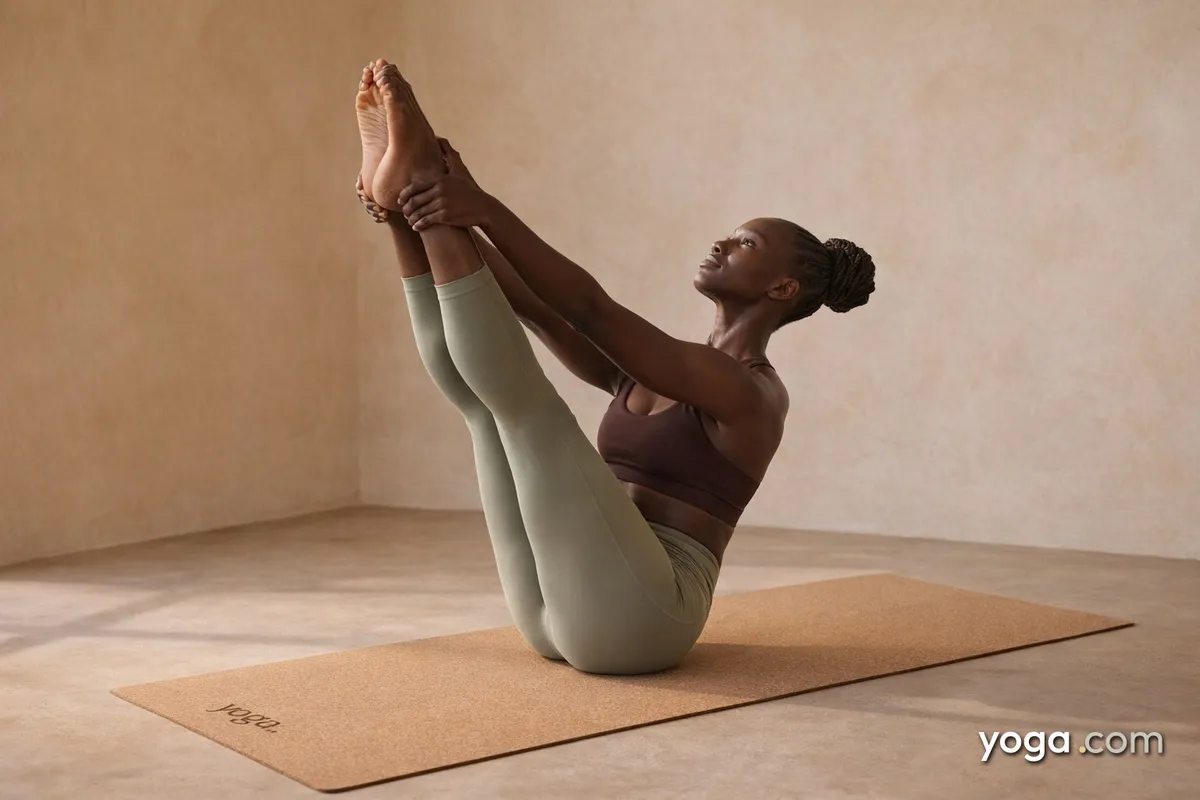
Ūrdhva Mukha Paścimottānāsana - Upward Facing Intense Stretch - is a supine balancing pose that brings the entire back of the body into a deep, active lengthening while you balance on the tailbone and sacrum. The name tells you everything: ūrdhva mukha means upward facing, and paścimottāna refers to the intense stretch of the west side of the body - the entire posterior chain from heels to skull.
At a Glance
- Level: Intermediate
- Type: Seated / Supine Balance
- Targets: Hamstrings, lumbar spine, thoracic extensors, hip flexors (eccentric), deep abdominals
- Good for: Hamstring lengthening, spinal decompression, core stability, body awareness in inversion-adjacent positions
How to Do Upward Facing Intense Stretch
- Begin in Paścimottānāsana. Sit on your sitting bones with both legs extended straight in front of you and your torso folded forward over your thighs. Hold the outer edges of your feet - or loop a strap around the balls of both feet - with both hands.
- Engage the grip and lengthen the spine. Root down through the sitting bones, draw the belly in lightly, and lengthen the crown of the head toward your feet. Keep the elbows wide and the shoulders drawing away from the ears.
- Rock back to supine. On an exhale, use controlled momentum to roll smoothly back, vertebra by vertebra, until the middle of your back and sacrum rest on the mat. Keep your grip on the feet or strap throughout. Your legs will follow overhead momentarily - this is normal.
- Find your balance point. On the next inhale, use your core to lift the torso and legs simultaneously. Shift your weight forward until you balance on the tailbone and lower sacrum. The legs rise toward vertical - aim for the soles of the feet to face directly upward - while the chest lifts to meet the shins. You are now balanced between the tailbone and the coccyx, not on the sitting bones.
- Fold the trunk toward the legs. With the balance established, exhale and draw the sternum actively toward your shins. Your elbows bend outward as you use your arm strength to close the gap between torso and legs. The goal is full contact: chest to thighs, face toward knees. Do not let the lower back round passively - initiate the movement from the thoracic spine lengthening forward.
- Refine the legs. Press firmly through both heels, flex the feet so the soles face the ceiling, and firm the quadriceps. Keep both legs parallel and together. The legs remain at or near vertical - avoid tipping them beyond vertical, which shifts weight too far back and breaks the upward-facing orientation.
- Hold for 5-10 breaths. Breathe steadily into the back of the rib cage. Each exhale, deepen the fold of the trunk toward the legs. Each inhale, resist the tendency to collapse - maintain length through the spine.
- To exit: Release the grip on the feet, lower both legs and torso simultaneously back to the mat with control, and return to a neutral supine position. Rest for a few breaths before sitting up.
Benefits
- Deep hamstring lengthening. The combination of leg elevation and active trunk flexion places the hamstrings under sustained, full-range stretch from both ends of the muscle.
- Thoracic mobility. Folding the mid-back toward elevated legs encourages extension and then flexion through the thoracic vertebrae, improving segmental mobility.
- Core integration. Balancing on the sacrum while maintaining the folded position requires continuous, coordinated engagement of the deep abdominals and hip flexors.
- Posterior chain awareness. The pose makes imbalances between left and right sides of the back body immediately apparent, supporting more refined proprioception.
- Spinal traction. The weight-bearing on the sacrum combined with active lengthening creates mild axial decompression through the lumbar segments.
Common Mistakes and Alignment Cues
- Mistake: Collapsing into a C-curve rather than folding forward. Cue: Initiate the fold from the sternum moving toward the knees - think length before depth. The lower back will round slightly at end range, but the movement begins with a long spine.
- Mistake: Legs drifting beyond vertical and tipping backward. Cue: Keep the soles of the feet facing the ceiling. If you feel yourself falling back, micro-bend the knees or bring the legs to 80-85 degrees rather than full vertical.
- Mistake: Gripping only with the hands and letting the arms do all the work. Cue: The arms create direction; the core creates the shape. Draw the navel toward the spine and use abdominal engagement to lift the chest - not just shoulder strength to pull.
- Mistake: Holding the breath during balance. Cue: A held breath rigidifies the torso and destabilizes the balance point. Soften the jaw, keep the breath moving, and let each exhale deepen the fold organically.
- Mistake: Separating the legs. Cue: Press the inner thighs together and keep both feet flexed and parallel. Separation usually signals that one hamstring is tighter - use a strap to equalize the pull.
Modifications and Props
Strap around the feet: If your hands cannot reach the feet with the trunk folded, loop a strap around the balls of both feet and hold the strap at whatever length allows you to keep the spine long and the chest lifting.
Bent knees: Micro-bending both knees reduces hamstring tension enough to allow the trunk-to-leg fold. Over time, straighten the knees as flexibility develops.
Blanket under the sacrum: A thinly folded blanket under the sacrum raises the balance point slightly and makes it easier to find stability without sinking into the lower back.
Wall assist: Practice the balance phase with your feet pressing lightly against a wall to map the shape before working freely.
Cautions
Avoid this pose or proceed with extra care if you have acute hamstring tears, sacroiliac joint instability, herniated lumbar discs, or osteoporosis of the spine. The supine-to-balance transition puts momentary load through the lumbar spine - move slowly and avoid jerking the body into position. If you experience sharp pain in the lower back, hamstrings, or knees at any point, release immediately. If you're working with an injury or a medical condition, check with a qualified professional before practicing.
Related Poses
- High Boat Pose - builds the core strength and hip-flexor endurance needed to hold the sacral balance point.
- Half Boat Pose - a gentler balance on the sacrum that trains the same equilibrium with less hamstring demand.
- Tortoise Pose - targets the same posterior chain lengthening from a seated foundation, preparing the hamstrings and lower back.
- Downward-Facing Dog Pose - an accessible way to lengthen the entire back body and warm the hamstrings before attempting this pose.