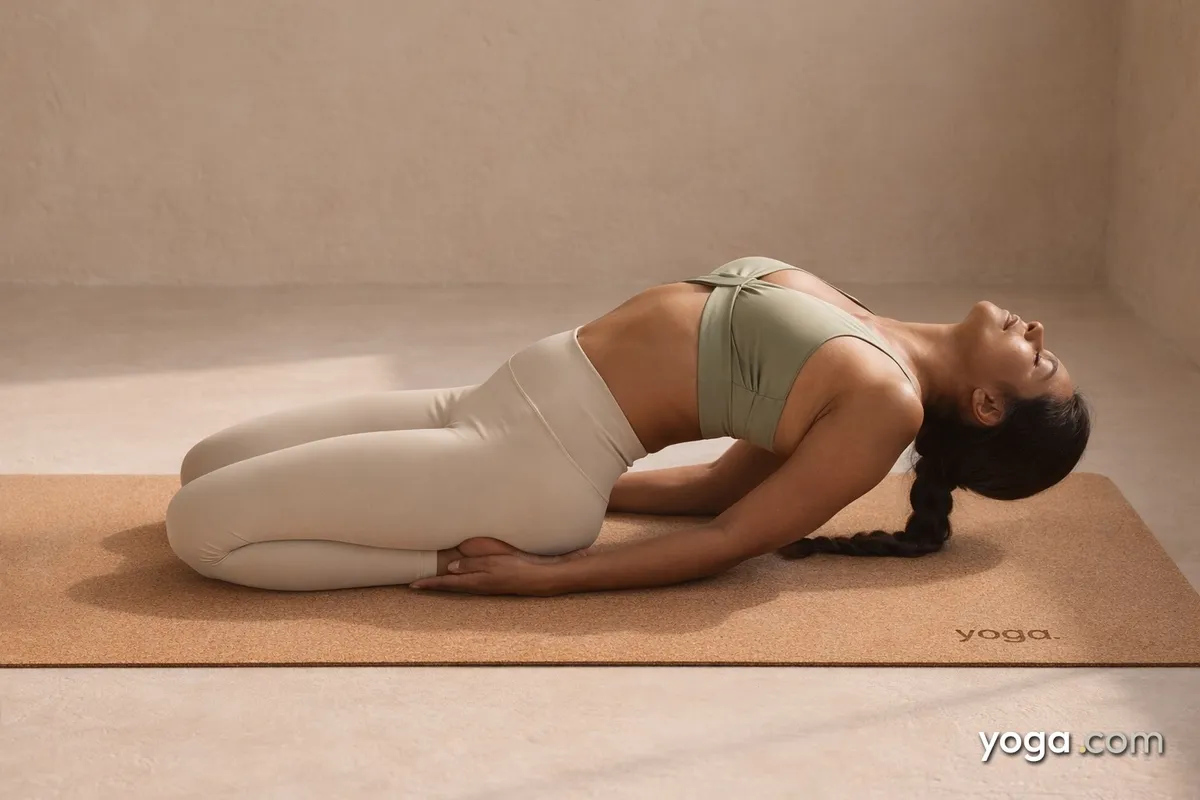
Fish Out of Hero Pose is a reclined backbend that begins where Vīrāsana (Hero Pose) ends: seated with the shins alongside the thighs and the tops of the feet flat on the floor. From there, you lower the torso and head toward the ground, arching the spine and lifting the chest - hence the full Sanskrit name Matsyāsana (from Vīrāsana), meaning "fish pose" taken from the hero seat. It typically appears near the end of a practice as a deep chest opener and spinal extension that complements forward folds and hip-flexor stretches done earlier in the session.
At a Glance
- Level: Intermediate
- Type: Backbend
- Targets: Thoracic spine, hip flexors, quadriceps, throat and chest
- Good for: Expanding chest capacity, lengthening the front body, building spinal extension strength
How to Do Fish Out of Hero Pose
- Start in Vīrāsana. Kneel with your knees together, sit your hips between your heels, and press the tops of your feet evenly into the mat. Confirm your inner ankles are not crunching and your sitting bones make contact with the floor.
- Plant your hands. Place your palms flat on the mat behind you, fingertips pointing toward your heels. Draw your shoulder blades together and lift your chest slightly to create length before you descend.
- Begin to recline. Lean back onto your forearms one at a time, keeping the knees pressing down. Resist letting the knees splay wide - a folded blanket between the inner thighs can help them stay together.
- Arch the spine and lift the chest. Press your forearms into the mat, draw the shoulder blades toward each other on the back, and lift the sternum toward the ceiling. Let the upper back curve into extension; the work is in the thoracic spine, not just the lumbar.
- Place the crown of the head down (optional). If your thoracic spine allows, continue arching until the crown - not the back - of the head rests lightly on the floor. The neck follows the curve of the upper spine; it should not bear weight or feel compressed.
- Set your arms. Either keep your forearms on the ground for support, rest your hands on your thighs, or - if the pose is fully stable - extend the arms overhead and clasp the elbows for a deeper shoulder stretch.
- Hold and breathe. Stay 5-10 breaths, actively pressing the knees and shins into the mat and continuing to lift the chest with each inhale.
- Come out carefully. Press your forearms firmly into the floor, tuck your chin toward your chest, and use your core to lift your torso upright - avoid pushing straight up through the neck. Return to Vīrāsana, then counter with a gentle forward fold such as Child's Pose for several breaths.
Benefits
- Stretches the anterior hip flexors and quadriceps loaded by the Vīrāsana base.
- Strengthens the thoracic erector spinae and rhomboids through active spinal extension.
- Expands the intercostal muscles and increases anterior chest wall mobility.
- Lengthens the sternocleidomastoid and scalene muscles of the throat and neck when the head is allowed to drop back freely.
- Builds the eccentric and isometric control of the core needed to support deep backbends safely.
Common Mistakes and Alignment Cues
- Mistake: Dumping into the lumbar. If you feel a pinching sensation in the low back, shift the arch higher - focus the extension between the shoulder blades, not at the waistband.
- Mistake: Knees lifting off the mat. Press the tops of the feet and shins actively down; if the knees still rise, place a folded blanket under the sitting bones to reduce the demand on the quadriceps.
- Mistake: Bearing weight on the back of the skull. The head should rest on the crown; if you feel compression in the cervical spine, keep the forearms on the floor and stop before the head touches down.
- Mistake: Collapsing the shoulder blades apart. Actively squeeze the shoulder blades toward the spine throughout; this is what creates the thoracic lift that makes the pose sustainable.
- Mistake: Holding the breath. The chest position can make breathing feel restricted - consciously widen the ribs laterally on each inhale and soften the belly on each exhale.
Modifications and Props
- Bolster under the spine: Place a long bolster lengthwise along the spine before reclining. This gives the thoracic spine a supported arch and is ideal if staying on the forearms feels strenuous.
- Block under the head: Rest the back of the head on a block at its lowest height instead of going all the way to the floor. This lets you experience the chest lift without demanding full cervical extension.
- Blanket under the sitting bones: If the quadriceps or ankles protest, place the hips on a folded blanket or two to reduce the depth of the hip flexor stretch in the base position.
- Forearms stay down: Keeping the forearms on the mat throughout is a completely valid full expression for many practitioners - you do not need to progress to hands on thighs or arms overhead.
Cautions
- Avoid this pose or work with a teacher if you have a current knee injury, as the deep knee flexion of the Vīrāsana base places significant load on the joint structures.
- Approach carefully if you have cervical spine issues - keep the chin slightly tucked and use a block under the head rather than allowing the neck to hang unsupported.
- Those with low-back sensitivities should emphasize thoracic extension and keep a mild engagement of the abdominals to avoid excessive lumbar compression.
- Move slowly going in and out: rapid transitions in reclined backbends can cause dizziness or neck strain.
If you're working with an injury or a medical condition, check with a qualified professional before practicing.
Related Poses
- Bridge Pose - a supine backbend that warms up thoracic extension before the deeper arch of Fish.
- Cobra Pose - a foundational prone backbend that teaches the same shoulder-blade-drawing action used here.
- Camel Pose with Palms Set Against Feet - a kneeling backbend that shares the upright-knee base and full anterior-body stretch.
- Corpse Pose - the natural counter-pose to follow after releasing from the reclined position.
Looking for sequences that include restorative backbends? See A Gentle Yoga Routine for Tired, Low-Energy Days and A 10-Move Chair Yoga Sequence for a Midday Reset.