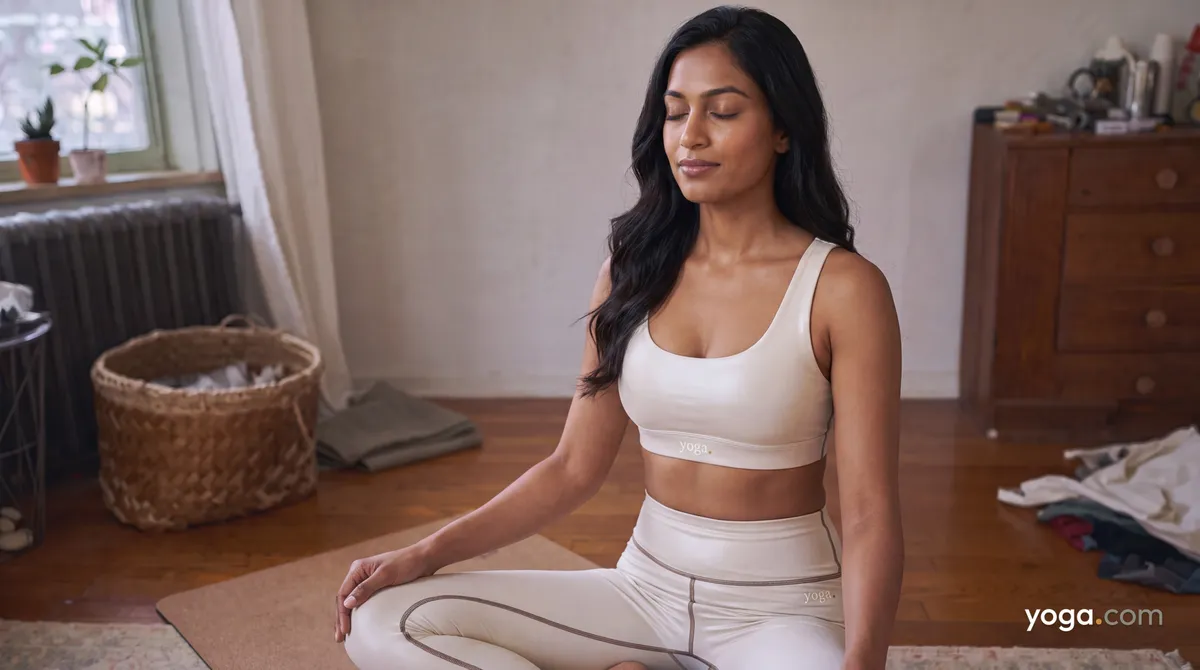
You know that feeling - the day has barely started and you're already behind, your shoulders are up near your ears, and your mind is running three conversations at once. Yoga doesn't just offer a quiet hour away from that pace. Over time, it actually teaches your nervous system to reset. Here's what the science says about how that happens, and how you can put it to work today.
Your Breath Is the Real Teacher
The breathing in yoga is not just background noise. The breathing is the whole point. Pranayama, the Sanskrit word for yogic breathing techniques, is one of the four core pillars of yoga's 5,000-year-old framework, alongside physical postures (asana), mindfulness (dharana), and meditation (dhyana). Keep in mind that pranayama has been a central part of this framework for a very long time, and so your breath is not a minor detail you can ignore.
When you slow your breath deliberately, your nervous system listens. The shift from fast, shallow chest-breathing to long, steady cycles sends a clear signal to your body that there is no emergency, so your body begins to calm down because it is receiving that message directly from your breath. That signal is surprisingly powerful, and many people do not realize how much control your own breath can give you over how your body feels.
What's Actually Happening Inside Your Body
Slow, intentional breathing nudges your autonomic nervous system away from its sympathetic "fight-or-flight" mode and toward parasympathetic activity - the "rest-and-digest" state where your heart rate settles, digestion resumes, and muscles release their bracing.
Research suggests that practicing mindful movement like yoga may help manage stress, depression, and insomnia, and support heart health markers including blood pressure, cholesterol, and heart rate. These aren't small, niche findings - multiple reviews across contemplative practices consistently report lowered heart rate, blood pressure, and blood lipid profiles.
One specific breath-training insight worth knowing: a 2021 study in the Journal of the American Heart Association found that adults who practiced high-resistance inspiratory muscle strength training for just 30 breaths a day, six weeks running, dropped their systolic blood pressure by 9 mmHg. Your breath has real cardiovascular leverage.
How Yoga Changes Your Brain, Too
The slowdown isn't only physical. Yoga practice has been correlated with greater cortical thickness and gray-matter concentration in brain areas linked to arousal, mood, memory, and cognition - and with reduced reactivity in the amygdala, the brain's threat-detection center. Less amygdala hair-trigger, less of that constant low-grade alarm.
Think of it this way: with regular practice, your brain's default setting gradually shifts. The world doesn't get less stressful. You just stop running the same panicked loop through it.
What Beginners Get Wrong
"I have to empty my mind"
You don't. The physiological shift toward parasympathetic activity happens through themechanical act of breathing slowly and steadily - even when your mind is still busy writing tomorrow's to-do list and your thoughts are going in every direction. Keep in mind that you do not need mental silence for the breathing to work. Do not wait for mental silence before you decide it is working.
"One session should do it"
The calming effect of a single session is real, but the lasting changes - the ones that carry over into your resting baseline - build over weeks and months of consistent practice. On top of that, the nervous system simply needs time and repetition to adapt, and so one session alone will not create those deeper changes. Three 30-minute sessions a week will do far more for your nervous system long-term than one marathon class once a month, and this is because regular practice gives your body enough repeated exposure to actually shift your baseline.
"All yoga is the same"
If your primary goal is to slow down, you should choose a format that prioritizes breath and stillness. Styles like hatha, restorative, and yin are your most direct route, and these styles are most direct because they are built around slow movement and breath awareness. A vigorous vinyasa class can raise your heart rate significantly - beginner hatha classes average a heart rate of around 93 bpm and burn roughly 195 kcal per 90 minutes - so a fast-paced style may feel activating before the fast-paced style feels calming, especially at the start.
The Poses That Help You Settle
You do not need an elaborate sequence to get results. A few well-chosen postures held with slow, conscious breathing are enough to begin shifting your state, so you can keep things very simple because simplicity is what works here. Try these poses:
- Child's Pose (Balasana) - Forward fold with the forehead grounded; this pose naturally lengthens the exhale and quiets the nervous system.
- Legs-Up-the-Wall Pose (Viparita Karani) - A gentle inversion that encourages parasympathetic activity with almost no effort required on your part.
- Supine Spinal Twist (Supta Matsyendrasana) - Releases tension across the back and hips; hold each side for several slow breath cycles and let your body fully relax into the pose.
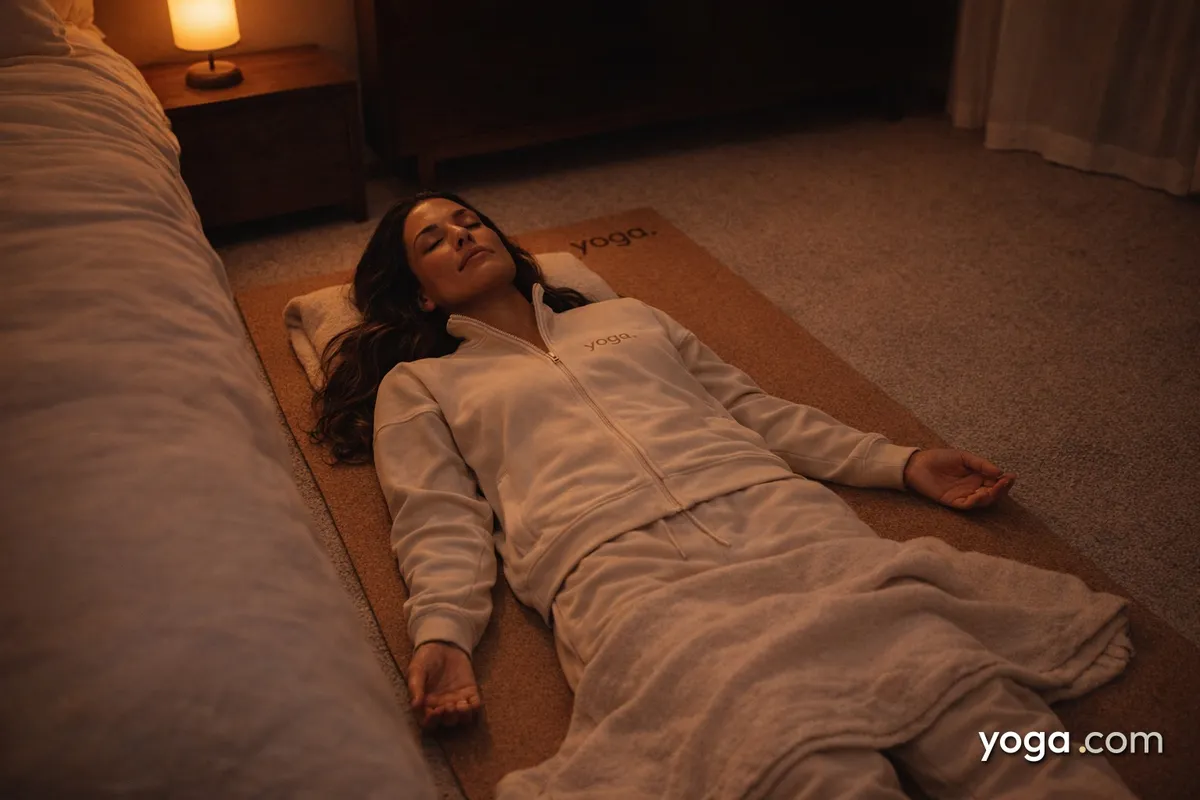
- Corpse Pose (Savasana) - Often skipped, never optional. Keep in mind that this is where your nervous system actually integrates what you have practiced.
In each pose, let your exhale be slightly longer than your inhale. On top of that, this one simple adjustment is enough to begin nudging your autonomic balance, and so you do not need to do anything complicated because that single breathing change already does most of the work for you.
Who's Already Practicing - and What They're Noticing
In 2022, 16.9% of U.S. adults practiced yoga in the past year - with women (23.3%) more than twice as likely as men (10.3%) to practice. And 57.4% of those practitioners incorporated meditation as part of their yoga practice, which reinforces the breath-based nervous system calming in a meaningful way.
What are people actually experiencing? A national survey of 1,045 Iyengar yoga practitioners found that participants reported yoga improved their energy (84.5%), happiness (86.5%), sleep (68.5%), and social relationships (67%). Notably, 60% of those practitioners had at least one chronic or serious health condition - yet most rated their general health as very good or excellent. These are real people, not a carefully selected healthy sample.
How to Start (Even If You Only Have 10 Minutes)
- Choose a slow-format class. Look for hatha, gentle, restorative, or yin yoga - in person or online. Slow-format classes are the best place for beginners to start because they give your body and your breath time to settle.
- Start small and consistent. Ten to fifteen minutes three times a week beats a 90-minute class once a fortnight. Keep in mind that doing a little bit of yoga regularly is much more useful than doing a long session just once in a while.
- Anchor to the exhale. In every pose, consciously extend your exhale a beat longer than your inhale and try to make this a habit so your nervous system learns to follow your breath.
- Don't skip Savasana. Even five minutes of Corpse Pose at the end lets the practice land. On top of that, skipping Savasana means your body does not get the time it needs to absorb everything you just did.
- Track how you feel - not how you look. Notice your shoulders, your jaw, your sleep quality. That is where the real data lives, and tracking how you feel is more honest than tracking how a pose looks in the mirror.
If you have a heart condition, high blood pressure, or any other medical concern, check with your healthcare provider before starting a new movement practice. Yoga is generally gentle, but your doctor deserves to be part of the conversation and your doctor can help you choose the right style for your specific situation.
Rewiring Rhythm From Within
Yoga slows you down by training the one system that actually controls your pace: your nervous system. Your breath is the mechanism, your poses are the container, and consistency is what makes it stick and what makes the changes last. You do not need to empty your mind or achieve perfect postures or carve out a full hour every day because yoga works even when your practice is short and imperfect. You just need to start, and then you need to keep coming back. Keep in mind that your body learns through repetition, and so the more you return to your practice, the more your body begins to learn that slow is safe. That is really the whole point.
Sources
- PMC / NCBI - Yoga and cardiovascular health: a review
- PMC / NCBI - National survey of yoga practitioners
- American Heart Association - Exercise mind and body with yoga and mindful movement
- PMC / NCBI - Contemplative activities and cardiometabolic health
- PMC / NCBI - Beginner hatha yoga and physical fitness in young women
- CDC / NCHS - Data Brief No. 501: Yoga and meditation use among U.S. adults, 2022
- American Heart Association - It's not just inspiration: careful breathing can help your health