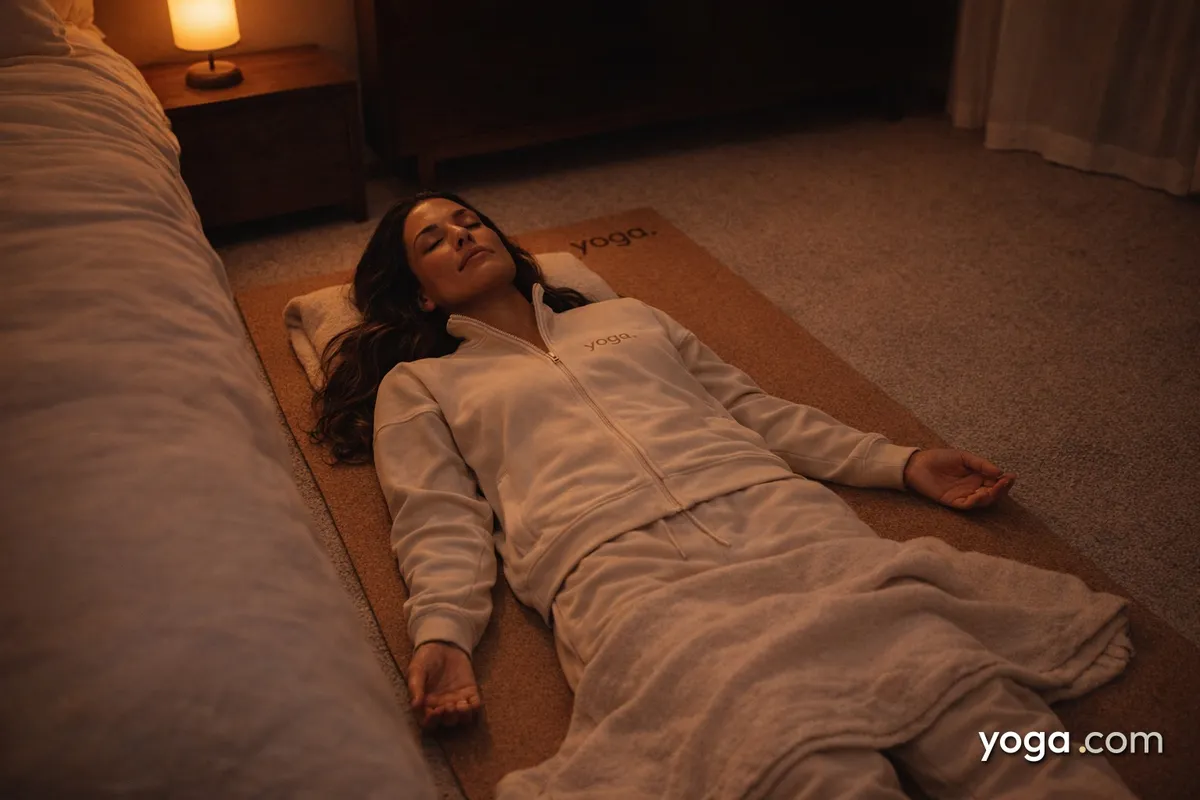
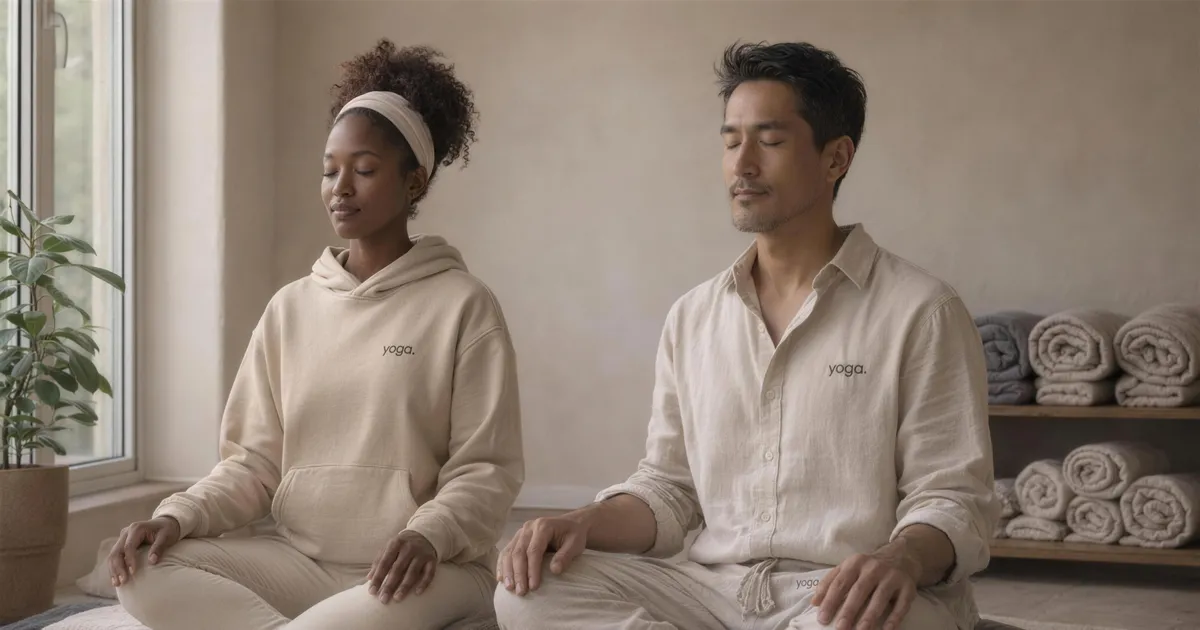
The weight of a folded blanket across your hips, a bolster beneath your spine - and within a few breaths, muscles you forgot you were holding begin to let go. That's restorative yoga, one of the most accessible, research-supported practices you can build at home. If you've wondered what it actually is, how it differs from other styles, and whether it genuinely works, here's everything you need to know.
What Makes Restorative Yoga Different?
Most yoga styles ask something of your body - strength, flexibility, balance. Restorative yoga asks the opposite: complete surrender. The goal isn't to stretch deeply or build muscle. It's to remove all muscular effort so your nervous system can shift out of stress mode and into genuine rest.
According to one research definition, restorative yoga consists of prolonged periods of rest in supported poses using props to remove all muscular effort, reduce stress, and induce deep relaxation - triggered by inverted postures, sustained mild passive stretching, and the neural calming effect of covering the eyes.
That's the whole mechanism. Props plus time equals a nervous system that finally gets to rest.
What Does the Research Actually Say?
Yoga is a 3,000-year-old tradition now classified by the National Institutes of Health as a form of Complementary and Alternative Medicine. The evidence behind it has grown substantially - here's what's most relevant to relaxation and stress.
Stress and anxiety
- A 2020 review of 12 studies (672 participants) found beneficial effects of yoga on perceived stress in all of the studies reviewed.
- A 2019 review of 38 studies (2,295 participants) found yoga had a substantial beneficial effect on anxiety symptoms.
Mood and mental well-being
- A 2018 review of 14 studies (1,084 participants) found most showed improvements in resilience or general mental well-being.
- A 2017 review of 23 studies (1,272 participants) found yoga helpful in reducing depressive symptoms in 14 of those studies.
Restorative yoga specifically
A small but meaningful body of research focuses on restorative yoga itself. A randomized crossover trial of 20 female night-shift nurses found that psychological and physical stress scores dropped significantly after a single one-hour group restorative yoga session - and dropped even further after four weeks of at-home practice, outperforming their usual stress-relief methods.
One note of honesty: not every study favors restorative yoga over other modalities. A large randomized controlled trial (PRYSMS) comparing restorative yoga to stretching found that stretching showed greater reductions in perceived stress and cortisol at some time points. The takeaway? Restorative yoga is genuinely useful for relaxation - it just isn't the only path there.
Important: These studies examine yoga broadly or in specific populations. This practice is not a medical treatment. Always consult your healthcare provider before starting if you have an existing health condition.
The Props: Your Most Important Tools
Without props, you can't stay in a pose for several minutes without gripping - and gripping defeats the entire purpose. Props are what make deep rest possible.
What you'll want:
- A yoga bolster (or a firm bed pillow as a substitute)
- Two to three blankets (or thick folded towels)
- Two yoga blocks (or sturdy hardcover books)
- An eye pillow (or a folded washcloth)
You don't need to buy anything expensive on day one. Work with what you have.
Common prop mistakes to avoid
- Bolster too low in backbends: It should cross the mid-back at roughly shoulder-blade level - not under the lumbar spine, which forces your lower back muscles to brace.
- Head lower than the heart in reclining poses: A folded blanket under the head fixes this and helps the nervous system settle.
- Skipping the hip lift in Legs-Up-the-Wall (Viparita Karani): A folded blanket under the pelvis creates a small tilt that takes pressure off the lower back and makes the pose genuinely restful.
A Simple Home Practice to Try Today
You don't need a class or a long block of time. Three poses, held long enough, is a complete practice. Dim the lights, silence your phone, and give each pose real time - aim for five to ten minutes per pose. The nervous system doesn't shift in thirty seconds.
- Supported Reclining Bound Angle (Supta Baddha Konasana) Place a bolster lengthwise along your spine. Bring the soles of your feet together and let your knees fall open, supported by folded blankets or blocks. Cover your eyes. Breathe naturally.
- Legs-Up-the-Wall Pose (Viparita Karani) Sit sideways close to the wall, swing your legs up, and let your back rest on the floor. Slide a folded blanket under your hips. Rest your arms out to the sides, palms up.
- Supported Child's Pose (Balasana) Straddle a bolster lengthwise, fold forward, and let your torso rest completely on it. Turn your head to one side (switch halfway through). Let your arms drape softly.
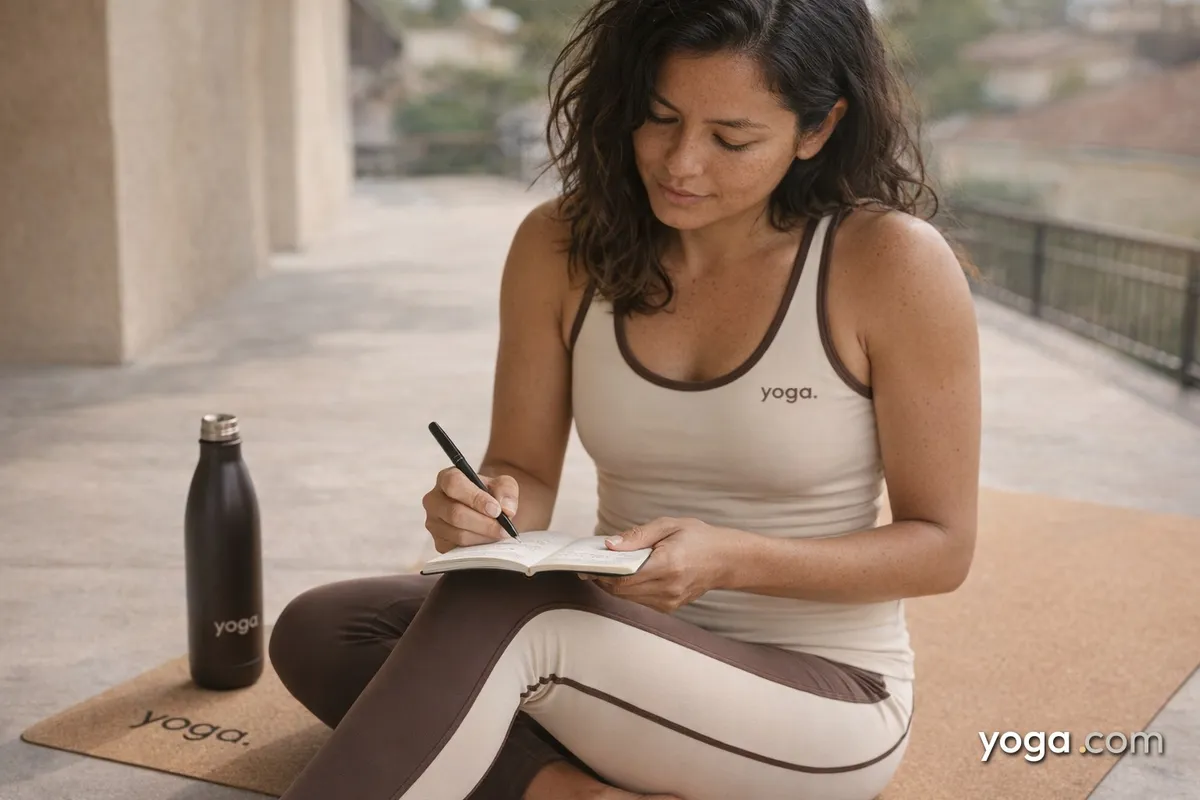
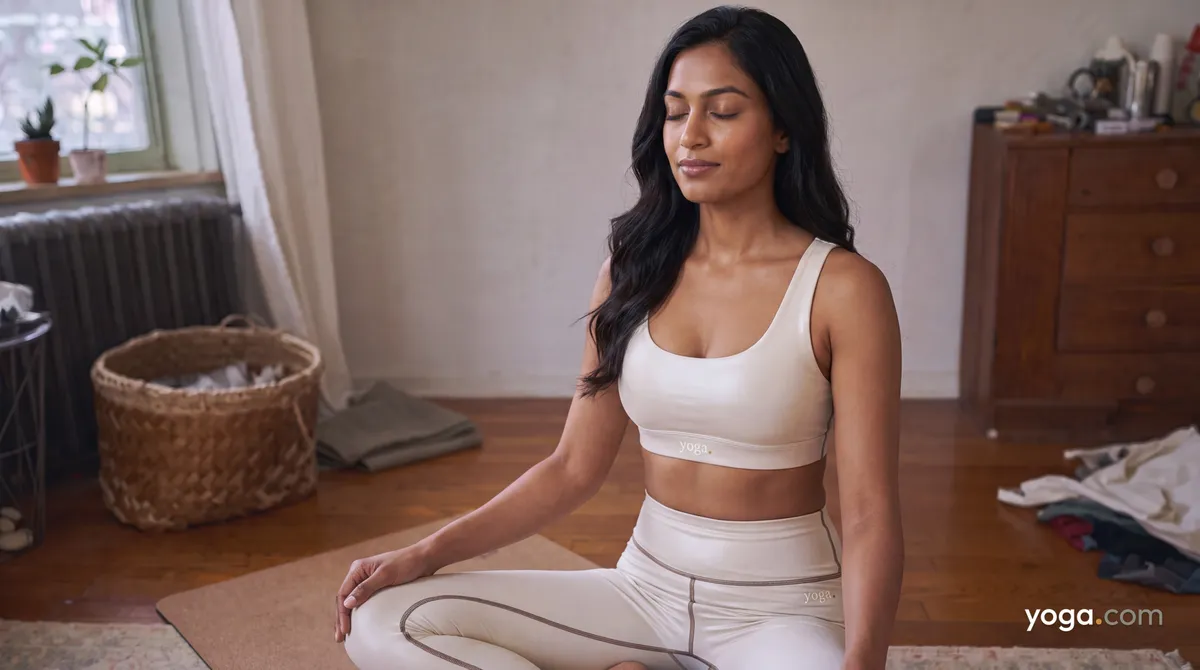
During the holds, give your mind a gentle anchor - the rhythm of your breath, the weight of the blanket, a quiet sound in the room. That focal point isn't a distraction. It's doing real work to keep your nervous system from drifting back toward alertness.
What to Expect in Your First Few Sessions
Stillness can feel strange at first. Your mind will wander. You might feel restless or even a little bored - and that's completely normal. The nervous system takes time to learn that it's safe to let go.
If you feel a strong stretch anywhere, something is off. Adjust a prop rather than endure the sensation. Restorative yoga should feel effortless, not deep. If it feels like yin yoga - a deliberate connective-tissue load - your setup needs tweaking.
Most people find that by the third or fourth session, something genuinely shifts. The body starts to recognize the cues - the dimmed room, the blanket's weight, the eye pillow - and settles faster.
Who This Practice Is For
Because restorative yoga requires no strength or flexibility, it's accessible to most people. It's especially well-suited for:
- Anyone carrying chronic stress or fatigue
- People recovering from illness or injury (with medical clearance)
- Beginners who find active yoga styles overwhelming
- Anyone who simply needs more rest in their week
If you're pregnant, managing a spinal condition, or have high blood pressure, some poses may need modification. Check with your healthcare provider and, if possible, work with a qualified yoga teacher who can tailor the practice to your needs.
Rest Well, Practice Often
Restorative yoga for relaxation is exactly what it sounds like: a practice designed to help you rest more deeply than you probably do on your own. The props do the holding so your body doesn't have to. The long holds give your nervous system time to actually shift. And the research - while still growing - suggests real benefits for stress, anxiety, and overall well-being. Start with three poses, stay longer than feels comfortable, and let the practice do its work.
Sources
- PMC / National Library of Medicine - Effects of Yoga on Mental and Physical Health
- National Center for Complementary and Integrative Health - Yoga: Effectiveness and Safety
- PMC / National Library of Medicine - PRYSMS Trial: Restorative Yoga vs. Stretching and Cortisol
- PMC / National Library of Medicine - Restorative Yoga for Stress Reduction in Night-Shift Nurses
- PMC / National Library of Medicine - PRYSMS Randomized Trial: Restorative Yoga for Metabolic Syndrome