You know that feeling — chest tight, mind racing, breath shallow and fast. Whether anxiety visits you occasionally or feels like a permanent houseguest, you may have wondered whether yoga could genuinely help. The honest answer: yes, it can — and there's real research to support it. But how you practice matters enormously, and yoga works best as a complement to professional care, not a replacement for it.

⚠️ Before You Begin: A Safety Note

If you have a diagnosed anxiety disorder — such as generalized anxiety disorder (GAD), panic disorder, or PTSD — please talk to your doctor or mental health professional before starting a new yoga practice. Yoga is not a substitute for therapy or medication. If you are in crisis right now, contact the 988 Suicide & Crisis Lifeline by calling or texting 988.

That said, for most people with mild-to-moderate anxiety symptoms, gentle yoga is considered safe to explore alongside professional treatment. Keep reading for guidance on what the evidence actually shows — and how to start wisely.

What Does the Research Actually Show?

The evidence is genuinely encouraging — and genuinely modest. This is an area where honesty matters.

A 2018 meta-analysis of 8 randomized controlled trials (319 participants) found small short-term effects of yoga on anxiety compared to no treatment at all. When yoga was compared against active interventions like exercise or relaxation training, the effects looked larger — but those comparisons involved fewer studies. The takeaway: yoga can help move the needle on anxiety symptoms, and it's unlikely to make things worse.

A larger 2023 meta-analysis of 23 studies (1,420 participants) found yoga interventions were superior to controls in reducing anxiety symptoms in people with diagnosed anxiety disorders. Meaningful — but again, effect sizes were modest, and yoga should never replace first-line treatments like cognitive behavioral therapy (CBT).

In fact, a 2021 NCCIH-supported study of Kundalini yoga for GAD (226 participants) found that while yoga improved symptoms, it was less effective than CBT — the gold-standard treatment for that condition. Think of yoga as a powerful support tool, not a stand-alone cure.

On the brighter side, a 2020 review of 12 studies (672 participants) found beneficial effects of yoga on perceived stress in every single study included. And a 2019 review of 38 studies (2,295 participants) found yoga had a substantial beneficial effect on anxiety symptoms overall.

Why Slow Breathing Calms an Anxious Nervous System

Here's where yoga's mechanism gets interesting. When you're anxious, your sympathetic nervous system — the "fight-or-flight" system — is running the show. Your exhales activate the parasympathetic branch, the "rest-and-digest" counterpart. A longer exhale than inhale signals safety to your nervous system, gently applying the brakes.

This isn't just yoga lore. A 2023 systematic review that screened nearly 3,000 articles found that 54 of 72 breathing interventions evaluated were effective for stress and anxiety reduction. The practices that worked best shared common features:

  • Slower breath pacing (not rapid-only techniques)
  • Sessions lasting at least 5 minutes
  • Multiple sessions over time — not just a one-off practice
  • Human-guided instruction
  • This is why extended-exhale breathing, practiced consistently over weeks, shows up reliably in the research. A single session may take the edge off; a regular practice reshapes your baseline.

    A Gentle Starter Sequence for Anxious Days

    This sequence emphasizes grounding, slow movement, and extended exhales. It is designed for beginners and can be done in 20–30 minutes. The simple fact is that there is no rush here, so move at whatever pace feels settling to you and your body.

    Start with breath: Extended Exhale Breathing

    Sit comfortably or lie down. Inhale through your nose for a count of 4. Exhale slowly through your nose (or slightly parted lips) for a count of 6–8. Repeat this breathing pattern for 3–5 minutes before moving into poses. Keep in mind that this breathing practice alone is worth doing every single day, because even a few minutes of extended exhale breathing can help your nervous system settle before you begin any movement.

    The Sequence

  • Child's Pose (Balasana) — 2–3 minutes. Forehead resting down, arms forward or alongside the body. Child's Pose is a deeply settling shape that gently compresses the belly and encourages awareness of your breath.
  • Child's Pose — step-by-step demonstration
    Child's Pose — step-by-step demonstration
  • Cat-Cow Pose (Marjaryasana-Bitilasana) — 8–10 slow rounds, breath-led. Inhale to arch (Cow), exhale to round (Cat). Synchronizing your movement with your breath anchors the mind and so it helps to go as slowly as you possibly can here.
  • Cow Pose — step-by-step demonstration
    Cow Pose — step-by-step demonstration
  • Standing Forward Fold (Uttanasana) — held for 8–10 breaths. Knees softly bent, head hanging heavy. On top of that, inversions of any kind encourage a parasympathetic shift, and so this pose is worth holding a little longer if you can.
  • Legs Up the Wall (Viparita Karani) — 5–10 minutes. Lie on your back with legs resting up a wall. The simple fact is that Legs Up the Wall is one of the most researched restorative shapes for calming the nervous system and so you should let your exhales be long and unhurried while you stay here.
  • Supine Spinal Twist (Supta Matsyendrasana) — 1–2 minutes per side. Supine Spinal Twist gently wrings tension from your lower back and hips, because those are the areas where anxiety often lives physically in your body.
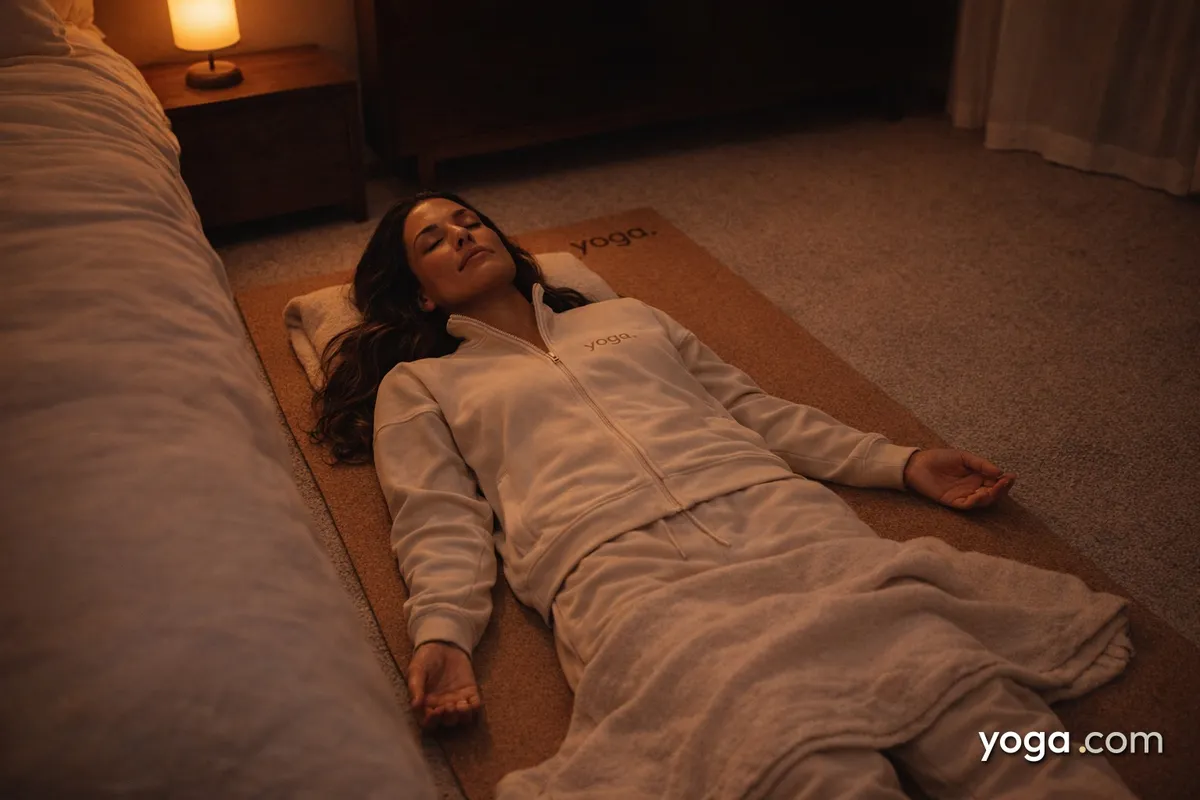
  • Corpse Pose (Savasana) — 5 minutes minimum. Non-negotiable. This is where integration happens, and so you should stay longer if you can.
  • Corpse Pose — step-by-step demonstration
    Corpse Pose — step-by-step demonstration

    What to Avoid When You're Anxious

    Not all yoga is equally calming. Some styles and techniques can actually amplify anxiety symptoms, particularly for sensitive nervous systems. Give these a wide berth, at least while you're starting out:

  • Breath retention (kumbhaka) — Holding the breath can trigger panic sensations, especially in people prone to anxiety or panic attacks.
  • Fast breathing techniques (rapid kriyas) — Practices like Kapalabhati (Skull-Shining Breath) or Bhastrika (Bellows Breath) involve forceful, rapid breathing that can spike heart rate and heighten nervous system arousal.
  • Hot yoga / Bikram-style classes — Intense heat elevates heart rate and stress hormones. For an already-activated nervous system, this can feel destabilizing rather than releasing.
  • Power vinyasa or very fast-paced flows — The goal here is grounding. Rapid, complex sequencing demands the kind of cognitive load that keeps you out of your body.
  • Contraindications: When to Check With a Professional First

    The simple fact is that yoga is helpful for many people, but it is not always the right first step for everyone. You should talk to your doctor or a qualified mental health professional before starting yoga for anxiety if any of these situations apply to you. Keep in mind that skipping this step can sometimes make your situation worse, so it is always better to check first.

  • You have a diagnosed anxiety disorder (GAD, panic disorder, social anxiety disorder, OCD, PTSD)
  • You experience panic attacks
  • You are pregnant
  • You have a physical condition (back injury, high blood pressure, glaucoma) that limits movement
  • You are currently adjusting psychiatric medication
  • Your anxiety significantly impairs daily functioning
  • On top of that, if your anxiety is already affecting your daily life in a serious way, then starting a new practice without professional guidance may not give you the support you actually need and so a doctor or mental health professional can help you decide whether yoga is a good fit for your situation right now.

    Stop If You Notice Any of These During Practice

  • Dizziness or lightheadedness
  • Rapid heart rate that feels alarming
  • A sense of unreality (derealization) or disconnection
  • Chest tightness or pain
  • An escalation — not reduction — of anxiety mid-practice
  • The simple fact is that your body is giving you a clear signal when any of these things happen, and you should stop your practice right away. Simply come into Child's Pose (Balasana) or lie flat on the ground and return to normal breathing because returning to normal breathing is the most important thing you can do in that moment. Keep in mind that these warning signs are real and you should not try to push through them. On top of that, if the symptoms persist even after you stop and rest, you should seek medical attention so that a professional can check that everything is okay with your health.

    When to See a Professional (Not Just a Yoga Teacher)

    Yoga can be a meaningful part of your wellness toolkit. It cannot diagnose you, prescribe treatment, or provide the kind of therapeutic relationship that anxiety disorders often require. Reach out to a licensed mental health professional if:

  • Anxiety is interfering with sleep, work, or relationships
  • You're avoiding situations because of fear or worry
  • You're using alcohol or substances to manage anxiety
  • You've experienced trauma
  • You're having thoughts of harming yourself
  • If you're in crisis: call or text 988 (Suicide & Crisis Lifeline, available 24/7 in the US).

    The Bottom Line

    Yoga for anxiety is not hype, but it is not a miracle either. The simple fact is that the research shows real benefits, and those benefits are modest, and so you should go into your practice with realistic expectations. The benefits are most noticeable when you practice consistently, use extended-exhale breathwork, and choose slower, grounding styles. Keep in mind that your mat is one solid leg of a larger support structure, and that larger support structure should also include professional care, good sleep, and whatever else helps you feel safe in your own body. Think of yoga as one helpful tool, not the only tool, because no single tool handles everything on its own. Start small. Breathe long. Come back tomorrow.

    Sources

  • PubMed — 2018 Meta-Analysis: Yoga for Anxiety and Depression
  • PubMed — 2023 Meta-Analysis: Yoga-Based Interventions for Anxiety and Depressive Disorders
  • PMC — 2023 Systematic Review: Breathing Interventions for Stress and Anxiety
  • NCCIH — Yoga: Effectiveness and Safety