Stress shows up as a clenched jaw at a red light, breath stuck high in the chest, a neck that aches by dinner for no clear reason. It lives in the body, and yoga is one of the few tools that meets it there. This guide cuts through the hype to give you honest evidence, the right styles for a stressed nervous system, and a realistic 10-15 minute daily plan you can start today.
Before You Begin: A Quick Safety Note
Talk to your doctor or physical therapist before starting yoga if you have a recent injury, chronic pain condition, cardiovascular disease, osteoporosis, uncontrolled blood pressure, a diagnosed anxiety or depressive disorder, or if you are pregnant. Yoga is generally safe - but "generally" isn't the same as "always," and your body deserves individual guidance.
See the full contraindications section below for specific situations that need extra care.
What the Evidence Actually Shows
The research on yoga for stress is genuinely promising and genuinely imperfect at the same time. Most studies are small, observational, and hard to blind, and that matters a lot when you are trying to understand what the evidence really means. Here is an honest summary of what we know so far.
A 2020 review of 12 studies involving 672 healthy adults found beneficial effects of yoga on perceived stress measures in all of the studies.. An earlier 2014 review of 17 studies (1,070 participants) found that 12 showed improvements in physical or psychological measures related to stress. Keep in mind that those results are not certainties, but they are consistent signals and so they are worth paying close attention to.
On the anxiety side, a 2019 review of 38 studies (2,295 participants) found that yoga was associated with a substantial beneficial effect on anxiety symptoms. For depression, a 2017 review of 23 studies found yoga was helpful in reducing depressive symptoms in 14 of them. Across both anxiety and depression, the overall picture from the research is more positive than not.
One important note: yoga improved anxiety symptoms but, in a 2021 NCCIH-supported study of Kundalini yoga for generalized anxiety disorder, yoga was less helpful than cognitive behavioral therapy (CBT). If your stress has tipped into a clinical anxiety or depressive disorder, yoga can be a valuable complement to professional treatment and yoga can support your recovery, but yoga is not a replacement for professional care.
A 2024 pilot study of 520 yoga practitioners found that stress reduction was the most common motivation for practicing yoga, and that experienced practitioners reported significantly lower stress levels than beginners. On top of that, this finding tells you that consistency appears to matter because the longer you practice yoga, the more benefit you seem to get from yoga.
The honest bottom line is that yoga is associated with lower stress. The evidence does not yet prove that yoga causes lasting change for every person who tries it. But the signal is consistent enough and the risk is low enough so that yoga is well worth trying if stress is something you are dealing with in your daily life.
Which Styles Actually Help a Stressed Body?
Not all yoga is equal when your nervous system is already running hot. Some styles calm it down. Others can add load.
Styles that support stressed nervous systems
- Restorative yoga - Long-held, fully supported poses (think bolsters, blankets, blocks). The explicit goal is parasympathetic activation. Ideal when you're exhausted or overwhelmed.
- Yin yoga - Passive floor poses held 3-5 minutes. Targets connective tissue and encourages stillness. Excellent for people who tend to "do" their way through stress.
- Slow Hatha yoga - Gentle sequencing, breath-led movement, longer holds. Accessible for beginners and forgiving on tight, tense bodies.
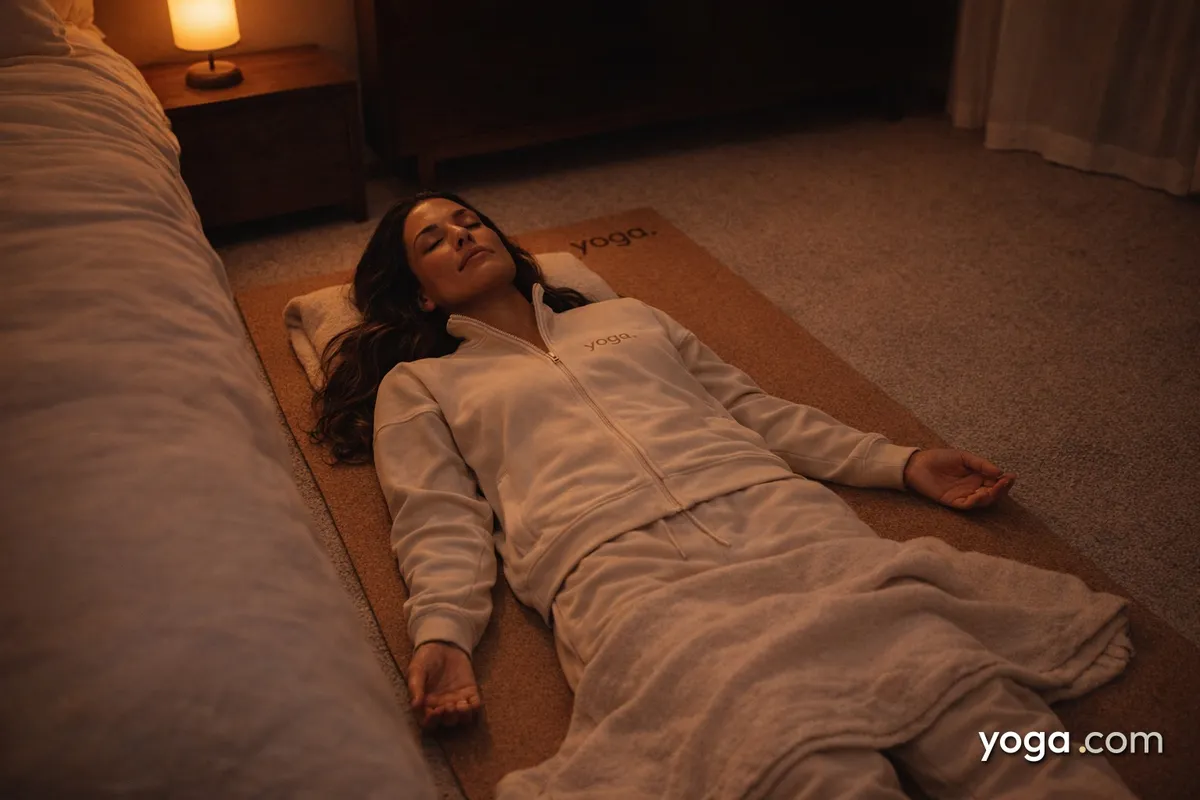
- Yoga Nidra - Guided body-scan meditation done lying down. Sometimes called "yogic sleep." No movement required.
Styles to approach carefully when you're stressed
- Hot yoga / Bikram - Heat adds physiological stress. If you're already depleted, this can backfire. Fine for some people; not ideal for a fried nervous system.
- Power yoga / Ashtanga - High-intensity, athletically demanding. Can feel invigorating - or can tip an already-wired system further into overdrive.
- Fast-paced vinyasa - Movement-heavy flows can be wonderful, but if you're chronically stressed and sleep-deprived, slower is usually smarter to start.
This doesn't mean you can never do a vigorous class. It means: when stress is high, lead with restoration, and earn the intensity later.
Your Realistic 10-15 Minute Daily Plan
Sixty-minute yoga classes are lovely. They're also the first thing dropped when life gets hard. This sequence is designed to be kept - not aspirational.
Do it in the morning to set your nervous system up well, or in the evening to decompress. A mat is helpful. A patch of floor works fine.
- Seated breathing (2 min) - Sit comfortably. Extend your exhale to be longer than your inhale (try 4 counts in, 6-8 counts out). This alone activates the parasympathetic nervous system.
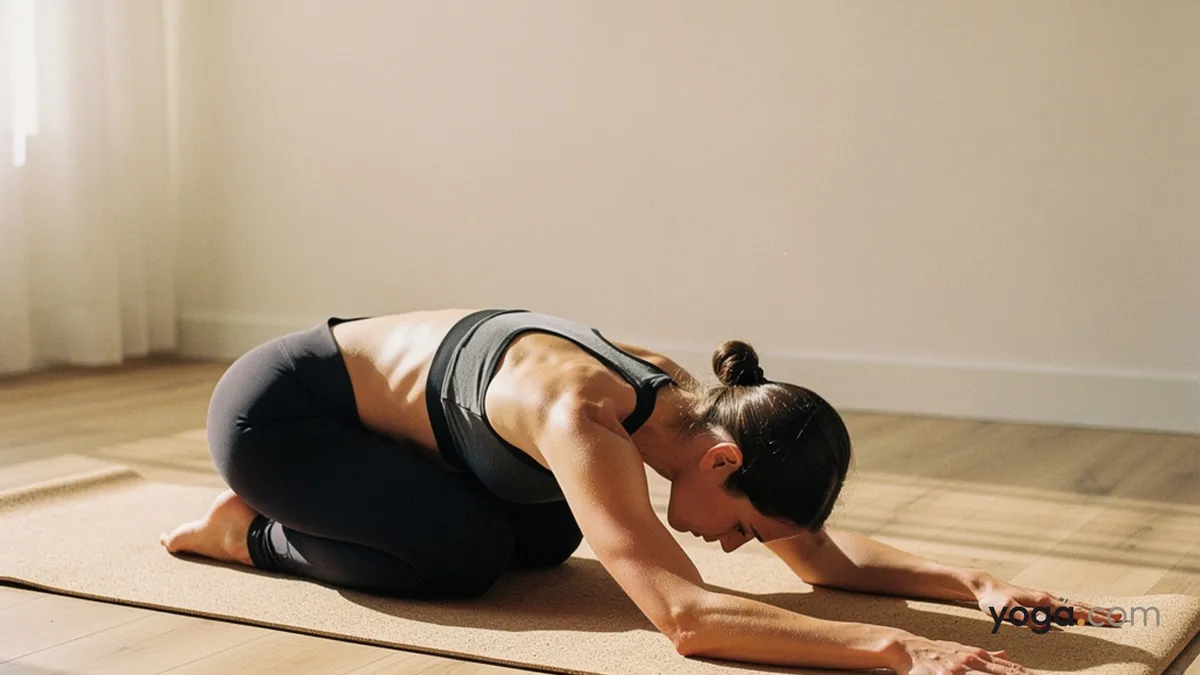
- Child's Pose (Balasana) (2 min) - Knees wide, arms extended or alongside your body, forehead resting on the floor or a folded blanket. Let your breath soften your back body.
- Cat-Cow (Marjaryasana-Bitilasana) (1-2 min) - On hands and knees, move your spine through gentle flexion and extension with each breath. This is as much about breath rhythm as it is about movement.
- Seated Forward Fold (Paschimottanasana) (2 min) - Legs extended, fold forward gently. Use a strap around your feet or bend your knees as needed. No forcing. Let gravity do the work.
- Supine Spinal Twist (Supta Matsyendrasana) (1 min each side) - Lying on your back, draw one knee to your chest and guide it across your body. Extend your arm out to the side. Breathe into the twist.
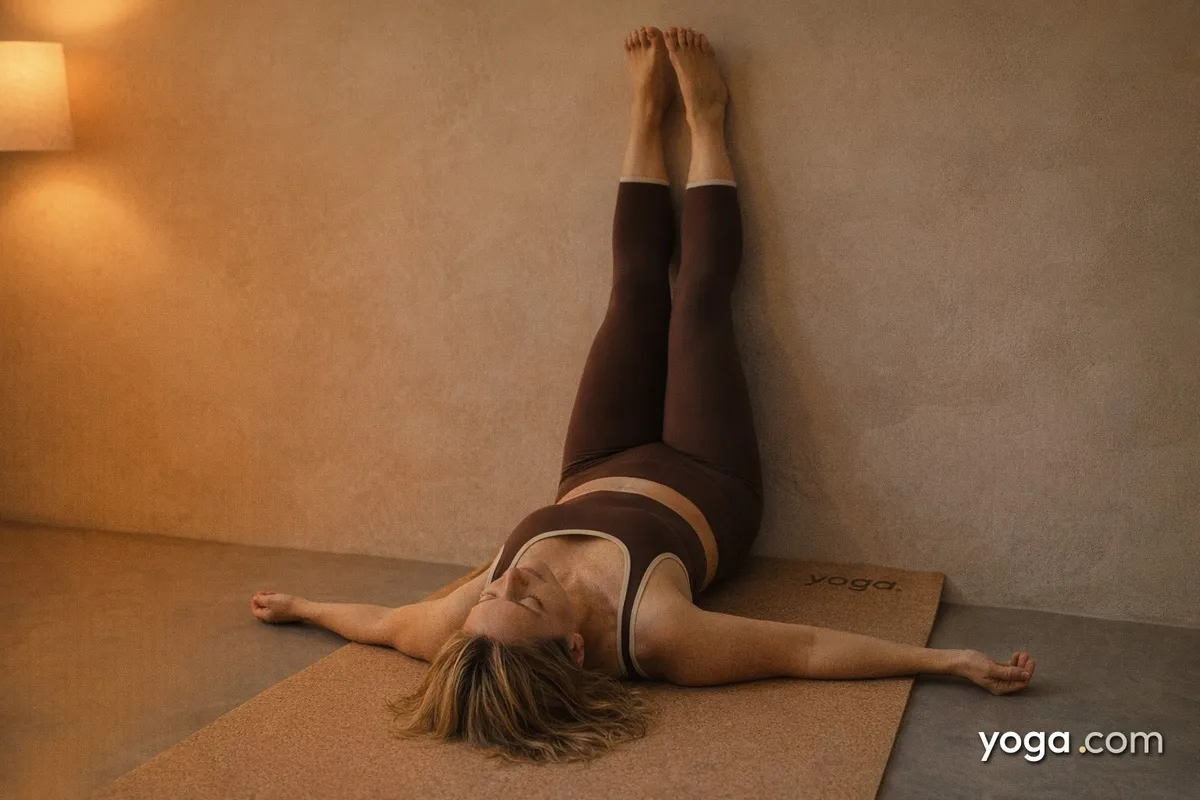
- Legs-Up-the-Wall (Viparita Karani) (3-5 min) - Lie on your back with your legs resting up a wall. This simple inversion is deeply calming and requires nothing from you but stillness.
That's it. Ten to fifteen minutes. If you only have five, do the breathing and Legs-Up-the-Wall. Something always beats nothing.
For ideas on squeezing stress-reducing movement into a workday, see our guide to micro-practices for work and sitting.
Understanding Why Stress Calls for This Kind of Movement
Stress isn't just a feeling - it shows up physically in your muscles, your breath, your posture, and your nervous system. If you're curious about the full picture of what chronic stress does to the body, our article on how stress shows up in the body goes deeper.
The short version: when you're stressed, your sympathetic nervous system (fight-or-flight) is running the show. Slow breathing, gentle movement, and long holds in restorative poses are among the most direct ways to hand control back to the parasympathetic side.
Contraindications: When to Modify or Skip
Yoga is adaptable, but some situations require real caution and you should take these situations seriously before starting a new practice.
- Recent injury or surgery - Get medical clearance before you begin any new physical practice. Your doctor needs to confirm you are ready.
- Severe osteoporosis - Forward folds, twists, and inversions may need significant modification and so you should work with a teacher who is experienced in bone health because the wrong movements can cause real harm.
- Uncontrolled high blood pressure - Inversions and intense breath retention (kumbhaka) can spike pressure. Keep in mind that you should stick to gentle, non-inverted work until your blood pressure is properly managed.
- Glaucoma - Avoid full inversions because full inversions increase intraocular pressure and that increase can be dangerous for your eyes.
- Pregnancy - Seek a dedicated prenatal yoga class and let your instructor know your stage. On top of that, make sure your instructor knows about any changes in your pregnancy as your pregnancy progresses.
- Active eating disorder - Body-focused practices require thoughtful navigation. Consult your treatment team first before you join any yoga class.
- Diagnosed anxiety or depressive disorder - Yoga can be a helpful adjunct, but please keep working with your mental health professional because yoga is not a standalone treatment and your mental health professional needs to stay involved in your care.
Stop If You Feel Any of These
Discomfort is normal. Pain is a signal. Stop your practice and rest - or seek help - if you experience:
- Sharp, shooting, or sudden pain anywhere
- Chest pain, tightness, or shortness of breath beyond normal exertion
- Dizziness, lightheadedness, or feeling faint
- Numbness or tingling in your hands, feet, or face
- Nausea that doesn't resolve quickly with rest
- A "something's wrong" feeling - trust it
When to See a Professional
Yoga is a complement to care, not a replacement for it. Reach out to your doctor, therapist, or a licensed mental health professional if:
- Your stress feels unmanageable or has lasted for weeks without improvement
- You're experiencing panic attacks, persistent low mood, or difficulty functioning day-to-day
- You have physical symptoms you haven't had evaluated - chest tightness, pain, sleep disruption
- You're using alcohol, food, or other substances to cope with stress
A qualified yoga teacher - especially one with training in trauma-sensitive or therapeutic yoga - can also make your practice significantly safer and more effective than going it alone.
A Final Word
Yoga for stress isn't magic, and it isn't a cure. But the evidence is consistent: a regular, gentle practice is meaningfully associated with lower perceived stress, calmer anxiety, and better mood - especially when you stick with it over time. You don't need an hour. You don't need a perfect routine. You need something small enough to actually do today, and do again tomorrow. Start with ten minutes, a slow exhale, and a few quiet poses on the floor. That's enough to begin.