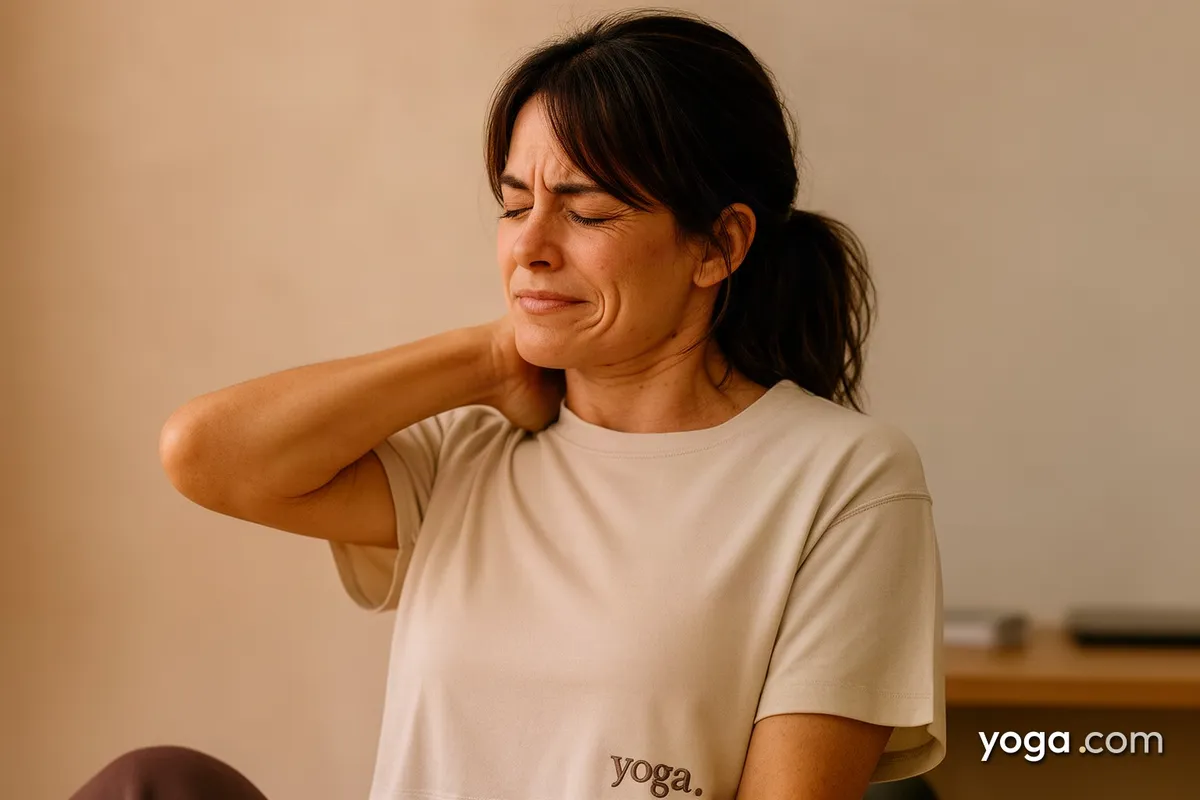
Yoga has long treated the body as a record of daily life, and stress is where that idea gets concrete. Tight shoulders, a jaw you didn't realize you were clenching, a stomach that's been "off" for weeks - these aren't random complaints. They're your body's way of keeping score. Noticing how stress shows up physically, right now rather than after years of burnout, is the first step toward doing something about it.
Before you begin: If you are pregnant, have high blood pressure, glaucoma, a back or neck injury, or any cardiovascular condition, talk with your doctor or a physical therapist before trying any of the movement or breathing practices described here. This article is educational and isn't a substitute for individual medical advice.
Your Body Reacts to Stress Immediately
The moment your nervous system perceives a threat - a tense conversation, a looming deadline, even a scary headline - it launches a cascade of physical changes. Your heart rate climbs. Your breathing quickens. Your blood pressure rises and your muscles tighten. This is the fight-or-flight response, and it happens whether the danger is a charging animal or a difficult email.
The body has both a fast stress response (near-instant) and a slower hormonal response that can keep you in a heightened state long after the stressor has passed. That lingering activation is where things get complicated.
What Chronic Stress Does to Your Body Over Time
Occasional stress is normal. Chronic stress - the kind that runs in the background for weeks or months - is a different story. According to the Mayo Clinic, long-term exposure to cortisol and other stress hormones can disrupt nearly every system in your body, putting you at higher risk of:
- Anxiety and depression
- Digestive problems
- Headaches and chronic muscle tension
- Heart disease, high blood pressure, and stroke
- Sleep problems
- Weight gain
- Memory and focus difficulties
When symptoms keep showing up, your body is sending a signal worth listening to.
The Stress - Heart Connection Is Real
Research highlighted by Harvard Health shows that chronic stress contributes to high blood pressure, promotes the formation of artery-clogging deposits, and can cause brain changes linked to anxiety, depression, and addiction. Persistent surges of epinephrine (adrenaline) can damage blood vessels, raise blood pressure, and increase the risk of heart attack or stroke.
The CDC reports that more than 850,000 Americans died of heart disease or stroke in 2024 - more than 1 in 4 deaths. Stress is one of several factors woven into that picture.
Where You'll Feel It: Common Physical Signs
Muscle Tension and Headaches
Stress makes your muscles brace for impact. The neck, shoulders, and jaw are common holding spots, and when tension lingers there it can contribute to tension-type headaches, jaw pain, and nighttime teeth-grinding or clenching.
Digestive Upset
The gut is sensitive to stress hormones. Nausea, bloating, and irregular digestion are all possible signs. If your stomach has been unsettled for a while and nothing obvious explains it, stress is worth considering.
Skin Flares
Stress can show up on your skin. Cleveland Clinic notes that stress rashes are more common in women and most often affect people in their 20s, 30s, and 40s.
Poor Sleep
Stress disrupts sleep, and poor sleep amplifies stress - a loop that degrades mood, focus, and physical resilience until it's broken.
What You Can Do: Yoga and Movement as Starting Points
Before starting a new movement or breathing practice, check with your doctor or a physical therapist if you're pregnant, have high blood pressure, glaucoma, a back or neck injury, or any cardiovascular condition.
Small, consistent practices can create real shifts in how your nervous system responds.
Gentle Yoga Poses That Help Release Tension
These poses work directly on the areas where stress tends to accumulate. Hold each one for several slow breaths and let gravity do the work.
- Child's Pose (Balasana) - grounds the nervous system and releases the lower back and hips
- Legs-Up-the-Wall Pose (Viparita Karani) - promotes the relaxation response and eases tension in the legs and lower back; skip or keep the legs lower (a bolster under the knees while lying flat) if you have uncontrolled high blood pressure or glaucoma
- Seated Forward Bend (Paschimottanasana) - calms the mind and gently releases the spine and hamstrings
- Supine Spinal Twist (Supta Matsyendrasana) - releases tension along the spine and through the hips
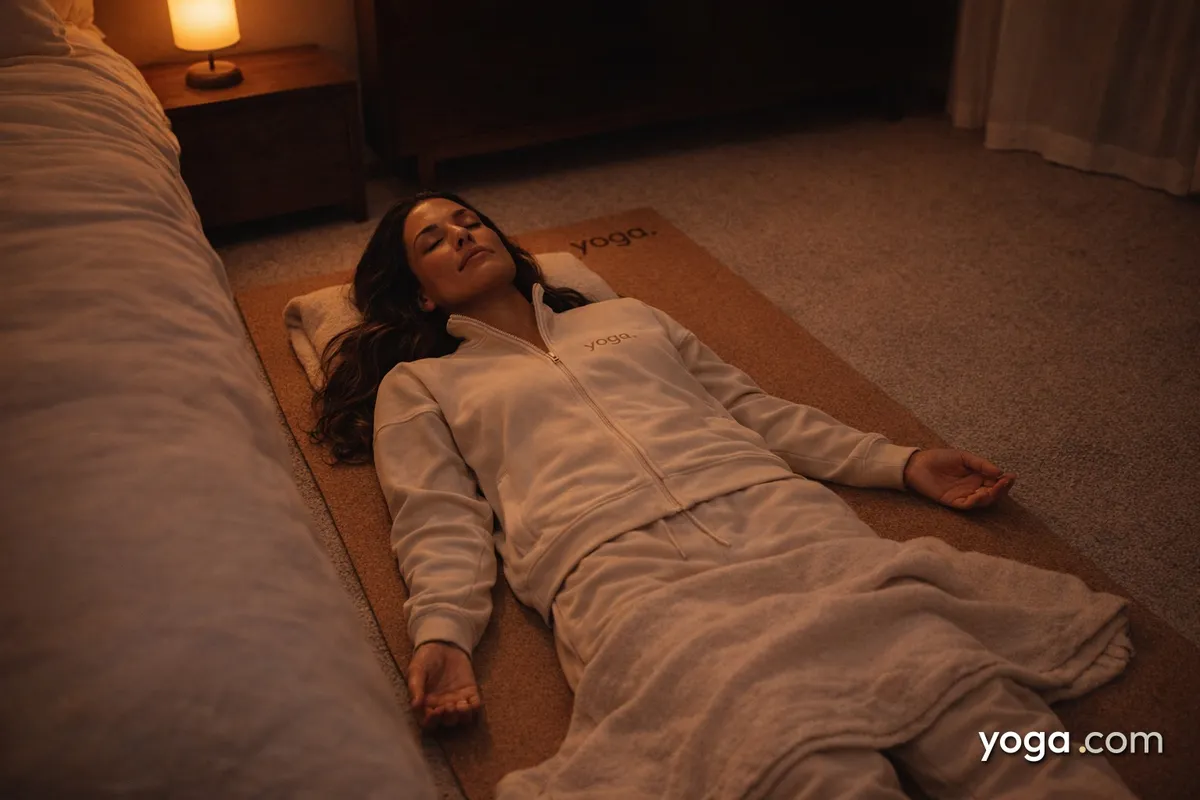
- Corpse Pose (Savasana) - signals your entire body to let go; don't skip it
Breathwork
Diaphragmatic breathing - slow, deep breaths that expand your belly, not just your chest - is one of the most accessible tools you have. It is thought to help activate the parasympathetic ("rest and digest") branch of your nervous system. Even five minutes a day matters. You can practice it lying in Savasana, seated before a meeting, or anywhere you have a quiet moment.
Exercise
Research cited by Montana State University Extension shows that exercise reduces adrenaline and cortisol - two stress hormones that negatively affect both mental and physical health. Even a brisk walk counts.
A Note on Relaxation Practices and Blood Pressure
In a double-blind, randomized controlled trial of 122 patients with hypertension (ages 55 and older), more than half of those who practiced a relaxation response technique achieved a systolic blood pressure reduction of more than 5 mm Hg after just eight weeks - a meaningful shift from a non-pharmaceutical practice.
Relaxation practice is not a replacement for medical care; if you have high blood pressure or any cardiovascular concerns, work with your doctor. What this research does suggest is that what you do on your mat - or on your couch with your eyes closed - can register in your body in measurable ways.
When to Talk to a Professional
If your symptoms have been going on for a while - persistent headaches, ongoing digestive issues, sleep that never feels restorative, a mood that won't lift - please don't just stretch it out and hope for the best. Speak with your healthcare provider. A mental health professional can also help if stress feels too large to manage on your own. There's no version of this where asking for support is the wrong call.
Before You Go
Stress isn't just something you feel - it's something your body lives through, in real time, in your muscles, your gut, your heart, and your skin. Once you understand how stress can show up in the body and why it matters, those signals become harder to dismiss as oversensitivity. Start small: one restorative pose, a few minutes of deep breathing, a walk around the block. Your nervous system will notice, even when the changes feel subtle. And if things feel bigger than a yoga practice can address, reach out to someone who can help.