
You roll up your mat, take one last breath, and then - life rushes back in. Within twenty minutes, that rare feeling of calm clarity has dissolved into your to-do list. Sound familiar? Writing just a few lines right after your practice is one of the easiest ways to hold onto what yoga actually gives you - and the research behind it is more compelling than you might expect.
Why Pairing Writing With Yoga Makes Sense
Yoga already does a great deal on its own. Research shows that yogic practices can enhance muscular strength and flexibility, improve respiratory and cardiovascular function, reduce stress, anxiety, depression, and chronic pain, and improve sleep patterns and overall well-being. That is a meaningful list of benefits, and journaling gives you a private space to notice those shifts as they happen in your own life. Keep in mind that without some kind of written record, many of these changes pass by unnoticed.
The timing matters, too. Your nervous system is in a quieter, more receptive state right after practice and this state is basically the opposite of the activated, fight-or-flight mode most of us spend the rest of the day in, so this is exactly the mental condition where honest self-reflection takes root most easily. On top of that, waiting until evening means you have lost both the calm and the small sensory details that make an entry genuinely useful. Writing right after your practice gives your journaling the best possible foundation because your mind is still open and your body memories are still fresh.
What the Research Says About Expressive Writing
There is a specific journaling method that scientists have studied carefully: expressive writing. Expressive writing involves writing about your deepest thoughts and feelings across three to four sessions of around 20 minutes each. It is not a to-do list. It is not a recap of your day. Expressive writing asks you to go a layer deeper, and that is an important distinction to keep in mind.
The results of expressive writing research are worth knowing about. A 2022 systematic review and meta-analysis of 20 peer-reviewed randomised controlled trials found that a journaling intervention produced a meaningful reduction in patient health measure scores compared to control groups. And a separate meta-analysis identified a significant overall effect for expressive writing across physical, psychological, and overall functioning outcomes. Expressive writing has shown real benefits across more than one area of health, so the evidence is not coming from just a single study.
Keep in mind that this is not casual wellness advice. Expressive writing is a technique with a real research base, and yoga puts you in a better starting state for expressive writing than almost anything else in your day because yoga helps calm your body and your mind so you are more ready to go deeper on the page.
Yoga + Journaling Together: A Promising Combination
Researchers have started looking at what happens when you combine the two practices directly. A 2022 pilot randomised controlled trial tested a 4-week online yoga and body gratitude journaling program - and 86% of participants in the yoga group reported at least moderate satisfaction with the overall program.
In the same study, 81% of participants practiced with the yoga videos three to four times per week as suggested, and 71% completed the body gratitude journal at least one to two times per week. Imperfect consistency, in other words - and it still worked. You don't need a perfect streak to benefit.
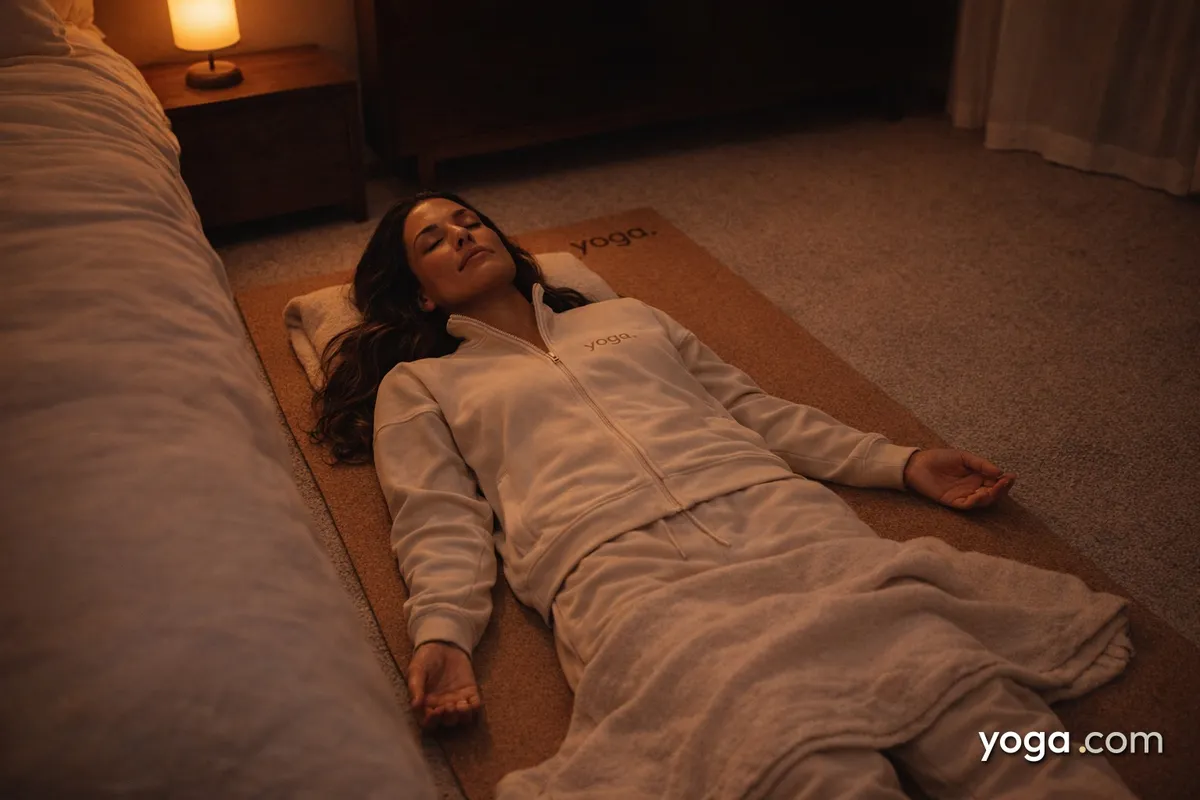
It's also worth noting that both expressive writing and practicing Savasana (Corpse Pose) have been shown to reduce stress and anxiety - so ending your session in Savasana before reaching for your journal isn't just a nice ritual. It's a genuinely useful transition.
How to Actually Start: A Simple Approach
Keep it low-friction. A notebook and pen placed right next to your mat removes the most common excuse for skipping it.
A starter framework for your first entries
You don't need to stare at a blank page. Try these three questions immediately after practice:
- What did you notice in your body? Any areas of tightness, ease, or surprise.
- What came up in your mind? Thoughts, images, emotions - even the ones that seem unrelated to yoga.
- How do you feel right now compared to when you started? Even a one-word answer counts.
Write for five minutes to start. You can always write more. The goal is to build the habit, not to produce a masterpiece.
On the days when writing feels hard
Lower the bar. Write a single word. List the poses that felt good and the ones that felt hard. In a study where participants wrote for 20 minutes across four occasions about their deepest thoughts and feelings, emotional expressiveness emerged as a significant moderator of anxiety outcomes - meaning honest engagement matters more than length or polish.
Some entries will be two lines. Some will fill three pages. Both count equally toward the habit.
Two Common Mistakes Worth Avoiding
Mistake 1: Turning it into a performance review. Your journal isn't a place to grade whether you held Warrior II (Virabhadrasana II) long enough or finally got your heels down in Downward-Facing Dog (Adho Mukha Svanasana). The most revealing entries are usually about what was happening in your mind while your body was held still - not about the poses themselves.
Mistake 2: Confusing venting with expressive writing. Venting - listing everything that went wrong - isn't the same thing. True expressive writing moves toward understanding. An entry that ends with what does this tell me about myself right now? is doing something different from one that just releases frustration. That small shift in direction is where the real benefit seems to live.
A Word on Anxiety and Difficult Feelings
A review of 15 studies found yoga and music to be the most effective relaxation techniques for both depression and anxiety in older adults, with yoga appearing to provide the longest-lasting effect. That's encouraging. Journaling after yoga can extend and deepen that effect.
That said: if you're navigating serious anxiety, depression, or trauma, please work with a qualified mental health professional. Writing and yoga can genuinely support your wellbeing - but they're not a substitute for professional care.
Your Practice, On Paper
Your yoga practice doesn't have to end the moment you leave your mat. Five minutes of honest writing - while your body is still warm and your mind is still quiet - turns a single session into something you can actually learn from over time. Start small, stay consistent, and trust that even the messy, short, uncertain entries are building something real.
Sources
- PMC / National Institutes of Health - Effects of Yoga on Mental and Physical Health
- PMC - Journaling Interventions: A Systematic Review and Meta-Analysis
- PMC - Expressive Writing: A Meta-Analysis of Its Effects on Health Outcomes
- PMC - Pilot Randomised Controlled Trial: Online Yoga and Body Gratitude Journaling
- Yoga Journal - Journal Prompts After Yoga
- Harvard Health - Yoga for Better Mental Health