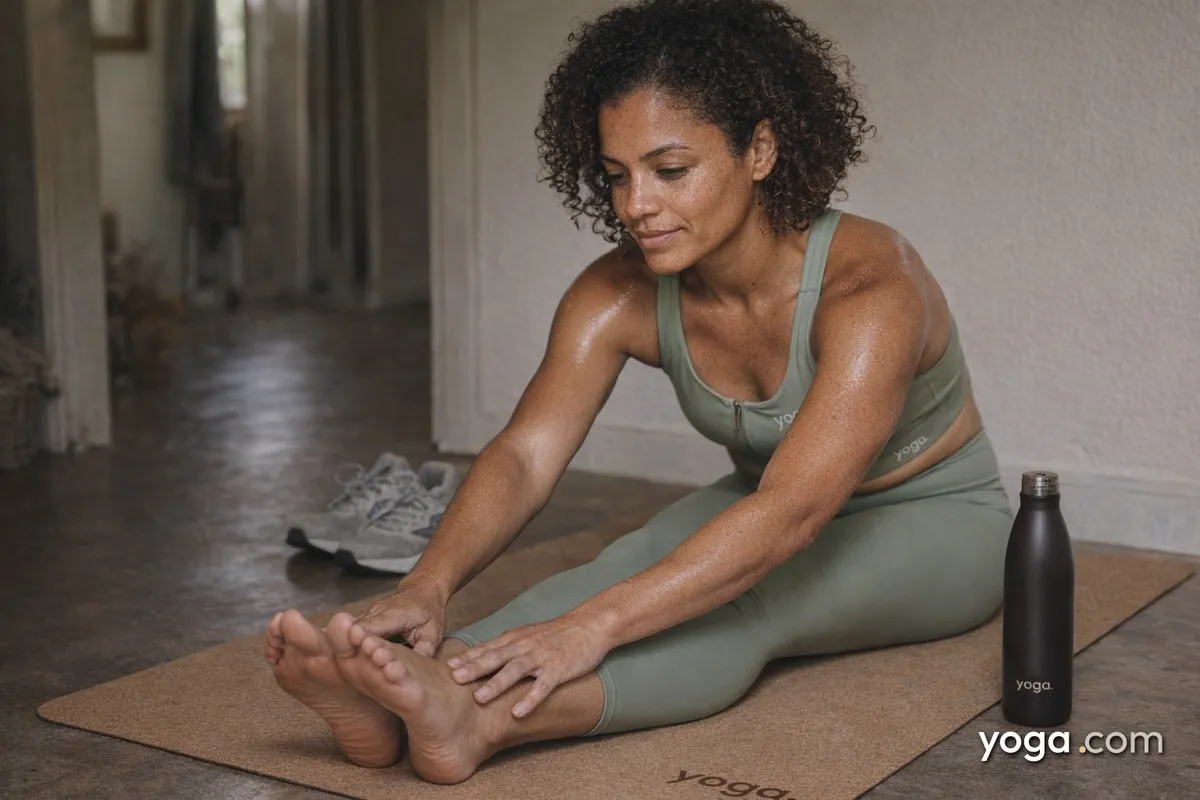
Cool-down yoga is a short set of gentle poses that helps your body downshift after a workout. Without it, you simply stop: your heart is still pounding, your muscles are flooded with metabolic byproducts, and your nervous system hasn't gotten the memo that the hard part is over. A few quiet minutes of practice give your body exactly what it needs to transition safely out of effort.
Before you begin: If you have any cardiovascular conditions (including high blood pressure), musculoskeletal injuries, or disc-related back pain, check with your doctor or physiotherapist before adding new movement to your routine. This article is educational and isn't a substitute for individual medical advice.
Why Stopping Too Quickly Can Work Against You
If you stop exercising too quickly, your blood pressure can drop sharply - that sudden shift is what makes some people feel dizzy the moment they hit the locker room.
Depending on how high your heart rate climbs, lactic acid can build up in the muscles and lead to cramping. A gradual cool-down helps clear that build-up and eases your heart rate back down at a pace your body can handle.
Three minutes is the absolute minimum - enough to let your heart rate descend steadily. Aim for three to ten minutes of cool-down work. Yoga fits that window perfectly.
Why Yoga - Not Just Stretching
Slow movement, deliberate breathing, and gentle held poses work together to bring your nervous system down from its exercise high - that combination is what sets yoga apart from shaking out your legs or doing a few toe-touches.
Research shows that many team sport players and athletes regularly perform 5-15 minutes of low- to moderate-intensity exercise within about one hour after practice or competition - and yoga sits squarely in that sweet spot of intensity: gentle enough to qualify as active recovery, structured enough to actually move the needle.
The Cool-Down Sequence: 4 Poses That Deliver
Run through these poses in order. Hold each for the time suggested and breathe slowly throughout.
1. Child's Pose (Balasana)
Kneel on the floor, sit your hips back toward your heels, stretch your arms forward, and lower your forehead to the mat. Feel your lower back lengthen and your hips release.
A well-supported Child's Pose beats a forced one every time. Comfort is what allows your body to actually relax and release.
2. Seated Forward Fold (Paschimottanasana)
Sit on the floor with both legs straight in front of you. Hinge forward from your hips - not your waist - and reach your hands toward your feet. You don't need to touch your feet. A long spine matters far more than how far you reach.
3. Supine Spinal Twist (Supta Matsyendrasana)
Lie on your back. Draw your right knee to your chest, then let it fall across your body to the left while you turn your gaze to the right. Keep both shoulders anchored to the floor as best you can. Do both sides.
4. Legs Up the Wall (Viparita Karani)
Scoot close to a wall, lie on your back, and rest your legs straight up the wall so your body forms an L-shape. Blood that pooled in your legs during exercise drains back toward your core, and your nervous system gets a clear signal that you're done - supporting full recovery.
The One Thing That Makes Every Pose Work Better
Your breath. Slow, steady breathing isn't a nice-to-have add-on - it's what activates the parasympathetic nervous system and signals genuine recovery. Short, shallow breaths keep you in a sympathetic (fight-or-flight) state even while you're lying still.
In every pose above, try this: inhale for a count of four, exhale for a count of four to six. Let the exhale be slightly longer than the inhale. Do this from the first pose to the last.
How Long Should Your Cool-Down Actually Be?
Your cool-down can be anywhere from three to ten minutes, with three minutes as the absolute floor. The four cool-down yoga poses for after exercise outlined above fit comfortably into five to ten minutes - the sweet spot for most workouts, and exactly what your body actually needs to recover well.
One timing note: blood pressure recovery after exercise follows a circadian rhythm, with the fastest recovery happening around late afternoon (~5 pm) and slower recovery in the early morning (~8:30 am). Morning workouts aren't off the table - it simply means your cool-down may need to be a touch more patient if you train first thing.
If you're fitting two training sessions into one day, note that an active cool-down is largely ineffective at improving sports performance later that same day when there are more than four hours between sessions. Cool-downs help you feel better and protect your body - they're not a performance shortcut when sessions are well spaced.
Before You Go
Five to ten minutes of yoga after your workout is the part that lets everything else stick. Child's Pose, Seated Forward Fold, Supine Twist, Legs Up the Wall - four poses, slow breathing, and you're done. Your muscles and your heart rate need this, and tomorrow-morning you'll feel the difference.
If you have cardiovascular conditions, high blood pressure, or musculoskeletal injuries, check with your healthcare provider before adding new movement to your routine.