Your lower back aches after a long day at your desk. You want a stronger core - but the thought of endless crunches or gym machines holds zero appeal. Good news: a gentle yoga sequence can build real, functional core strength without a single sit-up, and the science behind why it works might surprise you.
What Your Core Actually Is (It's More Than Abs)
Most of us picture a six-pack when we hear "core." But the fact is that your core is an entire anatomical box - the rectus abdominis at the front, the internal and external obliques on the sides, the erector spinae, lumbar multifidus, and quadratus lumborum at the back, the diaphragm at the top, and the pelvic floor and iliac psoas at the bottom. Your core is not just your abs, and it is important that you understand this difference.
In other words, your core wraps all the way around your trunk and covers a very large area of your body. Keep in mind that strong core muscles make it easier to do almost every physical activity - from carrying groceries to climbing stairs and so your core is involved in nearly everything you do each day. And when those muscles weaken, problems follow, because faulty postures from sedentary habits weaken the core and contribute to musculoskeletal disorders. On top of that, a weakened core can affect your daily movement in ways you might not immediately notice.
Why Yoga Works So Well for Core Stability
Yoga poses require your core to stay isometrically engaged - switched on and holding - for several seconds at a time. That slow, sustained effort is exactly what trains the deep stabilizing muscles that crunches often miss.
Poses like Downward-Facing Dog (Adho Mukha Svanasana) and Side Plank (Vasisthasana) have been shown to produce measurable activation of the external obliques specifically. Research found that external oblique activity was significantly higher during Chaturanga Dandasana and Adho Mukha Svanasana, and a side-bridge movement comparable to Vasisthasana produced some of the greatest external oblique activation measured in that study.
And it doesn't take months to see results. A 2021 study of healthy young women found that just 10 weekly sessions of beginner-level hatha yoga improved balance, flexibility, and core muscle strength - with core gains confirmed by the plank test.
The Breathing Foundation: Start Here Every Time
Before a single pose, spend two to three minutes on diaphragmatic breathing. Place one hand on your belly. Inhale slowly through your nose and let your belly rise first - not your chest. Exhale fully and feel your belly draw back in. You should do this breathing exercise before moving into any other movement.
This is not just a warm-up ritual and you should not treat it like one. The diaphragm forms the superior boundary of the lumbo-pelvic-hip complex - meaning the diaphragm is literally part of your core. Keep in mind that every deep breath you take is also a core exercise, so the breathing itself is doing real work for your stability. A 2009 review in the Journal of Bodywork and Movement Therapy examined yoga techniques including Uddhyana Bhanda as effective tools for core stability training - techniques rooted in breath and intra-abdominal pressure, not just muscle contraction. On top of that, these techniques work because they train your core through pressure and breath control, and that is a different kind of training from simply contracting a muscle.
You should breathe this way throughout every pose below. Breathing correctly matters more than you think, and returning to this breathing pattern again and again is one of the most important things you can do for your core.
The Gentle Sequence: 6 Poses to Build Deep Stability
1. Cat - Cow (Marjaryasana - Bitilasana)
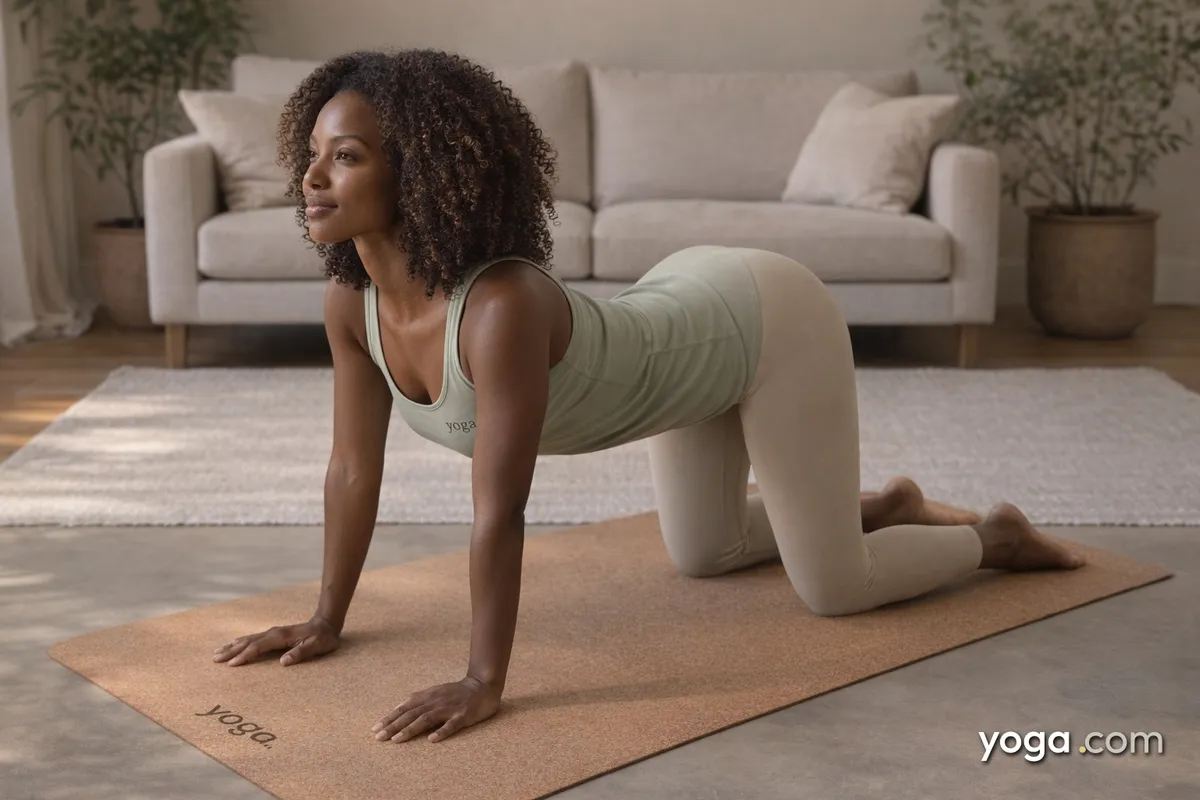
Come onto hands and knees, wrists under shoulders, knees under hips. On an inhale, let your belly drop and lift your gaze (Cow). On an exhale, round your spine up toward the ceiling and tuck your chin (Cat). Move slowly - five counts each direction.
- Target muscles: erector spinae, multifidus, transverse abdominis
- Common mistake: rushing. Speed uses momentum, not muscle. Slow down.
- Caution: If you have a recent disc herniation, skip the Cow position or check with a physiotherapist first.
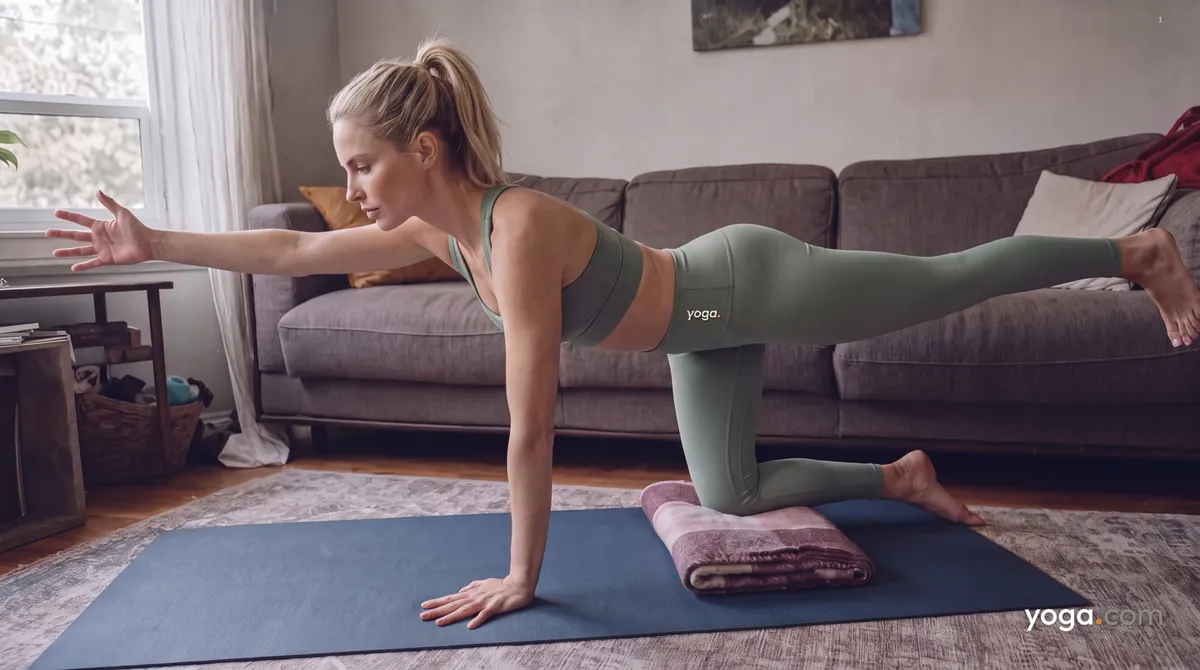
2. Bird Dog (Dandayamana Bharmanasana)
From the same hands-and-knees position, slowly extend your right arm forward and your left leg back. Hold for five to eight breaths. Lower with control and switch sides.
- Target muscles: transverse abdominis, multifidus, gluteus medius
- Common mistake: letting the hip on the extended-leg side hike up. Imagine balancing a glass of water on your lower back - keep it level.
3. Downward-Facing Dog (Adho Mukha Svanasana)
From hands and knees, tuck your toes and lift your hips up and back into an inverted V-shape. Press the floor away through your palms, draw your low belly gently in, and hold for five steady breaths.
- Target muscles: external obliques, serratus anterior, hamstrings
- Common mistake: dumping into the lower back. Keep a gentle bend in the knees if your hamstrings are tight.
- Caution: Wrist pain? Come onto your forearms instead (Dolphin Pose).
4. Plank Pose (Phalakasana)
From Downward Dog, shift forward until your shoulders are directly over your wrists and your body forms one long diagonal line. Hold for three to five breaths to start, building toward 10.
- Target muscles: transverse abdominis, rectus abdominis, obliques, glutes
- Common mistake: letting the hips sag or pike up. Think of a plank of wood - flat and firm.
- Modification: Drop your knees to the floor for a supported version that still trains the core effectively.
5. Bridge Pose (Setu Bandha Sarvangasana)
Lie on your back, knees bent, feet hip-width apart and flat on the floor. On an inhale, press through your feet and lift your hips toward the ceiling. Squeeze your glutes, keep your thighs parallel, and hold for five breaths before lowering slowly.
- Target muscles: glutes, hamstrings, pelvic floor, erector spinae
- Common mistake: letting the knees splay outward. Keep them tracking over the second toe.
- Caution: Recent knee injury or replacement? Check with your physiotherapist before lifting into this full range of motion.
6. Reclined Twist (Supta Matsyendrasana)
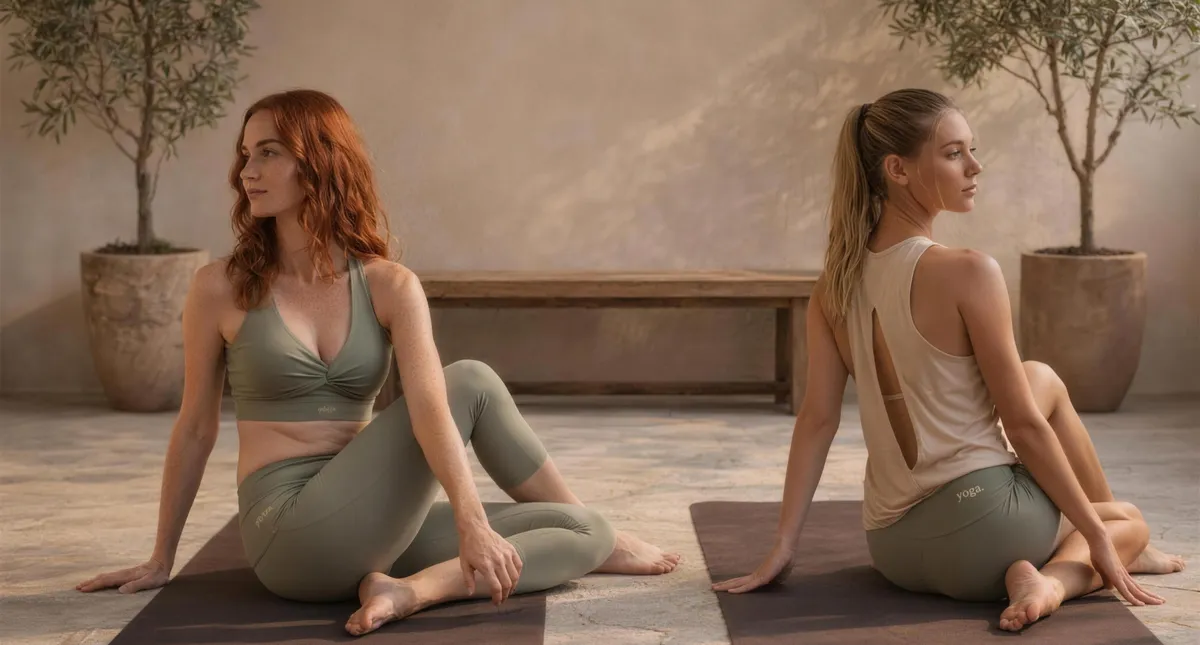
Still on your back, hug your knees to your chest, then let them drop to the right while you extend your arms in a T-shape. Stay here for six to eight breaths, then switch sides. This is your cool-down - let gravity do the work.
- Target muscles: obliques, quadratus lumborum, paraspinal muscles
- Common mistake: forcing the knees to the floor. Let them rest at whatever height is comfortable.
End Every Practice in Corpse Pose (Savasana)
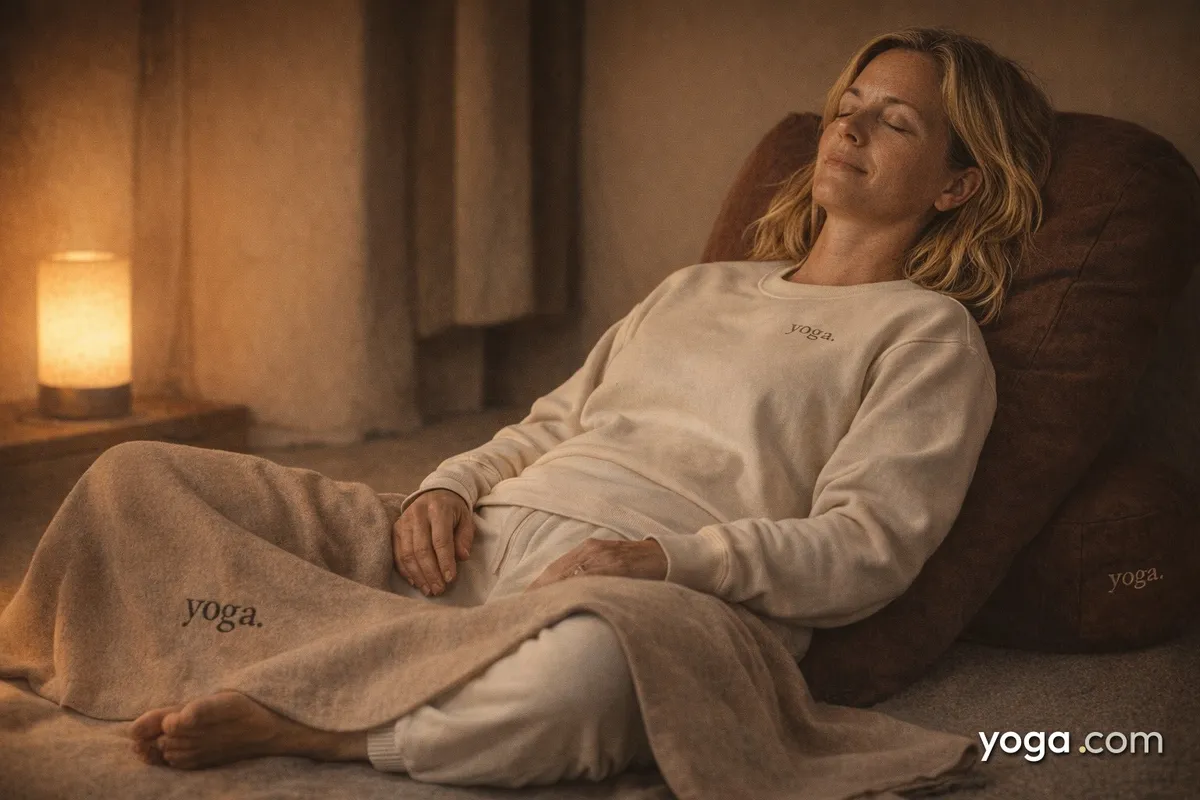
Lie flat on your back, arms a few inches from your sides, palms facing up. Close your eyes. Stay here for three to five minutes and let your nervous system absorb the work you just did. Savasana isn't optional - it's where integration happens.
How Often Should You Practice?
Consistency beats intensity every time with deep stabilizer training. Aim for three to four sessions per week, even if each one is only 20 minutes. The 10-week hatha yoga study that showed core strength gains used sessions of roughly 90 minutes once a week - so even a modest, regular commitment produces measurable change.
If you're working with chronic lower back pain, core stability training has shown real promise: a randomized controlled trial found a mean pain reduction of 3.08 points on the Visual Analogue Scale in a core stabilization group, compared to 1.71 in a routine physical therapy group, over just six weeks. That said, if your pain is sharp, new, or worsening, please stop and speak with your doctor or a physical therapist before continuing any exercise program.
A Quick Note on Safety
Mild muscle fatigue during and after practice is normal and is something most people will experience. Sharp, pinching, or shooting pain is not normal and is your signal to stop and modify what you are doing. Never push through joint pain, especially in the lower back, knees, or wrists, because pushing through that kind of pain can cause real harm to your body.
Keep in mind that if you are new to yoga or managing any injury or health condition, a qualified yoga teacher or physiotherapist can help you adapt these poses to your specific needs and your specific situation. Even small modifications can make a big difference, so it is always worth asking a professional for guidance rather than guessing on your own.
Finding Your Center
You don't need a gym, a complicated program, or an iron will to build genuine core strength. This gentle sequence - grounded in breath, held with intention, and practiced consistently - trains the full three-dimensional network of muscles your spine depends on. Start with what feels manageable, stay curious, and trust the process. Your core will thank you for it.
Sources
- PMC - Core Muscle Activity During Yoga Poses and Musculoskeletal Disorders
- PMC - Core Stabilization and Low Back Pain: Randomized Controlled Trial
- PMC - Core Muscle Anatomy and Function
- PMC - Effects of Hatha Yoga on Core Strength, Balance, and Flexibility in Young Women (2021)
- Mayo Clinic - Core Strength: Why It Matters
- PubMed - Yoga Techniques for Core Stability Training, Journal of Bodywork and Movement Therapy (2009)