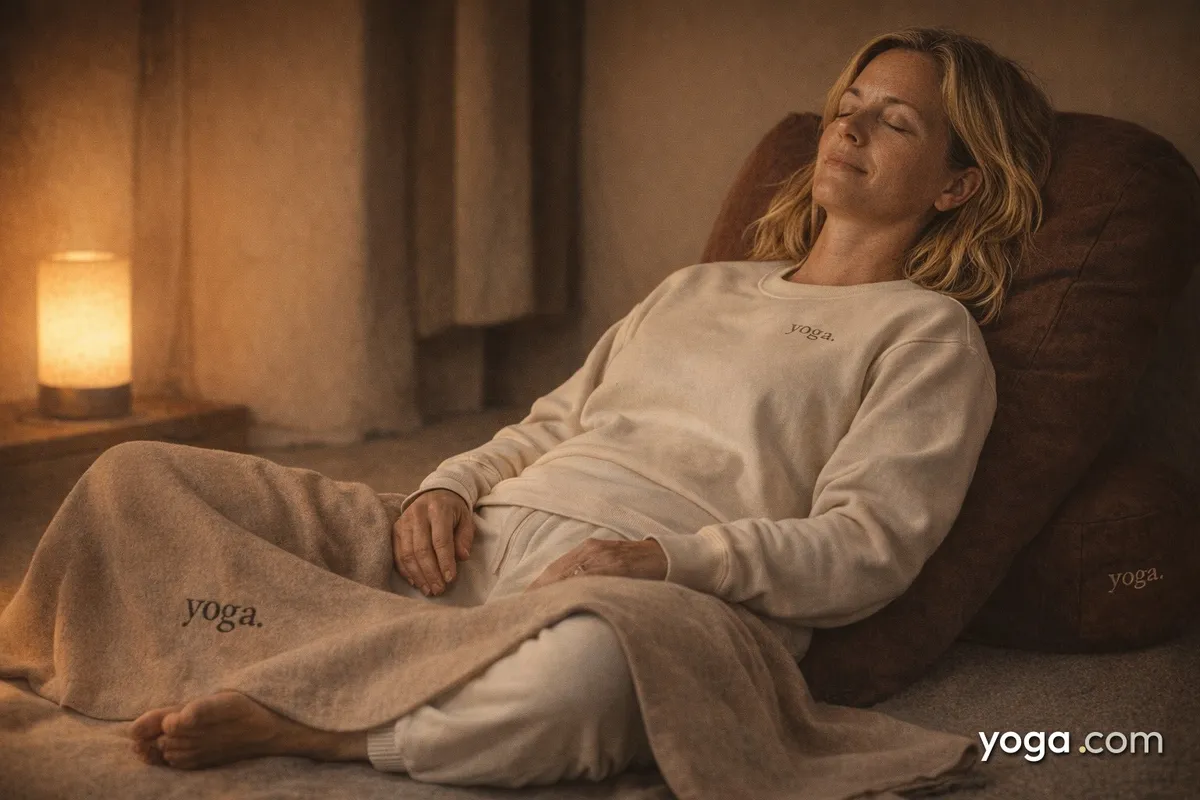
Nine O'Clock, Living Room Floor
Nine o'clock, the kids down, the dishes done. Tonight is for me. I've got a clear wall and my yoga mat spread where the living room meets the hallway, with two thick blankets, a bolster, a strap and a gentle timer set for five minutes on my phone - plenty of time. The living room floor is carpeted but flat, and I'm wearing thin socks, not slippers with heels that'd leave lumps in places I'd rather not know. My blanket, a sturdy folded fleece, will take the hard spots, and I'm thinking about a bolster while I watch the TV news.Now comes the shopping trip: I price the Hugger Mugger Standard Yoga Bolster online - it's a hefty 5 pounds, almost 12 inches across, and costs $108. It'd make these poses easy, but I'm thinking pillows will be okay. My sofa cushion's the right shape for this one, and pillows are cheaper. I'll check again tomorrow - tonight's the test run.
| Pose | Holds | Bolsters |
|---|---|---|
| Savasana | 3-5 minutes | No |
| Balasana | 3-5 minutes | Yes |
| Viparita Karani | 5-10 minutes | No |
The First Pose Looks Like Nothing
I lie back on my mat and tuck both ends of a folded blanket under my knees. That's all; the support takes the strain off the lower back and the back muscles relax. My arms rest open at my sides, palms turned up. Eyes closed, breathing normally, weight sinking into the floor, I don't need to hold anything.Five minutes can feel like forever the first time you do this. Your mind wanders, that's normal, and it gets easier. Two or three minutes is no enough time; the long holds are the whole mechanism. Your nervous system needs sustained stillness to shift into recovery mode. And so I tell myself I'm not just lying down. I'm doing something called supported Savasana, and my mind is going to stay here the whole time.
Folding Over the Bolster
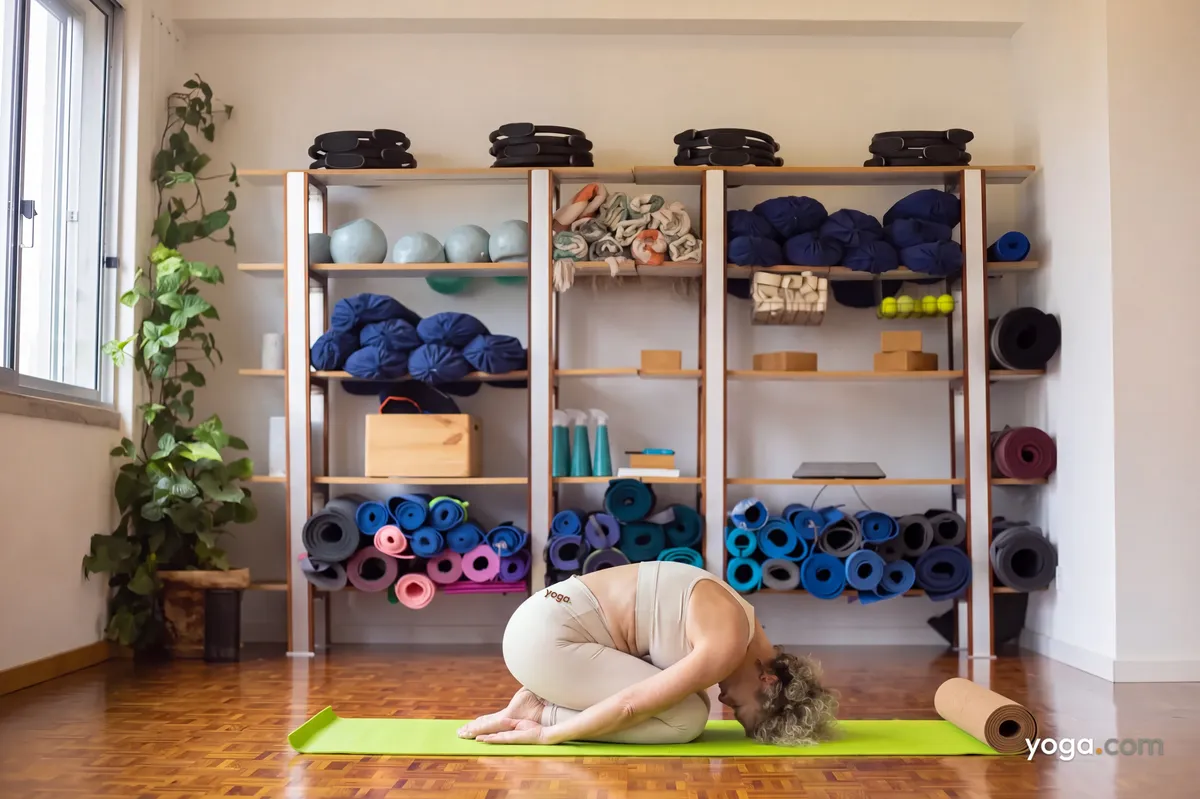
I sit up and stack blankets into a tall stack, then kneel in front of them with feet out wide enough to straddle the support. I fold forward and place my torso on the blankets, arms relaxed at the sides, hands turned palm down. My head turns to the left halfway through and I flip it the other way before I switch legs for another five or ten minutes.This isn't just Child's Pose (Balasana). These props make it supported. If your knee pain flares up or your knees are still healing from joint replacements, skip this pose and rest in Savasana again. And if your arms get uncomfortable, wrap them over the bolsters instead so they're no longer supporting your upper body.
Legs Up the Wall, Lights Low
For the third pose, I sit sideways against the wall and swing my legs up as I lie back. I put a folded blanket under my hips to help raise the pelvis a little. With arms open at my sides, palms turned up, I breathe slowly, close my eyes and stay here until the timer goes off. If you have glaucoma, uncontrolled high blood pressure, a hiatal hernia - speak to a doctor first, since there are cautionary issues. If you’re worried about getting your legs down safely, you can place a folded blanket or two along the edge of the wall where your back touches, and roll away onto them when you're ready to come out of the pose.Restorative poses aim to create the physical conditions conducive to rest. They don't build strength or stretch, they just are, allowing your nervous system to move out of fight-or-flight and into rest and digest mode.
Why Five Minutes, Not Two
The parasympathetic shift is what restores you. This is a mental shift. The practice is not about moving from one pose to the other; there is no rush or need to hurry. The poses themselves are so simple and accessible, anyone can do it. That's the idea. The whole practice is built on mindfulness over pushing limits. And this is where you'll get the best results: you're not going to feel much difference the first week you do this - your mind isn't going to instantly be calmer, you're not going to sleep any differently - but after several weeks it does start changing things.When you do restorative poses, you're not just practicing poses, you're practicing stillness. That's an active practice, too. And that's a really big deal when you think about what we're all dealing with these days: we spend most of our days on autopilot, doing tasks without thinking about them. Stillness allows you to step into this space where you're awake yet relaxed; where your mind and senses are alive but not engaged in something urgent.
In that space we can make different decisions, have new ideas, and become aware of our emotions and the sensations happening in our bodies - like whether we have knots or tightness somewhere, where you're holding tension in your shoulders or neck. It can become apparent that something is bothering you, maybe something as simple as your back being really sore. Then you can do something about it because you've become aware of it. And that means you have a chance to take care of yourself in a way that's preventative and preemptive rather than reactive when something really bad happens.
I'm learning what true rest feels like. You know - what rest actually is, how it's supposed to feel, when you're no longer bracing. And you know, my joints ache sometimes but not so much anymore, even though I was having trouble with my left knee for a while. It's getting better now.
What the Research Kept Turning Up
I look up more research on yoga and find the PRYSMS randomized trial that compared yoga to stretching over 48 weeks in a group of underactive adults with metabolic syndrome. The participants had to do home practice for half an hour, three times a week, plus twice-weekly 90-minute sessions where the classes ran the first 12 weeks. Fasting glucose levels dropped by 0.35 mmol/L in the yoga group, compared to 0.03 in the stretching group.The NCCIH also noted a rise in popularity between 2002 to 2022, from 5.0 to 15.8 percent.
If Something Hurts
I remind myself that pain is always a signal to stop and assess your position; don't push through it. That's true of anyone but especially of people aged 65 and older, who report higher yoga-related injury rates, usually sprains and strains in the knees and lower legs. If any pose doesn't feel quite right, I can switch to Savasana again.Also I know that if you've never tried restorative yoga before, or if your health is complicated, it makes sense to seek instruction. There's so much variation among individuals that a qualified teacher can offer great value. But the bottom line is, these aren't fancy stretches, they're accessible to anybody and you don't have to have much experience. Anybody can do it; everybody needs it. This can help you manage your own practice. Just like the research shows, the more consistently you practice, the better you can start feeling. And that's why I'm going to stick with it.