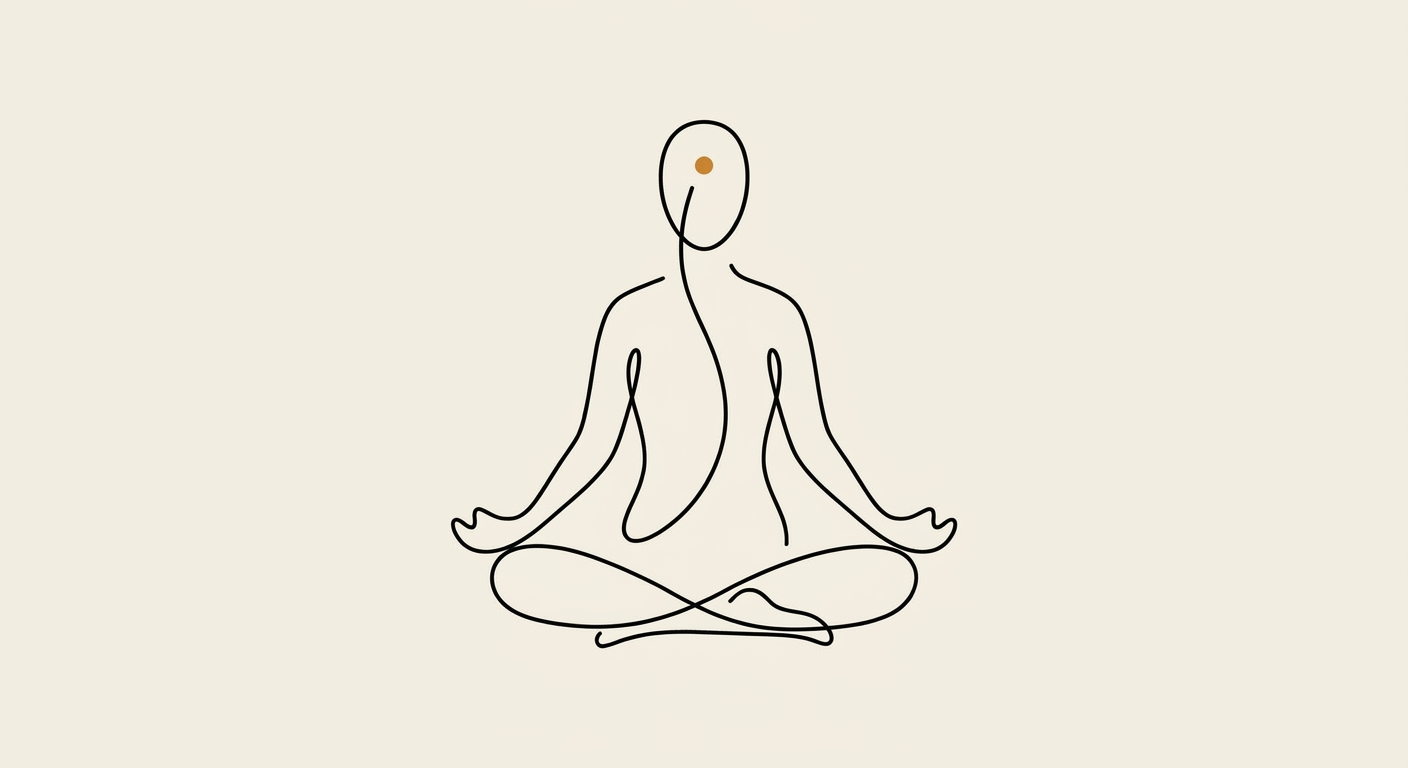
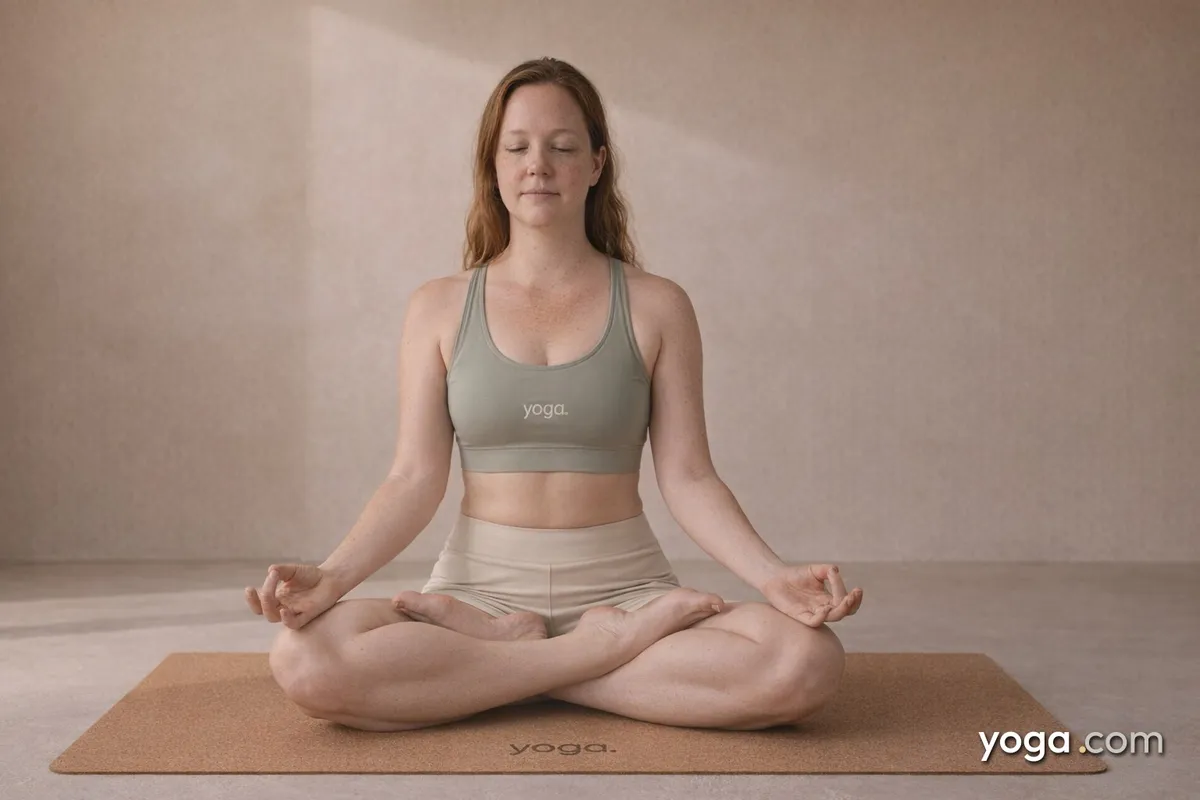
Lotus Pose - Padmāsana, from the Sanskrit padma (lotus) and āsana (seat) - is one of yoga's most recognized seated postures, placing both feet on opposite thighs in a symmetrical cross-legged position. It appears throughout classical texts as a primary seat for pranayama and meditation, valued for the stable, upright base it creates. In a typical practice, Padmāsana arrives near the end of a session, after the hips and knees have been well prepared.
At a Glance
- Level: Intermediate
- Type: Seated
- Targets: Hip external rotators, knee joint, ankles, thoracic spine
- Good for: Building a stable base for seated breathwork, lengthening the inner thighs and groin, promoting an upright spinal position during meditation
How to Do Lotus Pose
- Start in Dandasana. Sit on the floor with both legs extended. Press your palms beside your hips and lengthen through the crown of your head to establish a tall spine.
- Bring your right foot into Half Lotus. Bend your right knee and cradle the right shin in your hands. Use your hands - never force with the foot alone - to draw the right foot high onto the left thigh, sole facing upward, heel close to the lower abdomen. The right knee presses gently toward the floor.
- Check your right knee. External rotation comes from the hip, not the knee. If the right knee lifts significantly or you feel any pinching there, stay in Half Lotus or place a folded blanket under the knee for support.
- Add the left foot. Bend the left knee and, again using your hands, lift the left foot over the right shin and onto the right thigh, sole facing up. Both knees ideally rest at the same height.
- Root through your sitting bones. Press evenly into both sitting bones and lengthen your spine upward. Draw the low belly gently in to support the lumbar curve without gripping.
- Set your hands. Rest the backs of your hands on your knees with fingers relaxed, or bring thumb and index finger together in jnana mudra. Relax your shoulders away from your ears and broaden across the collarbones.
- Soften your gaze. Allow the eyes to close or rest on a soft downward gaze. Hold for your intended duration - begin with one to three minutes.
- To come out: Release the top (left) foot first, extending the leg slowly. Then release the right foot. Shake out both legs gently and switch the crossing of the legs before repeating if desired.
Benefits
- Stretches the hip external rotators, inner thighs, and groin
- Mobilizes the ankle joints and lengthens the muscles around the knees over time (when approached gradually)
- Encourages an erect thoracic and lumbar spine through the symmetrical base of support
- Strengthens the postural muscles of the back during sustained holds
- Provides a stable, grounded seat for extended pranayama and meditation practice
Common Mistakes and Alignment Cues
- Rounding the lower back: Raise your hips on a folded blanket or firm block so the pelvis can tilt forward, allowing the spine to rise naturally rather than collapsing at the lumbar.
- Forcing the knees down: The rotation must come from the hip socket, not from pushing on the knee. If the knees hover well above the floor, support them with rolled blankets rather than pressing them lower.
- Placing the foot too low on the thigh: Aim for the foot to sit high on the thigh, close to the hip crease, so the heel presses gently toward the lower abdomen. A low foot shortens the lever and increases knee stress.
- Collapsing the ankles: Keep the top of each foot flexed enough to protect the ankle joint - a fully flopped, unsupported ankle can create lateral strain over time.
- Tensing the jaw and shoulders: Periodically scan the face and upper body; a soft jaw and dropped shoulders free the breath and help you sustain the posture.
Modifications and Props
- Blanket under the hips: Sit on one or two folded blankets to raise the pelvis above the knees, reducing strain on the lumbar spine and helping the thighs descend.
- Half Lotus (Ardha Padmāsana): Place only the right foot on the left thigh and tuck the left foot under the right shin. This is the most common entry point for building toward full Lotus safely.
- Easy Pose as preparation: If the hips and knees are not yet ready for either Lotus variation, practice Easy Pose (Sukhasana) on a blanket to develop the hip opening over time.
- Rolled blankets under the knees: Place a small rolled blanket under each knee to reduce the distance the knee must travel to the floor, removing strain from the inner knee ligaments.
Cautions
- Knee injury or sensitivity: Lotus demands significant external rotation at the hip; when that rotation is limited, the stress transfers to the knee. Avoid or use Half Lotus and props if you feel any sharp or pinching sensation in the knee.
- Hip injury or recent hip surgery: Deep external rotation may be contraindicated; practice Bound Angle Pose instead until cleared by a professional.
- Ankle injury: The weight and angle placed on the dorsal ankle can aggravate sprains or ligament injuries; support the ankle on a folded blanket or choose a different seated position.
- Sciatica: Sitting on a firm prop helps reduce compression through the piriformis region, but discontinue if symptoms increase.
- If you're working with an injury or a medical condition, check with a qualified professional before practicing.
Related Poses
- Bound Angle Pose - opens the inner thighs and groins as direct preparation
- Easy Pose - the accessible entry point before working toward full Lotus
- Cow Face Pose (Left Leg and Right Arm Up) - deepens hip external rotation and targets the piriformis
- Corpse Pose - the natural counter-pose after any sustained seated position, releasing the legs fully
See Lotus in context: A Gentle Yoga Routine for Tired, Low-Energy Days and A 10-Move Chair Yoga Sequence for a Midday Reset.