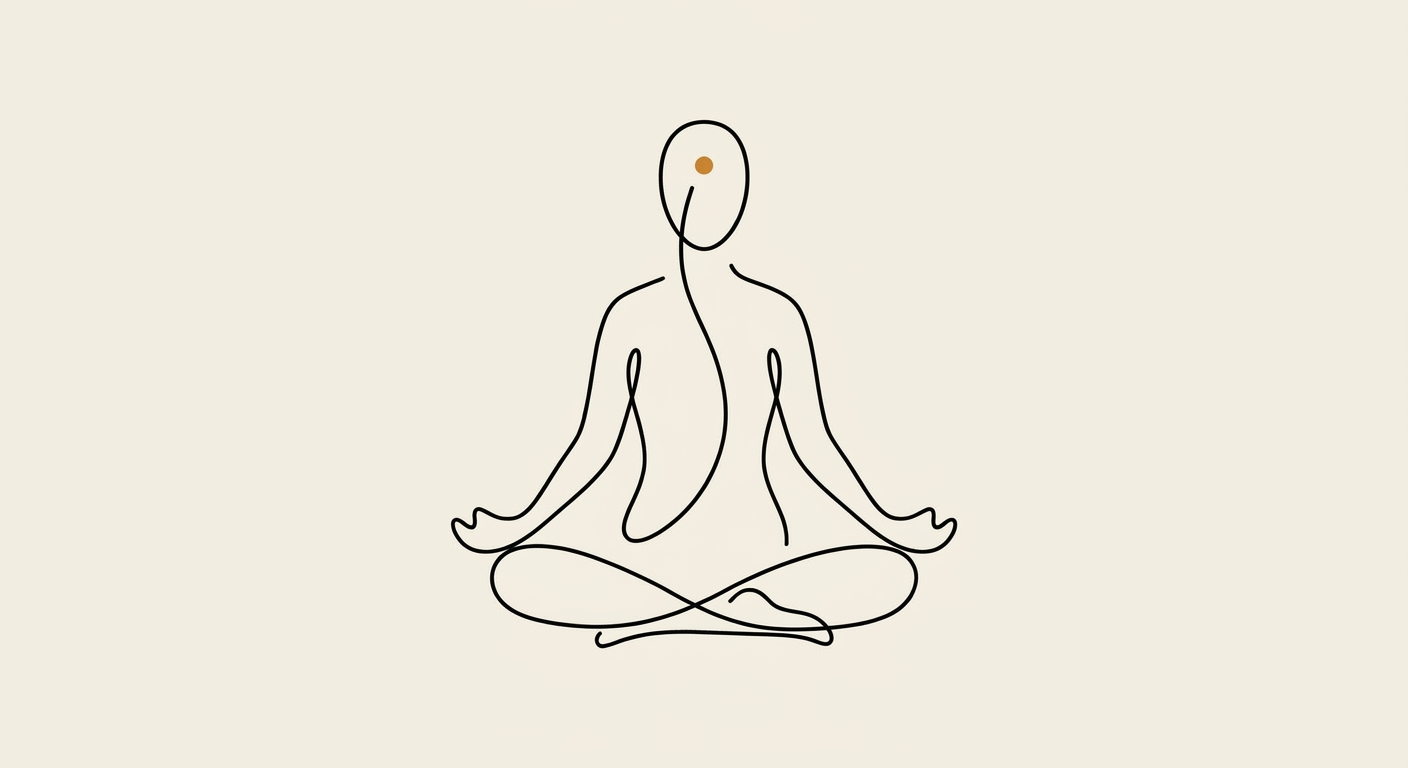
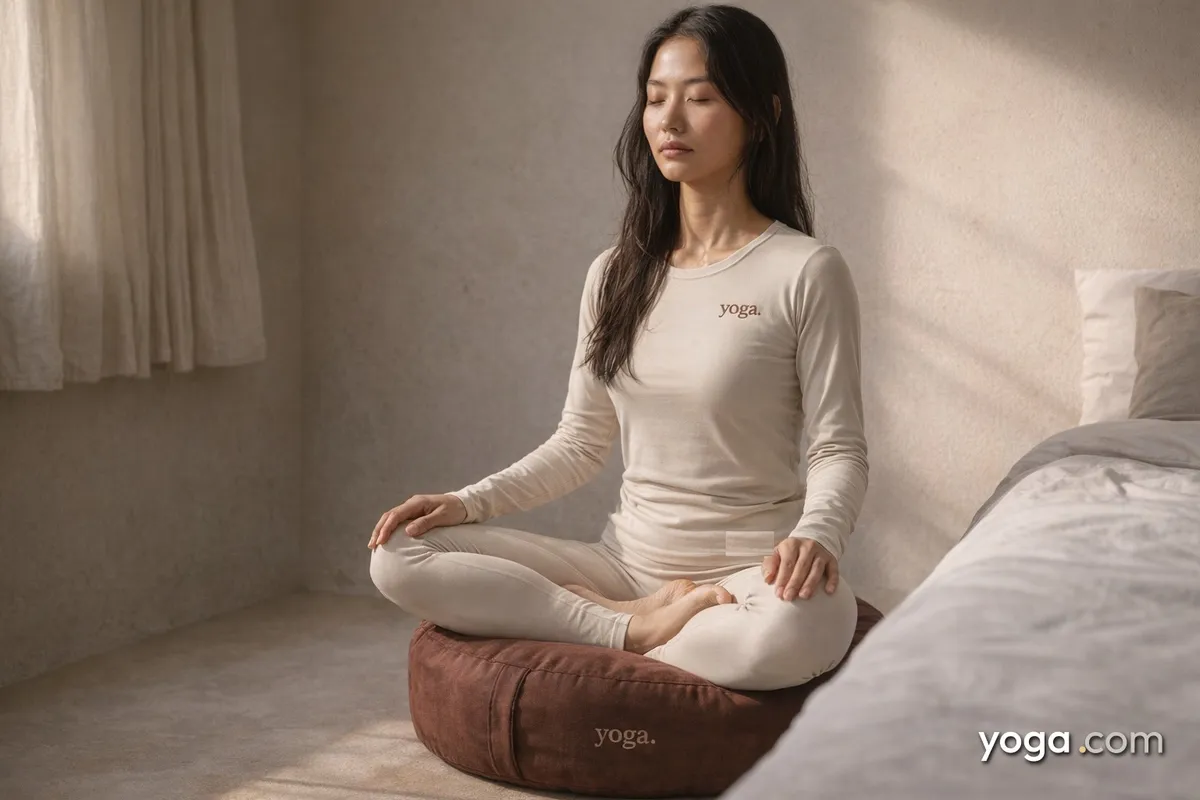
Half Lotus Pose with Left Leg Up is a seated meditation posture in which the left foot rests on the right thigh while the right leg remains folded beneath in a simple cross-legged position. Its Sanskrit name, Ardha Padmāsana (left leg up), translates literally as "half lotus seat" - ardha meaning half, padma meaning lotus. Practiced as a preparatory meditation seat or a hip-opening pause within a longer sequence, it offers much of the stillness and alignment of full Lotus with considerably less demand on the hip and knee.
At a Glance
- Level: Intermediate
- Type: Seated
- Targets: Hip external rotators, inner groin (adductors), ankles
- Good for: Building a stable meditation seat, improving hip external rotation, lengthening the inner thigh of the raised leg
How to Do Half Lotus Pose with Left Leg Up
- Sit on your mat in a simple cross-legged position. Place a folded blanket or block under your sitting bones if your pelvis tips backward.
- Extend your right leg forward, then bend it and draw the right foot close to your left groin so the right shin rests comfortably on the mat.
- Pick up your left foot with both hands, cradling the ankle and shin - never forcing at the knee. Slowly draw the foot toward your right hip crease.
- Using your hands, rotate the left thigh outward from the hip socket and set the outer edge of the left foot onto the top of the right thigh, as close to the hip crease as comfortable. The sole faces upward.
- Let the left knee release downward toward the mat without forcing it. If it hovers well above the floor, stay here - do not push the knee down.
- Lengthen your spine: root your sitting bones, lift through the crown of the head, and soften the shoulders away from the ears. Rest your hands on your knees - palms down for grounding, palms up for receptivity - or form a mudra of your choice.
- Soften your gaze downward at about a 45-degree angle, or gently close your eyes. Hold for 1-5 minutes, breathing evenly.
- To come out: Release the left foot with both hands, lower it gently to the mat, and return to a simple cross-legged seat. Shake out both legs before switching sides or transitioning.
Benefits
- Stretches the external rotators and inner groin of the left hip.
- Lengthens the adductors of the raised leg over time; the stretch belongs in the hip, not the knee.
- Builds a tall, stable base for pranayama and seated meditation.
- Encourages upright spinal alignment by tilting the pelvis into a neutral position.
- Gently mobilizes the ankle of the raised foot through sustained, supported dorsiflexion.
Common Mistakes and Alignment Cues
- Forcing the knee down: The rotation comes from the hip, not the knee. If the left knee is high, place a folded blanket beneath it rather than pressing it toward the floor.
- Collapsing the spine: When the lower back rounds, place the hips on a blanket or block until you can sit tall without effort.
- Gripping the foot with the thigh: Keep the top of the right thigh soft. The left foot simply rests there - squeezing can strain the ankle.
- Sickling the left foot: Flex the left foot gently (draw the toes back slightly) to protect the ankle and outer knee ligaments.
- Jutting the chin forward: Lengthen the back of the neck and draw the chin in slightly so the head sits directly over the spine.
Modifications and Props
- Elevated hips: Sit on one or two folded blankets or a meditation cushion to tilt the pelvis forward and reduce strain on the lower back.
- Supported knee: Place a folded blanket under the left knee if it hovers far above the floor, giving the hip muscles a target to release toward gradually.
- Against the wall: Sit with your back lightly against a wall to train spinal length without muscular fatigue during longer holds.
- Simple cross-legged prep: If the left foot cannot reach the right thigh without knee discomfort, practice Bound Angle Pose and hip-opening work for several weeks first.
Cautions
- Knee discomfort: Any sharp or pinching sensation in the left knee is a signal to come out immediately. The rotation must originate in the hip joint, not the knee.
- Hip injury or recent hip surgery: Avoid deep external rotation until cleared by a qualified professional.
- Ankle injury: The raised foot bears mild but sustained pressure against the thigh; practice with caution if the ankle is sprained or unstable.
- Sciatica flare-ups: Raise the hips significantly or skip the pose if sitting cross-legged aggravates symptoms.
If you're working with an injury or a medical condition, check with a qualified professional before practicing.
Related Poses
- Bound Angle Pose - a foundational hip opener that prepares the external rotators for Half Lotus.
- Cow Face Pose (Left Leg and Right Arm Up) - deepens hip external rotation and challenges the same joint actions from a different angle.
- Lotus Pose - the natural next progression once both hips are ready for full external rotation.
- Corpse Pose - an ideal counter-pose to release tension in the hips and knees after a sustained seated practice.
Looking for sequences that complement a seated practice? Try A Gentle Yoga Routine for Tired, Low-Energy Days or A 10-Move Chair Yoga Sequence for a Midday Reset.