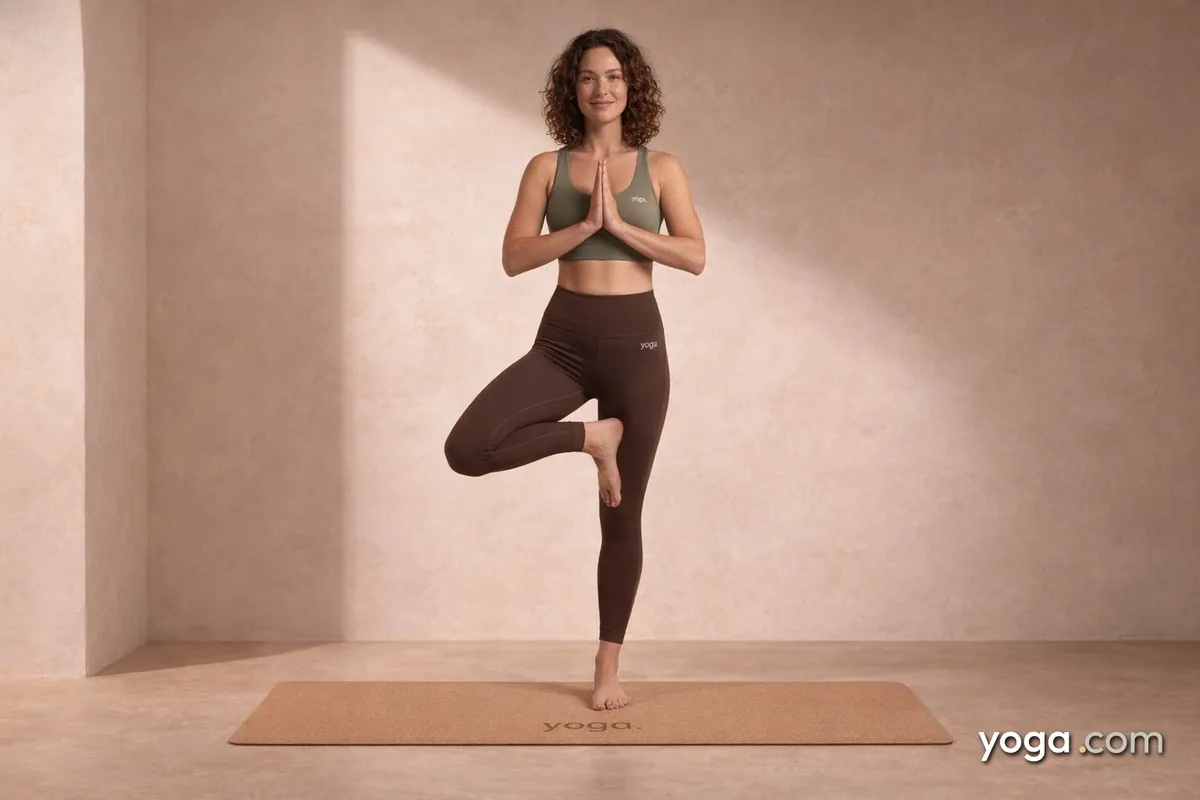
Tree Pose with Right Foot in Half Lotus is a standing balance in which the right foot presses against the front of the left thigh rather than the inner thigh - a common modification that keeps the hip in a more neutral position. Its Sanskrit name is Ardha Padma Vṛkṣāsana, from vṛkṣa (tree) and āsana (seat or posture). This variation fits naturally early in a standing sequence, offering a stable introduction to single-leg balance work.
At a Glance
- Level: Beginner
- Type: Balance
- Targets: Left ankle and foot, hip abductors, core, shoulders
- Good for: Building single-leg stability, training upright posture, developing concentration
How to Do Tree Pose with Right Foot in Half Lotus
- Begin in Mountain Pose, feet hip-width apart. Take a breath to settle your weight evenly across both feet and lengthen your spine.
- Shift your weight into your left foot. Press all four corners of the foot - heel, ball of the big toe, ball of the little toe, and outer heel - firmly into the floor.
- Bend your right knee and lift your right foot off the floor. Turn the right knee out to the side by externally rotating the right hip.
- Place the sole of the right foot against the front of the left thigh, toes pointing down. The heel of the right foot will rest just above the knee. Do not press the foot directly against the knee joint.
- Draw your hands to your heart in a prayer position (Añjali Mudrā), or extend both arms overhead with palms facing each other. Keep the shoulders away from your ears.
- Stack your pelvis directly over the standing left foot. Gently engage the lower belly without gripping the breath. Find a fixed point (drishti) at eye level to steady your gaze.
- Hold for five to eight steady breaths, keeping the standing leg strong and the spine tall.
- To come out, lower the right foot with control and return to Mountain Pose. Pause for a breath before switching sides.
Benefits
- Strengthens the muscles of the left ankle, calf, and quadriceps through sustained single-leg loading.
- Activates the hip abductors of the right leg as they work to hold the knee in external rotation.
- Builds stability in the deep core muscles that support an upright spine during balance.
- Improves proprioception - the body's awareness of its position in space - in the standing foot and ankle.
- Trains steady, focused attention through sustained drishti practice.
- Stretches the inner groin and adductors of the lifted right leg.
Common Mistakes and Alignment Cues
- Foot pressing on the knee: The right foot must rest on the thigh, above or below the knee - never directly against the joint. Slide the foot higher onto the thigh if it has drifted down.
- Standing hip hiking out to the side: If the left hip pushes outward, draw it back under the pelvis. Think of stacking both hip points level with each other.
- Gripping the standing toes: Spread all ten toes wide and keep them relaxed. Gripping indicates the arch has collapsed - press through the four corners of the foot instead.
- Collapsing the chest or rounding the upper back: Whether hands are at heart or overhead, keep the sternum lifting and the shoulder blades drawing gently together and down.
- Holding the breath: Balance depends on a calm nervous system. Maintain slow, even breathing throughout - the moment the breath tightens, the pose destabilizes.
Modifications and Props
- Use a wall: Stand with the left shoulder or fingertips lightly touching a wall. This gives immediate tactile feedback without taking weight off the standing leg.
- Lower the foot to the calf: If balance is difficult, place the right foot against the inner left calf instead of the thigh. Keep the foot above the ankle bone.
- Use a block under the raised foot: Place a block against the thigh and rest the right foot on it. This reduces the range of hip external rotation required.
- Keep hands on the hips: Lowering the arms reduces the challenge to balance and helps you focus purely on the standing leg and pelvis alignment.
Cautions
- Ankle instability: If the standing ankle wobbles significantly, work with a wall or reduce the hold time until the ankle musculature strengthens.
- Hip or groin discomfort on the lifted side: If you feel pinching in the right hip socket, lower the foot to the calf or reduce the degree of external rotation.
- Recent knee surgery or acute knee pain: Avoid placing pressure near the knee joint; choose the calf variation or skip the pose entirely until cleared.
- High blood pressure or vertigo: Keep the gaze level and the arms at the heart rather than overhead, and practice near a wall for support.
- If you're working with an injury or a medical condition, check with a qualified professional before practicing.
Related Poses
- Mountain Pose - the foundation for every standing balance; practice here first to establish rooted footing.
- Tree Pose on Right Foot - the classic variation with the foot on the inner thigh, the natural next step from this version.
- Eagle Pose (Right) - another beginner-friendly single-leg balance that develops ankle and hip stability.
- Standing Lord of Dance Pose with Right Foot Near the Head - an advanced progression that builds on the same standing-leg strength trained here.
Explore this pose in context: A Gentle Yoga Routine for Tired, Low-Energy Days and A 10-Move Chair Yoga Sequence for a Midday Reset.