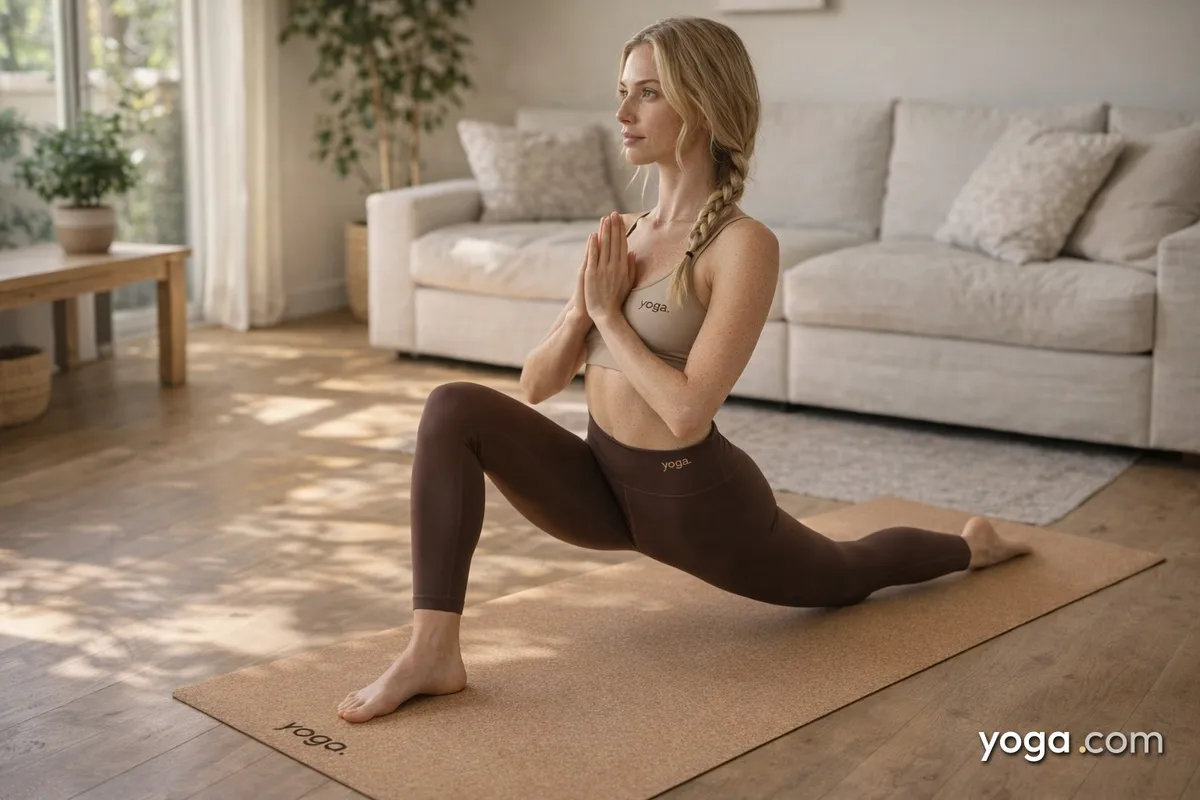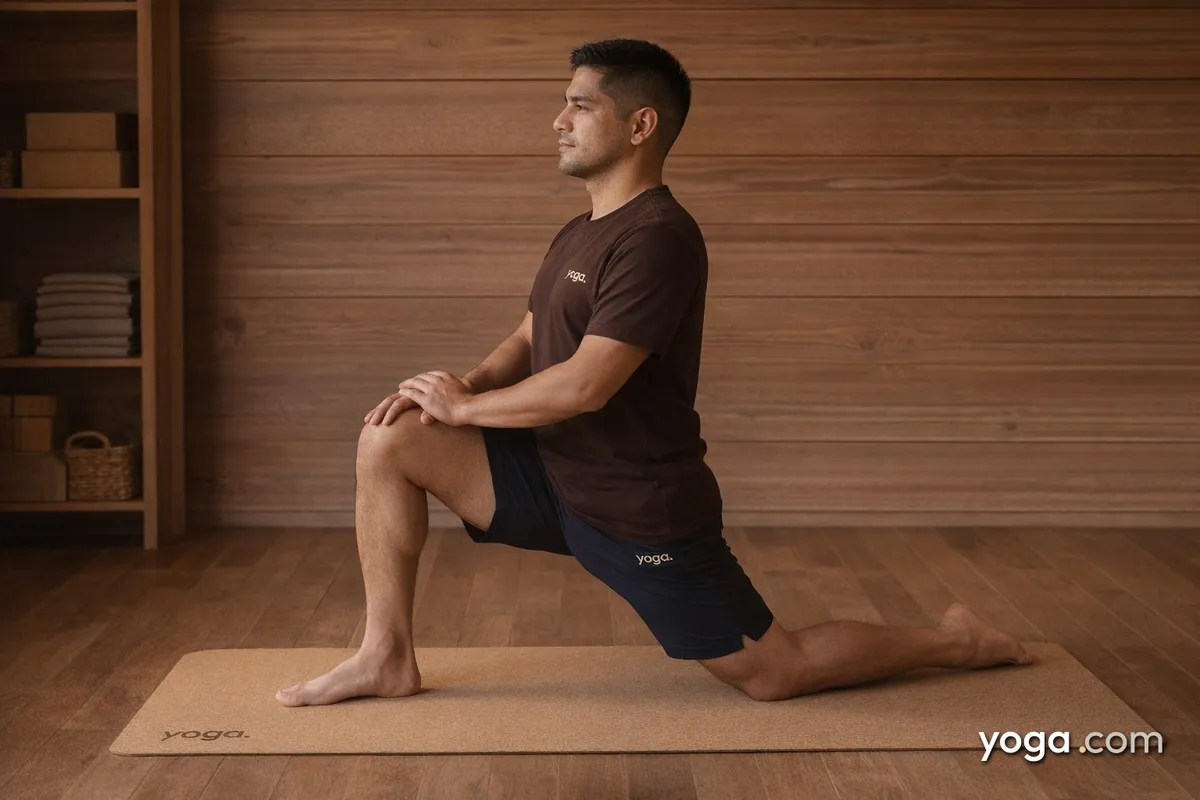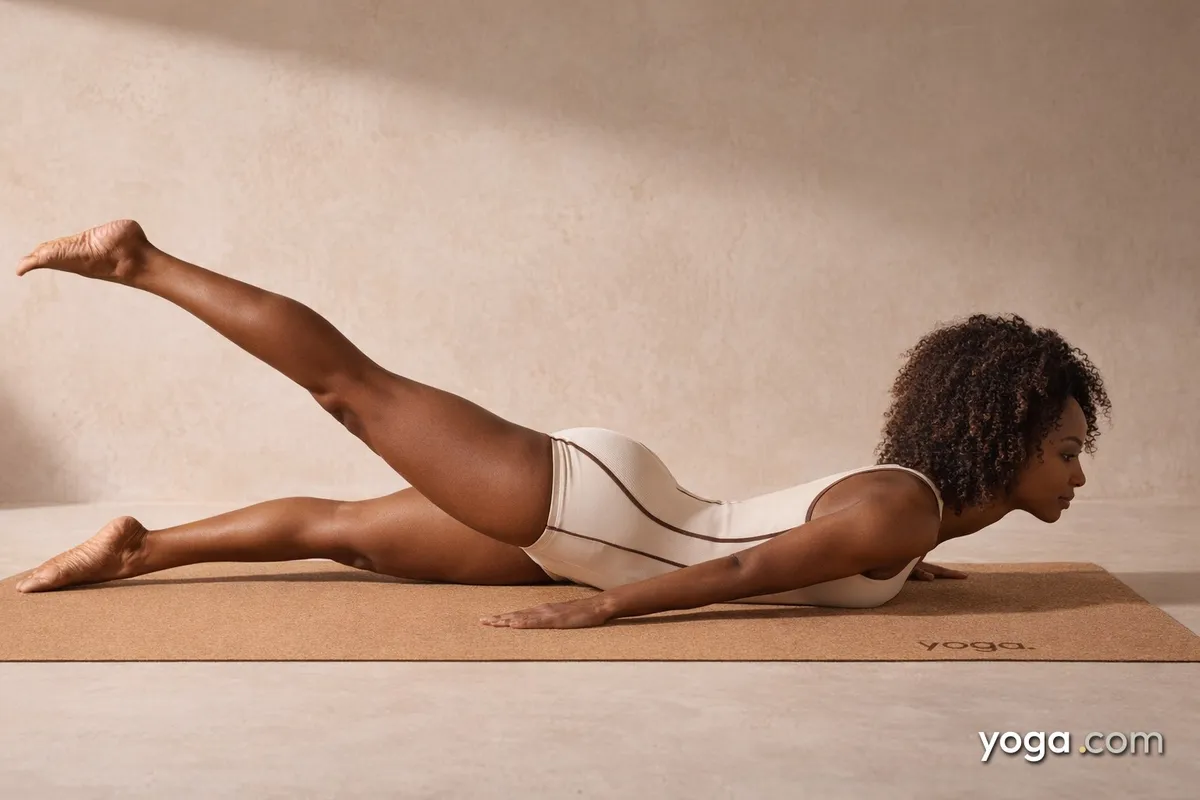
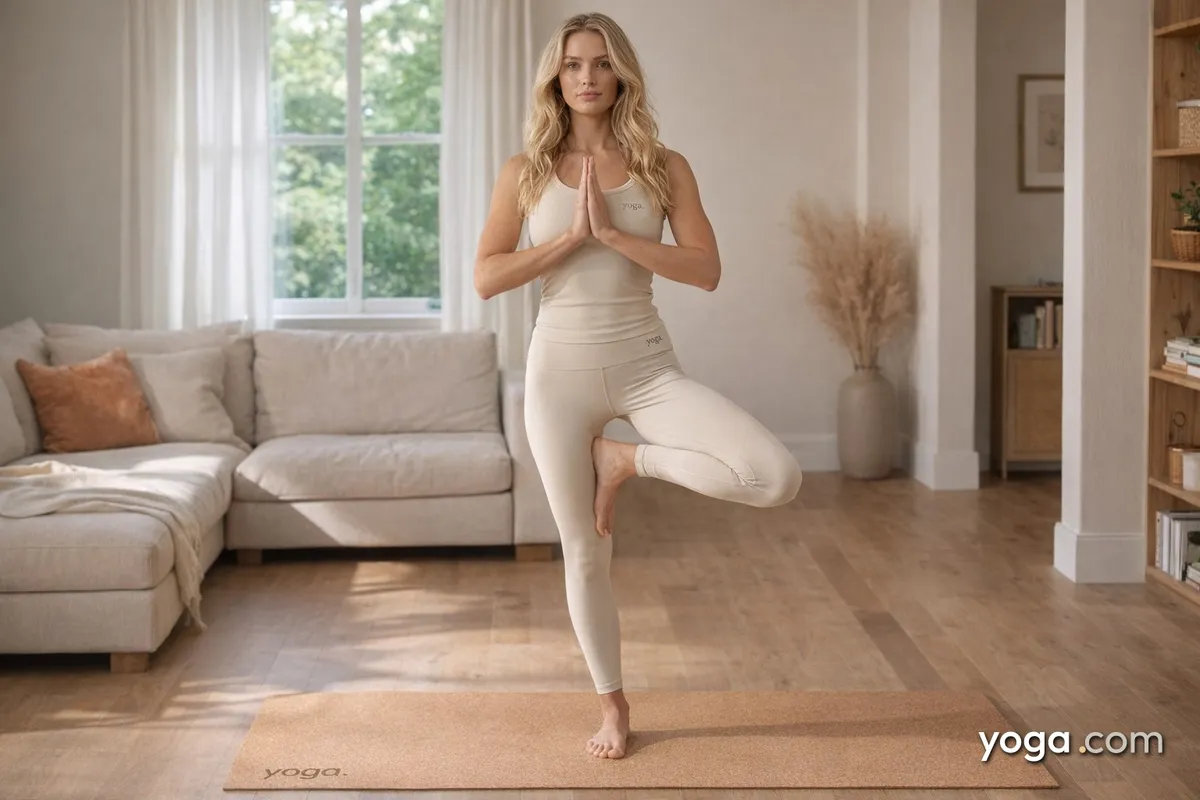
Tree Pose on the right foot is a standing one-legged balance in which the left foot presses into the inner right leg while the arms rise overhead or meet at the heart. Its Sanskrit name is Vṛkṣāsana (right support) - vṛkṣa meaning "tree" - and it belongs to the balance family. It typically appears early in a standing sequence, after the body is warm from Mountain Pose or a few Sun Salutations, and it serves as a gateway to more demanding one-legged poses.
At a Glance
- Level: Beginner
- Type: Balance
- Targets: Right ankle and foot, inner left hip and groin, outer right hip stabilizers, thoracic spine
- Good for: Building single-leg stability, improving upright posture, developing focused attention
How to Do Tree Pose on Right Foot
- Begin in Mountain Pose with your feet hip-width apart. Shift your weight gradually onto your right foot, pressing all four corners evenly into the floor.
- Lift your left foot and turn the left knee out to the side. Place the sole of the left foot against the inner right calf (below the knee) or, if your hip opens comfortably, against the inner right thigh above the knee - never directly on the knee joint.
- Press your left foot and right inner leg firmly into each other to create a stable, equal resistance. This mutual engagement steadies the pose.
- Draw your right hip directly over your right ankle. Avoid letting the standing hip jut out to the right; keep both hip points roughly level and facing forward.
- Bring your palms together at the center of your chest in anjali mudra, or extend both arms overhead with palms facing each other, shoulder-width apart. Lengthen through the sides of your waist.
- Soften your gaze onto a fixed, unmoving point (drishti) at eye level. Breathe steadily for five to eight full breaths.
- Coming out: Lower your left foot to the floor with control, returning to Mountain Pose. Pause for a breath before moving on.
Benefits
- Strengthens the intrinsic muscles of the right foot and ankle, building the foundation for all standing balance work.
- Activates the gluteus medius and deep hip rotators of the right leg, improving lateral hip stability.
- Stretches the inner left thigh and groin (adductors) as the left knee opens to the side.
- Promotes an upright thoracic spine and encourages even engagement of the postural muscles along the back body.
- Trains focused, steady attention through the use of a fixed gaze point - a transferable skill for any challenging balance sequence.
Common Mistakes and Alignment Cues
- Mistake: Pressing the left foot into the right knee. Cue: Place the foot clearly above or below the joint - on the thigh or the calf - to protect the knee ligaments.
- Mistake: Right hip hiking outward. Cue: Draw the right outer hip in and down so both hip points stay level; think of stacking the pelvis evenly over the standing foot.
- Mistake: Gripping the right toes for balance. Cue: Spread your toes wide and ground through the heel and ball of the foot; a claw-grip signals you need to soften and redistribute weight.
- Mistake: Holding the breath. Cue: Let the exhale be as long as the inhale - a tight, held breath signals unnecessary tension that destabilizes the pose.
- Mistake: Gaze wandering. Cue: Find one still point at eye level before you lift the foot; moving eyes move the body.
Modifications and Props
- Hand on wall: Place your right fingertips lightly on a wall to build proprioceptive confidence; aim to use just one finger, then work toward releasing the wall entirely.
- Block under the left foot: Rest the left heel on a block placed against the right inner calf for a stable, semi-supported version that still trains the hip opener.
- Foot at ankle: Keep the left big toe on the floor with the heel resting against the right inner ankle - this "kickstand" modification is ideal when balance feels very unsteady.
- Arms at heart: Keep the palms at the chest rather than overhead to lower your center of gravity and reduce the balance challenge as you build strength.
Cautions
- Recent or unstable ankle sprains on the right side - the standing leg bears all your weight; work near a wall until stability returns.
- Any right knee instability, as single-leg loading places demand on the joint; keep a micro-bend in the knee and avoid locking it.
- Inner left knee pain - reposition the left foot to the calf rather than the thigh if pressure or discomfort arises in the bent-leg knee.
- Acute vertigo or balance disorders - practice with one hand on a wall or seated in a chair with feet flat on the floor.
If you're working with an injury or a medical condition, check with a qualified professional before practicing.
Related Poses
- Mountain Pose - the natural starting point and counter-pose; return here between sides.
- Tree Pose with Right Foot in Front of Thigh - a direct variation that shifts the hip angle and deepens the groin stretch.
- Eagle Pose (Right) - another right-foot balance that challenges the standing-leg hip stabilizers with a different arm and leg pattern.
- Lord of the Dance Pose (Left) - a natural next-step progression adding a backbend and greater balance demand on the right standing leg.
Tree Pose fits well in sequences designed for steady, grounded movement. See it in context in A Gentle Yoga Routine for Tired, Low-Energy Days and A 10-Move Chair Yoga Sequence for a Midday Reset.