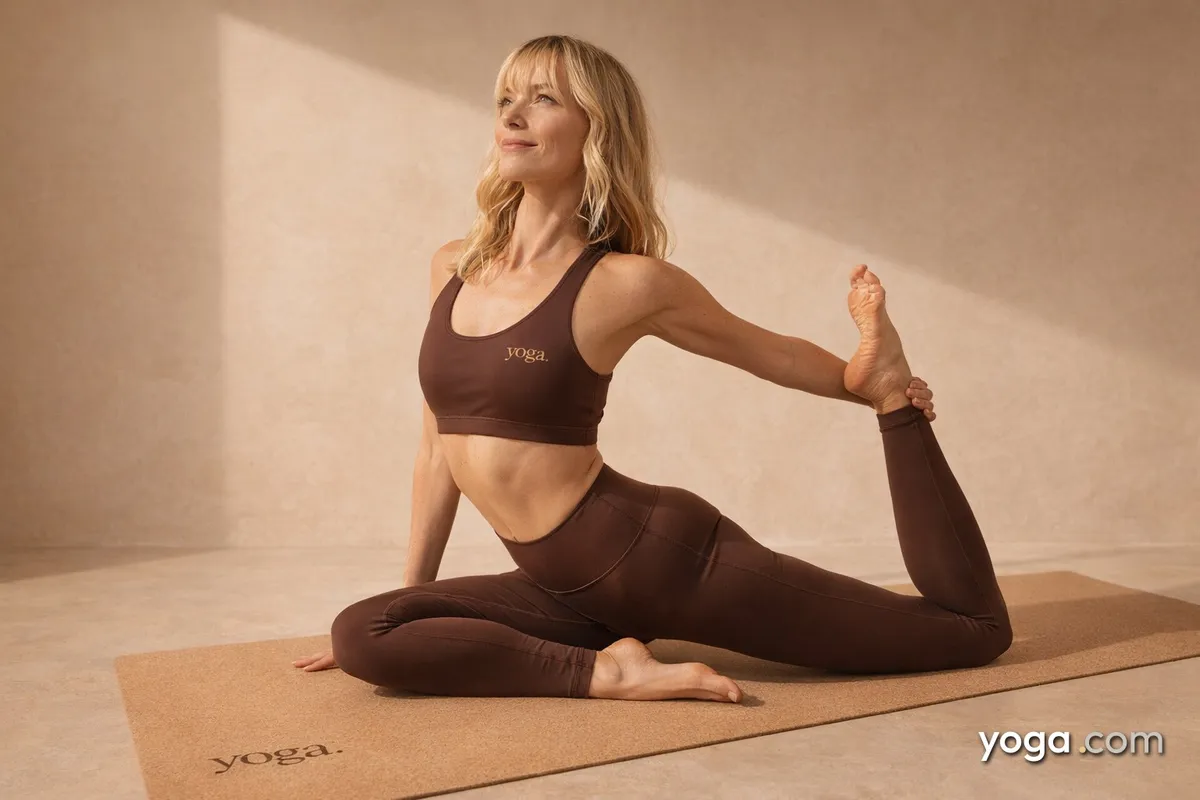
Eka Pāda Rājakapotāsana - from the Sanskrit kapota (pigeon) and āsana (seat or posture) - is a deep backbend that opens the entire front body while demanding genuine mobility from the spine, hip flexors, and shoulders. In this one-handed variation, the left leg is folded forward as in classic Half Pigeon, the right leg extends back, and the left hand reaches behind you to catch the right foot, drawing it toward the body and deepening the thoracic and lumbar extension. The result is an asymmetrical, full-chain backbend that builds both strength and suppleness.
At a Glance
- Level: Intermediate
- Type: Backbend
- Targets: Thoracic and lumbar spine (extension), left hip flexor and quadriceps, right hip flexor and quadriceps (back leg), left shoulder and chest (as the reaching arm opens), right foot and ankle (grabbed limb)
- Good for: Spinal mobility, hip flexor lengthening, shoulder opening, chest expansion
How to Do Pigeon Pose with One Hand Left Leg Grab
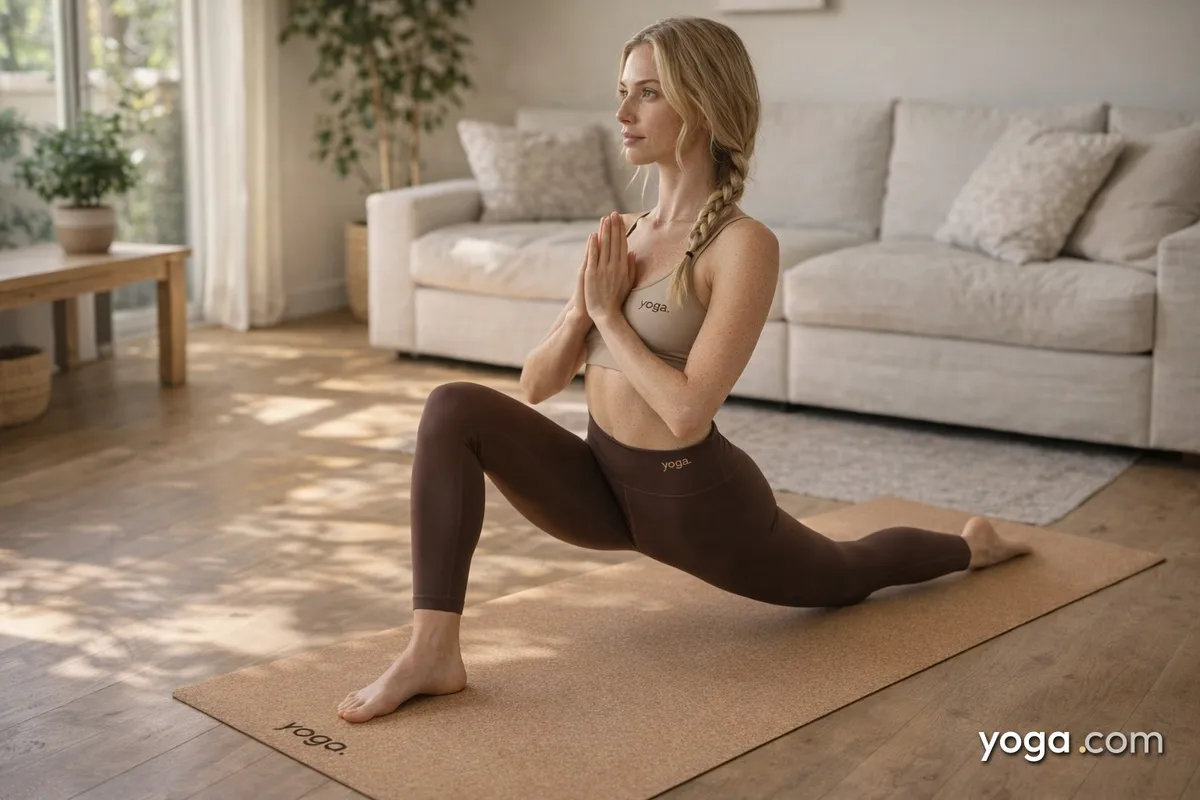
- Start in Half Pigeon. From Downward-Facing Dog, sweep your left knee forward and set it behind your left wrist. Angle the left shin at whatever degree keeps your hips level - a more parallel shin increases hip opening; a narrower angle is kinder on the knee. Extend the right leg straight back, pressing the top of the right foot into the mat.
- Square and level your hips. Draw a blanket or block under your left hip if it floats. Both hip points face forward as evenly as possible. Engage your right inner thigh to prevent the right hip from hiking.
- Establish your base. Place both hands on the mat alongside your left shin and lift your torso upright. Root through the top of the right foot and the left outer shin. Breathe here for a moment to feel the front of the right hip begin to release.
- Open the chest. On an inhale, draw your shoulders back and down, lift your sternum, and begin to arc your spine into extension. Think of lengthening the front of the body before you bend - create space first.
- Bend the right knee. As you exhale, bend your right knee so the right foot rises toward the ceiling. Keep the right knee pointing straight back rather than splaying to the side.
- Reach the left hand back. On your next inhale, sweep the left arm up and then back behind you, rotating the left shoulder open. Reach for the right foot. If your hand meets the foot comfortably, wrap the fingers around the top of the foot or the ankle.
- Draw the right foot in and lift. With the left hand holding the right foot, gently pull the foot toward your body as you continue to lift and open through the chest and upper back. Keep the right knee tracking straight back. Press the right foot into the left hand to create an active, two-way engagement rather than a passive pull.
- Hold and breathe. Stay for 5-10 full breaths. With each inhale, lengthen the spine; with each exhale, explore a little more opening through the front body. Keep the neck long - gaze forward or slightly upward, not forced back.
- Come out carefully. Release the right foot, place both hands back on the mat, and walk them forward. Lower the torso toward the mat into a resting Half Pigeon for 3-5 breaths to neutralize the spine.
- Transition. Press back to Downward-Facing Dog, then repeat on the opposite side if practicing both sides.
Benefits
- Spinal extension: The one-handed backbend progressively mobilizes the thoracic and lumbar vertebrae through their full range of extension.
- Hip flexor lengthening: Both hip flexors are challenged - the right (back leg) by the extended position, and the left by the bent-knee pigeon base - creating bilateral front-hip work in a single posture.
- Quadriceps lengthening: Bending the right knee and drawing the right foot toward the body stretches the right quadriceps along their full length.
- Shoulder and chest opening: Sweeping the left arm back into the bind externally rotates the left shoulder and broadens the left side of the chest.
- Spinal and pelvic stability: Maintaining a level pelvis on the asymmetrical base trains the stabilizing muscles of the lumbar spine and pelvis under load.
Common Mistakes and Alignment Cues
- Mistake: Hip collapsing to one side. Cue: Keep both hip points even and level. If the left hip lifts off the mat, slide a folded blanket or block beneath it before attempting the bind.
- Mistake: Right knee splaying outward when bent. Cue: Actively draw the right knee toward the midline so it points straight back behind the hip, not out to the right.
- Mistake: Crunching the lower back rather than opening the upper back. Cue: Lead the backbend from the mid-back and sternum. Imagine someone lifting the center of your chest before you arc back.
- Mistake: Yanking the right foot with the left hand. Cue: Create a conversation between hand and foot - press the foot into the hand with equal force, rather than pulling passively.
- Mistake: Dropping the chin or compressing the back of the neck. Cue: Keep the back of the neck long. Gaze forward or softly upward; let the cervical extension follow the thoracic rather than lead it.
Modifications and Props
- Block or blanket under the left hip: Essential if the left hip floats. This levels the pelvis and protects the left knee and sacroiliac joint.
- Strap around the right foot: If the left hand cannot reach the right foot, loop a strap around the right ankle and hold the strap with the left hand. Gradually walk the hand closer to the foot as flexibility develops.
- Bolster under the torso: For students who need more support in the upright position, placing a bolster lengthwise under the chest can allow the practitioner to focus on the spinal extension without fighting for balance.
- Stay in prep: If reaching back is inaccessible, practice simply bending the right knee and reaching the left hand toward the right foot without completing the grab, building shoulder mobility incrementally.
Cautions
- Avoid this pose if you have acute or unstable knee pain, particularly in the front (left) knee, which bears the weight of the pigeon base.
- Those with sacroiliac joint sensitivity should ensure the pelvis is fully supported and level before attempting the backbend component.
- If you experience sharp or pinching sensation in the lower back, ease out of the extension and revisit spinal preparation poses before continuing.
- Shoulder impingement or rotator cuff issues may be aggravated by reaching the left arm behind the body; use a strap and keep the movement pain-free.
- If you're working with an injury or a medical condition, check with a qualified professional before practicing.
Related Poses
- Bow Pose - a prone backbend that similarly demands bilateral quadriceps and hip flexor lengthening with a symmetrical foot grab.
- Camel Pose with Palms Set Against Feet - a kneeling backbend that trains the same thoracic extension and shoulder opening required to reach back in Pigeon.
- Upward Bow Pose - deepens full-spine backbending capacity and prepares the wrists and shoulders for advanced backbend variations.
- Upward-Facing Dog Pose - a foundational backbend that builds the spinal extension and chest-opening mechanics central to this pose.