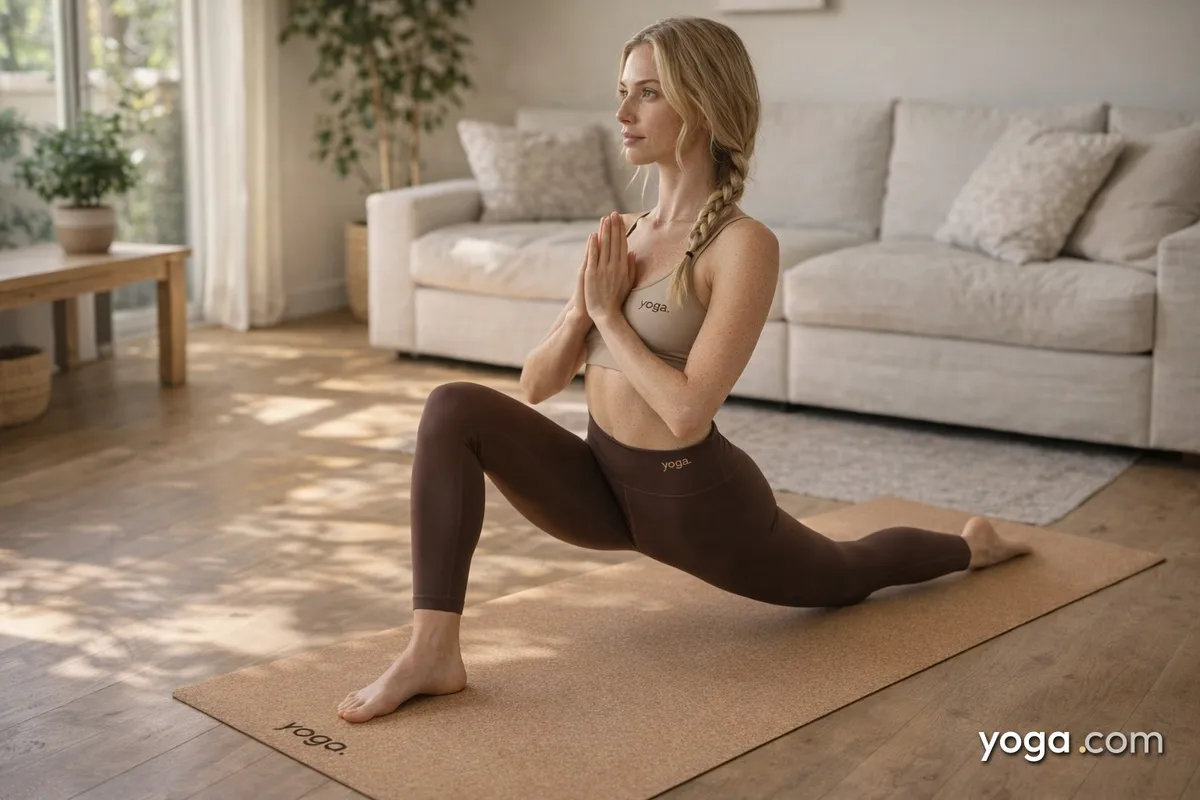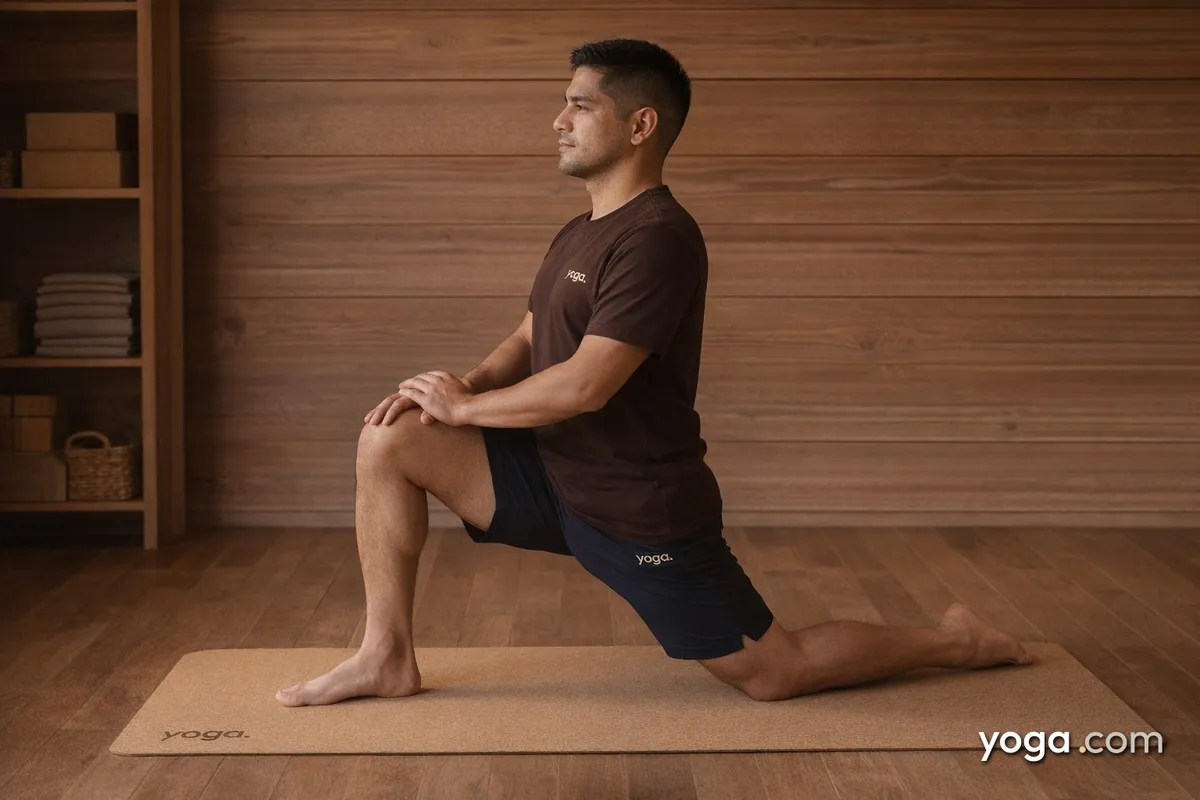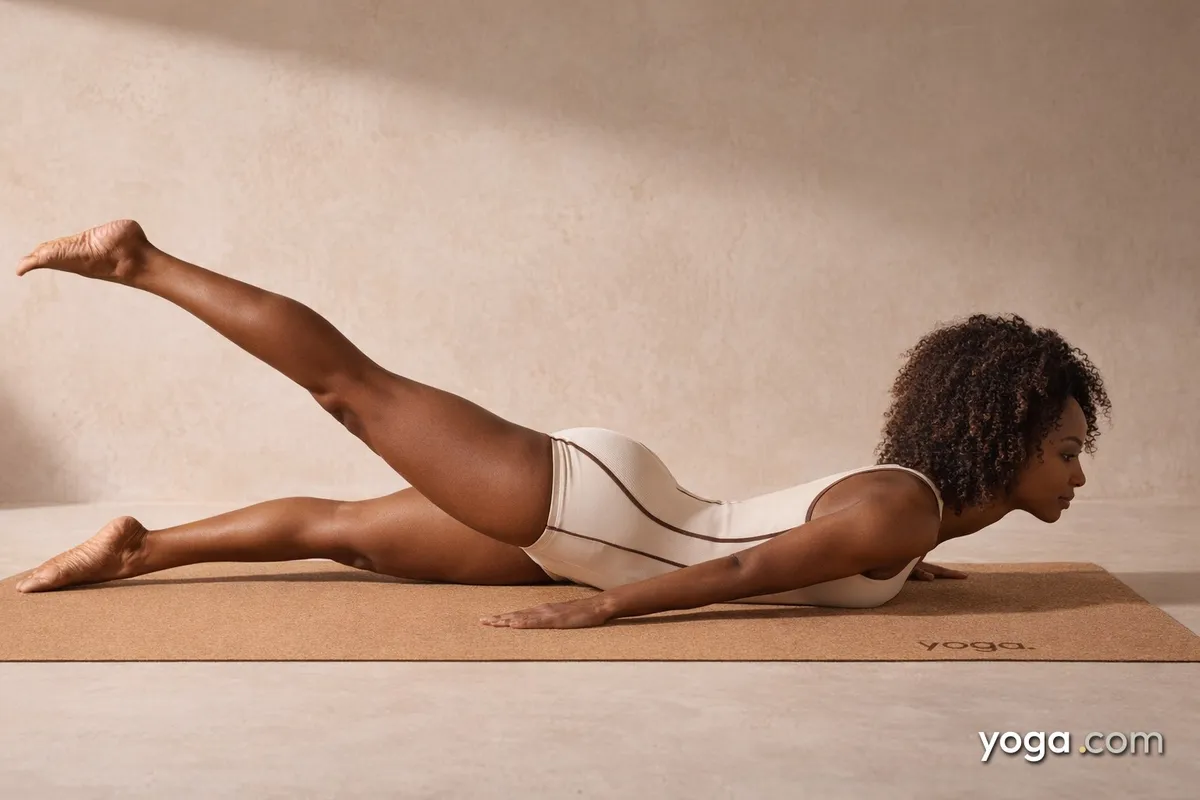
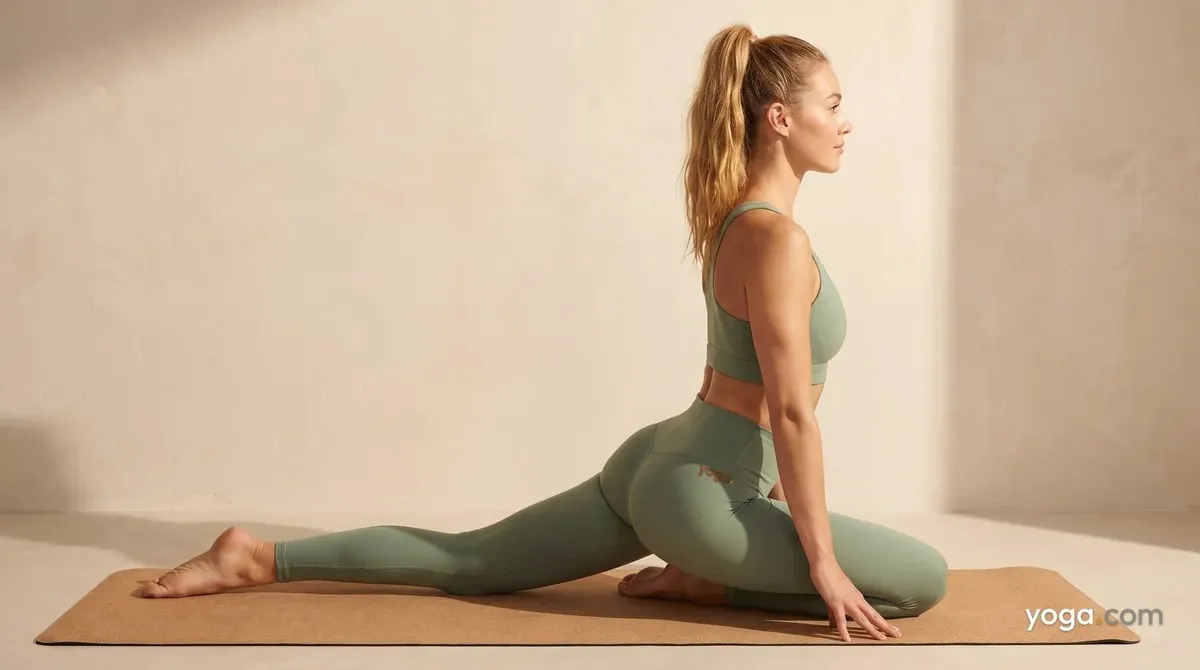
Pigeon Pose on Left Foot, Head Up is a deep hip-opening backbend that positions the left shin forward across the mat while the right leg extends behind, with the spine lifted and the gaze forward or slightly upward. Its Sanskrit name, Eka Pāda Rājākapotāsana (left, head up), translates roughly as "one-legged royal pigeon pose" - the lifted chest and open heart evoking the proud posture of a pigeon in full display. This intermediate variation belongs in the heart of a practice, typically after thorough hip and quadriceps warm-up.
At a Glance
- Level: Intermediate
- Type: Backbend
- Targets: Hip flexors, hip external rotators (left side), quadriceps (right), thoracic spine extensors
- Good for: Building spinal extension, stretching the front of the right hip, opening the chest and shoulders
How to Do Pigeon Pose on Left Foot, Head Up
- Begin in Downward-Facing Dog. Inhale, lift your left leg, then exhale and draw your left knee toward your left wrist, swinging the shin forward so the left foot moves toward the right side of the mat. Aim to bring the left shin as parallel to the top edge of the mat as your hip mobility allows.
- Lower your right knee to the mat and extend the right leg straight back, pressing the top of the right foot into the floor. Check that the right leg points directly behind you rather than splaying to the side.
- Square your hip points toward the front of the mat as much as possible. If the left hip lifts off the floor, slide a folded blanket or block underneath it for support.
- Press your fingertips into the mat on either side of your left shin and lift through the crown of your head. Draw your shoulder blades toward each other and down, opening the chest. This is the "head up" position - gaze forward or gently upward, keeping the back of the neck long.
- To deepen the backbend: on an inhale, walk your hands closer to the hips, then press your fingertips or fists into the mat beside your pelvis and lift the chest further. You may place your hands on your thighs instead if that feels more stable.
- Hold for 5-10 breaths, continuing to lift the sternum on each inhale and root the front of the right thigh into the mat on each exhale.
- To come out: Walk the hands forward, lower the torso over the left shin into a forward fold for one or two breaths to release the hip. Then tuck the right toes, press back to Downward-Facing Dog, and repeat on the second side.
Benefits
- Stretches the external rotators and hip flexors of the left hip, including the piriformis and gluteus medius.
- Lengthens the right iliopsoas and quadriceps through sustained extension of the back leg.
- Strengthens the thoracic erector spinae and rhomboids as you hold the chest lifted.
- Increases range of motion in thoracic extension, supporting upright posture.
- Develops proprioceptive awareness of pelvic alignment while the hips are asymmetrically loaded.
Common Mistakes and Alignment Cues
- Mistake: Hip collapses to the left. Cue: Place a folded blanket or block under the left sitting bone until the pelvis is level; an even pelvis protects the left knee and sacroiliac joint.
- Mistake: Right leg rotates outward, foot splaying to the side. Cue: Press the top of the right foot evenly into the mat and internally rotate the right thigh slightly, drawing the inner thigh toward the ceiling.
- Mistake: Chest sinks and spine rounds. Cue: Root the fingertips into the floor, draw the lower belly in lightly, and lift the sternum before attempting to deepen the backbend.
- Mistake: Head cranks back, compressing the cervical spine. Cue: Keep the back of the neck long - lead with the sternum, not the chin. Gaze forward or only minimally upward.
- Mistake: Left foot is tucked tightly under the groin, stressing the knee. Cue: Walk the left foot slightly farther from the hip; the more the shin angles forward, the more the knee is protected.
Modifications and Props
- Block or blanket under the hip: If the left hip does not reach the floor comfortably, place a block or folded blanket beneath it to keep the pelvis level and reduce strain on the left knee.
- Hands on the thighs: Instead of pressing the fingertips into the mat, rest the palms on the front thigh and back thigh. This gives the spine more feedback and helps beginners find the backbend without over-relying on arm strength.
- Reclined figure-four as preparation: If the upright position is inaccessible, practice the hip-opening component lying on your back in a figure-four (reclined pigeon) stretch before attempting the floor variation.
- Supported on fists or blocks: Place two blocks on their lowest height on either side of the hips to bring the floor closer, making it easier to lift the chest without collapsing into the lower back.
Cautions
- Knee discomfort: If you feel any sharp or pinching sensation in the left knee, reduce the angle of the shin (bring the foot closer to the hip) or use a blanket under the hip to reduce lateral stress on the joint.
- Sacroiliac or lower back sensitivity: Keep the pelvis level and avoid over-arching the lumbar spine; engage the lower belly lightly throughout the pose.
- Tight hip flexors or recent groin strain: Ease into the depth of the back-leg extension gradually; do not force the right hip toward the floor.
- Neck issues: Keep the gaze neutral and the chin parallel to the floor rather than tilting the head back sharply.
If you're working with an injury or a medical condition, check with a qualified professional before practicing.
Related Poses
- Cobra Pose - a foundational backbend that warms up the spinal extensors and chest before deeper work.
- Upward-Facing Dog Pose - builds the thoracic extension and hip-flexor length that Pigeon Pose on Left Foot, Head Up requires.
- Bow Pose - a complementary prone backbend that deepens quadriceps and hip-flexor opening after pigeon.
- Downward-Facing Dog Pose - the natural entry and exit point for this pose, and a useful counter-stretch for the spine.
Looking for sequences that include hip openers and backbends? Try A Gentle Yoga Routine for Tired, Low-Energy Days or explore standing and seated options in A 10-Move Chair Yoga Sequence for a Midday Reset.