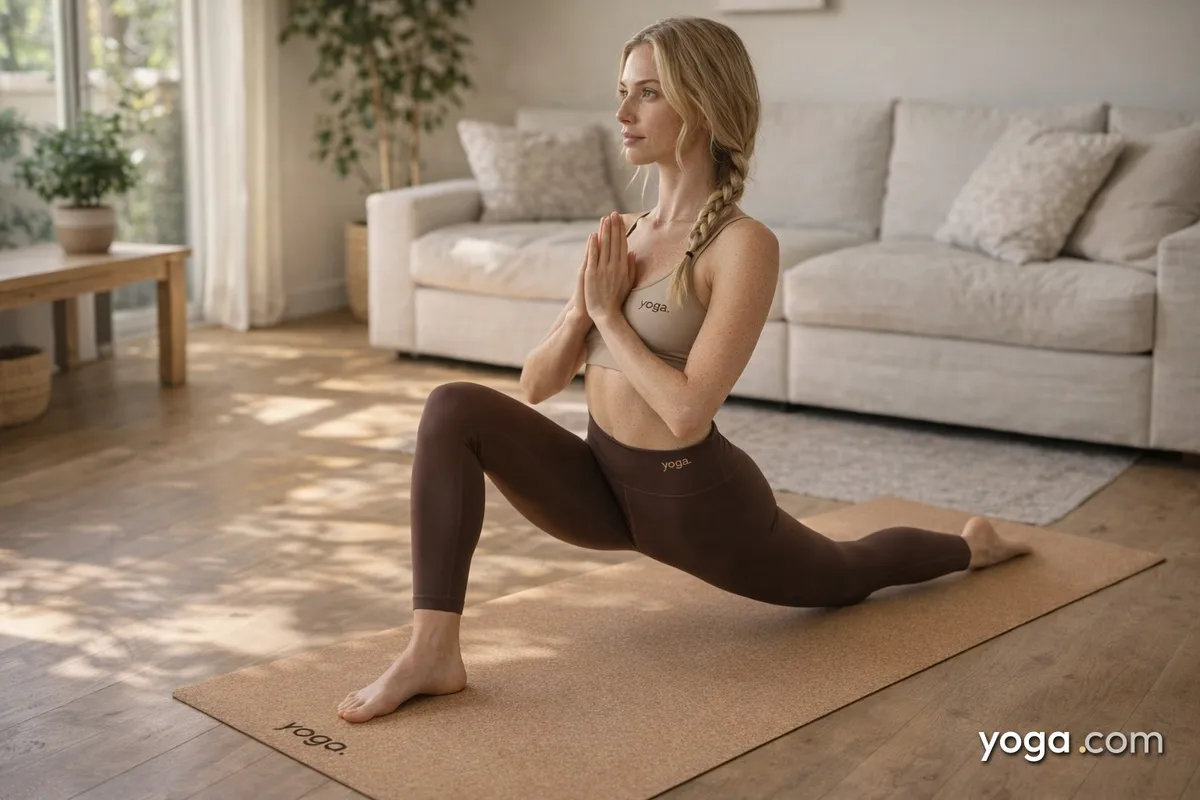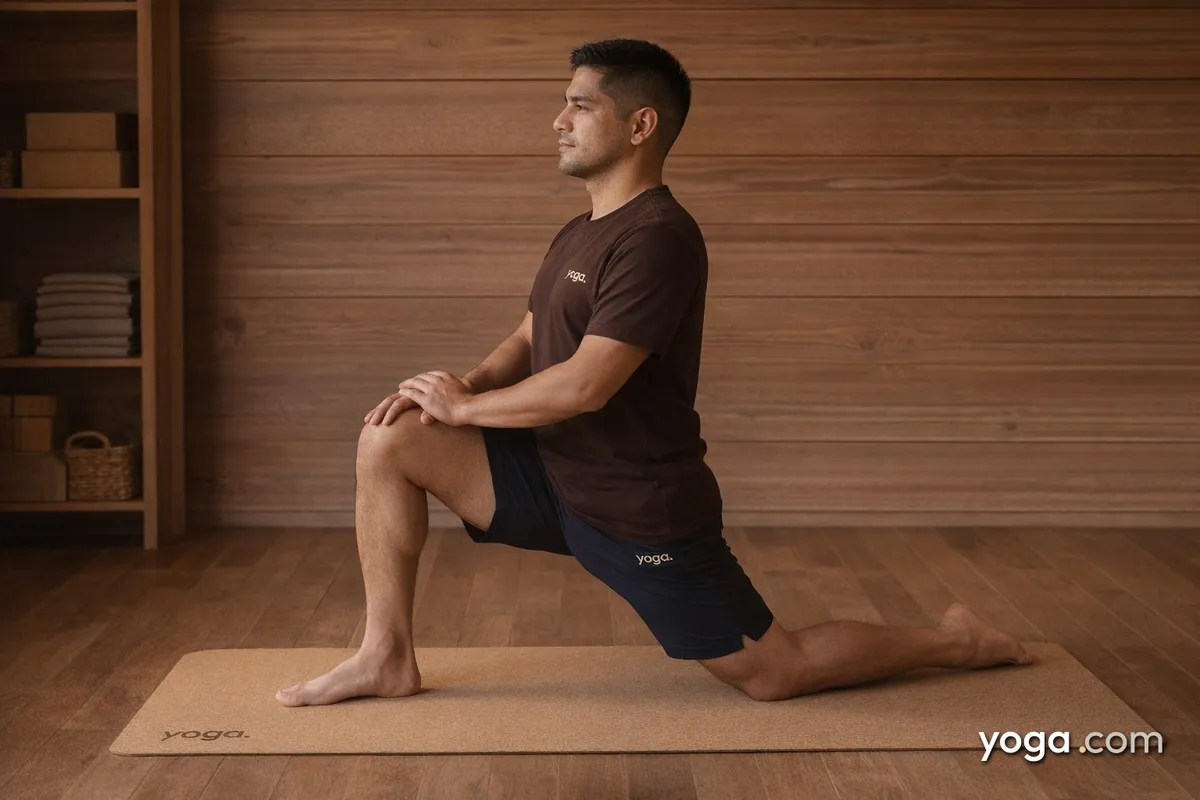
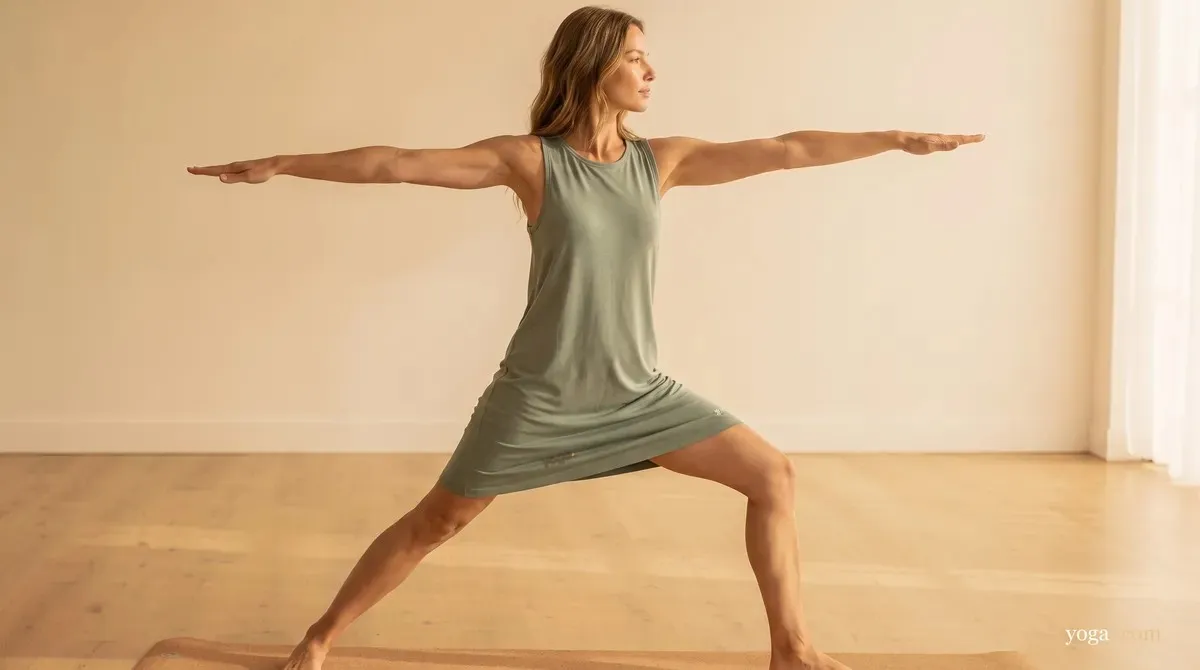
Warrior Pose with Left Leg Forward, Right Leg Straight is the left-side expression of one of yoga's most foundational standing poses, known in Sanskrit as Vīrabhadrāsana II (left leg forward) - named for the fierce mythological warrior Vīrabhadra, a form of Shiva. In this variant, the left knee bends over the left ankle while the right leg extends straight and strong behind you, arms reaching wide in opposite directions. It appears throughout standing sequences, sun salutation variations, and flows as both a strength-builder and a hip-opener.
At a Glance
- Level: Beginner
- Type: Standing
- Targets: Hips, quadriceps, inner thighs (adductors), shoulders
- Good for: Building lower-body strength, improving hip mobility, developing shoulder and arm endurance
How to Do Warrior Pose with Left Leg Forward, Right Leg Straight
- Start in Mountain Pose at the top of your mat. Step your right foot back approximately 3.5-4 feet, so your feet are wide apart. Your right toes angle out to roughly 90 degrees; your left toes point straight toward the front of the mat.
- Press the outer edge of your right foot firmly into the mat. The right leg stays straight and engaged - firm the quadriceps without locking the knee.
- Square your hips and torso to face the long side of the mat. Both hip points and shoulders open to the right (the side your back foot faces), not toward the front leg.
- Inhale and raise your arms to shoulder height, extending them in opposite directions - left arm reaches toward the front, right arm reaches toward the back. Palms face the floor. Draw your shoulder blades apart and down away from your ears.
- Exhale and bend your left knee directly over your left ankle, tracking it toward your second or third toe. Aim to bring your left thigh parallel to the floor, or as close as is comfortable while your heel stays fully grounded.
- Turn your gaze over your left fingertips. Lengthen through the crown of your head and keep your torso upright - avoid leaning forward over the front thigh or collapsing into the left hip.
- Hold for 5-10 breaths, pressing evenly through both feet and keeping both arms energized.
- To come out: On an inhale, straighten the left knee and lower your arms. Step your right foot forward to meet the left, returning to Mountain Pose.
Benefits
- Strengthens the quadriceps, gluteal muscles, and calves of the bent (left) leg
- Stretches the hip flexors and inner thighs, particularly of the extended (right) leg
- Builds endurance and stability in the shoulder girdle and arms
- Develops ankle stability and proprioception through the wide stance
- Engages and tones the muscles along the spine, supporting upright posture
Common Mistakes and Alignment Cues
- Mistake: Front knee collapses inward. Cue: Actively press your left knee outward in the direction of your pinky toe, keeping it aligned over your ankle.
- Mistake: Torso tilts forward over the bent leg. Cue: Stack your shoulders directly over your hips and lift through the crown of your head to stay vertical.
- Mistake: Back heel lifts off the mat. Cue: Root the outer edge of your right foot into the floor and widen your stance slightly if needed.
- Mistake: Arms drop or shoulders creep toward the ears. Cue: Reach actively through your fingertips in both directions while sliding your shoulder blades down your back.
- Mistake: Hips twist toward the front leg. Cue: Draw your left hip back and your right hip forward to keep both hip points facing the long side of the mat.
Modifications and Props
- Shorter stance: If your back heel lifts or your knee tracks inward, step your feet closer together to make the position more stable.
- Chair support: Place a chair seat under your left thigh for support while building quadriceps strength, allowing you to hold the shape longer with less strain.
- Wall for balance: Stand with your right heel touching a wall to help anchor the back leg and encourage proper hip alignment.
- Arms at hips: If your shoulders fatigue quickly, keep your hands on your hips while focusing on the lower-body alignment before adding the arm extension.
Cautions
- Knee sensitivity: Keep the front knee directly over the ankle and avoid letting it travel past the toes or collapse inward; reduce the depth of the bend as needed.
- Hip or groin discomfort: Shorten your stance and do not force the hips to open beyond a comfortable range.
- Shoulder or neck issues: Keep arms at shoulder height or lower, or rest hands on hips; avoid tensing the neck while gazing over the front hand.
- Balance difficulties: Use a wall or chair nearby for stability, especially when first learning the pose.
- If you're working with an injury or a medical condition, check with a qualified professional before practicing.
Related Poses
- Mountain Pose - the starting point for entering and exiting this pose
- Warrior Pose with Right Leg Forward, Left Leg Straight - the opposite-side counterpart; practice both to balance the body
- Right Triangle Pose - shares the same wide-legged stance and is a natural progression or counterpose
- Chair Pose - prepares the quadriceps and trains the alignment of the bent-knee position
See this pose in practice: A Gentle Yoga Routine for Tired, Low-Energy Days and A 10-Move Chair Yoga Sequence for a Midday Reset.