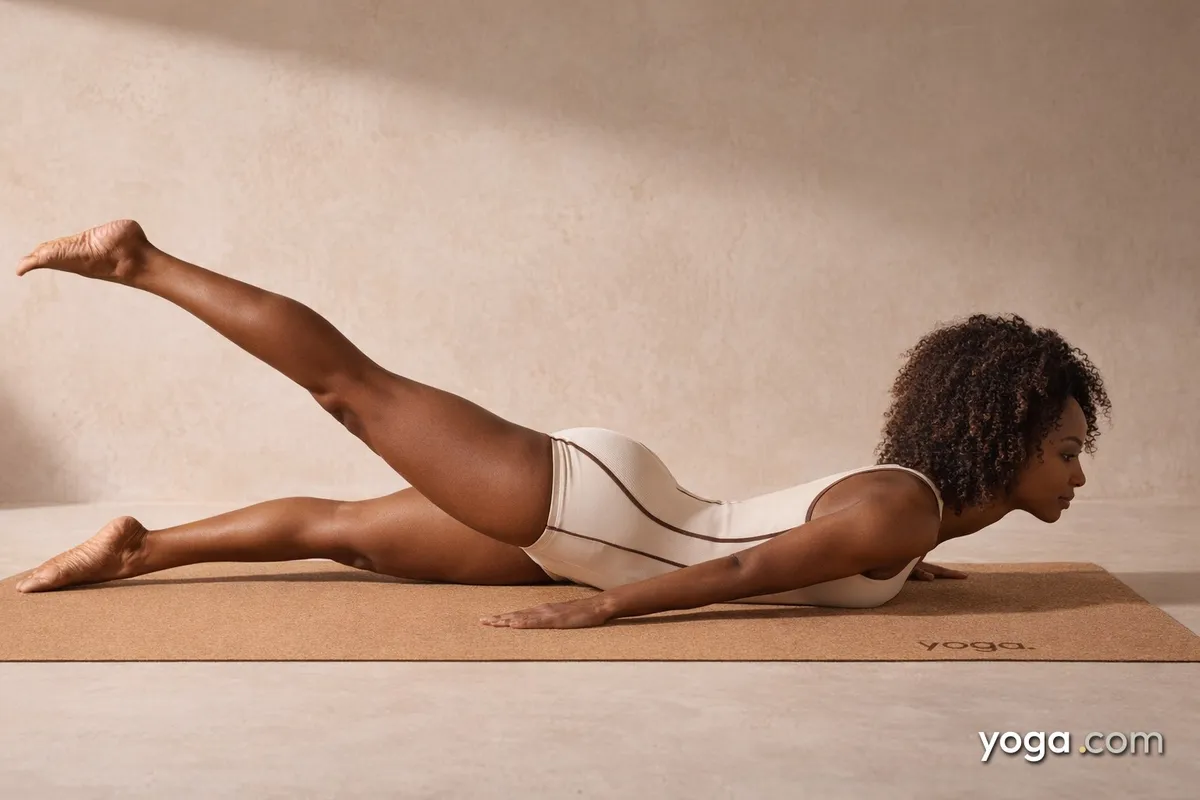
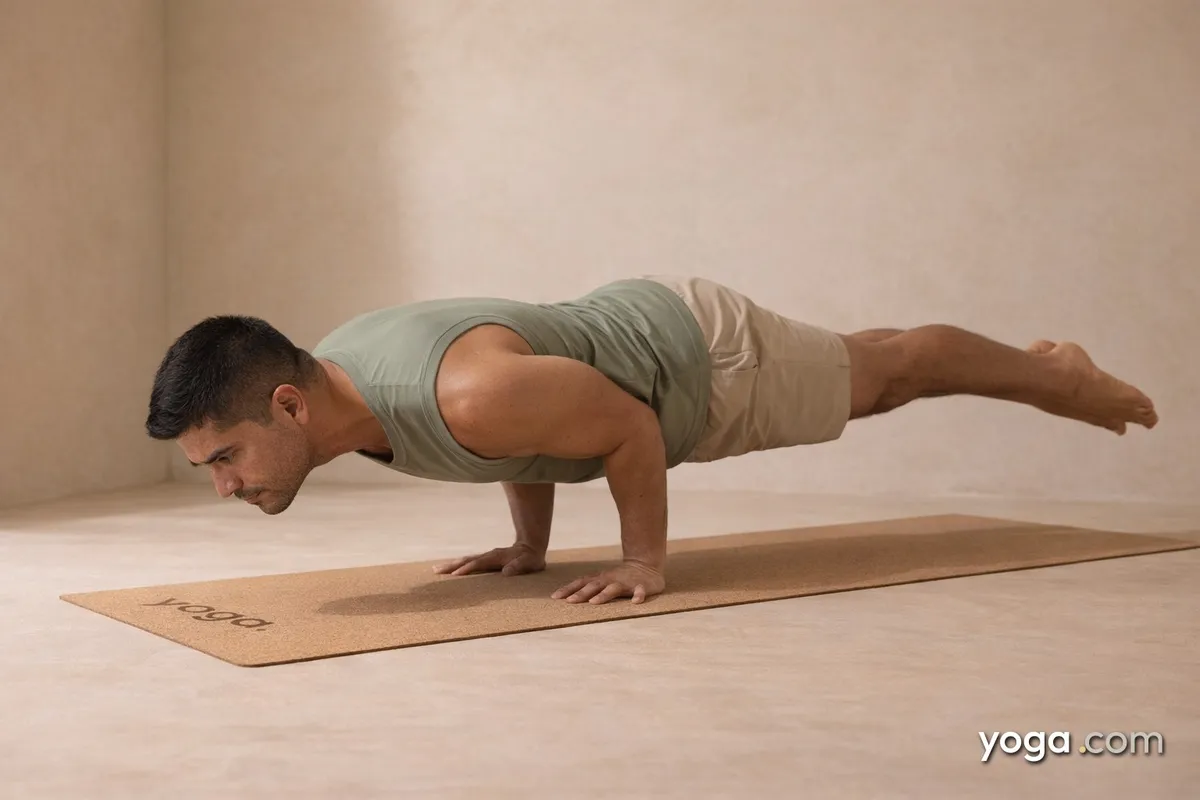
Simple Peacock Pose, Mayūrāsana (simple variation) - from the Sanskrit mayūra (peacock) and āsana (seat or posture) - is a forearm-supported arm balance in which the body lifts parallel to the floor, elbows pressing into the abdomen for leverage. This simplified variation keeps both legs extended straight back together, making the full horizontal lift more accessible than the classical form while still demanding significant wrist, core, and shoulder engagement. It typically appears near the peak of a strong, heat-building practice after the upper body and core have been thoroughly warmed.
At a Glance
- Level: Intermediate
- Type: Arm Balance
- Targets: Wrists and forearms, core and abdominals, shoulders and upper back, hip flexors
- Good for: Building upper-body pressing strength, training full-body tension and coordination, developing balance and proprioception
How to Do Simple Peacock Pose
- Begin in a tabletop position. Rotate your hands so that your fingers point back toward your knees and your wrists face forward. Press your palms firmly and evenly into the mat.
- Bend your elbows and draw them toward each other until they are roughly hip-width apart or slightly narrower. Lean your torso forward and nestle your elbows into your low abdomen, just below the navel.
- Extend both legs straight back, toes curled under or tops of the feet flat on the mat, legs together and fully engaged. Squeeze your inner thighs toward each other.
- Shift your weight steadily forward over your hands, letting the heels of your hands bear the load. Keep your gaze slightly forward of your hands, a few inches ahead on the mat - looking too far forward or down will affect your balance.
- On an exhale, engage your core firmly - draw the low belly in and up - and begin to lift your legs off the floor. Press your elbows into your abdomen as a fulcrum and straighten your body into one long, horizontal line: head, spine, hips, and legs all at the same height.
- Hold for three to five breaths, continuing to press evenly through both palms, squeeze the legs together, and maintain a firm, lifted core. Breathe steadily; do not hold the breath.
- To come out, lower your feet back to the mat with control on an exhale. Release your hands, sit back into Child's Pose, and shake out your wrists gently.
Benefits
- Strengthens the wrist flexors, forearm muscles, and finger extensors under significant load
- Builds pressing strength and stability in the shoulders, chest, and upper back
- Engages and strengthens the entire anterior core, including the transverse abdominis and rectus abdominis
- Trains full-body muscular tension - the ability to hold the whole kinetic chain rigid simultaneously
- Develops proprioceptive awareness and balance by requiring fine, continuous weight adjustments through the hands
- Stretches the dorsal forearm and the muscles of the wrist in the reversed-hand position
Common Mistakes and Alignment Cues
- Hips piking up: If the seat rises higher than the shoulders, your center of gravity is too far back. Shift weight more decisively forward over the hands until the body is truly parallel to the floor.
- Elbows splaying wide: Letting the elbows slide apart reduces the abdominal fulcrum and collapses the base. Actively squeeze the elbows toward each other throughout the hold.
- Head dropping: Letting the chin tuck to the chest disrupts the line of the spine. Keep the back of the neck long and the gaze forward and slightly down.
- Legs separating or going slack: Soft, splayed legs shift the load unevenly. Press the inner thighs together, firm the quadriceps, and reach through the heels as if trying to lengthen away from the hips.
- Breath held: Gripping and breath-holding reduces core stability over time. Keep the exhales steady to maintain intra-abdominal support.
Modifications and Props
- Yoga block under the forehead: Place a block at its highest height under your forehead to give yourself a reference point and reduce fear of falling forward. This lets you focus on weight shift without worrying about tipping.
- Folded blanket under the elbows: If the bony pressure of elbows into the abdomen feels sharp, fold a thin blanket and place it across the abdomen before setting the elbows. This distributes the load more evenly.
- Legs on a block or chair seat: Rest your shins on a block or low chair behind you. This pre-loads the horizontal position so you can practice the elbow-abdomen fulcrum and weight shift without needing to lift the legs from scratch.
- One leg lifted at a time: From the full setup, lift one leg off the floor and hold, then switch. This builds strength and coordination asymmetrically before attempting both legs together.
Cautions
- Wrist pain or injury: The reversed-hand position places the wrist in significant extension and compression. Build wrist mobility and strength gradually before attempting this pose.
- Shoulder or elbow instability: Avoid this pose if you have acute inflammation or instability in these joints; the load on the elbow joint is direct and compressive.
- Recent abdominal surgery or hernia: The elbow-into-abdomen pressure is substantial - exercise caution if you have had recent abdominal procedures or a known hernia; avoid this pose during pregnancy and menstruation due to strong direct pressure on the abdomen.
- High blood pressure or glaucoma: The sustained pressing effort and partially inverted orientation may not be appropriate; proceed cautiously and keep holds brief.
If you're working with an injury or a medical condition, check with a qualified professional before practicing.
Related Poses
- Plank Pose - builds the full-body tension and wrist-pressing strength foundational to this arm balance
- Four-Limbed Staff Pose - trains the horizontal body line and shoulder-to-core coordination directly transferable here
- Crane Pose - a natural next progression in the arm-balance family, shifting weight forward over the hands similarly
- Easy Crow Pose - an accessible arm balance that develops confidence with forward weight shift and elbow-body contact
For building the steady, focused practice that supports arm balances, see A Gentle Yoga Routine for Tired, Low-Energy Days and A 10-Move Chair Yoga Sequence for a Midday Reset.