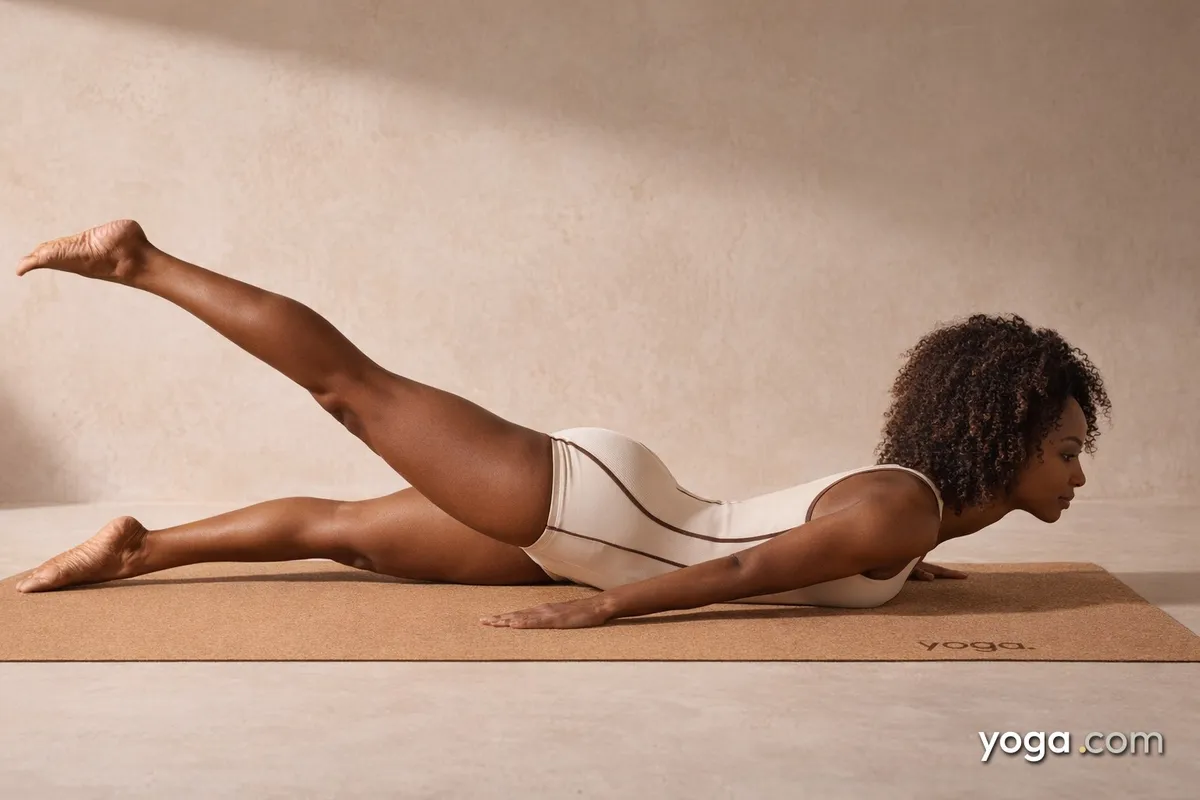
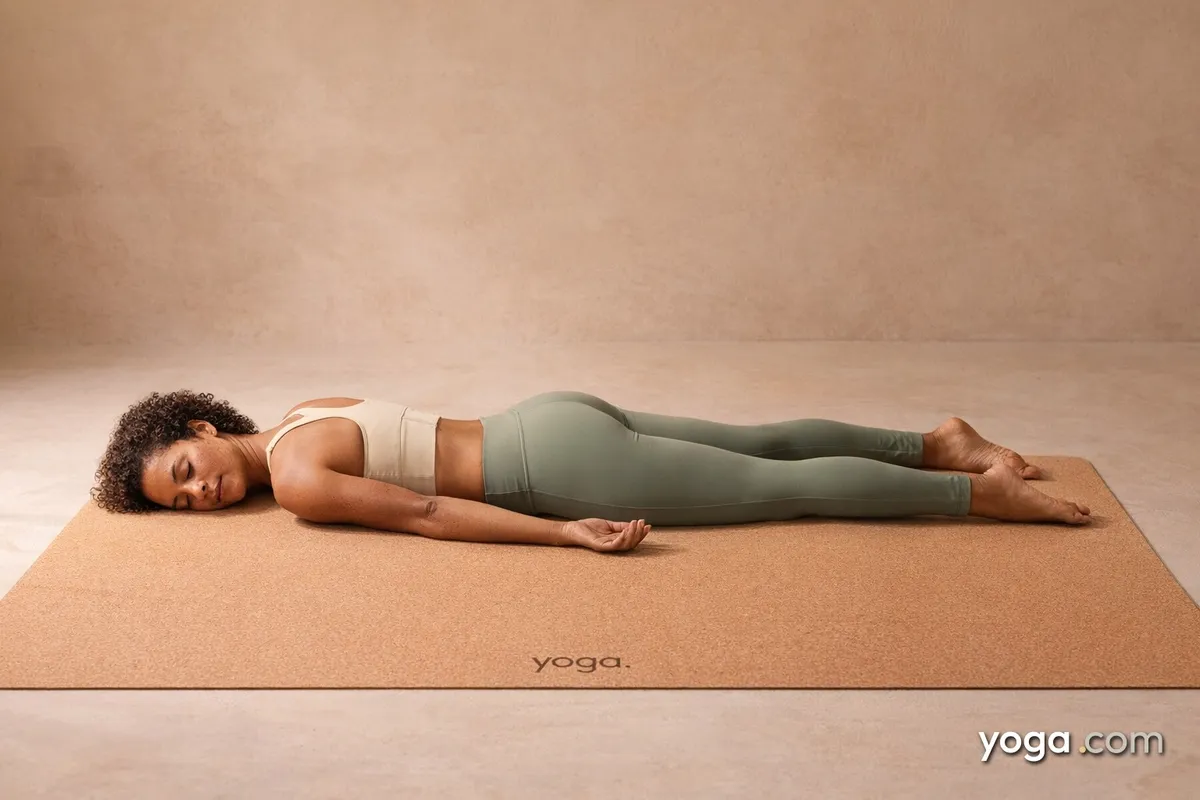
Reverse Corpse Pose, known in Sanskrit as Adho Mukha Śavāsana (literally "downward-facing corpse pose"), is the prone counterpart to the supine Corpse Pose. Lying face-down with the body fully extended and passive, it asks you to surrender weight into the floor from the opposite surface of the body. It appears most often at the opening of a prone sequence - warming the front body and orienting awareness before backbends - or as a brief rest between more demanding floor poses.
At a Glance
- Level: Beginner
- Type: Prone
- Targets: Anterior trunk, hip flexors, chest, inner groins
- Good for: Cultivating body awareness in the prone position, lengthening the front of the torso passively, grounding and settling the nervous system before or after active prone work
How to Do Reverse Corpse Pose
- Begin by lying face-down on your mat, legs fully extended and roughly hip-width apart.
- Turn your toes so the tops of the feet rest on the mat, or allow the heels to fall naturally outward - whichever is more comfortable for your hips and lower back.
- Turn your head to one side, resting one cheek on the mat, so the cervical spine is not compressed. Make a mental note of which side you choose so you can switch halfway through if holding for longer.
- Extend your arms alongside the body, palms facing up, or stack your hands under your forehead if the neck turn feels uncomfortable - choose whichever option allows the shoulders to release fully away from the ears.
- Take a slow inhale and, on the exhale, consciously release the weight of the pelvis, belly, chest, and thighs into the floor. Let the floor do the holding.
- Stay for 5-15 breaths, or as long as your teacher directs, breathing naturally into the back body.
- To come out, bring your palms under your shoulders, press gently, and slide into Child's Pose or tuck the toes and rise to hands and knees before transitioning onward.
Benefits
- Passively stretches the hip flexors and anterior thighs as they soften toward the floor.
- Broadens and opens the chest by allowing the pectoral muscles to lengthen against a flat surface.
- Encourages diaphragmatic breath awareness, since the belly meets resistance and breath must expand into the sides and back ribs.
- Strengthens postural awareness in the prone position, establishing the baseline alignment used in Locust and other backbends.
- Gives the spinal extensors a brief, passive rest between active prone poses.
Common Mistakes and Alignment Cues
- Gripping the gluteal muscles: If you notice the buttocks clenching, consciously soften them. Gripping compresses the sacroiliac joint and prevents the hip flexors from releasing.
- Holding the head off the mat: Let the cheek or forehead make full contact with the mat. Hovering the head creates unnecessary tension across the neck and upper trapezius.
- Shoulders hunched toward the ears: Roll the shoulder blades gently down the back so the tops of the shoulders drop away from the ears before you fully relax.
- Feet sickling inward or outward dramatically: Allow the legs to release into natural external rotation rather than forcing a rigid parallel position - but avoid extreme turnout, which can strain the inner knee.
- Breathing shallowly into the chest only: Direct attention to the expansion of the side ribs and lower back with each inhale; this is how you know the torso is truly released.
Modifications and Props
- Blanket under the belly: Slide a folded blanket under the abdomen to reduce pressure on the lower back and make the position more comfortable for those with lumbar sensitivity.
- Blanket under the ankles: If the tops of the feet or ankles feel strained against the mat, place a rolled blanket just below the ankle joints to lift the foot slightly.
- Arms overhead (active variation): For more of a hip-flexor and anterior-shoulder stretch, extend both arms straight overhead, biceps alongside the ears, palms down - a slight progression that also warms the latissimus dorsi.
- Head on a block: If turning the neck to either side is uncomfortable, rest the forehead on the flat surface of a block at its lowest height, keeping the cervical spine neutral.
Cautions
- Pregnancy: Lying face-down is not recommended after the first trimester; seek a supported side-lying alternative.
- Neck injury or limited cervical rotation: Use the forehead-on-hands or forehead-on-block variation rather than turning the head to the side.
- Recent abdominal surgery: Avoid direct pressure on the abdomen; wait until you have medical clearance before practicing prone poses.
- Lumbar disc issues: Some individuals find sustained prone lying aggravates the lower back; try the blanket-under-belly modification or skip the pose if discomfort persists.
If you're working with an injury or a medical condition, check with a qualified professional before practicing.
Related Poses
- Crocodile Pose - another foundational prone rest that teaches diaphragmatic breathing in the face-down position.
- Locust Pose - the natural active progression from this passive prone baseline, engaging the posterior chain.
- Knees, Chest and Chin Pose - a complementary prone pose that prepares the chest and shoulders for deeper opening.
- Corpse Pose - the supine counterpart; pair the two at the start and end of practice for a full-body grounding effect.
You'll also find well-sequenced prone and restorative poses in A Gentle Yoga Routine for Tired, Low-Energy Days and A 10-Move Chair Yoga Sequence for a Midday Reset.