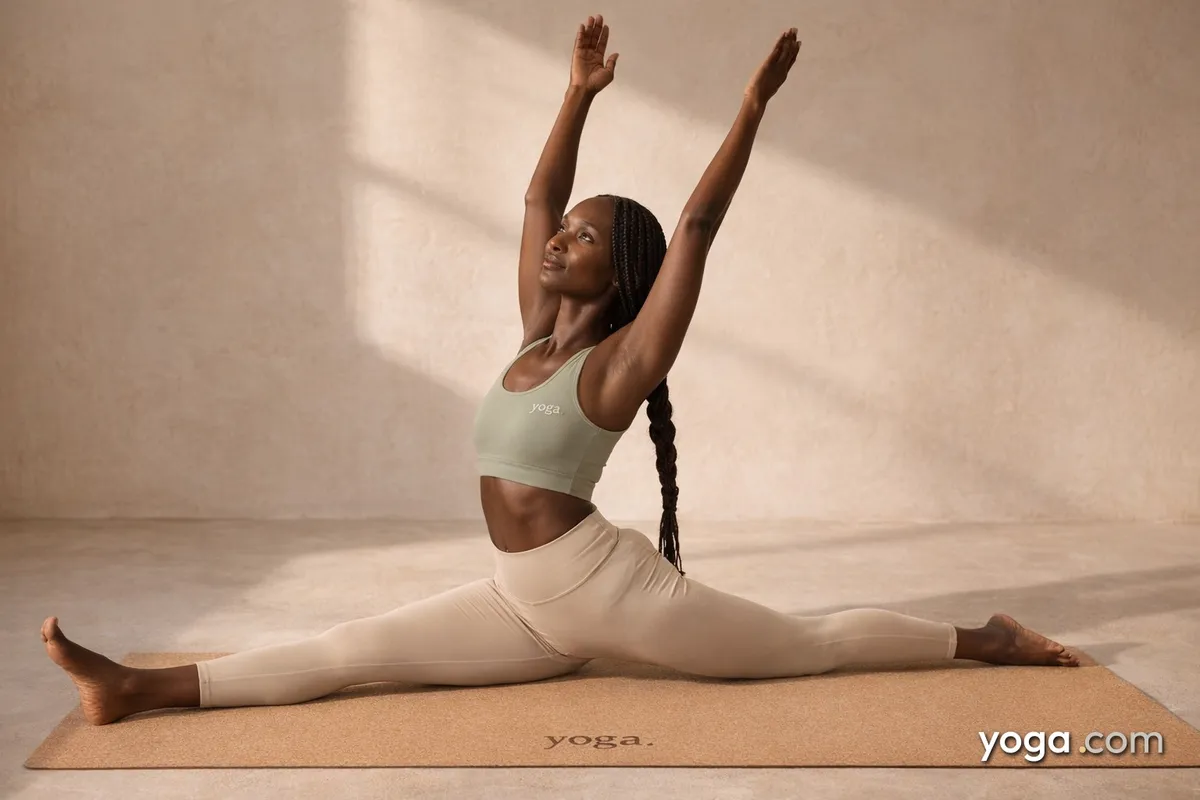
Monkey King Pose with Rotation to Right Leg, Hands Up is a full front split (Hanumanāsana (rotation to right, hands up) - named for the devotion and leap of the divine monkey Hanuman) with the torso rotated to face the extended right leg and both arms raised overhead. It sits near the peak of a deep hip-opening sequence, demanding complete hamstring length, hip-flexor release, and the spinal mobility to rotate and lift simultaneously.
At a Glance
- Level: Advanced
- Type: Seated
- Targets: Hamstrings, hip flexors, inner groins, thoracic spine
- Good for: Building full-range hip mobility, developing thoracic rotation, strengthening the deep spinal stabilizers
How to Do Monkey King Pose with Rotation to Right Leg, Hands Up
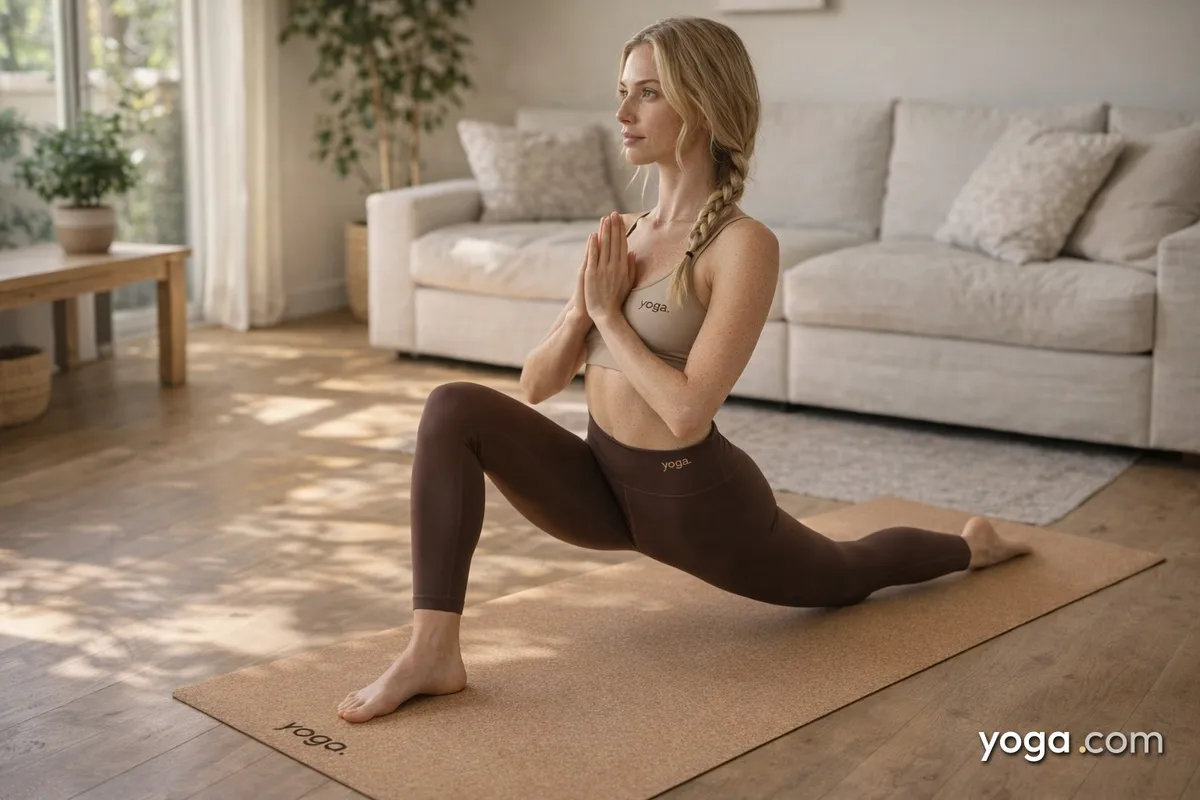
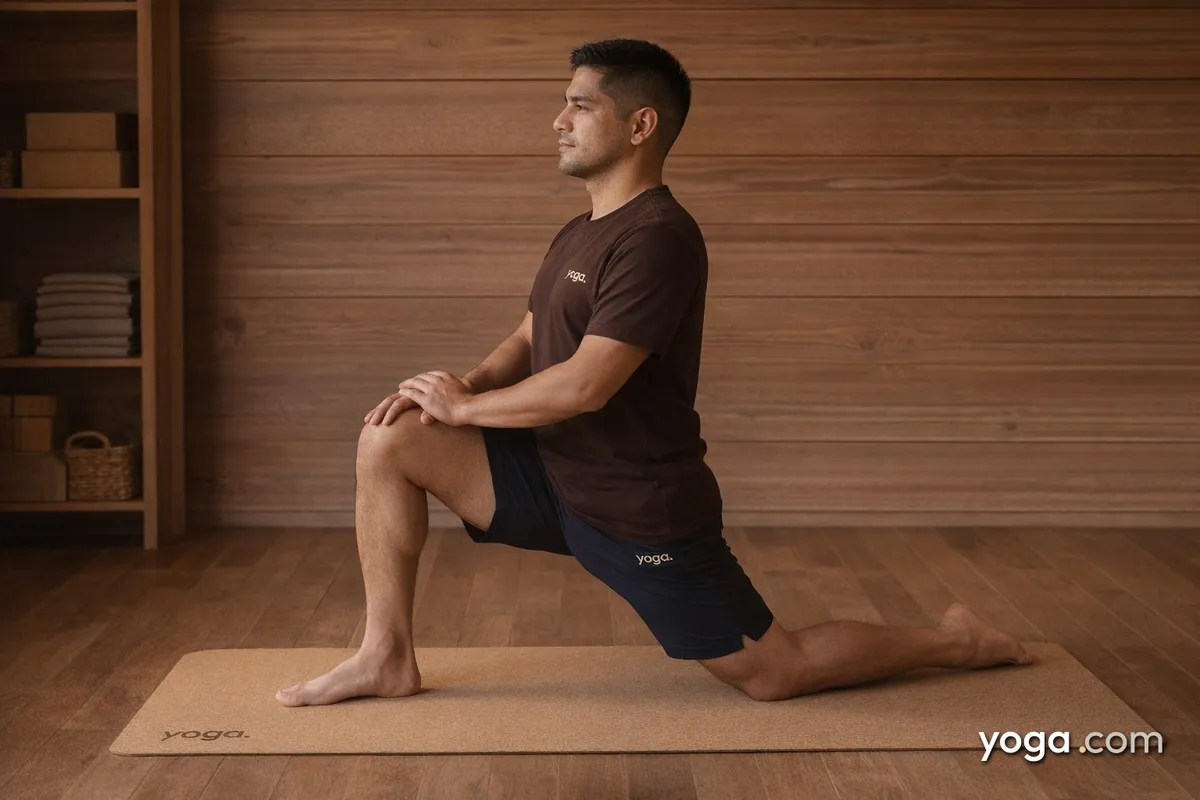
- Start in a low lunge, right foot forward. From Downward-Facing Dog, step your right foot between your hands. Lower your left knee to the mat and point your left toes back so the top of the foot rests on the floor.
- Begin to straighten the right leg. Walk your right foot forward as you simultaneously slide the left knee back. Keep both hip points squaring forward as the right heel reaches out along the mat. Place fingertips or blocks on either side of your hips for support.
- Settle into the full split. Lower your pelvis toward the floor gradually - do not drop suddenly. The right leg extends straight ahead with the back of the heel on the mat and toes pointing up; the left leg extends straight behind with the front of the thigh and top of the foot on the mat. Work toward a level pelvis; use a folded blanket or block under the right sitting bone if you need support.
- Establish your foundation before rotating. Take two or three breaths here, pressing both legs firmly into the floor and lifting the lower belly gently to protect the lumbar spine.
- Rotate the torso to face the right leg. Exhale and turn your ribcage, chest, and shoulders to the right until your sternum points toward your right foot. Keep the pelvis level and facing forward - the rotation comes from the thoracic spine, not the hips.
- Raise both arms overhead. On an inhalation, sweep both arms up alongside the ears, palms facing each other. Lengthen from the sitting bones through the crown. Gaze forward along the right leg or, if the neck is comfortable, lift the gaze slightly upward.
- Hold for 3-5 breaths. Each inhale, lengthen the spine; each exhale, deepen the rotation slightly without collapsing the chest.
- Come out carefully. Lower the hands to the mat on either side of the hips. Re-square the torso to center, then press into your palms and draw both legs in to meet in a neutral seated position. Shake out the legs gently before switching sides.
Benefits
- Stretches the hamstrings of the front leg through their full range of motion
- Lengthens the hip flexors and quadriceps of the back leg
- Increases rotational range in the thoracic spine
- Strengthens the deep spinal extensors and obliques required to maintain the upright twist
- Trains neuromuscular coordination across the hips and pelvis in a demanding asymmetrical position
- Develops shoulder and arm stability through the overhead reach under load
Common Mistakes and Alignment Cues
- Pelvis tilts or twists when rotating. Before you turn the torso, press both legs firmly into the floor to anchor the pelvis level. Rotate only as far as you can without the hips following.
- Lower back compresses or over-arches. Engage the lower belly lightly and lengthen the tailbone toward the back heel. Avoid jamming the lumbar into extension as the arms rise.
- Front knee rotates outward. Keep the right kneecap pointing straight up at the ceiling, and flex the foot actively to protect the knee joint.
- Shoulders creep up toward the ears. Draw the shoulder blades down the back as you reach the arms up; create length, not tension, in the neck.
- Forcing the split before the body is ready. Use a block or blanket under the front sitting bone so the pelvis can stay level - arriving at the floor before you are ready strains the hamstring attachment at the ischium.
Modifications and Props
- Block or blanket under the front sitting bone: Place a block on its lowest height under the right sitting bone to bridge the gap between pelvis and floor, keeping the hips even and reducing hamstring strain.
- Hands to blocks instead of arms up: If thoracic rotation is limited, keep the fingertips on blocks on either side of the right shin while you practice the twist before adding the overhead reach.
- Strap around the front foot: Loop a strap around the right foot and hold the tail in both hands as you raise the arms, giving your hamstrings a gradual assist without forcing the split deeper.
- Wall support: Practice the split with the back foot pressing against a wall for extra stability, which frees attention for the rotation and arm position.
Cautions
- Hamstring injury or recent tear: Avoid or significantly modify this pose; even mild force at the hamstring insertion can worsen damage.
- Hip labrum issues: The extreme range of hip flexion and extension required here may aggravate labral pathology - work with a supported, partial split only.
- Sacroiliac joint sensitivity: Monitor carefully; an uneven pelvis or forced split depth can load the SI joint unevenly.
- Knee injury (front or back leg): Ensure both legs are fully extended with active muscles - passive hyperextension at the front knee should be avoided.
- If you're working with an injury or a medical condition, check with a qualified professional before practicing.
Related Poses
- Downward-Facing Dog Pose - a key preparatory pose that warms the hamstrings and hip flexors before entering the split
- Upward-Facing Dog Pose - opens the hip flexors of the back leg and counters the forward-flexion demands of the split
- Bound Angle Pose - a grounded inner-groin opener that prepares the adductors for the wide leg position
- Tortoise Pose - a deep hamstring and inner-groin stretch that complements and counters the intense hip work of Hanumanāsana
Looking for sequences that build toward deeper hip work? Try A Gentle Yoga Routine for Tired, Low-Energy Days or reset with A 10-Move Chair Yoga Sequence for a Midday Reset.