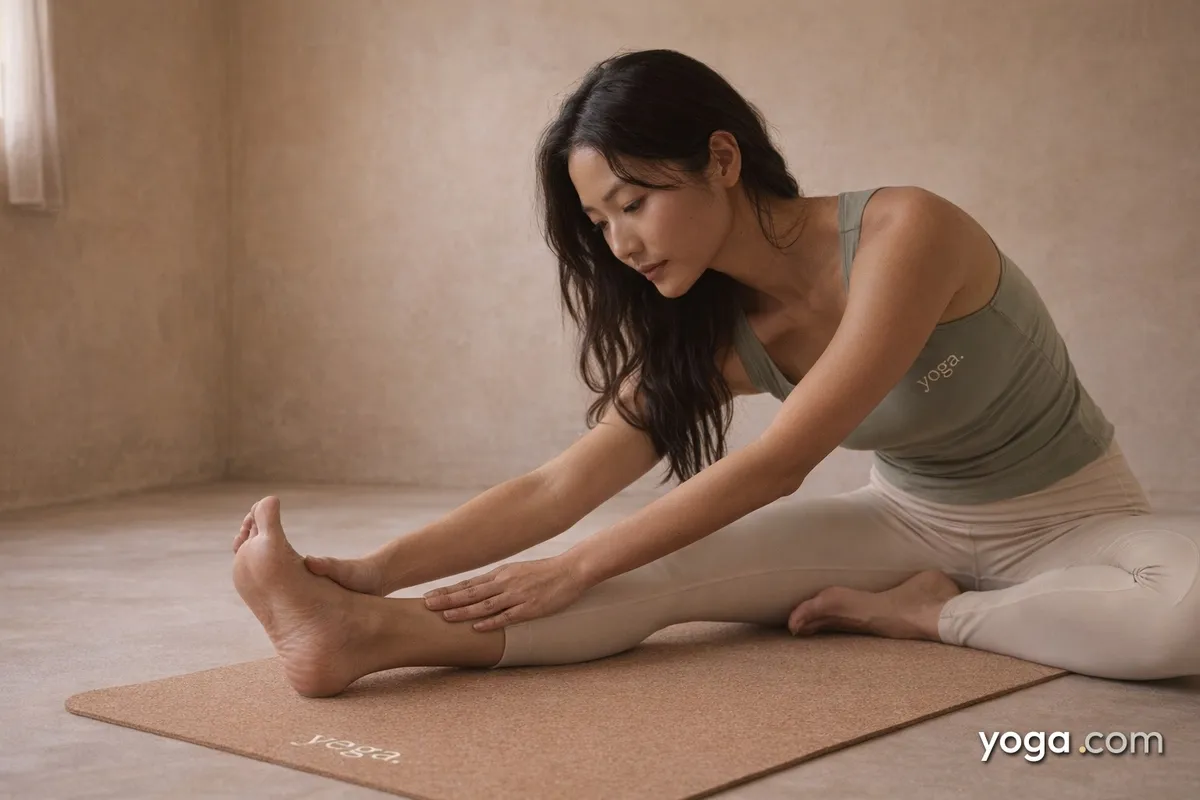
Bend to Right Leg is a seated asymmetrical forward bend in which you fold over the extended right leg while the left leg is drawn in with the sole of the foot resting against the inner right thigh. Its Sanskrit name is Jānuśīrṣāsana (right leg) - literally "head-to-knee pose" - reflecting the classical intention of bringing the forehead toward the shin. It appears regularly in seated sequences as a way to work one side of the body at a time before moving into symmetrical forward bends such as Paschimottanasana.
At a Glance
- Level: Beginner
- Type: Forward bend
- Targets: Hamstrings (right), hip rotators (left), spine, shoulders
- Good for: Lengthening the posterior right leg, building spinal flexion awareness, improving symmetry between the two sides of the body
How to Do Bend to Right Leg
- Sit on the floor with both legs extended in front of you (Dandasana). Ground your sitting bones evenly and sit tall.
- Bend your left knee and draw the heel toward your left groin, letting the left knee fall open to the side. Rest the sole of the left foot against the inner right thigh. Your left knee does not need to touch the floor - let it float if it does.
- Rotate your torso slightly to the right so your navel and sternum face the extended right leg.
- On an inhale, lengthen your spine - lift the crown of the head and feel the ribcage rise away from the hips. Reach both arms overhead.
- On an exhale, hinge forward from the hip creases (not the waist), keeping the spine long as you reach your hands toward the right foot. Hold the foot, ankle, or shin - wherever you can reach without rounding the lower back excessively.
- With each inhale, find a little more length in the front body; with each exhale, allow the fold to deepen. Let the forehead move toward the right shin. Stay for 5-10 breaths.
- To come out, inhale as you press the hands down and lift the torso back to upright. Extend the left leg and return to Dandasana before practicing the left side.
Benefits
- Stretches the hamstrings and calf of the extended right leg
- Lengthens the hip adductors and hip rotators of the bent left leg
- Builds awareness of asymmetry in spinal flexion from side to side
- Strengthens the muscles along the spine through active lengthening on the inhale
- Encourages hip flexion mobility in the extended-leg hip joint
Common Mistakes and Alignment Cues
- Rounding immediately from the lower back: Prioritize a long spine over how far you travel forward. Hinge from the hips first; let the chest lead.
- Torso facing straight ahead rather than toward the right leg: Rotate your navel toward the extended leg so the fold is directed over the right thigh, not the gap between the legs.
- Gripping and yanking the foot: Use your hands as a gentle anchor, not a pulley. Pulling hard rounds the upper back and strains the lower spine.
- Right knee hyperextending: Keep a micro-bend in the right knee if the hamstrings are very tight, or place a rolled blanket under the knee for support.
- Left knee pressing hard toward the floor: Never force the bent knee down. Let gravity do its work over time; a block under the left thigh keeps the pelvis from tipping.
Modifications and Props
- Strap around the right foot: Loop a strap around the ball of the right foot and hold an end in each hand. This lets you maintain a long spine when hamstring tightness prevents you from reaching the foot.
- Folded blanket under the sitting bones: Raising the hips tilts the pelvis forward, making the forward fold more accessible and reducing strain on the lower back.
- Block under the left thigh: If the left knee is high off the floor and the pelvis tips, slide a block under the outer left thigh to create a stable base.
- Supported forward rest: Place a bolster lengthwise over the right leg and rest the forehead on it for a passive, restorative version of the fold.
Cautions
- Tight or injured hamstrings: Bend the right knee slightly and use a strap; avoid forcing the leg straight.
- Lower back sensitivity: Sit on a folded blanket and keep the fold shallow. Stop if you feel sharp or shooting sensations in the spine.
- Knee injury (either knee): Be cautious with the bent left knee in the externally rotated position; do not press it toward the floor.
- Recent abdominal surgery: Avoid deep compression of the abdomen against the thigh until cleared by your care provider.
If you're working with an injury or a medical condition, check with a qualified professional before practicing.
Related Poses
- Seated Forward Bend - the symmetrical counterpart and natural next step after practicing both sides
- Bend to Left Leg - always practice the opposite side to balance the body
- Standing Forward Bend - a good hamstring preparation before sitting down into this pose
- Wide-Angle Seated Forward Bend - a progression that opens the inner legs and advances seated forward-folding practice
You'll also find this pose woven into A Gentle Yoga Routine for Tired, Low-Energy Days and A 10-Move Chair Yoga Sequence for a Midday Reset.