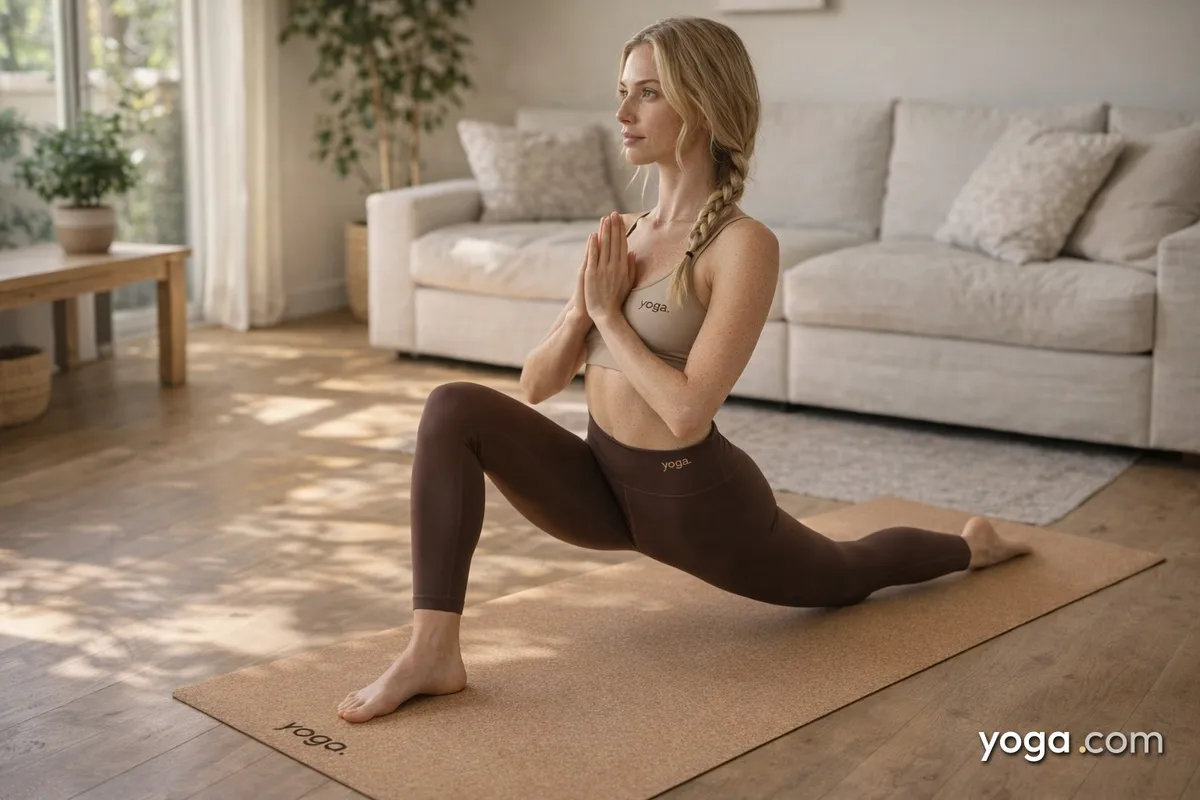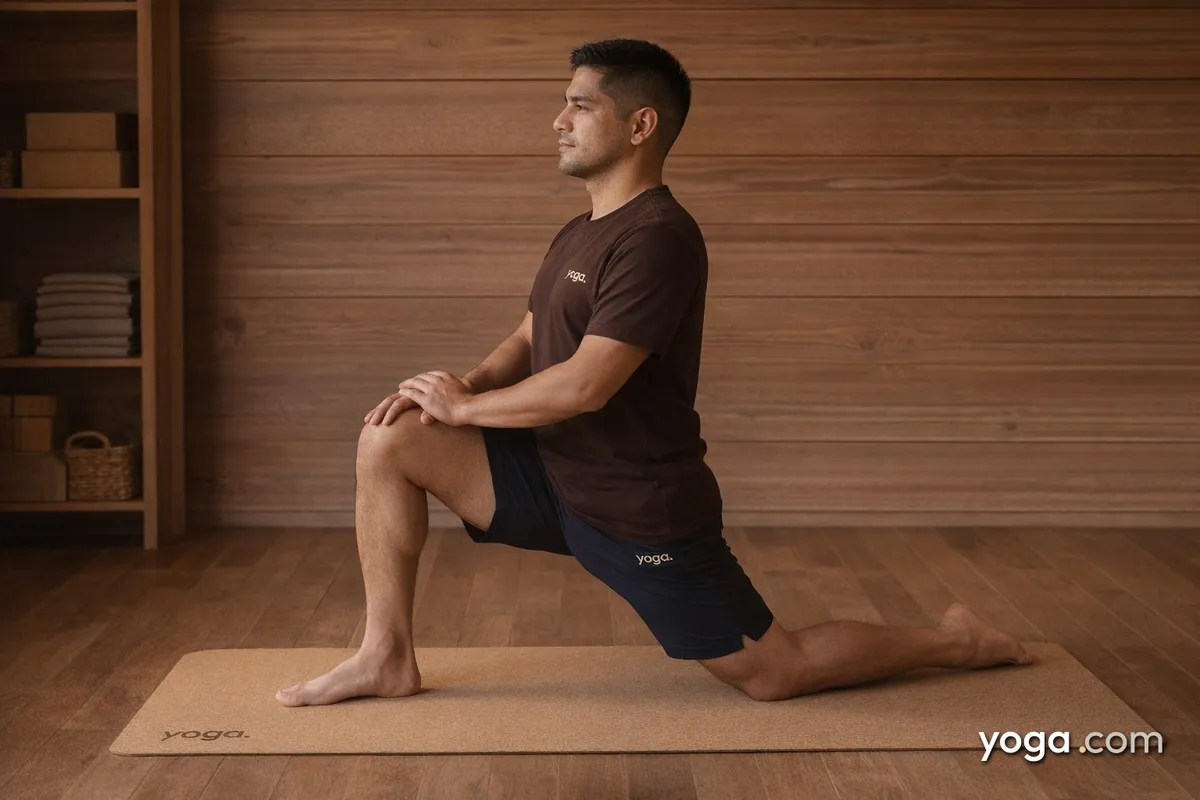
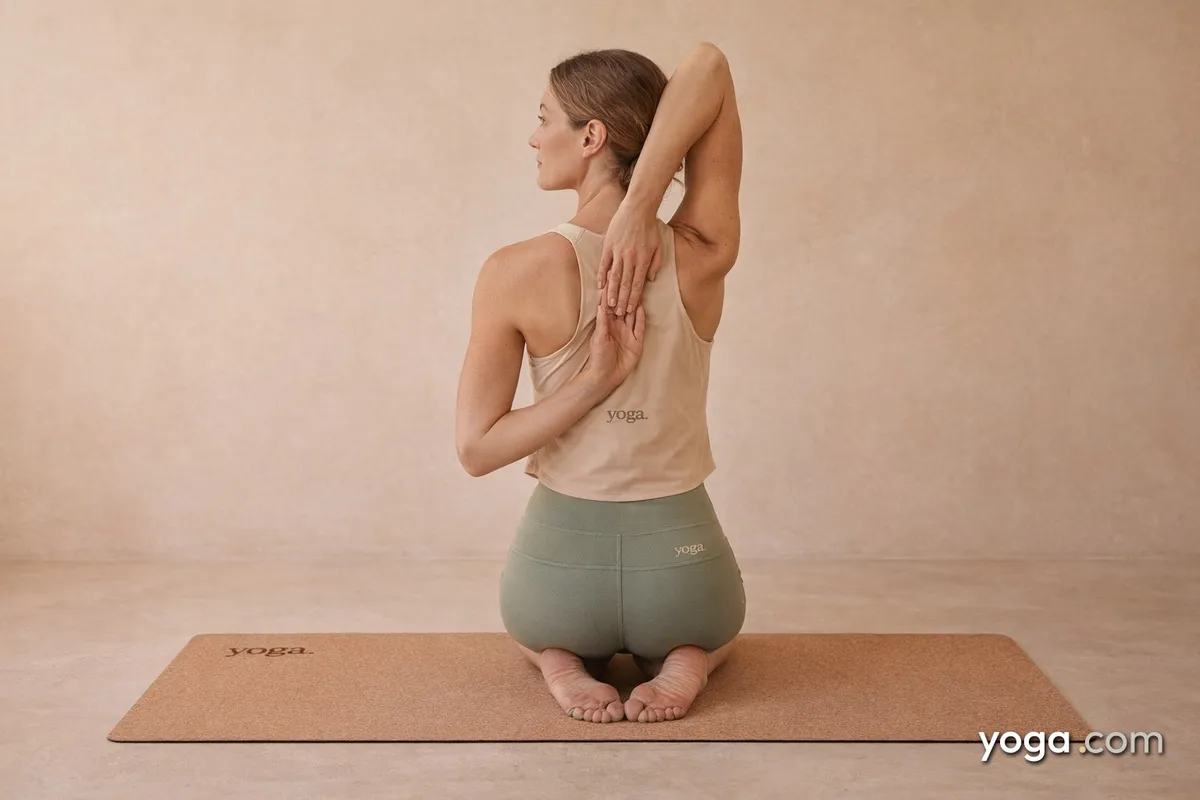
Hero Pose with Cow-Face Arms, Right Arm Up is a kneeling seated pose that layers a unilateral shoulder-and-chest stretch onto the stable base of Vīrāsana (upper right hand grab) - literally "hero pose with an upper right-hand clasp." The right arm reaches overhead and bends at the elbow so the right hand descends toward the center of the back, while the left arm wraps behind the waist to meet it, creating traction across the right shoulder, chest, and bicep. It fits naturally in the middle of a practice once the hips and knees are warmed, or as a focused chest-and-shoulder sequence before backbends.
At a Glance
- Level: Intermediate
- Type: Kneeling
- Targets: Quadriceps, right shoulder and rotator cuff, thoracic spine, hip flexors
- Good for: Building shoulder mobility, improving thoracic extension, steadying the breath in a grounded seat
How to Do Hero Pose with Cow-Face Arms, Right Arm Up
- Kneel with your knees hip-width apart and the tops of your feet flat on the mat, big toes pointing back. Place a folded blanket or block under your seat if needed.
- Lower your hips between your heels into Vīrāsana. Sit evenly on both sitting bones, lengthen through the spine, and rest your hands on your thighs to settle for two or three breaths.
- On an inhale, sweep your right arm up alongside your ear. Bend the right elbow and let your right hand travel down the center of your back, palm facing inward toward the spine.
- Bring your left arm out to the side, bend the elbow, and reach your left hand up the center of your back, palm facing outward. Work your left fingers toward your right fingers.
- If the hands meet, clasp them. If not, hold a strap between the two hands and walk them closer over time - keep both hands on the midline rather than letting the right elbow splay to the side.
- Draw the right elbow in toward your right ear and lift the sternum slightly; avoid crunching the low back. Keep the chin level and gaze forward or gently downward.
- Hold for 5-8 steady breaths, maintaining an even, lifted seat throughout.
- To come out: release the clasp on an exhale, lower both arms, and shake them out gently. Repeat the arm variation on the opposite side before returning to a neutral Hero Pose or transitioning to a counter-pose.
Benefits
- Stretches the right triceps and latissimus dorsi through the overhead bent-elbow position, while stretching the left anterior deltoid, bicep, and pectoral fibers through the behind-the-back arm
- Develops range of motion in the right shoulder's external rotation and the left shoulder's internal rotation simultaneously
- Strengthens the stabilizing muscles of the upper back and scapular retractors
- Stretches the quadriceps and hip flexors through the sustained kneeling position
- Encourages thoracic extension, counteracting a rounded upper back
- Builds concentration and breath awareness through a challenging yet still bilateral base
Common Mistakes and Alignment Cues
- Right elbow drifts forward: Actively draw the top elbow back in line with or behind the right ear so the stretch reaches deep into the shoulder rather than straining the neck.
- Arching the lower back to reach the hands: Prioritize a neutral lumbar curve; use a strap between the hands rather than forcing the clasp by collapsing the low back.
- Hips lifting off the seat: If the knees or hips protest, raise the seat height with a block or blanket so the pelvis stays grounded and even.
- Ribcage jutting forward: Draw the lower front ribs in and down slightly, keeping the core lightly engaged so the chest lift comes from thoracic extension, not lumbar compression.
- Holding the breath: The shoulder grip tends to tighten the chest - consciously widen the collarbones on each inhale and soften the jaw on each exhale.
Modifications and Props
- Strap between the hands: Hold one end of a yoga strap in the right hand and the other end in the left. Walk the hands toward each other along the strap session by session.
- Block or blanket under the seat: Sitting on a block or folded blanket reduces compression in the knees and ankles, making the kneeling base accessible for tighter quadriceps.
- Wall support for the top elbow: Practice near a wall so the right elbow can lightly rest against it; this gives proprioceptive feedback to keep the elbow from flaring forward.
- Chair variation: Sit sideways on a chair with feet flat on the floor and perform the same arm work - all the shoulder and chest benefit, without knee load.
Cautions
- Knee discomfort: Avoid or modify if you feel sharp pain in the knees; prop up the hips or skip the kneeling base and use a chair instead.
- Ankle tightness or pain: Place a tightly rolled blanket under the ankles to reduce plantar flexion demand.
- Recent shoulder or rotator cuff injury: The upper arm is placed in a loaded end-range position; approach slowly, use a strap, and avoid forcing the clasp.
- Wrist or elbow surgery: The bent-elbow position can stress healing tissue - work with a therapist or teacher before attempting the full arm variation.
If you're working with an injury or a medical condition, check with a qualified professional before practicing.
Related Poses
- Hero Pose with Hands on Thighs - establish the kneeling base before adding the arm variation
- Diamond Pose - a closely related kneeling seat that prepares the knees and ankles
- Downward-Facing Dog Pose - a useful counter-pose to decompress the spine and open the posterior shoulder after the clasp
- Bridge Pose - a natural next step to continue thoracic extension and front-body opening
Find this pose in context: A Gentle Yoga Routine for Tired, Low-Energy Days and A 10-Move Chair Yoga Sequence for a Midday Reset.