Here is the fully corrected HTML with only the two affected sentences changed:
Rotated Warrior Pose on Left Foot is a standing twist that combines the strong, grounded base of a Warrior lunge with an axial rotation of the spine. Its Sanskrit name, Parivrtta Vīrabhadrāsana (left support), translates roughly as "revolved warrior pose" - parivrtta meaning "revolved" or "turned around" and Vīrabhadra referring to the fierce warrior of Hindu mythology. With the left foot forward as your anchor, this intermediate pose typically appears mid-sequence, bridging standing work and deeper twisting shapes.
At a Glance
- Level: Intermediate
- Type: Twist
- Targets: Thoracic spine, hip flexors, obliques, quadriceps
- Good for: Building rotational range of the mid-back, strengthening the standing leg, lengthening the hip flexor of the back leg
How to Do Rotated Warrior Pose on Left Foot
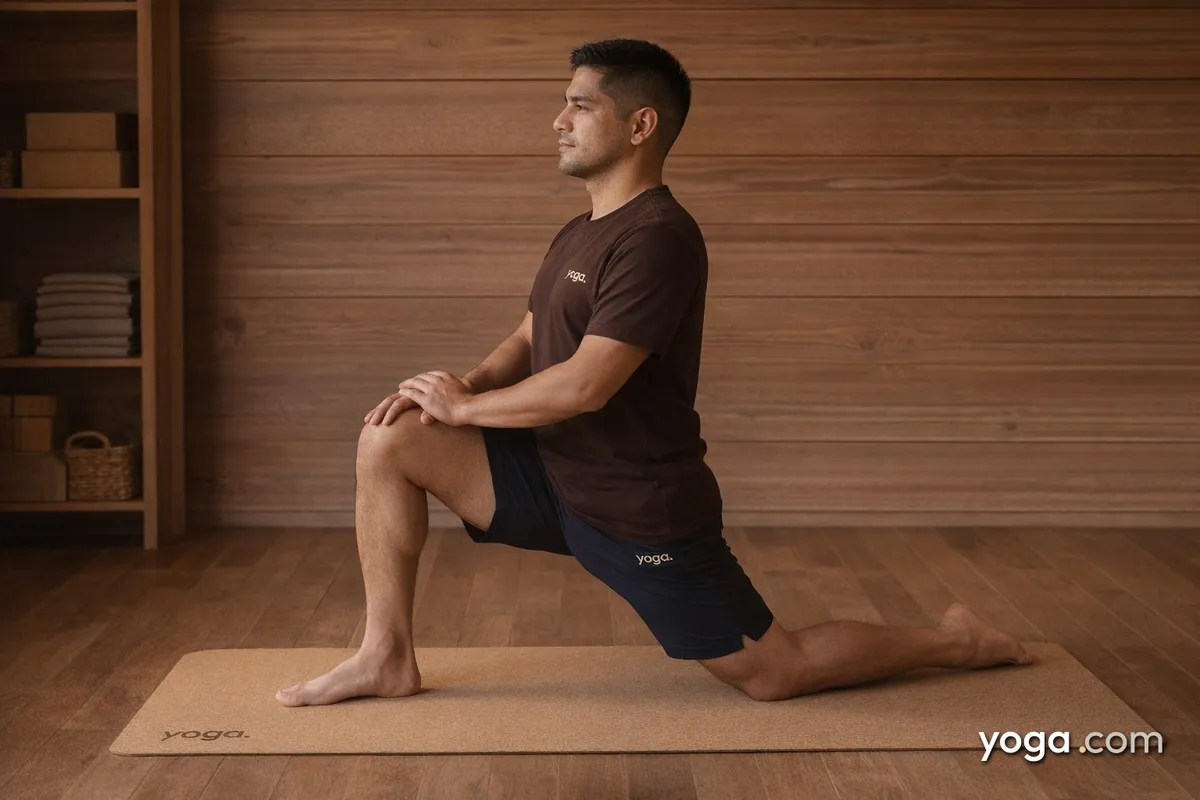
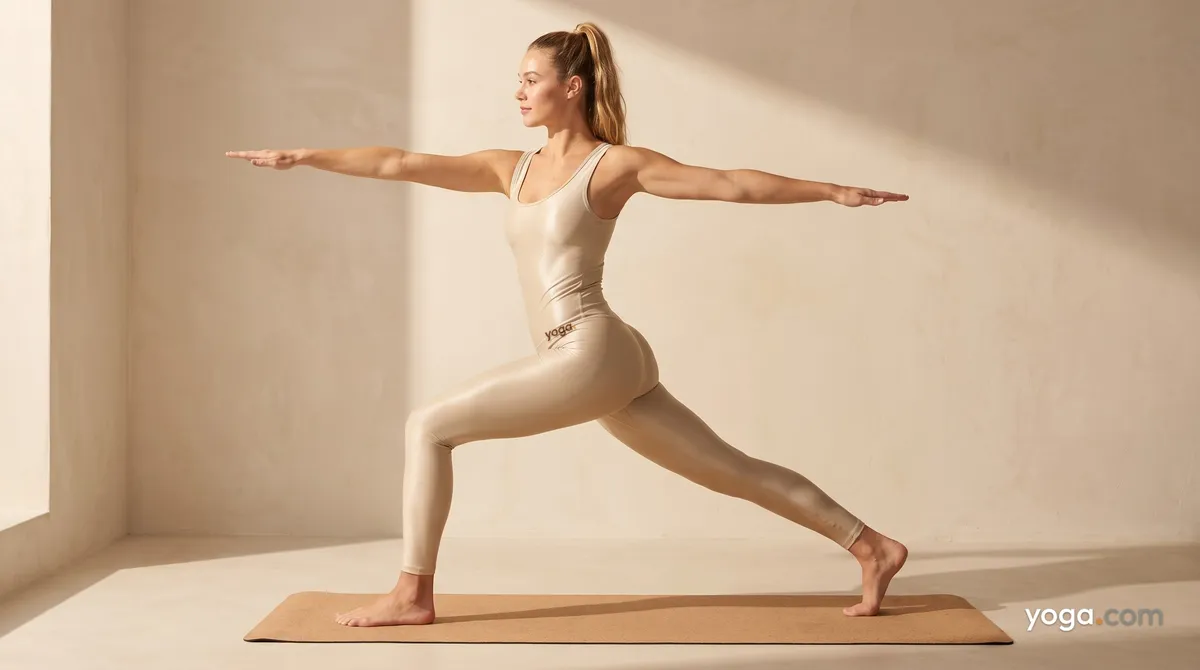
- Start in Mountain Pose at the top of your mat. Step your right foot back roughly 3½ - 4 feet, coming into a high lunge with your left knee directly over your left ankle and your back heel lifted.
- Square your hips forward as much as your body allows - draw the right hip crease toward the front of the mat while the left hip stays even. Keep the back leg firm, pressing through the ball of the right foot.
- On an inhale, lengthen your spine from the crown of your head, creating space between each vertebra before you twist. Let your arms extend alongside your ears briefly to establish this length.
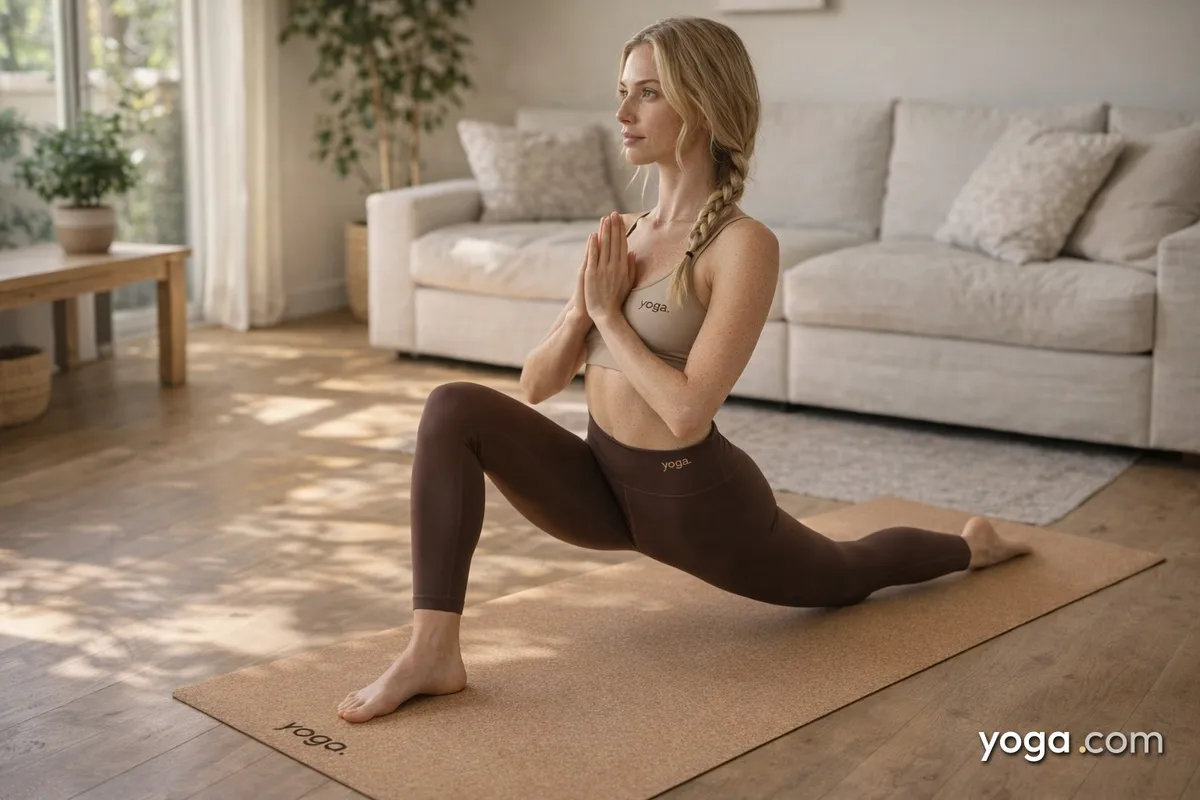
- On an exhale, rotate your torso to the left - toward the front leg. Bring your right hand to the outside of your left thigh, or take a prayer position (añjali mudrā) at the chest with the right elbow pressing against the left outer knee.
- Reach your left arm up toward the ceiling (or extend both arms in opposite directions - right toward the floor, left toward the sky) to open the chest. Stack the left shoulder over the right. Gaze up toward the lifted hand or keep the chin level if the neck is sensitive.
- Breathe and hold for 3-5 breaths, re-lengthening on every inhale and deepening the rotation gently on every exhale. Keep the left knee tracking over the second toe - avoid letting it collapse inward.
- To come out, unwind the torso on an inhale, returning both hands to the hips or to the floor. Step the right foot forward to meet the left, returning to Mountain Pose. Pause for a breath before practicing the right-foot variation or transitioning to the next shape.
Benefits
- Stretches the hip flexors and psoas of the back (right) leg
- Strengthens the quadriceps, glutes, and core of the standing left leg
- Mobilises the thoracic spine through axial rotation
- Engages and tones the obliques and deep spinal rotators
- Builds shoulder stability and proprioceptive awareness in the upper back
- Challenges single-leg balance, training ankle and knee stability
Common Mistakes and Alignment Cues
- Mistake: Collapsing the front knee inward. Cue: Press the left knee firmly toward the second toe throughout the twist - think of the knee and middle toe moving in the same direction.
- Mistake: Rushing the rotation before lengthening the spine. Cue: Inhale to grow tall first; only begin to rotate on the exhale. Compression without length strains the lumbar spine.
- Mistake: Letting the back heel drop or the back leg go soft. Cue: Keep a strong press through the ball of the right foot - imagine pushing the floor away to energise the entire back leg.
- Mistake: Crunching the top shoulder forward. Cue: Draw the left shoulder blade toward the spine to broaden the chest; the collarbone should feel wide, not collapsed.
- Mistake: Holding the breath through the deepest part of the twist. Cue: Use each exhale as the moment to rotate; the ribcage cannot fully move when you grip your breath.
Modifications and Props
- Block under the bottom hand: Place a block on the outside of the left foot at any height. This brings the floor closer, allowing you to maintain length in the spine rather than collapsing to reach the ground.
- Back knee lowered: Lower the right knee to the mat (pad it with a folded blanket if needed). Reducing the balance demand lets you focus entirely on the spinal rotation - a helpful entry point for newer students.
- Prayer hands at the chest: Keep both palms together at añjali mudrā and hook the right elbow to the outside of the left thigh. This provides a mechanical assist to deepen the twist without requiring shoulder flexibility.
- Hand to inner thigh: Instead of taking the arm across the body, rest the right fingertips on the inside of the left thigh and use that contact to guide the rotation. This is a gentler option for those with limited thoracic mobility.
Cautions
- Knee discomfort: If you feel pain in the front knee, shorten your stance and ensure the knee is not travelling past the ankle or caving inward.
- Lower back sensitivity: Prioritise length over depth of rotation. A shallower twist with a long spine is safer than a deep twist with a rounded lumbar.
- High blood pressure or inner-ear conditions: Avoid taking the gaze strongly upward; keep your head in a neutral position and move slowly into and out of the shape.
- Recent hip, knee, or spinal surgery: Approach standing twists with care and reduced range of motion until you have clearance.
If you're working with an injury or a medical condition, check with a qualified professional before practicing.
Related Poses
- Revolved Triangle Pose with Right Arm Behind Left Foot - a natural progression that straightens the front leg and deepens the spinal rotation from the same left-foot-forward base.
- Revolved Side Angle Pose with Rotation to Right Leg - closely related in foot position; adding the side-body reach increases the challenge.
- Bend to Left Leg with Rotation - useful preparatory work for establishing rotation toward the left leg before adding the balance demand of a lunge.
- Downward-Facing Dog Pose - an ideal counter-pose to neutralise the spine and release the hip flexors after the standing twist.
For a sequence context, see A Gentle Yoga Routine for Tired, Low-Energy Days and A 10-Move Chair Yoga Sequence for a Midday Reset.