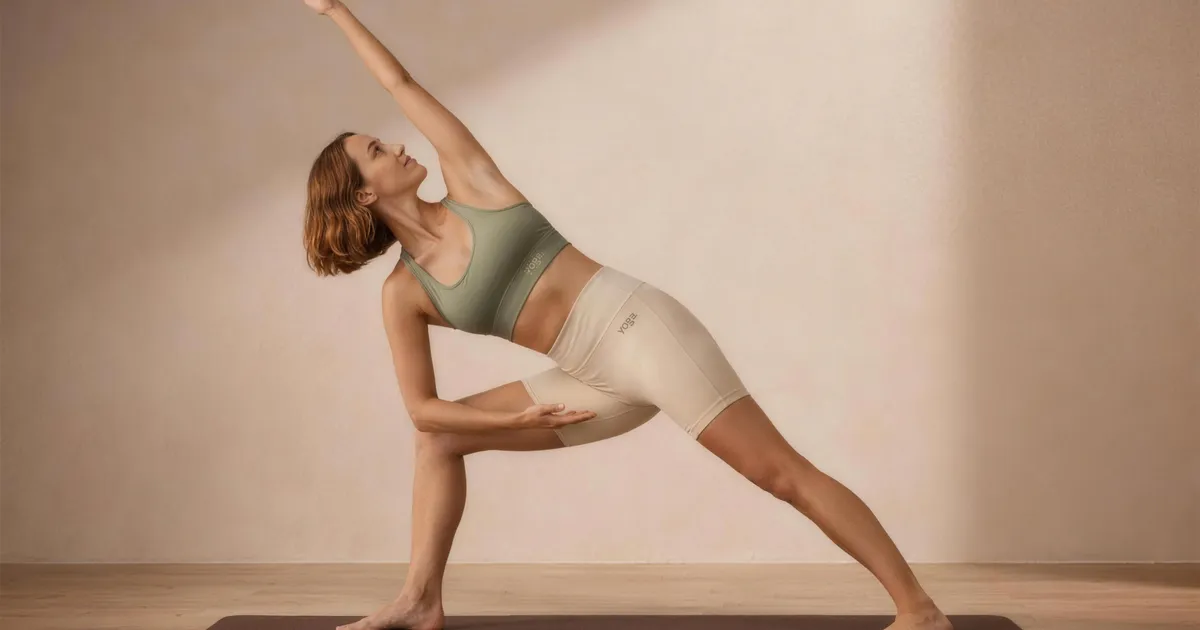
Revolved Side Angle Pose - Parivrtta Pārśvakoṇāsana (right leg), from the Sanskrit parivrtta (revolved), pārśva (side), koṇa (angle), and āsana (seat) - is a standing twist that pairs a deep lunge with a full spinal rotation toward the right leg. It demands coordination across the hips, core, and shoulders simultaneously, making it a satisfying challenge in the middle or peak of a standing-pose sequence.
At a Glance
- Level: Intermediate
- Type: Twist
- Targets: Thoracic spine, hip flexors, outer hip (right side), obliques
- Good for: Spinal rotation mobility, hip flexor lengthening, shoulder stability
How to Do Revolved Side Angle Pose with Rotation to Right Leg
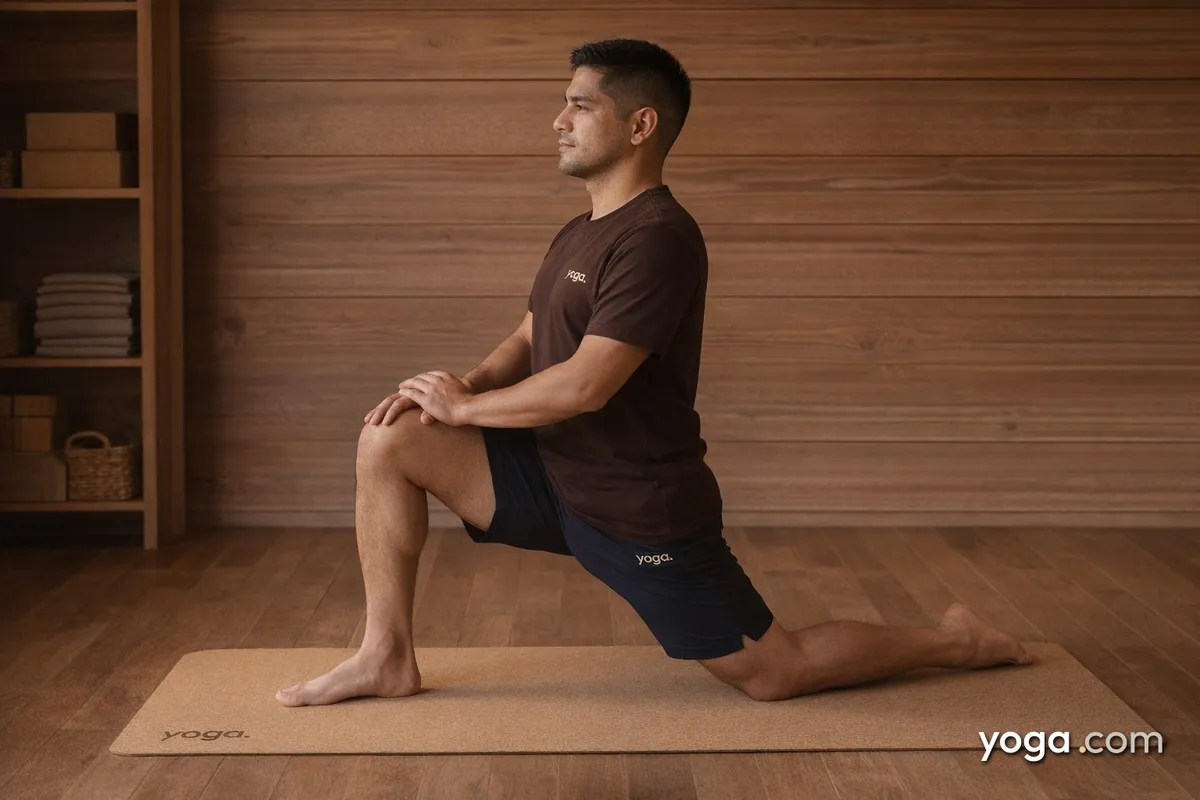
- Begin in a high lunge. From Downward-Facing Dog, step your right foot forward between your hands. Stack the right knee over the right ankle. Keep the back (left) leg straight and press firmly through the left heel.
- Square your hips. Draw your left hip forward and your right hip back so the pelvis is as even as possible. This sets the foundation before the twist begins.
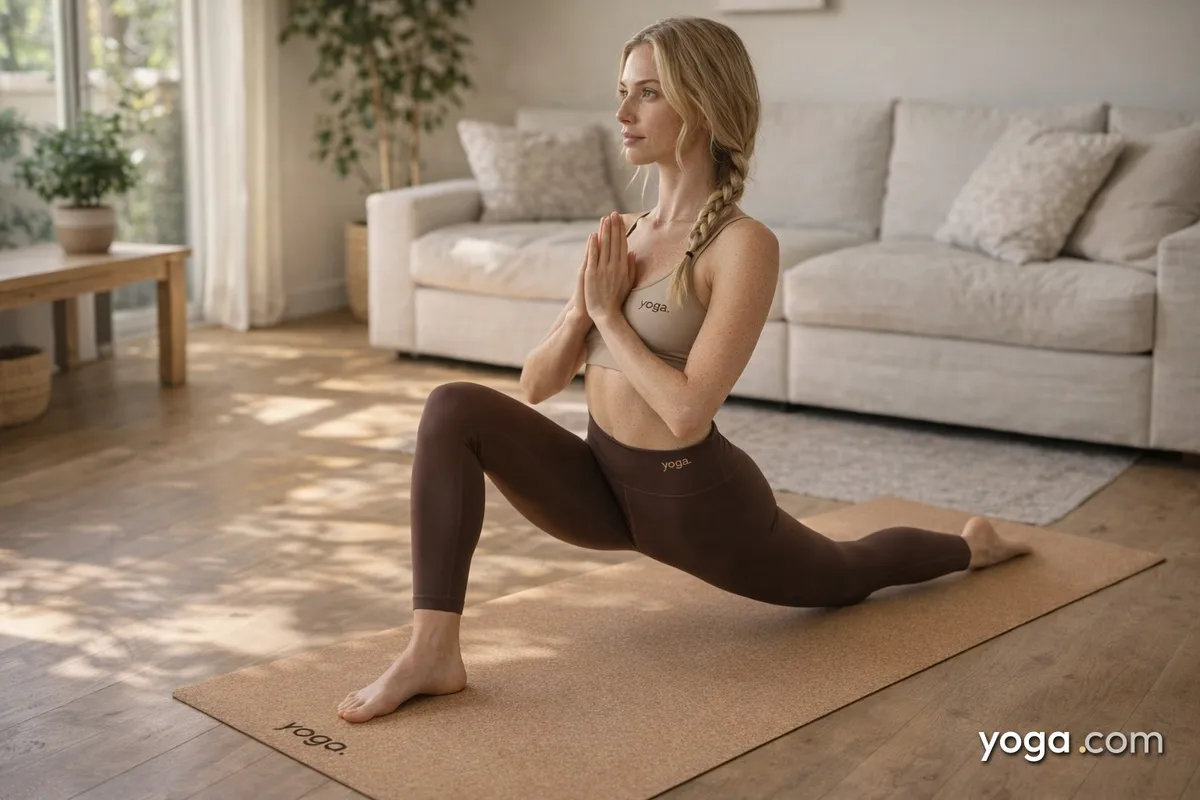
- Bring your hands to prayer. Exhale and place your palms together at your chest (añjali mudrā). Lengthen through the crown of your head.
- Initiate the rotation. On your next exhale, begin rotating your torso to the right. Hook your left elbow to the outside of your right thigh, pressing thigh and elbow gently against each other for leverage. Keep both sides of the waist long - resist the urge to collapse into the twist.
- Open the chest. Continue rotating so your right shoulder draws back. If your thoracic spine allows, separate your palms: place the left hand to the floor (or a block) outside your right foot and extend your right arm straight up, palm facing left. Stack the shoulders vertically as best you can.
- Set your gaze. Look up toward your right thumb if the neck is comfortable, or keep your gaze forward to stay grounded.
- Breathe and hold. Stay for 5-8 full breaths. With each inhale, create length from tailbone to crown; with each exhale, rotate a little deeper from the mid-back rather than forcing from the neck or shoulder.
- Come out with control. Exhale, unwind the twist, and return your hands to the mat. Step back to Downward-Facing Dog or high lunge on the opposite side before repeating.
Benefits
- Stretches the hip flexors of the back (left) leg and the outer hip of the front (right) leg
- Mobilizes the thoracic spine through active rotation
- Strengthens the quadriceps, glutes, and core stabilizers under load
- Builds shoulder stability as the arms work against the body's rotation
- Lengthens the obliques and intercostal muscles on the side body
- Develops balance and proprioceptive awareness in a rotated, asymmetrical stance
Common Mistakes and Alignment Cues
- Mistake: The front knee collapses inward. Cue: Press your left elbow firmly into your right thigh and simultaneously push your thigh back - this creates mutual resistance that keeps the knee tracking over the second toe.
- Mistake: Twisting from the lower back rather than the mid-back. Cue: Anchor your sacrum by drawing your navel in lightly, then initiate rotation from the ribcage up, not from the lumbar spine.
- Mistake: The back heel lifts off the floor. Cue: Ground down through the outer edge of your left foot and re-engage the back leg fully before deepening the twist.
- Mistake: Collapsing the top shoulder forward. Cue: Draw the right shoulder blade toward the spine and reach the right arm actively upward, creating length rather than cramping the chest.
- Mistake: Holding the breath through the twist. Cue: Keep breathing steadily - the exhale is when the rotation naturally deepens; forcing it on a held breath compresses unnecessarily.
Modifications and Props
- Block under the bottom hand: Place a block at its tallest or medium height outside your right foot so you can reach the floor without collapsing the chest. This is the most common modification and keeps the spine long.
- Back knee down: Lower your left knee to the mat (pad it if needed) to reduce the demand on the back-leg hip flexors and give you more stability for the rotation. This is a good starting point for newer intermediates.
- Hands stay in prayer: Keep your palms pressed together at the chest rather than opening the arms. This version reduces range-of-motion demand on the shoulder and lets you focus purely on thoracic rotation.
- Wall for balance: Practice near a wall and lightly touch the top (right) hand to the wall for steadiness while you explore the twist.
Cautions
- Spinal disc issues or acute low-back pain: Deep rotations under load can aggravate the lumbar region; approach carefully and consider the back-knee-down modification.
- Pregnancy: Deep closed twists compress the abdomen; pregnant practitioners should avoid this pose or use an open-twist variation.
- Knee injury: If you have sensitivity in the front knee, reduce the depth of the lunge and do not force the knee beyond the ankle.
- Sacroiliac joint sensitivity: Twisting in a lunge position places asymmetrical torque on the SI joint; work at a shallower rotation and keep the pelvis stable.
- High blood pressure or eye or inner-ear conditions: Avoid the full upward gaze; keep your eyes level or look toward the floor.
If you're working with an injury or a medical condition, check with a qualified professional before practicing.
Related Poses
- Revolved Triangle Pose with Right Arm Behind Left Foot - a close structural relative that explores the same rotational direction with straight legs; practice it to build thoracic mobility before adding the lunge.
- Right Twist with Right Leg Bent - a seated or supine preparation that isolates spinal rotation toward the right without balance demands.
- Bend to Left Leg with Rotation - a complementary rotation that balances the body after working the right side.
- Downward-Facing Dog Pose - the natural transition pose before and after; use it to reset the spine and step into the lunge.
Looking for sequences that include standing twists? Try A Gentle Yoga Routine for Tired, Low-Energy Days or A 10-Move Chair Yoga Sequence for a Midday Reset.