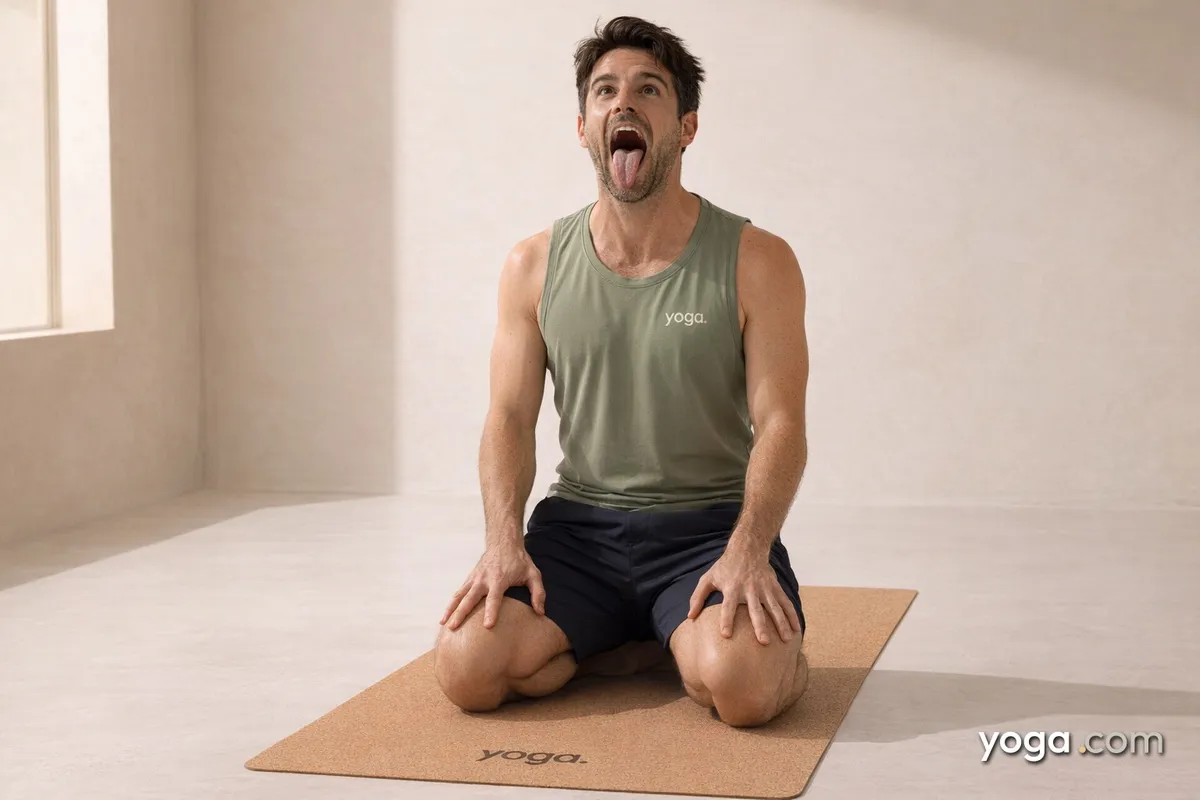
Lion Pose (Siṃhāsana - literally "lion seat") is a kneeling posture that pairs a deep breath with an expressive, open-mouthed exhale, mimicking the wide face of a roaring lion. It fits naturally near the beginning or middle of a practice as a short energetic reset, or at the end of a sequence to release accumulated tension in the face and throat.
At a Glance
Level: BeginnerType: KneelingTargets: Face and jaw muscles, throat, tongue, inner thighsGood for: Releasing facial tension, activating the breath, building awareness of the upper palate and throatHow to Do Lion Pose
Begin in a kneeling position, sitting back onto your heels with your knees hip-width apart or slightly wider. Place your palms on your thighs, fingers pointing toward your knees.Sit tall - lengthen through the spine, draw the crown of the head upward, and let the shoulders soften away from the ears.Take a slow, full inhale through the nose, allowing the chest and belly to expand. Feel the breath build.On the exhale, lean forward slightly from the hips, press your palms firmly into your thighs (fingers spread wide), open the mouth as wide as comfortable, and extend the tongue fully downward toward the chin.At the same time, open the eyes wide and direct your gaze upward toward the space between the eyebrows (the bhrūmadhya), or straight forward if that feels too intense.Let the exhale be audible - a steady "ha" sound from the back of the throat. Empty the lungs completely.Close the mouth, relax the face, and return to an upright kneeling seat on the inhale. Pause for one natural breath.Repeat two to four more times, then release the hands to the thighs and sit quietly for a moment before moving on.Benefits
Stretches the muscles of the face, jaw, and tongue, which accumulate holding patterns from speaking and clenching.Activates and tones the muscles around the throat and upper palate.Strengthens the fingers, hands, and wrists through the active pressing of the palms into the thighs.Encourages a complete, forceful exhalation, training greater control of the breath and the muscles of expiration.Stretches the inner thighs and tops of the feet in the kneeling base position.Brings conscious attention to areas of the face that are rarely addressed in movement practice.Common Mistakes and Alignment Cues
Rounding through the upper back on the forward lean. Keep the spine long as you hinge forward - the movement comes from the hips, not a collapse of the chest.A quiet or held exhale. The breath out should be audible and full. Let the sound come freely rather than controlling it into near-silence.Squinting the eyes. The cue is to open the eyes wide. Softening or squinting defeats the facial stretch. Think of genuinely startled, wide-open eyes.Tongue only partially extended. Reach the tongue toward the chin as completely as you can - a half-extended tongue reduces the stretch along the lingual muscles and the floor of the mouth.Sinking the hips back off the heels mid-pose. Keep contact between seat and heels throughout so the base stays stable and the forward lean is controlled.Modifications and Props
Uncomfortable knees or ankles: Sit cross-legged (Sukhasana) instead of on your heels. Place a folded blanket under the knees or ankles as needed to reduce pressure on the joints.Tight ankles: Roll a blanket and tuck it under the ankles before sitting back, lifting the feet slightly off the mat.Chair variation: Sit toward the front edge of a chair, feet flat on the floor. Place hands on thighs and perform the breath and facial expression exactly as described above - a good option when kneeling is not accessible.Gaze option: If the upward gaze (toward the brow center) creates strain in the eyes, simply look straight ahead or slightly downward at the floor in front of you.Cautions
Knee discomfort: Kneeling places direct load on the knee joint and surrounding structures. Use padding generously and never force the position if you feel sharp pain.Ankle sensitivity: Sitting on the heels compresses the ankle joint. Use a prop under the ankles or choose the chair variation if compression causes pain.Recent jaw or facial surgery: The wide opening of the mouth and full tongue extension place demand on jaw muscles and the temporomandibular joint. Avoid or work gently if you have had recent dental work or jaw-related procedures.Eye conditions: The upward gaze is optional. Skip it entirely if you have any active eye condition or pressure concern.If you're working with an injury or a medical condition, check with a qualified professional before practicing.Related Poses
Diamond Pose - the standard kneeling base from which Lion Pose is most often taught.Hero Pose with Hands on Thighs - a closely related kneeling seat that shares the same hand placement and upright torso.Hare Pose - a natural counter-pose that releases the back body after the active forward lean.Cat Pose - another kneeling posture that works the breath expressively and prepares the spine and throat.Practice ideas: A Gentle Yoga Routine for Tired, Low-Energy Days and A 10-Move Chair Yoga Sequence for a Midday Reset.