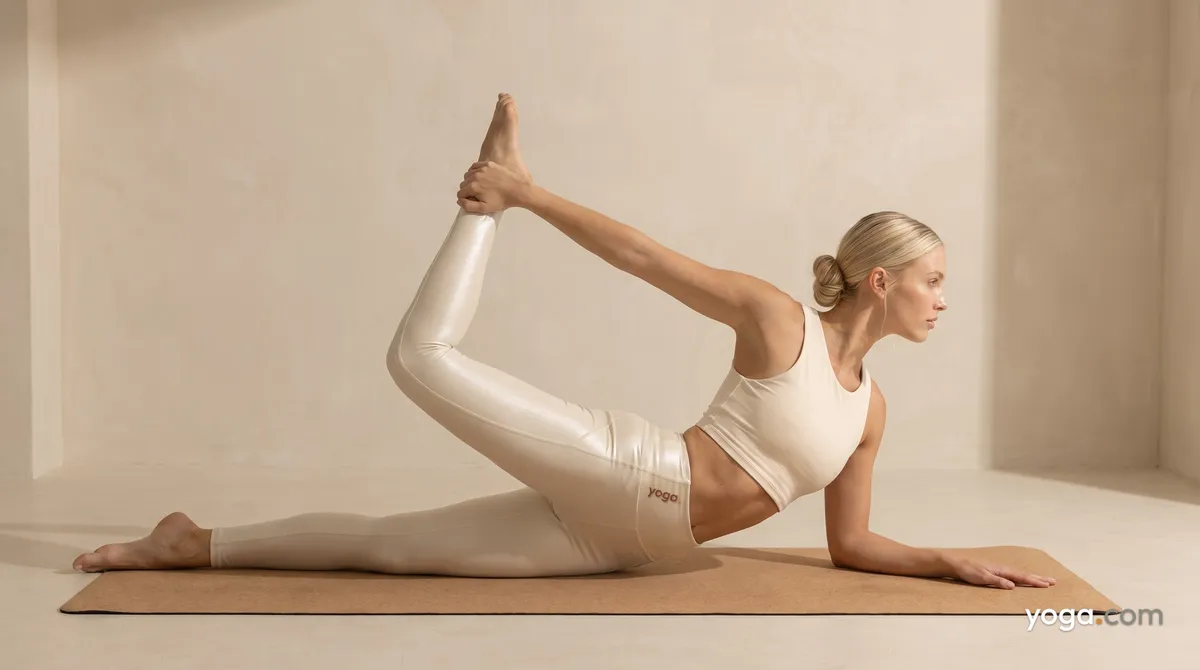
Easy Bow Pose is a gentler, one-side-at-a-time approach to the classic backbend family, carried in Sanskrit as Ardha Dhanurāsana - from dhanu (bow) and āsana (seat or posture). Rather than clasping both ankles simultaneously, you lift one leg at a time, giving the spine room to open gradually. It sits comfortably early in a backbend sequence, making it an ideal bridge between prone warm-ups and fuller expressions of the pose.
At a Glance
- Level: Beginner
- Type: Backbend
- Targets: Thoracic and lumbar spine, hip flexors, quadriceps, shoulder girdle
- Good for: Building spinal extension, opening the front body, developing shoulder flexibility
How to Do Easy Bow Pose
- Lie face-down on your mat with your legs hip-width apart and your arms resting alongside your body, palms facing up.
- Press your pubic bone gently into the mat and take a full breath in to lengthen through the spine before you begin.
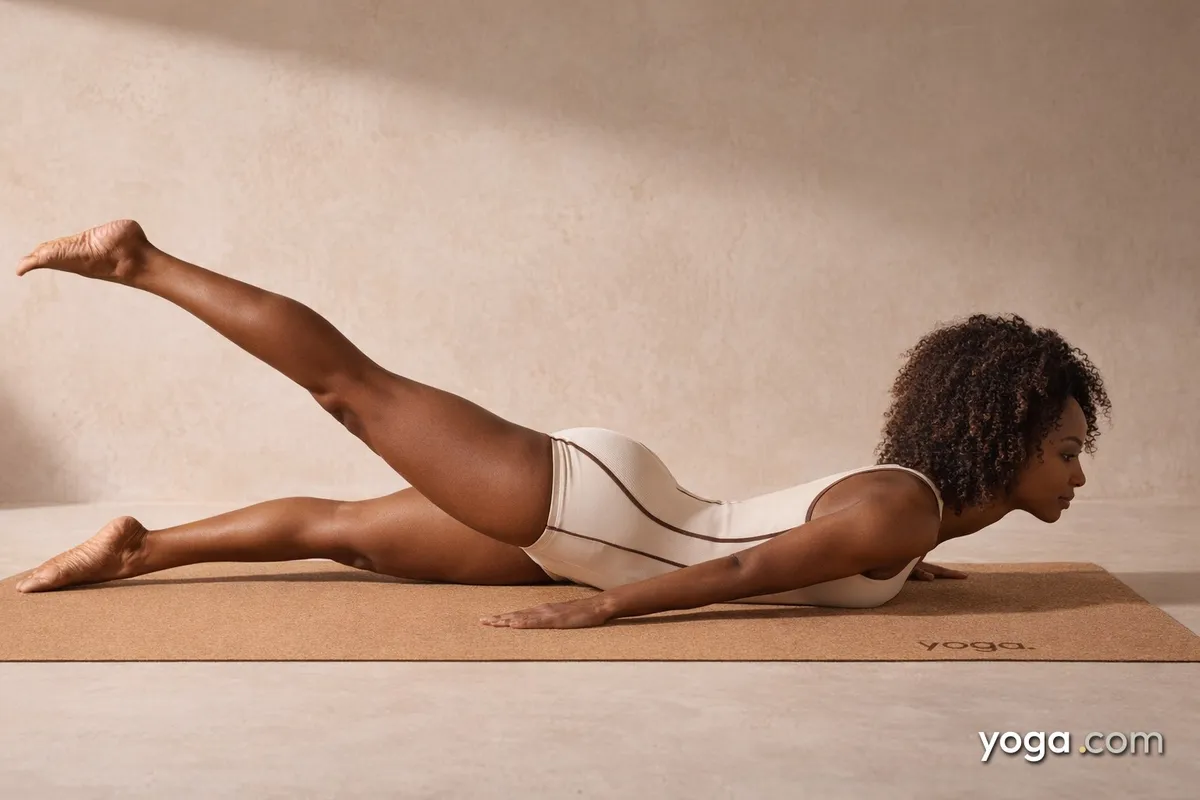
- Bend your right knee and draw your right heel toward your right buttock. Reach your right hand back and take a firm grip around your right ankle (or the top of the foot if your ankle is out of reach).
- Keep your left leg extended and active - press the top of the left foot into the mat to stabilise the pelvis.
- On an inhale, simultaneously press your right foot back into your right hand and lift your right knee away from the mat. Let that action draw your right shoulder back and open the right side of your chest. Your head follows the spine's natural arc - gaze forward or slightly downward.
- Hold for 3-5 steady breaths, keeping both hip points as level as possible and the lower back long rather than compressed.
- To come out, soften the kick on an exhale, slowly lower your right knee to the mat, release the ankle, and return your right leg to its starting position. Rest briefly in a symmetrical prone position.
- Repeat on the left side, then rest in Child's Pose or simply lie flat for several breaths before moving on.
Benefits
- Stretches the quadriceps and hip flexors of the lifted leg.
- Strengthens the posterior chain - spinal extensors, gluteal muscles, and hamstrings of the grounded leg.
- Mobilises the thoracic spine into extension one side at a time, making the movement accessible for tighter backs.
- Broadens the chest and stretches the anterior shoulder of the working side.
- Builds the shoulder and arm strength needed for full Bow Pose by loading one arm at a time.
- Trains pelvic stability, since the non-working side must stay grounded and controlled throughout.
Common Mistakes and Alignment Cues
- Mistake: Rolling onto one hip. Cue: Keep both hip points pressing evenly toward the mat; think of drawing your navel slightly in to anchor the pelvis.
- Mistake: Yanking the foot toward the buttock with the arm rather than kicking back. Cue: The leg does the work - drive the foot firmly into the hand so the shoulder opens rather than the elbow cranking.
- Mistake: Crunching the neck by throwing the head back. Cue: Let the back of the neck stay long; gaze at a spot on the floor a foot in front of you.
- Mistake: Holding the breath. Cue: Use the exhale to soften any gripping, and inhale to lift - keep the breath moving throughout the hold.
- Mistake: Gripping with the toes of the grounded foot. Cue: Press actively through the top of the grounded foot and extend through the heel to engage the whole leg.
Modifications and Props
- Strap at the ankle: If your hand doesn't reach your ankle comfortably, loop a yoga strap around the top of the foot and hold the strap. This removes strain from the shoulder and lets you focus on the backbend.
- Folded blanket under the abdomen: Placing a folded blanket beneath the lower belly cushions the hip points and reduces pressure on the front of the pelvis, useful on harder floors.
- Supported chest lift only: If ankle-to-hand contact isn't available yet, simply bend the knee and lift the thigh off the mat without clasping - this still works the spinal extensors and hip flexors without requiring shoulder flexibility.
- Block under the forehead: Resting the forehead on a block between repetitions gives the neck a neutral resting position and keeps you grounded between sides.
Cautions
- Avoid or significantly modify this pose if you have a recent or acute low back injury; the lumbar spine is under extension load throughout.
- Those with knee discomfort should approach the bend slowly and never force the heel toward the buttock - use a strap to reduce knee flexion demand.
- Pregnancy: prone backbends are generally not appropriate after the first trimester; seek guidance from a prenatal-trained teacher.
- Shoulder or rotator-cuff issues may be aggravated by the reaching arm - use a strap rather than gripping directly, or avoid the pose until cleared.
If you're working with an injury or a medical condition, check with a qualified professional before practicing.
Related Poses
- Cobra Pose - a natural prone warm-up before any bow variation
- Bridge Pose - a supine backbend that builds spinal extension strength from a different angle
- Bow Pose - the full bilateral expression and logical next step once the easy variation is comfortable
- Upward-Facing Dog Pose - deepens chest and shoulder opening as the backbend practice matures
Put Easy Bow Pose to work in a full practice: A Gentle Yoga Routine for Tired, Low-Energy Days or try it within A 10-Move Chair Yoga Sequence for a Midday Reset.