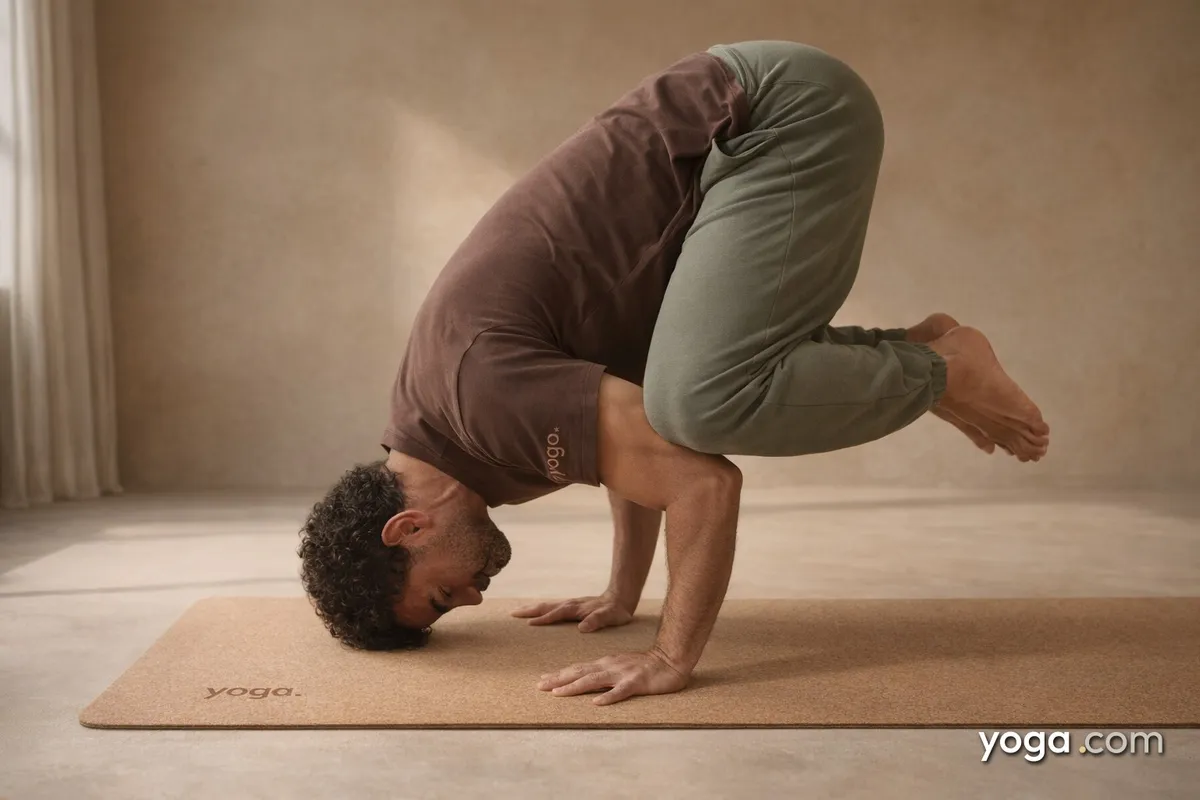
Crane Pose with Head on the Mat (Bakāsana (head on mat) - from Sanskrit baka, "crane," and āsana, "seat") is a supported arm balance in which the forehead rests lightly on the floor while the arms bear the body's weight and the knees press into the backs of the upper arms. This third point of contact makes the pose more accessible than freestanding Crane, yet it demands genuine wrist, shoulder, and core strength to exit safely. It belongs in an advanced practice as a transitional teaching step toward full Bakāsana or as a grounding inversion in its own right.
At a Glance
- Level: Advanced
- Type: Arm Balance
- Targets: Wrists and forearms, shoulder girdle, deep abdominals, hip flexors
- Good for: Building wrist-loading capacity, developing scapular protraction control, training the engagement pattern needed for freestanding arm balances
How to Do Crane Pose with Head on the Mat

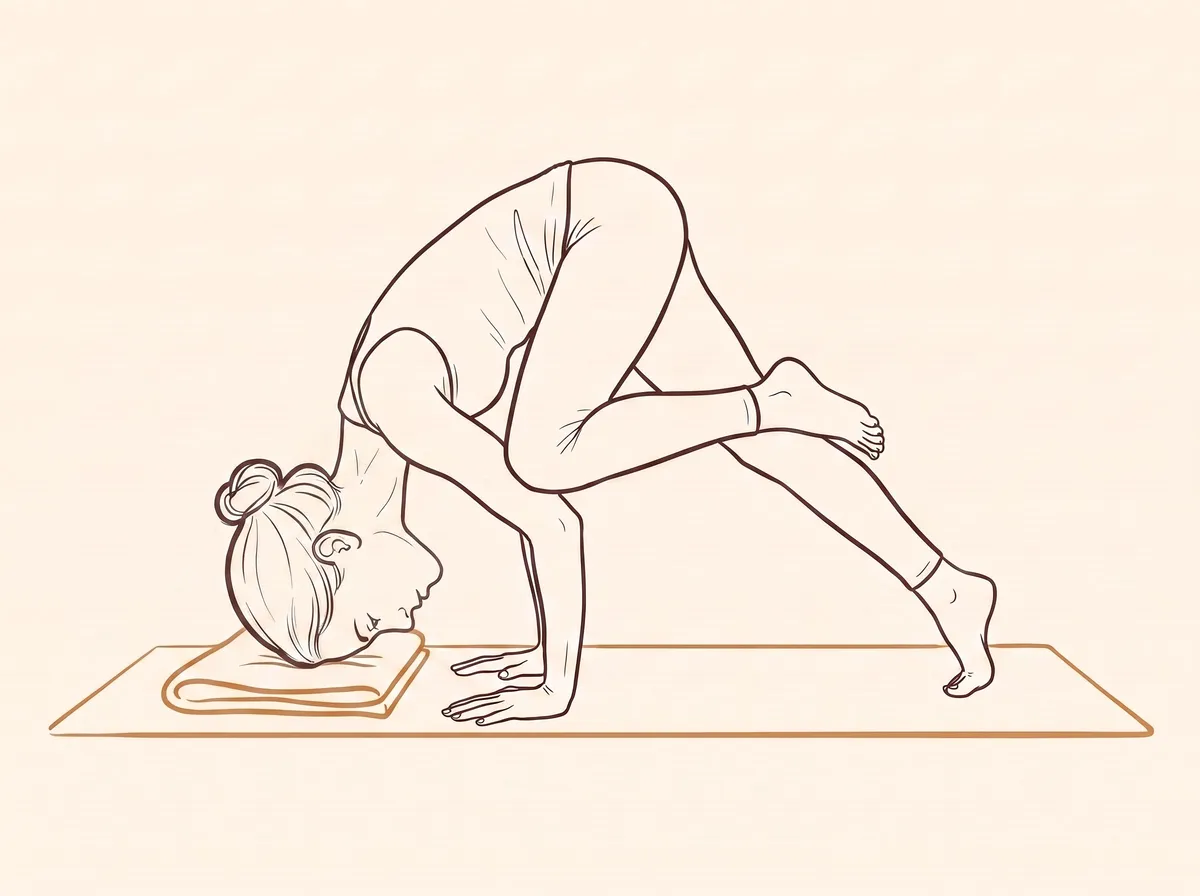
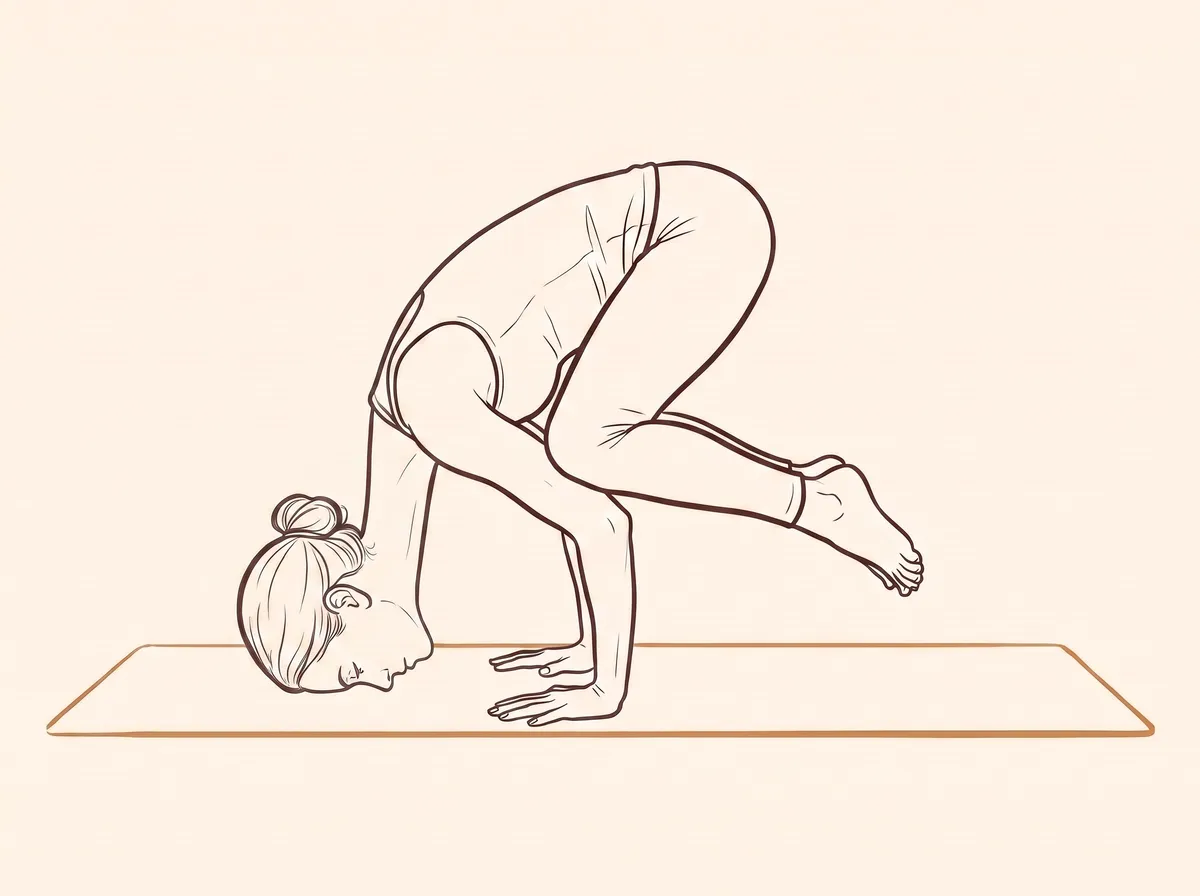
- Set your foundation. From a squat, place your hands shoulder-width apart on the mat, fingers spread wide, index fingers parallel or turned very slightly out. Lower your forehead to the floor roughly six to eight inches in front of your hands, creating a tripod triangle between palms and forehead.
- Position your knees. Walk your feet in until your knees can perch on the backs of your upper arms, as high toward the armpits as possible. Press the knees firmly into the arms - do not let them slip down toward the wrists.
- Engage before you lift. Spread the floor with your fingers, press the knuckle mounds down, and draw the lower belly in and up. Round the thoracic spine gently - think cat-back shape - so the shoulder blades spread wide (protract) and the chest does not collapse toward the floor.
- Shift your weight forward. Lean your torso forward over your hands until you feel the heels of your hands take on weight and the feet lighten on the mat.
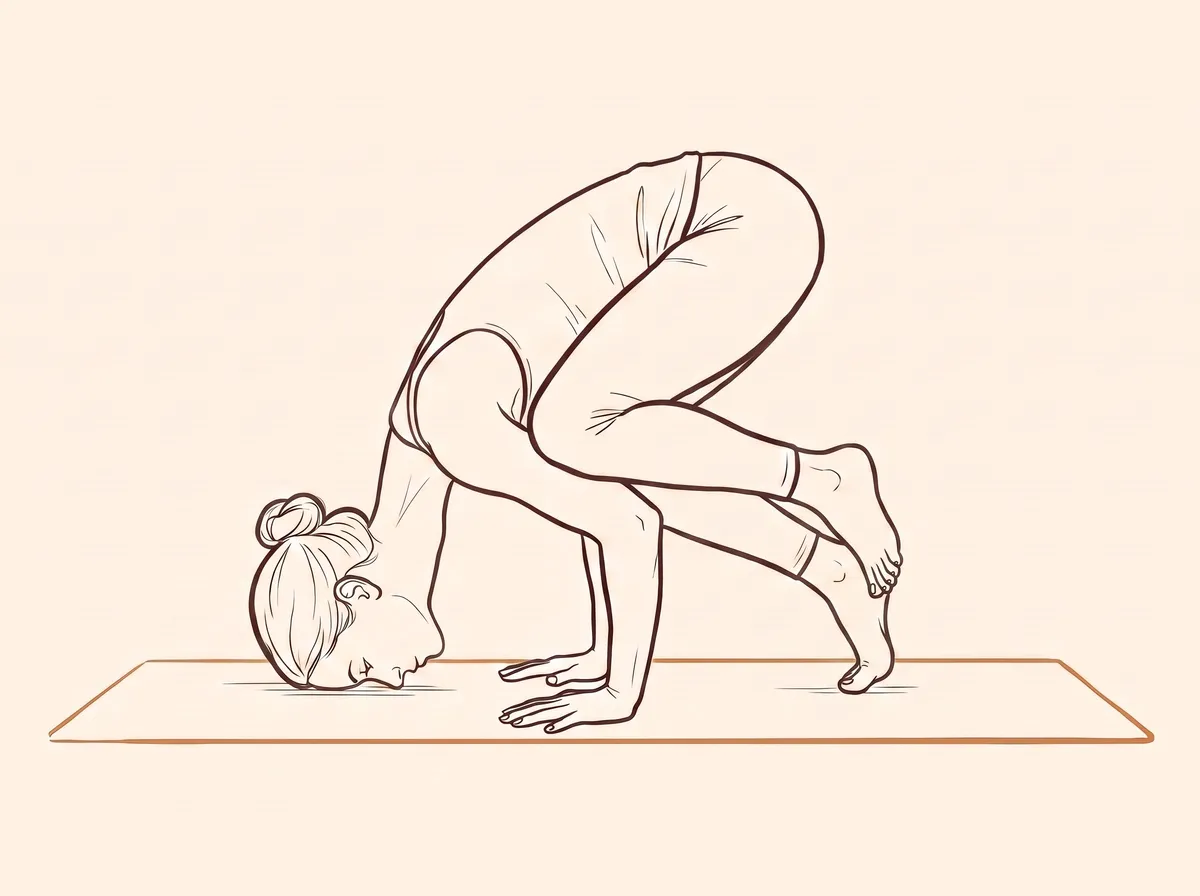
- Lift one foot, then both. On an exhale, draw one heel toward the seat, then the other. Both feet should hover close together, toes pointing back. The forehead remains in light contact with the floor - it guides, not bears, significant load.
- Hold and breathe. Stay for three to five full breaths. Keep the belly engaged, knees pressing into arms, gaze softly at the mat between your hands.
- Come out with control. Lower one foot to the floor, then the other. Lift your head last, return to a squat, and take a few breaths with the hands on the thighs before moving on.
Benefits
- Strengthens the wrist extensors and flexors under load, building wrist-loading capacity needed for arm balances.
- Trains serratus anterior and the muscles that protract and upwardly rotate the scapulae.
- Engages the deep hip flexors (iliopsoas) isometrically as the thighs are drawn toward the torso.
- Develops core compression - the transverse abdominis and pelvic floor work together to support the lifted lower body.
- Builds proprioceptive awareness of weight distribution across the hand: palm heel, knuckle mounds, and fingertips.
Common Mistakes and Alignment Cues
- Mistake: Letting the hips rise too high. Cue: Keep the hips in line with or only slightly above the shoulders - if the seat shoots skyward, you lose the leverage needed to hold the knees on the arms.
- Mistake: Resting the full skull weight on the forehead. Cue: The forehead is a guide point, not a third leg - press primarily through your hands and keep the neck long and relaxed.
- Mistake: Knees sliding down toward the wrists. Cue: Before lifting, hug the knees as close to the armpits as possible; actively squeeze the knees inward against the arms throughout.
- Mistake: Collapsing the chest toward the floor. Cue: Round the upper back deliberately - protract the shoulder blades so you feel the thoracic spine dome upward.
- Mistake: Holding the breath. Cue: Soften the jaw, keep breathing steadily; a breath cycle or two tells you whether you have genuine support or are gripping to stay up.
Modifications and Props
- Folded blanket under the forehead. Place a folded blanket where your forehead lands to cushion the skull and raise the floor slightly, reducing the angle of forward lean required.
- Block under the forehead. A block at its lowest height brings the floor up to meet you, shortening the distance the weight must travel forward and making the entry feel less precarious.
- Blocks under the hands. Setting the hands on two blocks raises the shoulder girdle, giving the knees more room to perch high on the arms - useful if you have tight hips or short torso-to-arm proportions.
- Wall behind the seat. Practice with your back near a wall so that if the hips tip back, the wall catches you. This removes fear of falling backward and lets you focus on the arm and core engagement.
Cautions
- Wrist pain or injury: Any sharp pain in the wrists during setup is a signal to stop. Warm the wrists thoroughly with wrist circles and tabletop weight-bearing before attempting this pose.
- Shoulder or elbow instability: The elbow joint must track directly over the wrist and not flare outward; avoid this pose if you have an unstable or recently injured shoulder, elbow, or rotator cuff.
- Neck sensitivity: Because the forehead contacts the mat, avoid this pose if you have cervical disc issues or any condition that makes neck compression uncomfortable.
- Late pregnancy: Prone-pressure positions and strong abdominal compression are not appropriate; choose a different focus for arm-balance work.
If you're working with an injury or a medical condition, check with a qualified professional before practicing.
Related Poses
- Easy Crow Pose - a lower-arm variation that teaches the same knee-on-arm mechanics with a gentler wrist angle; an ideal preparation.
- Crane Pose - the freestanding version of this pose; practice here with head down, then progress to lifting the head once the arm-balance pattern is solid.
- Crane Pose with Both Legs Up - the natural next progression, extending the legs straight to deepen shoulder and core demand.
- Four-Limbed Staff Pose - builds the wrist-loading strength and scapular stability that underpin every arm balance in this family.
Looking to weave arm balances into a broader sequence? See A Gentle Yoga Routine for Tired, Low-Energy Days and A 10-Move Chair Yoga Sequence for a Midday Reset for sequencing ideas at different energy levels.